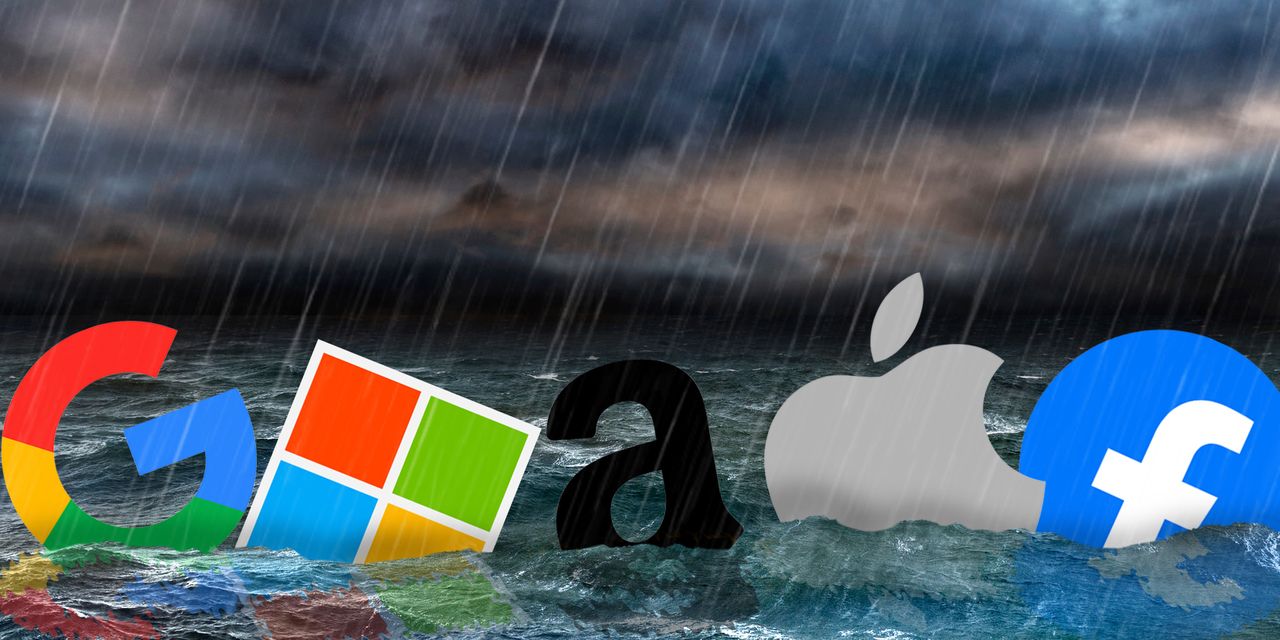
It’s looking like 2021 was the peak growth year for Big Tech, and any profit growth that is currently projected for 2023 is going to be fueled by cost cuts.
After stratospheric double-digit revenue growth of 27%, to $1.4 trillion, in 2021, this earnings season saw Big Tech revenue growth fall back to earth with a meager 6.85% growth rate in 2022. Combined revenue for the Big Five in tech reached $1.50 trillion, as the current macroeconomic slowdown led to a big drop in internet ad spending and consumer spending, and as manufacturing stopped for a while in China due to COVID-related lockdowns.
Read about the banner 2021 for Big Tech.
Indeed, $1.50 trillion in combined revenue for just five companies — Amazon.com Inc.
AMZN,
Alphabet Inc.
GOOG,
GOOGL,
(before traffic acquisition costs), Meta Platforms Inc.
META,
and calendar-year data for Apple Inc.
AAPL,
and Microsoft Corp.
MSFT,
— is still stunning, and is about equal to the gross domestic product of Australia in 2021. Apple, Microsoft, Amazon and Alphabet are still the top four most heavily weighted companies in the S&P 500 Index
SPX,
while Meta has slipped to No. 12.
But Wall Street is all about growth, and the fantastic growth of 2021 is clearly over, at least for the biggest monsters in tech.
The single-digit revenue slowdown for 2022 was quite a comedown from 2021, but the drop in profits the Big Five companies reported for the year was even worse. For 2022, Apple, Microsoft, Amazon, Alphabet and Meta reported a combined 24.31% drop in net income to $242.6 billion, thanks in large part to Amazon, which earlier this month reported its worst annual net loss on record.
But while Amazon was alone in posting a net loss, the other four companies also reported sharply lower results in net income, with Meta coming in with the second-steepest decline. Meta’s hefty spending on the unproven metaverse, combined with the drop in internet ad spending, fueled a 41% drop in its 2022 net income. Under big pressure from Wall Street, the Facebook parent began laying off workers in November, as part of its plans to cut 11,000 staffers and consolidate some real estate and assets.
Apple, Microsoft and Alphabet also saw big declines in net income for the year. Microsoft was hit by the overall drop in PC sales, which really hurt its profits, and a slowdown in cloud spending, although its highly profitable Azure cloud-services business did not suffer as badly as had been projected.
Apple reported its steepest sales decline in six years and its revenue was hit by pandemic-fueled production halts at Foxconn
2354,
factories in China, affecting shipments of the new iPhone 14 Pro and Pro Max; iPhone revenue came in $2 billion short in the holiday quarter.
In the past few months, four out of the five tech giants have announced cost-cutting moves, including big rounds of layoffs — with only Apple managing to not cut jobs.
The effects of the tech slowdown have been felt particularly in Silicon Valley, where a recent annual survey indicated that layoffs in the second half of 2022 resulted in a loss of 1 percentage point of the region’s share of the nation’s 1.1 million overall tech workforce. And many of those jobs are at Big Tech companies: The 30 largest companies account for 42% of employment in Silicon Valley, with 19% of that employment at Google, Apple and Meta alone, according to the recently published Silicon Valley Index.
Revenue is expected to continue at a slower pace for 2023 for the Big Five tech companies: For calendar 2023, FactSet estimates call for a combined $1.59 trillion in revenue, or a growth rate of 6.11%. But profits are expected to rise again, as cost-cutting efforts across the tech industry kick in. For calendar 2023, Wall Street is now forecasting that the five Big Tech companies will report a combined net income of $276.15 billion, up 13.85% from 2022.
But as the annual report on the state of Silicon Valley indicated, tech is still thriving, albeit at a slower pace for now. The report also noted that since 2010, tech jobs have grown at nearly twice the rate of overall employment in the region, even as tech becomes more concentrated.
Now that the huge pandemic rush for new technology has calmed down, along with a slower economy, it’s clear that the tech industry needs “the next big thing” to come along to fuel another growth boom. Many investors are now hoping developments in artificial intelligence will lead the way, as witnessed by the mad rush in recent weeks for any stock with a major AI connection, due to the hype over the creepy and often inaccurate ChatGPT.
Read also: Microsoft is hottest name in AI but Google and other rivals turning up the heat.
Whether or not that is a fool’s errand, a scary proposition or a wise investment remains to be seen, but tech has seen boom-and-bust cycles before. Even in this current downturn, the numbers show that Big Tech is more dominant than ever before.