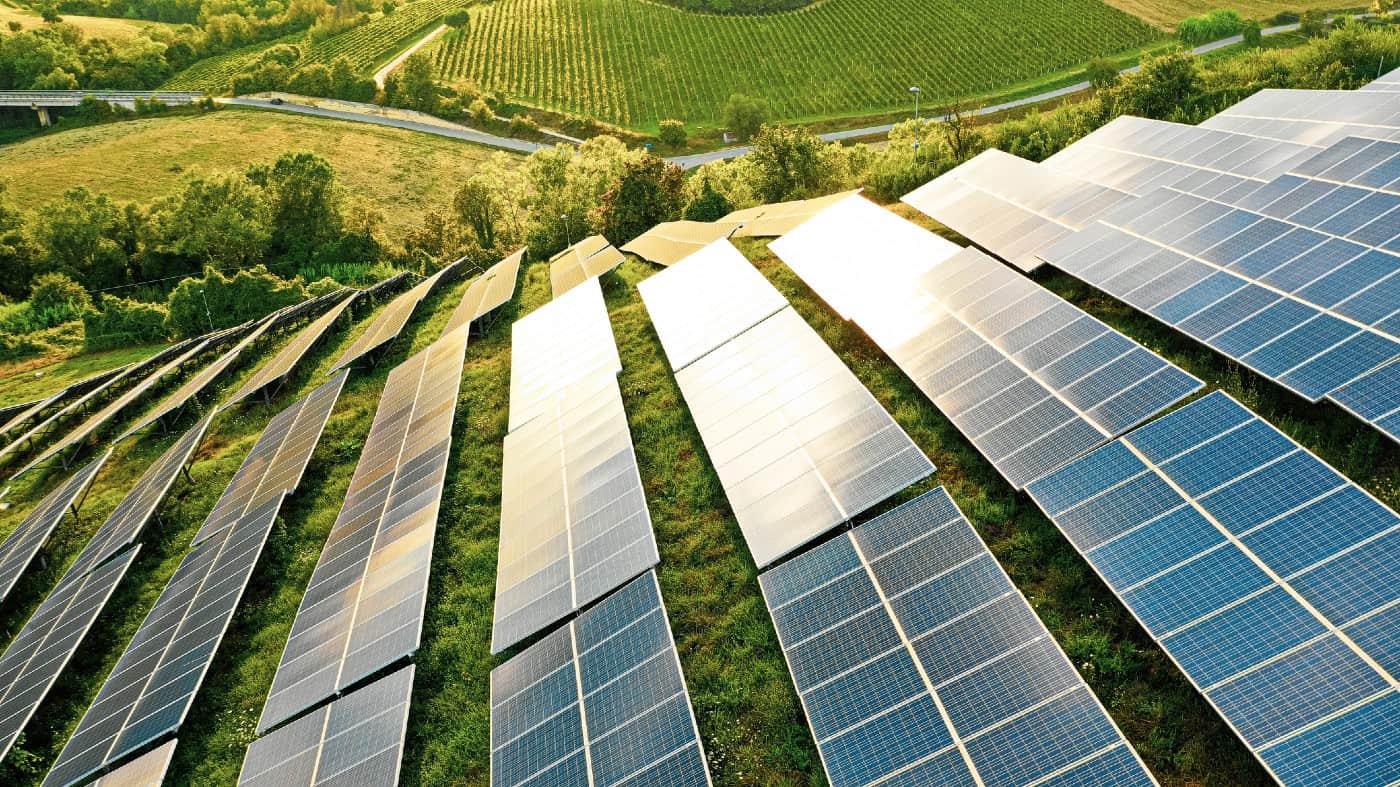
The transition to green energy seems to me to be inevitable. This provides investment opportunities in the businesses that will facilitate change and ultimately profit from it. I think that Berkshire Hathaway (NYSE: BRK.B) shares offer an attractive way for me to invest into the renewable energy movement.
Berkshire Hathaway is a conglomerate with various revenue sources. One of these is its electric utility subsidiary Berkshire Hathaway Energy (BHE). It is easy to overlook Berkshire Hathaway as an opportunity to invest in renewable energy. BHE only contributes around 9% of Berkshire Hathaway’s revenues and renewable sources only account for just under half of BHE’s total energy generation. I think, however, that BHE’s position within Berkshire Hathaway gives it a big advantage over other electric utilities. I also think that it mitigates some of the major risk that I associate with investing in the shift to renewable energy.
5 Stocks For Trying To Build Wealth After 50
Markets around the world are reeling from the coronavirus pandemic… and with so many great companies trading at what look to be ‘discount-bin’ prices, now could be the time for savvy investors to snap up some potential bargains.
But whether you’re a newbie investor or a seasoned pro, deciding which stocks to add to your shopping list can be a daunting prospect during such unprecedented times.
Fortunately, The Motley Fool UK analyst team have short-listed five companies that they believe STILL boast significant long-term growth prospects despite the global upheaval…
We’re sharing the names in a special FREE investing report that you can download today. And if you’re 50 or over, we believe these stocks could be a great fit for any well-diversified portfolio.
A competitive advantage
In the 2020 letter to shareholders, Warren Buffett described a key advantage that BHE has over other electric utilities. Most electric utility companies distribute around 60% of their earnings as dividends to income-seeking shareholders. This means that they cannot use that money to make investments into renewable energy infrastructure. Instead, they need to finance their investments by taking on debt, or issuing stock that dilutes the value of the shares held by existing shareholders.
By contrast, BHE does not pay a dividend. This means that it is able to use the income that it generates to make investments into renewable energy projects without taking on debt or issuing shares to finance these. Other electric utilities have a much more limited ability to do this. I view the ability to retain earnings and reinvest them into renewable energy projects as a significant advantage that BHE has over other renewable energy investments.
The ability to retain its earnings has allowed BHE to make substantial renewable energy investments. It has invested over $35bn into various renewable energy generation projects. This has reduced BHE’s dependence on coal-fired power plants. In 2006, coal-fired energy generation accounted for 74% of BHE’s overall energy generation. By the end of 2020, this had reduced to 33%. It has also allowed BHE to invest $18bn into the transmission infrastructure required for the transition to renewable energy.
Mitigating risk
The biggest risk that I can see with investing in green energy companies is over-optimism. While the shift to renewable energy seems to me to be inevitable, it is important that companies are disciplined in their investments in this space. Making investments that ultimately fail to pay off can be expensive and even lead to bankruptcy. A prominent example of this comes from SunEdison in 2016.
I think, however, that BHE’s position within Berkshire Hathaway protects it from this risk. There are two reasons for this. First is the ability to invest in renewable energy using its own money, rather than by taking on debt. Second is its position within the wider conglomerate, which connects BHE to $150bn in cash. Also, as part of Berkshire Hathaway, its investments are overseen by Warren Buffett. I can think of nobody better when it comes to finding good value investments.
All of this means that I think having Berkshire Hathaway shares in my portfolio is an attractive way to invest in the renewable energy movement.
Our 5 Top Shares for the New “Green Industrial Revolution”
It was released in November 2020, and make no mistake:
It’s happening.
The UK Government’s 10-point plan for a new “Green Industrial Revolution.”
PriceWaterhouse Coopers believes this trend will cost £400billion…
…That’s just here in Britain over the next 10 years.
Worldwide, the Green Industrial Revolution could be worth TRILLIONS.
It’s why I’m urging all investors to read this special presentation carefully, and learn how you can uncover the 5 companies that we believe are poised to profit from this gargantuan trend ahead!
Access this special “Green Industrial Revolution” presentation now
Stephen Wright owns Berkshire Hathaway (Class B) shares. The Motley Fool UK has no position in any of the shares mentioned. Views expressed on the companies mentioned in this article are those of the writer and therefore may differ from the official recommendations we make in our subscription services such as Share Advisor, Hidden Winners and Pro. Here at The Motley Fool we believe that considering a diverse range of insights makes us better investors.