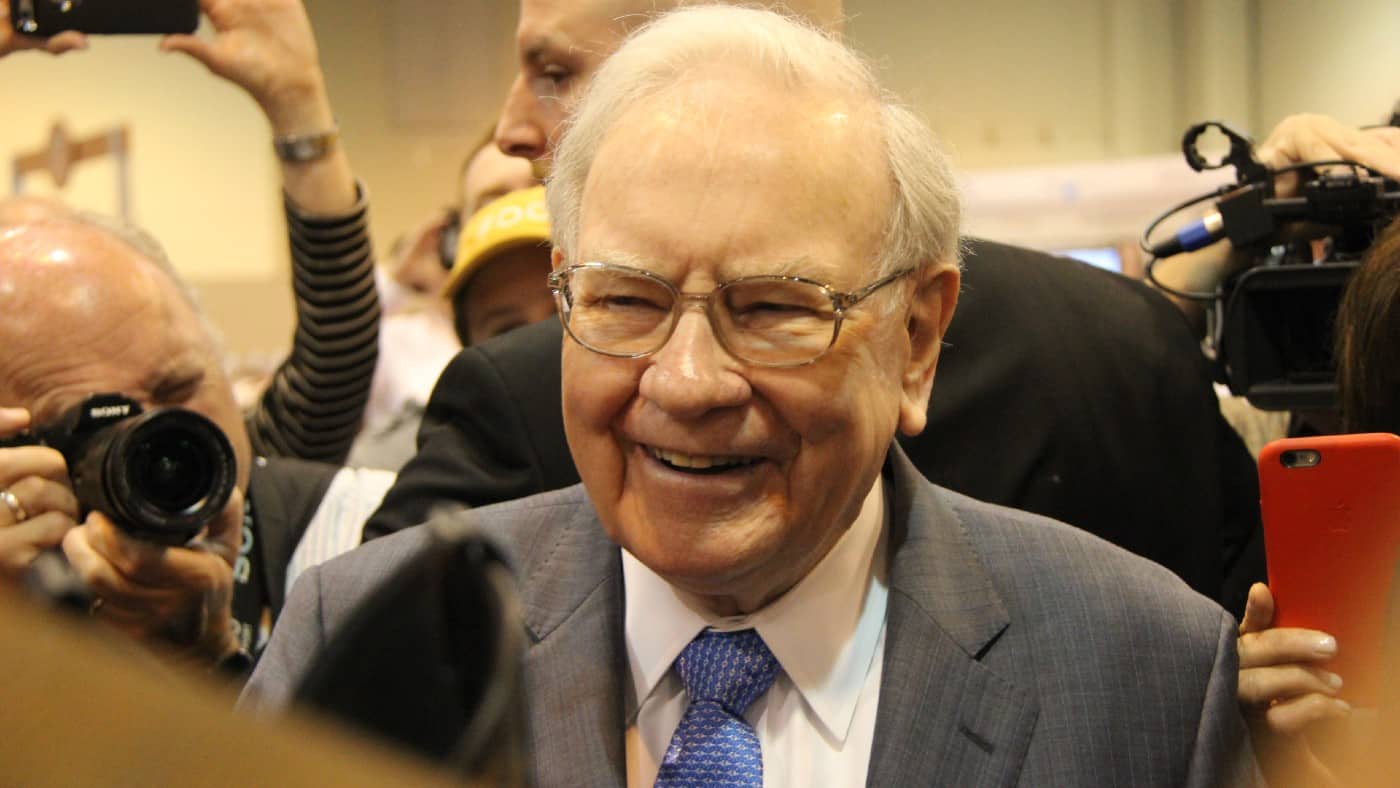
The sort of share picking success enjoyed by investor Warren Buffett does not just come about by accident. Over many years, Buffett has refined his investing strategy to try and improve his results.
Here are three simple but important rules he follows in his investment strategy. I believe following them can boost the performance of my own portfolio.
5 Stocks For Trying To Build Wealth After 50
Markets around the world are reeling from the coronavirus pandemic… and with so many great companies trading at what look to be ‘discount-bin’ prices, now could be the time for savvy investors to snap up some potential bargains.
But whether you’re a newbie investor or a seasoned pro, deciding which stocks to add to your shopping list can be a daunting prospect during such unprecedented times.
Fortunately, The Motley Fool UK analyst team have short-listed five companies that they believe STILL boast significant long-term growth prospects despite the global upheaval…
We’re sharing the names in a special FREE investing report that you can download today. And if you’re 50 or over, we believe these stocks could be a great fit for any well-diversified portfolio.
1. Focus on investment not speculation or trading
When it comes to moving in and out of shares, Buffett’s position is clear. He says, “Our favourite holding period is forever”. In other words, Buffett is happiest when he buys a share and never sells it. Some of the core holdings of his Berkshire Hathaway portfolio have been in it for decades, including household names like Coca-Cola and American Express.
I think a lot of people misunderstand this simple but profound insight. Buffett is not saying that he never sells shares. In fact, he has sold many shares over his career and continues to do so. Buffett clearly pays attention to how companies he owns are doing. If the facts make him change his mind about an investment thesis, he will offload the shares. He did that several years ago with IBM.
Instead, what Warren Buffett is saying here is that as an investor he is on the lookout for companies with such strong future earnings potential that, in an ideal world, he would be happy to own them indefinitely. When I compare that to some of my own moves as an investor, I can immediately appreciate the benefit of Buffett’s analytical framework. Often it is tempting to make marginal investments. Those might be companies whose businesses clearly have a shelf life but who look like they have a good few years of profit left in them yet. Clearly such a way of thinking would not meet the standard of Buffett’s approach. Put another way, Buffett says that if someone does not feel comfortable with the idea of owning a share for 10 years, they should not even entertain owning it for 10 minutes.
Clearly, Buffett is not a trader or a short-term speculator looking to make a fast buck. Instead he is trying to buy companies based on his assessment of their long-term potential.
How can this first Buffett investing rule improve my own investment performance? I think it is a good filter to apply to companies I am considering for my portfolio. Before buying a share, can I imagine holding it forever if its prospects remain the way they look now, or do I already have one eye on the exit? If I have any reason to imagine selling a share even before I have purchased it, it might mean it is not the sort of high-quality company that forms the basis of Buffett’s investment success.
2. Do fewer things, but on a big scale
An interesting aspect of Buffett’s portfolio is that it is relatively small in terms of the number of companies he owns. As one would expect from such a seasoned investor, he is careful to reduce his risk by diversifying across different companies and industries. But overall, Buffett’s share portfolio typically contains tens not hundreds of companies.
That is not an accident. It reflects a second investing rule Warren Buffett follows. That is to wait for what he regards as really promising opportunities and then to pile into them in a big way. In fact, Buffett goes even further than that, saying, “You only have to do a very few things right in your life so long as you don’t do too many things wrong”. This focus on the quality of decision making not quantity sets him apart from many investors.
This is not just talk: Buffett’s behaviour echoes the same points. He has spent many years of his career being criticised for not buying companies when his company has had vast amounts of spare cash on its balance sheet. But such criticism is water off a duck’s back. In the long run, Buffett reckons that the returns one receives from a great company will be exponentially better than those from a merely good company. That is why he is happy to wait for the few genuinely great opportunities that come along, even if that takes years.
When he does find one, he tends to invest large amounts. If an investment opportunity really is promising, on Buffett’s logic, it makes sense to devote substantial funds to it, in the hope of getting a big reward. That is an investing rule I can apply to my own portfolio.
3. Warren Buffett values sleeping soundly
Not all people in their nineties like Buffett can rely on a good night’s sleep. But he has been honing the skill for decades. In fact, it forms the core of the third Buffett investing rule.
Here is Warren Buffett on how he thinks about making investments that are potentially lucrative but also carry worrying risks: “When forced to choose, I will not trade even a night’s sleep for the chance of extra profits”.
If anything, I think this investing rule might actually be even more relevant for a private investor like me than for a professional like Buffett who has billions of dollars to his name. Buffett could sustain losses in his portfolio that would hardly dent its value, but would be big enough to cause huge problems for an investor of smaller means.
Whether it is shunning risky companies, not concentrating too much of his wealth in a single opportunity, or investing with money he cannot afford to lose, Buffett simply refuses to make any investment decision that would keep him up at night with worry. That is consistent with him being a long-term investor not a trader or speculator. It is one more valuable investing rule from Warren Buffett I believe I can profitably apply to my own decisions when buying shares for my portfolio.
FREE REPORT: Why this £5 stock could be set to surge
Are you on the lookout for UK growth stocks?
If so, get this FREE no-strings report now.
While it’s available: you’ll discover what we think is a top growth stock for the decade ahead.
And the performance of this company really is stunning.
In 2019, it returned £150million to shareholders through buybacks and dividends.
We believe its financial position is about as solid as anything we’ve seen.
- Since 2016, annual revenues increased 31%
- In March 2020, one of its senior directors LOADED UP on 25,000 shares – a position worth £90,259
- Operating cash flow is up 47%. (Even its operating margins are rising every year!)
Quite simply, we believe it’s a fantastic Foolish growth pick.
What’s more, it deserves your attention today.
So please don’t wait another moment.
Get the full details on this £5 stock now – while your report is free.
Christopher Ruane has no position in any of the shares mentioned. American Express is an advertising partner of The Ascent, a Motley Fool company. The Motley Fool UK has no position in any of the shares mentioned. Views expressed on the companies mentioned in this article are those of the writer and therefore may differ from the official recommendations we make in our subscription services such as Share Advisor, Hidden Winners and Pro. Here at The Motley Fool we believe that considering a diverse range of insights makes us better investors.