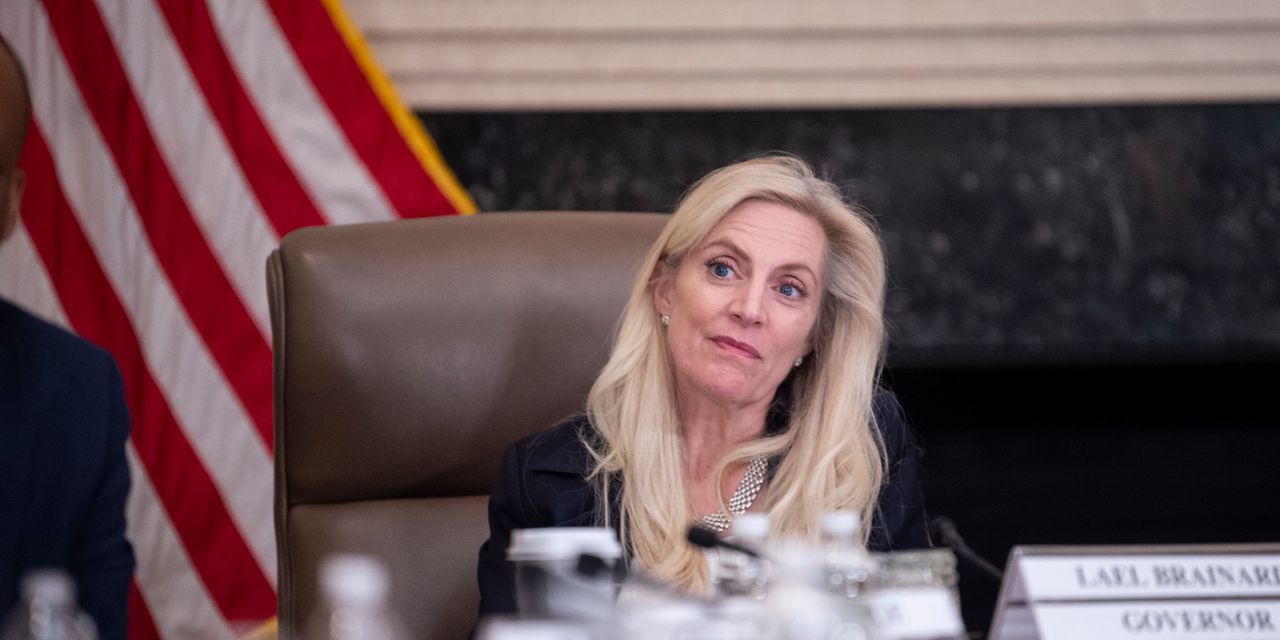
The No. 2 official at the U.S. central bank said Monday that policymakers are likely to soon slow down from the pace of interest rate hikes from the historically large increases seen since June.
“I think it will probably be appropriate soon to choose a slower pace of increases,” Brainard said in an interview with Bloomberg.
“We’ve done a lot,” Brainard added. The Federal Reserve has raised its policy rate almost 400 basis points since March, with four straight 0.75 percentage point hikes since the summer.
Yet Brainard seemed to shy away from specifics about the likely terminal rate of this cycle of rate hikes.
Fed Chairman Jerome Powell said earlier this month that stubborn inflation suggested the Fed might need to raise rates next year to a slightly higher level than the 4.5%-4.75% range they had expected in September.
Exactly what the path of further rate hikes looks like is “hard to say,” Brainard said.
“By moving forward at a pace that’s more deliberate, we’ll be able to assess more data and be better able to adjust the path of rates to bring inflation down,” she said.
As the Fed moves rates higher, the risks to the economy “become more two-sided,” Brainard said, a nod to risks of a possible recession.
In contrast, in a speech Sunday, Fed Governor Christopher Waller noted that the Fed has a “long long way to go” to get inflation down. He said a step down in the pace of tightening was not a “softening” of the central bank’s policy stance.
“We got a ways to go yet, We’re not there,” Waller said.
Read: Fed’s Waller says market has overreacted to consumer inflation data
The Fed Vice Chairman said that the central bank was focused on potential harmful spillovers from the Fed’s rate hikes.
She said the October consumer price inflation data was “reassuring” but only in a preliminary sense.
Stocks were mixed on Monday, with the Dow Jones Industrial Average
DJIA,
up slightly while the Nasdaq
COMP,
was lower. The yield on the 10-year Treasury note
TMUBMUSD10Y,
was up to 3.87%.