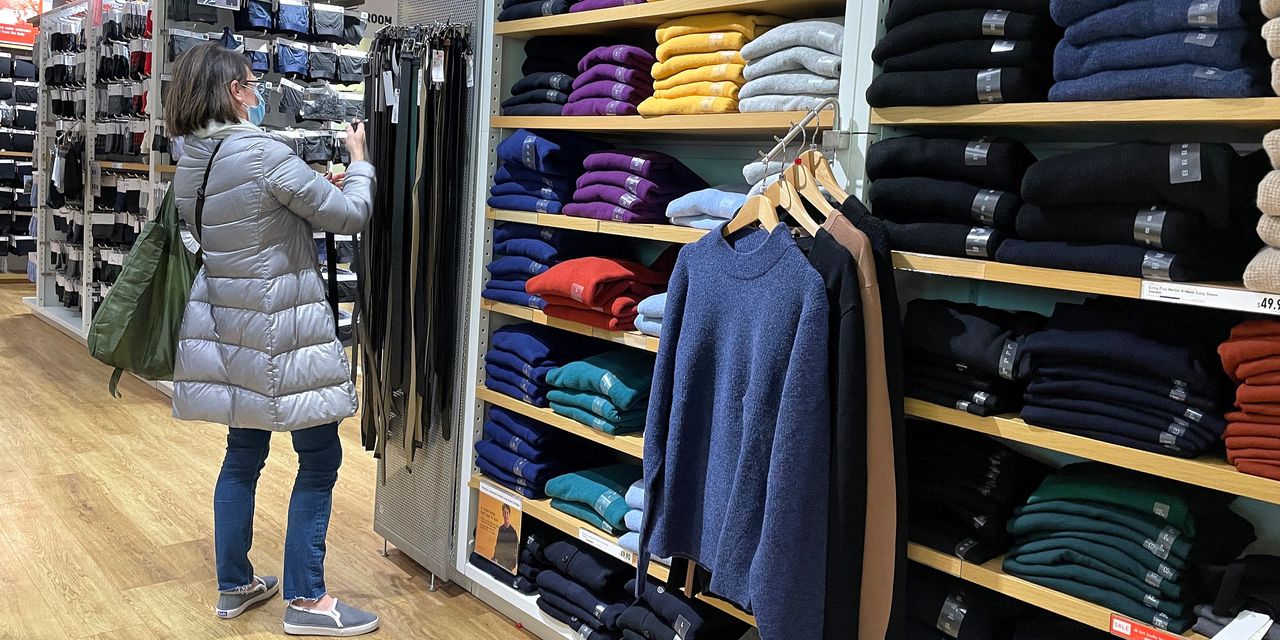
After a chaotic year of lopsided inflation and frenetic markdowns, retail chains are trying to get back to something resembling normal. But recent earnings reports show there is still plenty of room for products that aren’t groceries to stay on the discount rack.
Many large retailers have put a significant dent in the mountains of clothing and stacks of electronics they amassed last year that they couldn’t sell, after warped supply chains staggered product shipments and rising prices made many shoppers more necessity-minded. Inventories for the most recent quarter were down, or at least evened out, at chains like Target Corp.
TGT,
Walmart Inc.
WMT,
and Macy’s Inc.
M,
compared with where they were at the end of 2021.
But some analysts have said retail inventories are still high overall, and signals from executives were still mixed.
John Rainey, Walmart’s chief financial officer, was optimistic, saying “I feel like this year will be more of a normal environment for markdowns — or certainly more normal than what it was last year,” on the big-box chain’s earnings call last month.
Executives at Target, which is more exposed to the whims of discretionary shopping, were not as sanguine. They said last week that they expect “a more promotional environment” up ahead and were planning “more cautiously” on bringing discretionary items — or things that aren’t, say, groceries — to store shelves. The chain also planned rollouts of cheaper items, including its private-label brands.
Previously: Retailers aren’t planning for the one thing everyone’s talking about
Macy’s Chief Executive Jeff Gennette concurred, saying “we believe discretionary spend will be under pressure across income tiers,” with essentials sucking up spending as shoppers struggle more to repay balances on cards and levels of sour debt rise.
Other retailers are still trying to realign their inventories, including at Kohl’s Corp.
KSS,
where inventories were still up 4%. While that’s a much smaller increase than in prior quarters, executives also said they expected discounts from rivals to “remain competitive.” Inventories were also up at Burlington Stores Inc.
BURL,
though executives there said the increase was intentional after the off-price chain found itself with too little inventory.
Other analysts have noted that inventories, broadly, remain bloated, suggesting a longer runway for customers seeking discounts.
“We note that some management teams within our coverage who have already reported Q4 results have suggested that industry promotions may last longer into FY23 than initially thought,” Cowen analyst John Kernan said in a research note last month. “Inventory dollars across the sector are at peak levels over the recent four-year period, reflecting a steady build from the trough experienced early on during the COVID-19 pandemic.”
See also: As consumers pull back on discretionary spending, what’s next for retail?
Heading into this year, analysts said retailers weren’t preparing for a recession. Edward Jones analyst Brian Yarbrough said in an interview that none of the chains he follows have indicated any sudden, sharp turn in that stance.
“No one has raised some red flag, like ‘Hey, we’re really concerned, we’re seeing a massive shift in consumer spending or a big slowdown’ or anything like that,” he said.
“They feel like it’s better to be cautious, and go light on inventories, and try and chase if things turn out better,” he continued. “But I think most of them want to avoid the situation they got into last year, where there was just way too much inventory.”
Last year’s sharp turn in consumer demand caught retailers off-guard. The stimulus boost from 2021 faded, a knotted-up supply chain was still keeping shipping prices higher, and Russia’s invasion of Ukraine drove up food costs. Customers, increasingly forced to choose between needs and wants, trained what spending power they had on the things they needed — like groceries and heating — or things they hadn’t done in a while, like travel and concerts.
That left retailers with loads of toys, laptops, pants and shirts that nobody wanted — after a burst of demand when pandemic restrictions were still in place. Stocks fell. Store chains had to cut prices on those items to maintain consumer interest and work off bloated inventories.
Don’t miss: An earnings recession seems inevitable, but it might not last long
Those effects have fallen disproportionately on low-income shoppers. Barbara Rentler, chief executive at discount retailer Ross Stores Inc.
ROST,
said higher costs of living were “continuing to impact our low-to-moderate-income customer” and said it was “prudent to remain conservative when planning our business.”
“At the same time, the higher-income consumer is also looking for value,” Cowen analyst Oliver Chen said. “And you see that with higher-income share gains at Walmart and even in Costco
COST,
”
Some retailers have tried to put a positive spin on the year ahead. Executives at Burlington said any economic slowdown would “create a greater consumer focus on value, potentially driving some trade-down activity from middle and higher income groups.” And following the pandemic’s electronics boom and bust, executives at Best Buy Co. Inc.
BBY,
cited the need for upgrades and replacements to electronics — and broader tech innovations — as potential sales drivers.
Some stores, to some degree, are embracing a world of cheaper goods. Nordstrom Inc.
JWN,
executives announced last week that the retailer was pulling out of Canada, but opening a bunch more bargain-oriented Rack stores to lure customers. Similar to Target, Macy’s executives said they would “refresh, reimagine and replace” private-label products over the next three years.
Retailers can sell their in-house brands at a lower price because they can get them for a lower price, Yarbrough notes. That’s different from, say, Levi Strauss & Co.’s
LEVI,
jeans, which a retailer would buy from Levi’s at a markup and then mark up itself. But he said there was always a risk of leaning too deep into private-label general merchandise.
“People come into store for brands,” he said. “That’s how you drive people.”