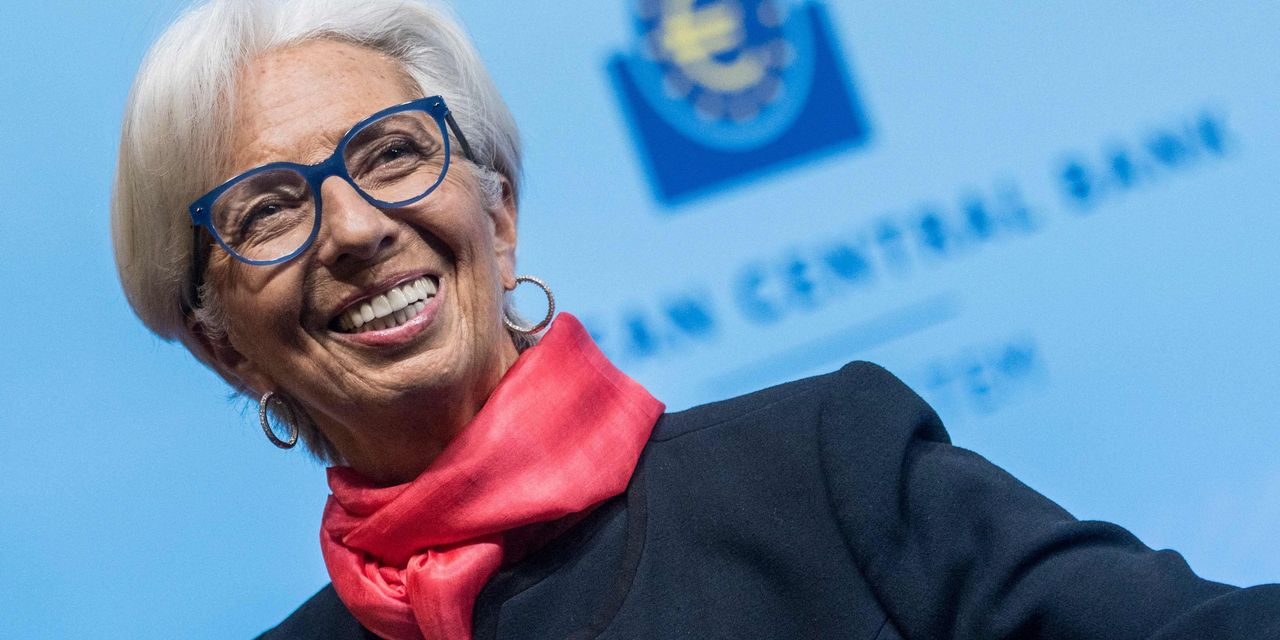
The European Central Bank, as expected, stood pat on Thursday, affirming the path for winding down pandemic-related asset purchases that it laid out in December. But pressure is mounting for an interest rate increase this year in the face of rising inflation pressures.
The Bank of England earlier on Thursday delivered a second rate increase, while the Federal Reserve has signaled it will begin what’s expected to be a series of rate increases in March.
See: Bank of England makes consecutive interest rate increases for first time since 2004
ECB President Christine Lagarde has previously pushed back against market expectations for a rate increase in 2022, but that resolve may be tested when she holds a news conference at 8:30 a.m. Eastern.
A 5.1% eurozone inflation reading for January was much higher than the ECB expected back in December, when staff forecast inflation to average 4.1% in the first quarter. That means Lagarde will have to concede that the ECB’s inflation conditions are closer to being met, said Andrew Kenningham, chief Europe economist at Capital Economics, in a note.
Lagarde, however, is likely to stress that much of the recent rise is due to higher energy prices and that wage agreements remain subdued, though a core inflation reading of 2.3% is uncomfortable, Kenningham said.
As for rate expectations, it’s unlikely Lagarde will “push back too hard” against markets pricing in around 30 basis points worth of hikes by the end of the year.
“This is not a major problem for the economy provided that long-term rate expectations and sovereign yields remain low,” the economist wrote.
The ECB in December announced that asset buying under PEPP would proceed at a slower pace in the first quarter and discontinued at the end of March, while activity under its separate Asset Purchase Program would be boosted from 20 billion euros a month to 40 billion euros in the first quarter and would run at 30 billion euros a month in the second quarter, returning to 20 billion euros in the third quarter, with net asset purchases expected to end before the bank begins raising interest rates. The ECB left rates unchanged, with the discount rate at -0.5%.
The euro
EURUSD,
was down 0.1% versus the U.S. dollar at $1.1288, and has slipped around 0.8% since the beginning of the year as the Fed has adopted a more hawkish tone on rates.
European government bond yields have moved higher, with the rate on the 10-year German government bond
TMBMKDE-10Y,
recently returning to positive territory. It was up 1.3 basis points in recent trade at 0.054%.