Top Wall Street analysts recommend these dividend stocks for regular income

A sign is posted on the exterior of a Verizon store on September 30, 2024 in Daly City, California. 
Justin Sullivan | Getty Images News | Getty Images

As the stock market focuses on major earnings and negotiations on the tariff front, investors seeking a regular income stream continue to look for attractive dividend stocks amid ongoing volatility.

To this end, the analysis of top Wall Street analysts can provide useful insights that can help investors pick companies with solid fundamentals and the ability to pay dividends consistently.  

Here are three dividend-paying stocks, highlighted by Wall Street’s top pros, as tracked by TipRanks, a platform that ranks analysts based on their past performance.

EOG Resources

Oil and gas exploration and production company EOG Resources (EOG) is first on this week’s list. In May, the company announced a deal to acquire Encino Acquisition Partners (EAP) for $5.6 billion. EOG stated that the deal’s accretion to its free cash flow supports a 5% increase in its quarterly dividend, to $1.02 per share, payable on Oct. 31. At an annualized dividend of $4.08 per share, EOG stock offers a dividend yield of 3.4%.

Ahead of EOG Resources’ second-quarter earnings call on Aug. 8, Siebert Williams Shank analyst Gabriele Sorbara reiterated a buy rating on EOG stock with a price forecast of $155. In comparison, TipRanks’ AI analyst has a price target of $138 on EOG stock with an “outperform” rating. Meanwhile, Sorbara stated that he expects EOG to report strong quarterly results on both the operational and financial fronts. 

The five-star analyst believes that investors will pay more attention to EOG’s significant expansion in the Utica shale via the EAP acquisition, as the deal is expected to provide catalysts from the integration, synergies, and execution in the quarters ahead. 

“All in all, we are positive EOG into the print, especially since EOG should be more defensive in the current price environment,” said Sorbara.

The analyst is also bullish on EOG due to its peer-leading shareholder returns, supported by its solid free cash flow generation, best-in-class balance sheet, and the Utica shale expansion. Sorbara expects EOG to maintain its commitment to return at least 70% of free cash flow to shareholders annually via dividends and opportunistic buybacks. He expects $450 million of buybacks for Q2 2025. Overall, Sorbara estimates $976.6 million of capital returns, representing 107.7% of free cash flow and a 6.0% capital returns yield.

Sorbara ranks No. 178 among more than 9,800 analysts tracked by TipRanks. His ratings have been profitable 55% of the time, delivering an average return of 22.5%. See EOG Resources Ownership Structure on TipRanks.

Williams Companies

Energy infrastructure provider Williams Companies (WMB) is the next dividend-paying stock in focus. WMB offers a quarterly dividend of 50 cents per share (annualized dividend of $2.00 per share), reflecting a yield of 3.5%.

Heading into WMB’s Q2 results scheduled for early August, RBC Capital analyst Elvira Scotto reaffirmed a buy rating on the stock with a price target of $63. Interestingly, TipRanks’ AI analyst has a “neutral” rating on WMB stock with a price target of $63. Meanwhile, Scotto lowered the Q2 projections to reflect insights from the conversations with the WMB team, seasonal adjustments to marketing estimates, and RBC’s updated commodity price deck.

Scotto expects sequential decline in commodity prices to be a modest headwind in the second quarter, particularly for WMB’s upstream operations. The analyst expects Q2 results to be impacted by lower quarter-over-quarter marketing contributions due to normal seasonality and higher storage fees, partially offset by contributions from the recent investment in Cogentrix.

On the positive side, Scotto is confident about WMB’s long-term growth, backed by its robust backlog of projects with low build multiples (less than five-times capex to earnings before interest, taxes, depreciation and amortization), with planned in-services dates through 2030. The analyst also expects WMB to benefit from additional behind-the-meter (BTM) projects and the potential revival of the Northeast Supply Enhancement (NESE) pipeline and the Constitution pipeline project.

“Despite its recent selloff, we still view WMB as one of the best positioned companies within our coverage universe to benefit from growing natural gas demand,” said Scotto.

Scotto ranks No. 72 among more than 9,800 analysts tracked by TipRanks. Her ratings have been successful 67% of the time, delivering an average return of 18.5%. See Williams Insider Trading Activity on TipRanks.

Verizon Communications

Finally, let’s look at telecom giant Verizon Communications (VZ). The company delivered solid results for the second quarter of 2025. Verizon raised the lower end of its annual profit guidance, reflecting robust demand for its premium plans and its reaction to the new tax law under the Trump administration.

The company announced a quarterly dividend of $0.6775 per share, payable on Aug. 1. With an annualized dividend of $2.71, VZ stock offers a dividend yield of 6.3%.

In reaction to the Q2 print, Citi analyst Michael Rollins reiterated a buy rating on Verizon stock with a price forecast of $48. Also, TipRanks’ AI analyst has an “outperform” rating on VZ stock with a price target of $49. Rollins noted Verizon’s Q2 performance and the upgrade to the full-year EBITDA and EPS guidance based on the relative strength in the first half of the year.

He added that key performance indicators (KPIs) were mixed and continue to reflect a more promotional competitive backdrop. Notably, Rollins trimmed his postpaid phone subscriber outlook to reflect a year-over-year rise in churn, which is expected to persist in the second half of the year.

“Verizon indicated a more disciplined approach to subscriber acquisition, which is encouraging for competitive dynamics and its financials, albeit likely dilutive to its near-term volume KPIs,” said Rollins.

Despite additional promotional costs and lighter volume, Rollins believes that Verizon is well-positioned to deliver its full-year guidance. Overall, Rollins remains bullish on VZ stock, given its relative value and opportunities for the company to sustain annual financial growth.

Rollins ranks No. 276 among more than 9,800 analysts tracked by TipRanks. His ratings have been successful 68% of the time, delivering an average return of 12.6%. See Verizon Stock Charts on TipRanks.

Top Wall Street analysts are confident about the potential of these 3 stocks

Idrees Abbas | SOPA Images | Lightrocket | Getty Images

The earnings season is on, and investors are paying attention to how the leading companies are faring. However, tariffs and other challenges remain on the minds of investors.

While top Wall Street analysts also watch the quarterly results closely, they generally have a broader focus and assess the company’s ability to navigate short-term difficulties and deliver attractive returns over the long term.

Here are three stocks favored by the Street’s top pros, according to TipRanks, a platform that ranks analysts based on their past performance.

Uber Technologies

First on this week’s list is ride-sharing and delivery platform Uber Technologies (UBER). The company is scheduled to announce its second-quarter results on Aug. 6.

In a preview note on Uber’s Q2 earnings, Evercore analyst Mark Mahaney stated that he expects the company to report a 17% year-over-year growth in gross bookings to $46.8 billion, slightly above the Street’s estimate and within the company’s guidance.

The analyst expects revenue growth of 18%, modestly above the Street’s expectations, and EBITDA (earnings before interest, tax, depreciation, and amortization) of $2.09 billion, in line with the consensus estimate. Mahaney’s estimates are based on favorable industry checks for consumer demand trends, third-party data checks, and Evercore’s non-deal roadshows (NDR) with UBER management. The analyst’s expectations are also backed by Evercore’s 8th Annual U.S. Ridesharing Survey and insights from its NDR with DoorDash management.

Despite the stellar year-to-date rally, Mahaney stated that UBER remains a top pick for Evercore. He attributed the stock’s rise to multiple factors, including better-than-expected growth in Mobility and Delivery bookings over the past two quarters and positive key user metrics and the impressive rollout of Waymo in Austin on the Uber network.

“Key to our Long Thesis – we believe there will be ‘more Austins’ – more successful robotaxi partner rollouts for Uber, and not just with Waymo, over the next 12-18 months,” said Mahaney and reaffirmed a buy rating on UBER stock with a price forecast of $115. Meanwhile, TipRanks’ AI analyst has an “outperform” rating on UBER stock with a price forecast of $108.

Mahaney ranks No. 219 among more than 9,800 analysts tracked by TipRanks. His ratings have been profitable 60% of the time, delivering an average return of 15.9%. See Uber Technologies Statistics on TipRanks.

Alphabet

We move to Alphabet (GOOGL), the parent company of search engine giant Google. In a Q2 earnings preview of the companies in the internet space, JPMorgan analyst Doug Anmuth reaffirmed a buy rating on GOOGL stock and increased the price forecast to $200 from $195. In comparison, TipRanks’ AI analyst has a price target of $199 on GOOGL stock with an “outperform” rating. Anmuth explained that his higher estimates mainly reflect better channel checks and third-party data as well as more favorable forex changes.

Anmuth added that his revised price target is based on a multiple of about 20-times his 2026 GAAP earnings per share (EPS) estimate of $9.89. The analyst believes that Alphabet deserves to trade at a premium to the S&P 500, given that it is one of the few companies in this index with a double-digit percent revenue and EPS growth on a very large base. He also highlighted the company’s more than 30% GAAP operating income margin.

“We believe Alphabet’s fundamentals are solid and the company will remain both a driver of and primary beneficiary of an increasingly digital economy & advances in Generative AI,” said Anmuth.

He highlighted Alphabet’s continued focus on innovation. Anmuth sees a healthy runway across Search and YouTube ads, with artificial intelligence (AI) fueling higher return on investment (ROI) and a shift in TV dollars to online channels. Furthermore, he said that Alphabet’s non-ad businesses, like Cloud and YouTube subscription services, still have substantial scope to grow. Anmuth also said that the companies within Alphabet’s Other Bets division, including Waymo and Verily, provide potential upside.

Overall, Anmuth is bullish about Alphabet’s ability to innovate around generative AI, control costs and deliver impressive revenue growth.

Anmuth ranks No. 56 among more than 9,800 analysts tracked by TipRanks. His ratings have been successful 65% of the time, delivering an average return of 21.6%. See Alphabet Stock News and Insights on TipRanks.

Meta Platforms

Anmuth is also bullish on social media giant Meta Platforms (META) and raised the price target for the stock to $795 from $735 while maintaining a buy rating ahead of the company’s Q2 results. In comparison, TipRanks’ AI analyst has an “outperform” rating on META stock with a price target of $798.

The analyst explained that the upgraded price target is based on about 27-times his 2026 GAAP EPS estimate of $29.53. Anmuth believes that META stock’s premium valuation to the S&P 500 is justified, as he has greater confidence in the company’s robust top-line growth and ongoing cost efficiencies.

“We believe Meta’s virtual ownership of the social graph, strong competitive moat, and focus on the user experience position it to become an enduring blue-chip company built for the long term,” said Anmuth.

The analyst noted Meta Platforms’ strength in terms of scale, growth, and profitability, with its extensive reach and engagement continuing to drive network effects. Anmuth also noted the company’s targeting abilities that offer huge value to advertisers.

Anmuth stated that Meta will invest in the massive growth opportunities offered by the two big tech waves – AI and Metaverse, while also focusing on cost discipline. Despite significant infrastructure investments, the analyst expects Meta Platforms to deliver strong revenue and EPS growth in 2026. He noted Meta’s solid track record in delivering returns on higher spending. See Meta Platforms Insider Trading Activity on TipRanks.

Coinbase steps into consumer market with stablecoin-powered ‘everything app’ that goes beyond trading

foreground of header

Watch Daily: Monday – Friday, 3 PM ET

  • The “Base App,” which replaces Coinbase Wallet, will combine wallet, trading and payment functions as well as social media, messaging and support for mini apps.
  • The intent is to expand Coinbase’s reach to a new subset of consumers who aren’t necessarily interested in buying or trading crypto but could still reap the benefits of the so-called on chain economy.
  • The Base App will run on Coinbase’s in-house built public blockchain, also called Base. In-app transactions will be powered by USDC.
Dominika Zarzycka | Nurphoto | Getty Images

Coinbase unveiled Wednesday an “everything app” designed to bring more people into the crypto economy.

The “Base App,” which replaces Coinbase Wallet, will combine wallet, trading and payment functions as well as social media, messaging and support for mini apps – all running on the company’s homegrown public blockchain network Base, which is built on Ethereum.

So-called super apps like WeChat and Alipay – which bundle several different services and functionalities into a single mobile app – have long been viewed as the holy grail of fintech by the industry. They’re central to everyday life in China but haven’t been successfully replicated in the West. Meta Platforms and X have made attempts to realize that vision, integrating payments, messaging and social content, among other things.

For Coinbase, the intent is to expand its reach to a new subset of consumers who aren’t necessarily interested in buying or trading crypto, the company’s core business. Over-reliance on that revenue stream has been a sticking point for the company, and some analysts view the Base blockchain as a way for it to drive utility in crypto beyond speculative trading.

Until now, enthusiasm around the Base network has been confined to builders and developers keen to use the technology. In perhaps the highest profile example, JPMorgan said last month that it’s launching a so-called deposit token on the Base blockchain.

Base is often touted for its ability to settle a payment in less than a second for less than a cent, which its fans expect will help the network grow in a way other crypto-based payments efforts haven’t.

Now, Coinbase hopes to tap into an opportunity to settle payments on the Base network that go beyond trading and payments. With the introduction of the everything app, the company is emphasizing the opportunity for a new economic model for content creators in particular – one that might give them more direct and diverse monetization options for their content as well as more control over their identity and data.

The new app will be powered by two key functions also being introduced: an identity verification system called Base Account and an express checkout system for payments with the Circle-issued USDC stablecoin, called Base Pay.

Coinbase will fund creator rewards and waive USDC transaction fees within chats in the app as part of the effort to bring more users on chain. It is not expected to generate significant revenue right away.

The new consumer app comes as the crypto industry and Coinbase, in particular, embrace a boom in product launches and rollouts thanks to the pro-crypto policies of the Trump administration and more clearly defined crypto regulations expected from Congress — perhaps as soon as this week. Last month Coinbase launched its first credit card with American Express and Shopify rolled out USDC-powered payments through Coinbase and Stripe.

Coinbase CEO Brian Armstrong has said both have a “stretch goal” to make USDC the number 1 stablecoin in the world, a position currently held by Tether’s USDT, and that he aims to make Coinbase “the number one financial services app in the world” in the next five to 10 years.

Don’t miss these cryptocurrency insights from CNBC Pro:

Peter Thiel just bought a big stake in Tom Lee’s ether company and the shares are surging

foreground of header

Watch Daily: Monday – Friday, 3 PM ET

Peter Thiel, president and founder of Clarium Capital Management LLC, holds hundred dollars bills as he speaks during the Bitcoin 2022 conference in Miami, Florida, U.S., on Thursday, April 7, 2022. 
Eva Marie Uzcategui | Bloomberg | Getty Images
Stock chart icon

hide content
Bitmine (BMNR) 1-month

The current wave of interest in Ethereum and related assets follows an announcement by Robinhood that it will enable trading of tokenized U.S. stocks and ETFs across Europe, and a groundswell of interest in stablecoins throughout June following Circle’s wildly successful IPO and ongoing progress in Congress on the Senate’s proposed stablecoin bill, the GENIUS Act.

The price of ether itself also continued its rally, up more than 4% Wednesday. The coin has doubled in price in the past three months.

Thiel is a venture capitalist and hedge fund manager best known as a cofounder of both PayPal and Palantir and an early investor in Facebook. Founders Fund was an investor in Tagomi, the crypto brokerage acquired by Coinbase in 2020, and Polymarket, the prediction market built on Ethereum.

Don’t miss these cryptocurrency insights from CNBC Pro:

Top Wall Street analysts are upbeat about these dividend-paying stocks

Budrul Chukrut | Lightrocket | Getty Images

Optimism about the strong growth opportunities presented by the ongoing artificial intelligence (AI) boom has been tempered by tariff-related distractions and macroeconomic challenges.

Against this uncertain backdrop, investors looking for consistent income can add attractive dividend-paying stocks to their portfolios, and studying top Wall Street analysts can offer useful insights into picking the right dividend payers.

Here are three dividend-paying stocks, highlighted by Wall Street’s top pros, as tracked by TipRanks, a platform that ranks analysts based on their past performance

ConocoPhillips

Oil and gas exploration and production company ConocoPhillips (COP) is this week’s first dividend pick. The company distributed $2.5 billion to shareholders in the first quarter of 2025 via $1.5 billion of share repurchases and $1.0 billion in dividends. At a quarterly dividend of $0.78 per share (annualized dividend of $3.12), COP pays a dividend yield of 3.3%.

In a research note on the third-quarter update on RBC Capital’s Top 30 Global Ideas for 2025, analyst Scott Hanold reiterated a buy rating on ConocoPhillips with a price target forecast of $115. The analyst expects COP to outperform its large-cap exploration and production peers.

“COP has a returns-focused value proposition, a strong balance sheet, and peer-leading distributions,” Hanold said.

The analyst believes that ConocoPhillips is well-positioned to generate competitive free cash flow (FCF) through various commodity price cycles. Hanold highlighted that the company has a global and diversified asset base, which gives it spending flexibility to deliver industry-leading shareholder returns through economic and commodity price cycles.

Moreover, Hanold expects ConocoPhillips’ vast position in the Permian basin to enable greater FCF generation, while providing asset diversity and development flexibility. He noted that the company has a low break-even point of below $40/bbl (WTI), where it can fund its production maintenance capital and dividends. The analyst also noted COP’s solid balance sheet, which allows it to enhance shareholder value.

Hanold ranks No. 12 among more than 9,800 analysts tracked by TipRanks. His ratings have been successful 71% of the time, delivering an average return of 31.2%. See ConocoPhillips Insider Trading Activity on TipRanks.

U.S. Bancorp

U.S. Bancorp (USB) is another stock that is a part of RBC Capital’s list of Top 30 Global Ideas for 2025. It is the parent company of the U.S. Bank and offers customers financial services through a diversified mix of businesses, including consumer banking, commercial banking and wealth management, among others.

With a quarterly dividend of $0.50 per share (annualized dividend of $2 per share), USB offers a dividend yield of 4.2%.

RBC analyst Gerard Cassidy reaffirmed a buy rating on USB stock with a 12-month price target of $50. He highlighted several positives supporting his bullish stance, including the bank’s new leadership. Cassidy noted that Gunjan Kedia, who succeeded Andy Cecere as the CEO of U.S. Bancorp in April 2025, has reiterated the company’s financial goals, including a target of delivering more than 200 basis points of operating leverage. USB reported 270 basis points of operating leverage in the first quarter of 2025.

Cassidy also highlighted that USB has consistently been one of the best-performing banks in the U.S., as reflected in an attractive compound annual growth rate (CAGR) in shareholder return generated over the past 20 years. That growth is mainly driven by the bank’s focus on increasing its tangible book value and dividends per share. Notably, U.S. Bancorp has consistently returned as much as 80% of its earnings every year through stock buybacks and dividends.

Cassidy also cited USB’s strong asset quality and underwriting skills. The long-time analyst believes that “following general underperformance over the last two years, USB is at an inflection point in 2025 where headwinds are becoming tailwinds.” The improvement is driven by the investments made by the bank over the past decade, which are expected to fuel revenue growth ahead of expense growth in years to come, Cassidy said.

Cassidy ranks No. 24 among more than 9,800 analysts tracked by TipRanks. His ratings have been profitable 72% of the time, delivering an average return of 21%. See U.S. Bancorp Statistics on TipRanks.

HP Inc.

Finally, dividend-paying technology company HP (HPQ) declared a quarterly dividend of $0.2894 per share last month, payable on October 1, the fourth dividend in the company’s fiscal year 2025. At an annualized dividend of $1.1576 per share, HPQ yields of 4.5%.

Despite tariffs and other ongoing challenges, Evercore analyst Amit Daryanani reiterated a buy rating on HPQ stock with a price target of $29. Following an investor webinar with HP’s chief enterprise officer Ernest Nicolas, the analyst highlighted key takeaways supporting his bullish stance.  

Daryanani noted that HP is successfully diversifying and is on track to achieve its target of manufacturing 90% of all U.S.-bound products outside China. Much of the manufacturing will remain in Asia and take place in countries such as Vietnam, Thailand, and Indonesia, along with some planned in Mexico. The analyst added that HP is attempting to close the gap with rivals by adopting a multi-site approach to manufacturing and optimizing its supply chain.

HP expects the “tariff environment to remain fluid,” but management believes the company is now better equipped to face tariff-related challenges, Daryanani said.

HP also remains focused on generating $2 billion in gross annual run-rate savings from its Future Ready cost savings plan, the analyst said. The plan includes various initiatives, including internal artificial intelligence tools that could drive productivity and efficiencies.

Daryanani ranks No. 174 among more than 9,800 analysts tracked by TipRanks. His ratings have been profitable 64% of the time, delivering an average return of 15.3%. See HP Ownership Structure on TipRanks.

Pentagon to become largest shareholder in rare earth miner MP Materials; shares surge 40%

  • The Defense Department will buy $400 million of preferred stock in MP Materials.
  • MP Materials owns the only operational rare earth mine in the U.S. at Mountain Pass, California.
  • It will build a second magnet manufacturing facility in the U.S. with the support of the Pentagon.
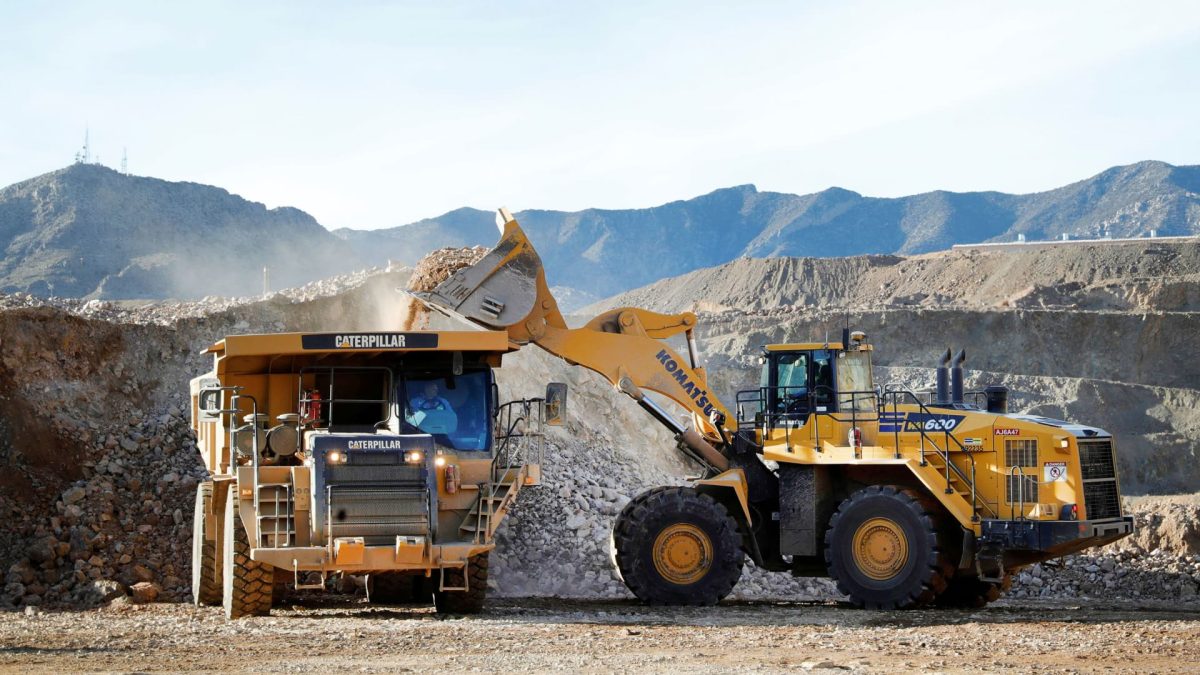
A wheel loader operator fills a truck with ore at the MP Materials rare earth mine in Mountain Pass, California, January 30, 2020.
Steve Marcus | Reuters

The Defense Department will become the largest shareholder in rare earth miner MP Materials after agreeing to buy $400 million of its preferred stock, the company said Thursday.

MP Materials owns the only operational rare earth mine in the U.S. at Mountain Pass, California. The company said it will use the proceeds of the Pentagon’s investment to expand its rare earths processing capabilities and its magnet production capacity.

Shares of MP Materials jumped more than 40% premarket on the news.

Interior Secretary Doug Burgum said in April that the Trump administration was considering making direct equity investments in critical mineral companies to break U.S. dependence on China.

“This initiative marks a decisive action by the Trump administration to accelerate American supply chain independence,” MP Materials CEO James Litinsky said in a statement.

The Pentagon is buying a newly created class of preferred shares that are convertible into MP Materials’ common stock. It is also buying a warrant that allows it to purchase additional common stock in the rare earth miner. The convertible shares and the warrant for common stock would represent about a 15% stake in MP Materials as of July 9.

MP Materials will build a second magnet manufacturing facility in the U.S. to serve defense and commercial customers with support from the Pentagon. The facility is expected to start commissioning in 2028 and have a rare earth magnet manufacturing capacity of 10,000 metric tons.

The Defense Department will ensure that 100% of the magnets produced at the facility, called 10X, are purchased by defense and commercial customers for a decade-long period after the plant is built.

The Pentagon will also establish a price floor for 10 years of $110 per kilogram for NdPr products that are stockpiled or sold by MP Materials. NdPr is a rare earth compound used to make permanent magnets.

JPMorgan and Goldman Sachs are providing $1 billion to help finance the manufacturing facility. MP Materials also expects to receive a $150 million loan from the Pentagon to expand its rare eart h separation capabilities at Mountain Pass.

Top Wall Street analysts are pounding the table on these 3 stocks

Dado Ruvic | Reuters

President Donald Trump’s announcement of a U.S.-Vietnam trade deal and a solid June jobs report lifted stocks last week, but investors can still find plenty of opportunities to snap up names at attractive levels.

The recommendations of top Wall Street analysts can help inform investors as they search for the stocks of companies with strong fundamentals and solid growth opportunities.  

Here are three stocks favored by the Street’s top pros, according to TipRanks, a platform that ranks analysts based on their past performance.

Dell Technologies

This week’s first stock pick is Dell Technologies (DELL), a provider of IT hardware, software, and services.

Following meetings with management, Evercore analyst Amit Daryanani reiterated a buy rating on Dell with a price target of $150. Meanwhile, TipRanks’ AI analyst has an “outperform” rating on DELL with a price target of $128.

Notably, Daryanani stated that he came away from the meetings incrementally positive about Dell’s ability to deliver high-single-digit revenue growth and a double-digit increase in earnings per share (EPS) and free cash flow (FCF). His optimism is backed by the initiatives taken by the company over the past two years to optimize its cost structure and tailwinds from key AI (artificial intelligence) investments.

Among the key takeaways from the meetings, the analyst highlighted that the AI server margins are turning out to be better than initially expected, with Dell earning a premium compared to rivals while delivering impressive growth. He also pointed out the company’s innovations in its infrastructure offerings, with its internal liquid cooling capabilities becoming a more vital part of its strategy.

Daryanani added that Dell expects to benefit from acceleration in enterprise AI adoption over the next five to seven years. In fact, the company believes that higher-margin enterprise customers could account for the vast majority of AI server sales over time. Daryanani also noted Dell’s confidence about navigating tariff woes, given that it “believes its diversified and global footprint is an advantage over its competitors.”

Daryanani ranks No. 187 among more than 9,600 analysts tracked by TipRanks. His ratings have been profitable 63% of the time, delivering an average return of 14.8%. See Dell Technologies Stock News and Insights on TipRanks.

Trade Desk

We move to Trade Desk (TTD), a cloud-based advertising platform that providers advertisers with cutting-edge technology to find new audiences and grow their brands.

Recently, Evercore analyst Mark Mahaney upgraded Trade Desk stock to Buy from Hold with a price forecast of $90. Interestingly, TipRanks’ AI analyst has an “outperform” rating on TTD stock, but with a lower price target of $83. Mahaney views the pullback in TTD stock as an attractive buying opportunity “to get involved again in what has proved over time to be one of the highest quality and most consistent performers across the Internet landscape.”

Explaining his bullish stance, Mahaney stated that recent checks have indicated that online ad demand sentiment has clearly improved since April/May, though uncertainty about the second half of the year remains significant. He added that the checks reflect a clear improvement in Trade Desk’s execution. Also, solid product announcements, like that of Deal Desk, helped address some concerns about the transition from the company’s legacy platform Solimar to the AI-powered Kokai platform.

Mahaney mentioned that checks indicated a clear improvement in the company’s execution, both on product and go-to-market strategy. While the analyst acknowledged increasing competition from Amazon’s demand-side platform (DSP), he highlighted that Google’s DV360 and not Trade Desk is more likely to be impacted due to its overlap with the areas where AMZN is strong.   

Finally, Mahaney thinks that Trade Desk’s set-ups for the remainder of fiscal 2025 look quite achievable, with his billings analysis suggesting that the company is very likely to exit 2025 at premium growth levels (excluding political spend). He sees significant catalysts for 2026 such as the World Cup, the Winter Olympics and the full-year Kokai impact.

Mahaney ranks No. 214 among more than 9,600 analysts tracked by TipRanks. His ratings have been successful 60% of the time, delivering an average return of 16.0%. See Trade Desk Ownership Structure on TipRanks.

Amazon

This week’s third pick is e-commerce and cloud computing giant Amazon (AMZN). In a research note dated July 1, Jefferies analyst Brent Thill reaffirmed a buy rating and increased the Amazon stock price forecast to $255 from $250. Meanwhile, TipRanks’ AI analyst has assigned an “outperform” rating on AMZN stock with a price target of $233.

Thill raised his price target after Jefferies’ proprietary survey of nearly 700 U.S. consumers in mid-/late June indicated that Amazon “remains resilient despite price increases related to tariffs, with stable spend levels and upside if pricing on other websites becomes more expensive.”

The analyst noted that although 80% of the respondents are concerned about prices, the survey reflected a stable spending pattern by most Amazon shoppers (62% spent the same or more in the past three months). However, the survey noted some cost-conscious behavior, as 31% spent less in the past three months.

Thill highlighted that the survey also reflected that Amazon Prime remains the most popular membership and a major loyalty driver for the company. Notably, 73% of respondents reported having a Prime membership, compared to 26% for rival Walmart. He also noted Amazon’s superior positioning on fast and free shipping, selection, and low prices.

The analyst said that given the heightened focus on prices, Amazon’s Prime Day event could turn out to be more popular and impactful by running for four days instead of two (from July 8 to July 11 vs. July 16 to July 17 in 2024) across 20 countries. He expects the event to result in incremental Prime memberships, particularly among students and young adults ages 18 to 24 via six-month extended free trials.

Thill ranks No. 109 among more than 9,600 analysts tracked by TipRanks. His ratings have been successful 67% of the time, delivering an average return of 15.2%. See Amazon Insider Trading Activity on TipRanks.

Cliff Asness’ AQR sees multiple hedge funds up double digits in 2025, beating the market

  • AQR Capital Management’s Apex strategy rallied 11.4% in the first six months of the year, according to a person familiar with the fund’s returns.
  • AQR’s long-short Delphi equity fund gained 11.6% net of fees in the first half of 2025, the person said.
  • Its alternative trend-following Helix strategy has returned 7.4% so far this year, the person said.
Cliff Asness.
Chris Goodney | Bloomberg | Getty Images

AQR Capital Management took advantage of a volatile first half of 2025, with a duo of hedge funds doubling the S&P 500’s return.

The Apex strategy from Cliff Asness’ firm, which combines stocks, macro and arbitrage trades and has $4.3 billion in assets under management, rallied 11.4% in the first six months of the year, according to a person familiar with AQR’s returns who asked to be anonymous as the information is private.

AQR’s long-short Delphi equity fund, with $4.1 billion in assets under management, gained 11.6% net of fees in the first half of 2025, the person said.

The stock market staged a stunning rebound this year even as uncertainty remains amid an aggressive trade war and Middle East escalation. The S&P 500 has rebounded from a near 20% sell-off in April, going on to score a new record high on Friday and again on Monday. The equity benchmark is up 5.3% year to date.

AQR’s alternative trend-following Helix strategy has returned 7.4% so far this year, the person said.

Asness co-founded AQR in 1998 after a stint at Goldman Sachs. He and his partners established the quant-driven firm’s investment philosophy at the University of Chicago’s Ph.D. program, focusing on value and momentum strategies.

The firm has successfully expanded into multistrategy approaches in recent years. AQR has $142 billion in assets under management, up from about $99 billion at the start of 2024.

AQR declined to comment.

Don’t miss these insights from CNBC PRO

Wall Street strategist Tom Lee is aiming to create the MicroStrategy of Ethereum

foreground of header

Watch Daily: Monday – Friday, 3 PM ET

  • Tom Lee has been appointed chairman of the board of directors of bitcoin miner BitMine Immersion Technologies, effective Monday.
  • BitMine announced a $250 million private placement to implement a buying strategy around ether, which it aims to make its primary treasury reserve asset.
  • Lee’s appointment comes amid a groundswell of interest from traditional financial institutions around stablecoins, many of which run on the Ethereum network.
Adam Jeffery | CNBC

Fundstrat’s Tom Lee is joining a little known bitcoin miner aiming to become the biggest publicly traded holder of ether.

Lee, a high-profile market strategist known for his prescient bitcoin price forecasts and stock predictions, has been appointed chairman of the board of directors of BitMine Immersion Technologies, effective Monday. The company also announced a $250 million private placement to implement a buying strategy around ether, which it aims to make its primary treasury reserve asset while continuing with its core bitcoin mining business.

Lee’s appointment comes amid a groundswell of interest around stablecoins following the successful IPO of stablecoin issuer Circle at the beginning of the month and positive momentum pushing potential stablecoin legislation through Congress.

“Stablecoins have proven to be the ‘ChatGPT’ of crypto, leading to rapid adoption by consumers, merchants and financial services providers,” Lee said in a statement. “Ethereum is the blockchain where the majority of stablecoin payments are transacted … and thus, ETH should benefit from this growth.”

The company will monitor the value of ether held per company share as a key performance metric going forward, Lee added, similar to MicroStrategy’s bitcoin-per-share metric “BTC Yield.” BitMine can increase the value of ETH held per share “by a combination of reinvestment of the company’s cash flows, capital markets activities, and by the change in value of ETH,” according to Lee.

Companies are increasingly looking past bitcoin for crypto treasury management strategies. BitMine joins the publicly listed betting platform SharpLink Gaming, which initiated an ether treasury strategy in May and appointed Ethereum co-founder Joseph Lubin as chairman of its board of directors. DeFi Development is focused on a similar strategy for the Solana token.

Ahead of this transaction, Bitmine Immersion had a very tiny market value of just $26 million with lightly traded shares that were down 45% on the year.

Don’t miss these cryptocurrency insights from CNBC Pro:

Top Wall Street analysts like these 3 dividend stocks for enhanced returns

A sign sits in front of a McDonald’s restaurant on May 13, 2025 in Chicago, Illinois.
Scott Olson | Getty Images

The S&P 500 rose to a fresh record on Friday, but macro uncertainties persist. Investors may want to consider dividend-paying stocks as a way to enhance returns in the event of choppy markets.

Tracking the stock picks of top Wall Street analysts can help investors select attractive dividend stocks, given that these experts assign their ratings after an in-depth analysis of a company’s fundamentals and its ability to generate solid cash flows to consistently pay dividends.

Here are three dividend-paying stocks, highlighted by Wall Street’s top pros, as tracked by TipRanks, a platform that ranks analysts based on their past performance.

McDonald’s

Fast-food chain McDonald’s (MCD) is this week’s first dividend pick. The company offers a quarterly dividend of $1.77 per share. With an annualized dividend of $7.08 per share, MCD stock offers a dividend yield of 2.4%. It is worth noting that McDonald’s has increased its annual dividend for 49 consecutive years and is on track to becoming a dividend king.

Recently, Jefferies analyst Andy Barish reiterated a buy rating on McDonald’s stock with a price target of $360. The analyst believes that MCD stock is a buy on a pullback. Meanwhile, TipRanks’ AI analyst has an “outperform” rating on McDonald’s stock and a price target of $342.

Barish sees near-term acceleration in McDonald’s U.S. same-store sales (SSS) and medium-term acceleration in unit growth as the major drivers for the stock, which would help narrow the current valuation gap compared to rivals Yum Brands and Domino’s. The analyst also noted improved international SSS, as the company remains a trade-down beneficiary due to its value proposition and low-price point combos.

Among other positives, Barish mentioned brand power and competitive advantages in size, scale, advertising, supply chain and most up-to-date chain of restaurants. He is also optimistic about MCD due to its defensive qualities and brand positioning during uncertain times, higher visibility in delivering low-single to mid-single digit SSS compared to rivals, acceleration of global unit growth to 4% to 5%, category-high operating margins and massive free cash flow generation to support dividends and repurchases.

“Despite a soft 1Q and well-known pressures on the low-end consumer, MCD is executing well by balancing value, innovation, and marketing,” said Barish.

Barish ranks No. 591 among more than 9,600 analysts tracked by TipRanks. His ratings have been profitable 57% of the time, delivering an average return of 9.9%. See McDonald’s Ownership Structure on TipRanks.

EPR Properties

We move on to EPR Properties (EPR), a real estate investment trust (REIT) that is focused on experiential properties such as movie theaters, amusement parks, eat-and-play centers and ski resorts. EPR recently announced a 3.5% increase in its monthly dividend to $0.295 per share. At an annualized dividend of $3.54 per share, EPR stock offers a dividend yield of 6.2%.

Following an extensive visit to EPR’s corporate headquarters and meetings with some teams in the company, Stifel analyst Simon Yarmak upgraded EPR stock to buy from hold and increased the price target to $65 from $52. TipRanks’ AI analyst also has an “outperform” rating on EPR with a price target of $61.

Yarmak turned bullish on EPR, noting the recent rise in the stock and improvements in the cost of capital. He said that the company can “once again return to reasonable external growth.”

Specifically, the analyst estimates that year to date, EPR’s weighted average cost of capital (WACC) has improved to about 7.85% from nearly 9.3%. At these improved levels, Yarmak said that he thinks the company can start aggressively making more acquisitions and boost external growth.

Moreover, Yarmak highlighted the continued improvement in the fundamentals of the theatre industry and expects percentage rent to enhance EPR Properties’ earnings over the next several years. Meanwhile, the improved cost of capital is enabling management to look at other external growth opportunities, mainly golf assets and health and wellness assets.

Yarmak ranks No. 670 among more than 9,600 analysts tracked by TipRanks. His ratings have been profitable 58% of the time, delivering an average return of 8.2%. See EPR Properties Stock Charts on TipRanks.

Halliburton

The third stock on this week’s dividend list is Halliburton (HAL), an oilfield services company that provides products and services to the energy industry. HAL offers a quarterly dividend of 17 cents per share. At an annualized dividend of 68 cents per share, Halliburton stock’s dividend yield stands at 3.3%.

Following a virtual investor meeting with management, Goldman Sachs analyst Neil Mehta reaffirmed a buy rating on Halliburton stock with a price target of $24. Also, TipRanks’ AI analyst has an “outperform” rating on HAL stock with a price target of $23.

While management acknowledged near-term risks to the North American business, Mehta noted that about 60% of HAL’s revenue comes from international markets and presents a relative degree of resilience, which is not priced into the stock. Halliburton expects continued softness in certain geographic locations such as Mexico, Saudi Arabia and Iraq. However, most of HAL’s international rigs are exposed to unconventional drilling, and management does not expect these rigs to experience large suspensions.

Interestingly, management expects “idiosyncratic growth” from four key areas: unconventional completion opportunities in Argentina and Saudi Arabia, market share growth in directional drilling, intervention opportunities as operators are more likely to spend greater time optimizing existing assets than developing greenfield assets, and artificial lift opportunities. Mehta expects these opportunities to enhance margins and support strong free cash flow conversion, making HAL stock attractive at these levels.

Despite the expected softness in pricing in North America, Halliburton expects to maintain a premium to the market due to its differentiated Zeus technology and the long-term nature of its electric contracts, noted the analyst.

Mehta ranks No. 541 among more than 9,600 analysts tracked by TipRanks. His ratings have been successful 60% of the time, delivering an average return of 9.2%. See Halliburton Technical Analysis on TipRanks.

Financial News

Daily News on Investing, Personal Finance, Markets, and more!

Financial News

Policy(Required)