£10,000 invested in Tesla stock 2 weeks before the US election is now worth…

The US election took place on 5 November 2024, and, as we all know, was won by Elon Musk ally Donald Trump. £10,000 invested in Tesla (NASDAQ:TSLA) stock two weeks before Trump’s election would now be worth £12,723, representing a significant 27% increase in value over the past five months. The pound is pretty much flat against the dollar over the period, so there’s no need to factor in exchange rate fluctuations.

What’s been going on?

Despite the gains over the period, it’s been a roller-coaster ride for shareholders. Initially, the stock jumped following Donald Trump’s victory in the US presidential election. Tesla CEO, Musk, had publicly supported Trump’s campaign and was seemingly ready to play an important role in the administration — we now know that role is with DOGE (the Department of Government Efficiency).

Tesla’s share price rocketed 38% in November 2024, but that was just the start. The stock peaked in December, just 2% below $500 a share. This partially reflected the belief that with Musk part of the administration, he would be able to secure regulatory approval for his autonomous driving project — this is critical to Tesla’s value proposition. What’s more, there was some belief that Trump’s policy would support the US car manufacturing industry.

The collapse

However, the euphoria was short-lived. Since the beginning of 2025, Tesla’s stock has crashed. To start with, Trump’s tariffs have endangered Musk’s supply chain, with China, Canada, and Mexico first in the firing line. The administration has also become largely unpopular overseas due to its hard bargaining/some may say blackmail.

Illustrating this, Danish pension funds, AkademikerPension, has officially blacklisted Tesla and sold off all its shares in the automaker. While the fund specifically highlighted issues with Musk, it’s worth noting that Trump has demanded the country hand over Greenland to the US.

But it hasn’t all been Trump’s fault. Musk has seen his public approval rating plummet in recent months with the often-eccentric billionaire firing huge numbers of federal workers. What I call the ‘Tesla salute’ didn’t go down all that well, either. Sales figures have also disappointed.

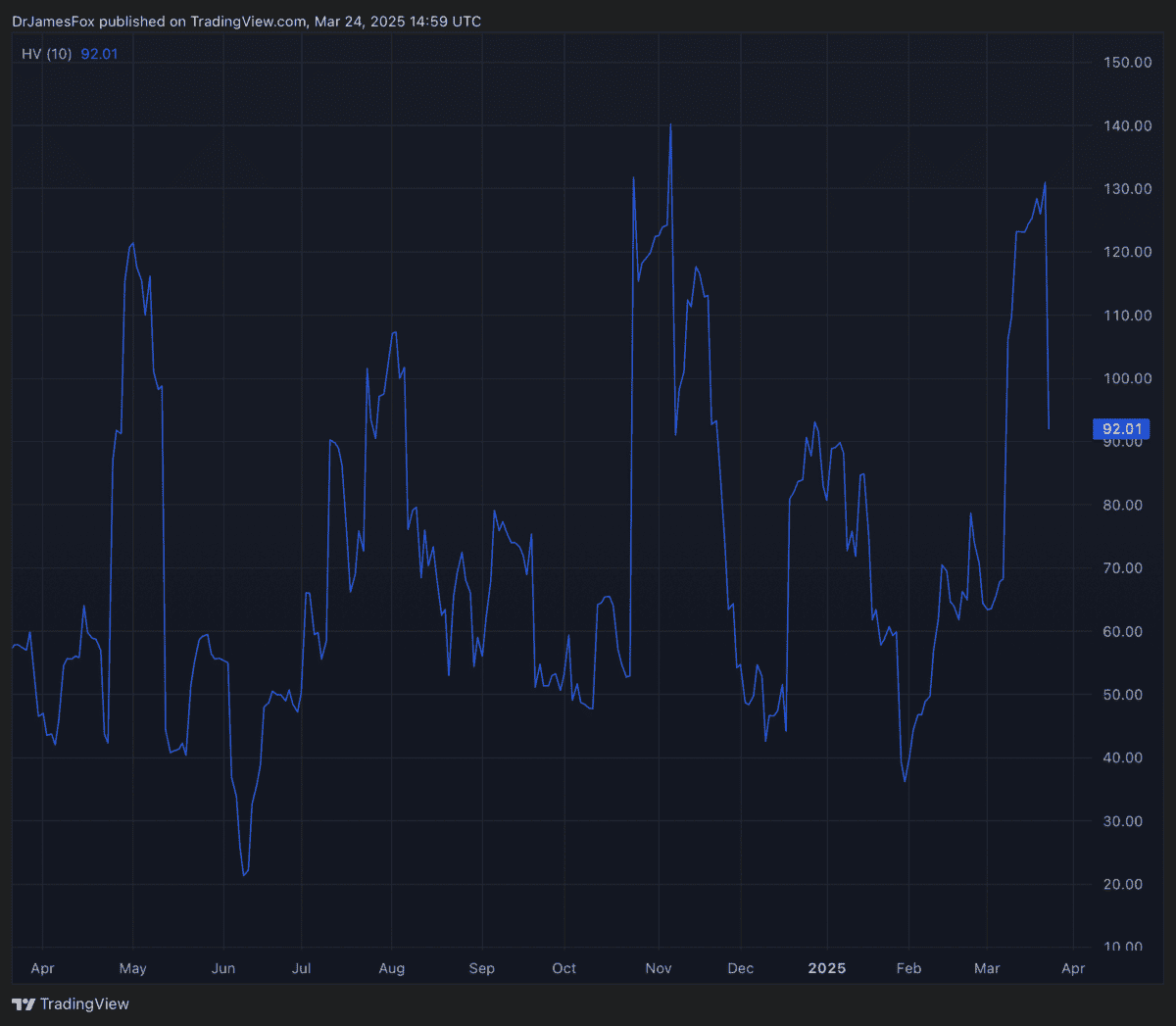
Source: TradingView: The Historic Volatility Index highlights vast swings in the share price. It’s typically calculated as the standard deviation of the asset’s price changes (returns) over a specific period, often annualised. 

Where next?

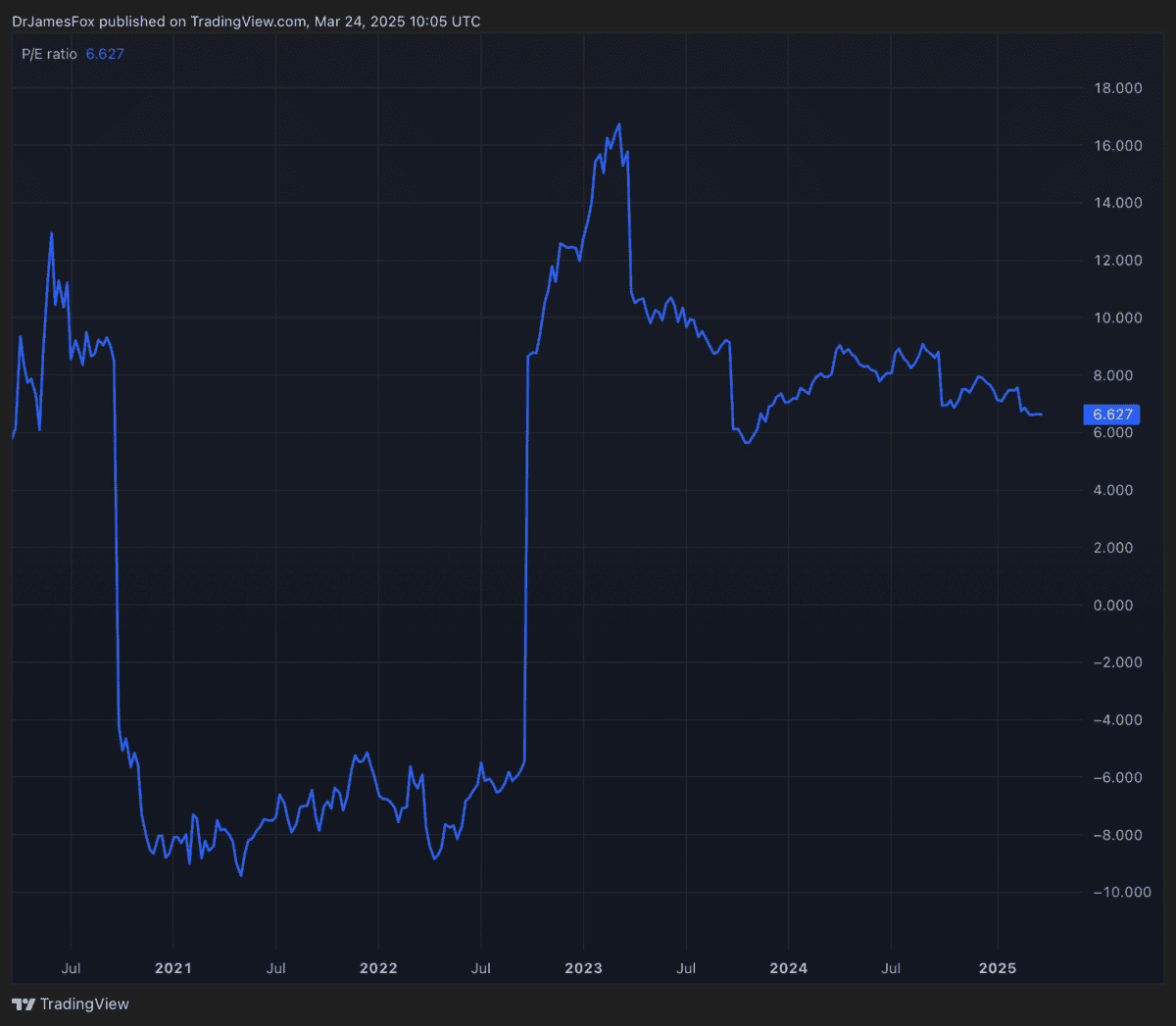
Despite the recent downturn, it’s crucial to understand that Tesla’s valuation is not based solely on its current financial performance. The company’s price-to-earnings (P/E) ratio has been notoriously high. Tesla stock currently trades at 94 times forward earnings.
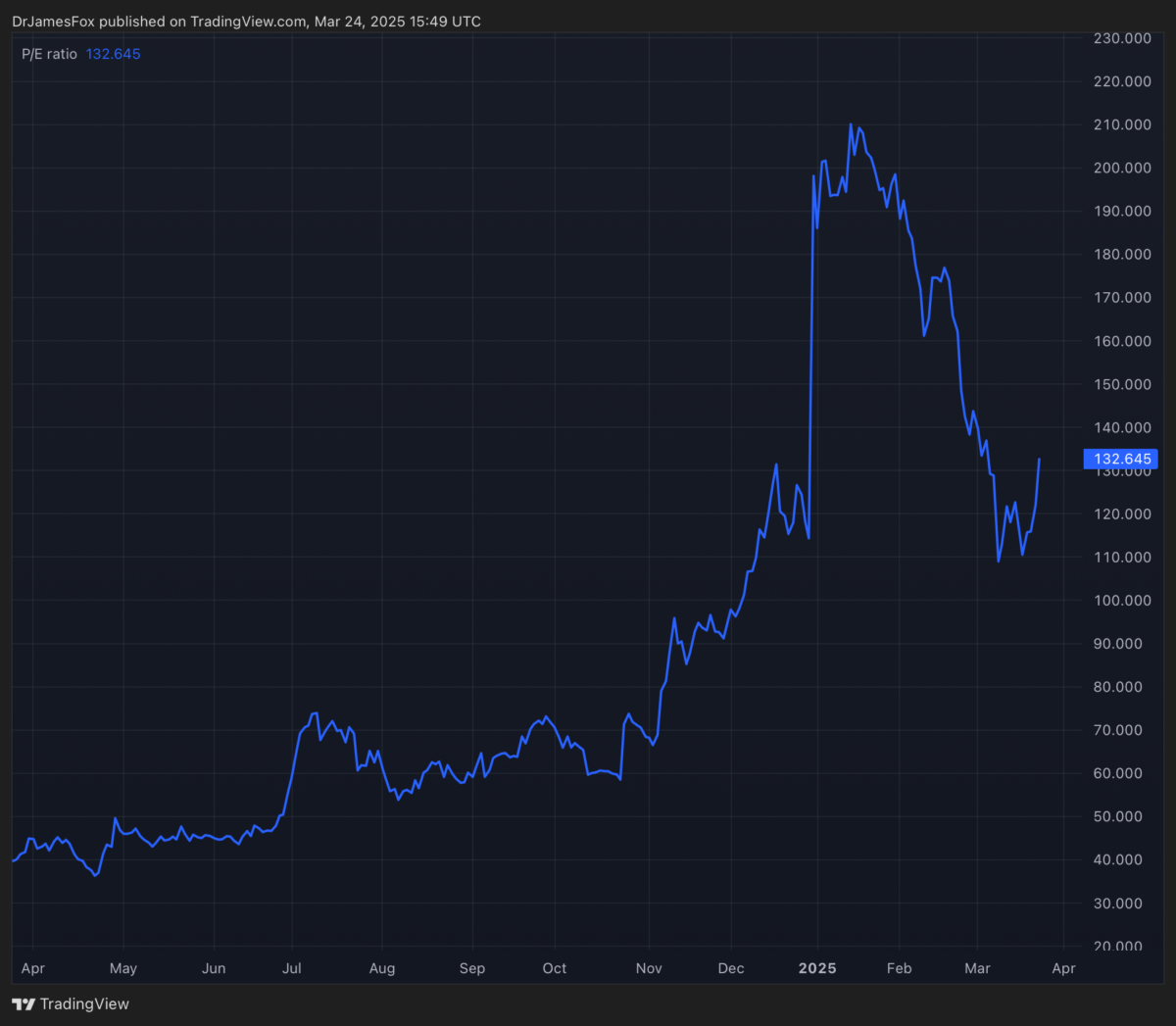
Source: TradingView: P/E ratio using Trailing 12 Month data

The P/E-to-growth (PEG) ratio, which factors in a company’s expected earnings growth, is also exceptionally high at 5.7. This indicates that investors are pricing in substantial future growth, which analysts are yet to quantify, particularly in Tesla’s autonomous driving and robotics divisions.

As such, Tesla’s valuation is largely based on its potential in the autonomous vehicle market and its advancements in artificial intelligence (AI) and robotics. However, for now at least, it does seem to be falling behind its peers. Only time will tell whether Tesla really does have technological dominance here.

Personally, I’d rather Tesla succeeded than its Chinese peers. However, I’m struggling to put my money behind the stock at the current valuation. I don’t expect to invest anytime soon.


This FTSE 250 trust is a high-risk, potentially-high-reward play

Baillie Gifford is best known for the Scottish Mortgage Investment Trust. However, it also operates many other trusts, including Edinburgh Worldwide Investment Trust (LSE:EWI). Edinburgh Worldwide is a volatile, FTSE 250-listed investment trust with significant holdings in SpaceX, quantum, and disruptive stocks. Let’s take a closer look.

A concentrated portfolio

Edinburgh Worldwide has a high-conviction approach, with a relatively concentrated portfolio — its top 10 holdings account for 46.2% of assets. The trust’s largest exposure is to SpaceX, representing 13.6% of the portfolio.

SpaceX’s valuation has surged in recent years, driven by its dominance in the space sector, including its Starlink satellite network and the development of its Starship rocket. The company’s ability to launch rockets at an unprecedented rate and its potential to revolutionise space travel have made it a cornerstone of Edinburgh Worldwide’s strategy.

Quantum computing’s another key theme, with PsiQuantum, the trust’s second-largest holding at 7.9%, leading the charge. PsiQuantum has attracted significant government funding and is at the forefront of developing commercially-viable quantum computing technology.

While PsiQuantum is privately held, this sector is highly volatile, as seen in the public markets, where quantum stocks have experienced incredible swings in value. The trust’s exposure to this nascent but transformative technology — the trust has additional quantum holdings — underscores its long-term growth focus, even if the sector remains speculative in the near term.

Performance lags

Performance-wise, Edinburgh Worldwide does stand out, with a 13.3% return over the past year but a 12.5% drop in the last month. Over five years, the trust has delivered a 23.9% return. That’s actually a vast underperformance of the FTSE 100 and FTSE 250.

However, it may just be the trust’s time to shine. It currently trades at a 5.7% discount to its net asset value (NAV), slightly narrower than its 12-month average discount of -7.92%. This discount may present an opportunity for investors seeking exposure to high-growth sectors at a reduced price.

High-risk, but potentially high-reward

As alluded to, Edinburgh Worldwide isn’t without risks. Its concentrated portfolio and focus on early-stage companies make it susceptible to volatility. What’s more, the trust borrows to fund investments (called gearing). This increases risk by amplifying losses if investments fall (or gains if an investment performs well), as borrowed funds must be repaid regardless of performance.

However, for investors with a long-term horizon and a tolerance for risk, the trust offers a unique opportunity to consider to access transformative technologies, from space exploration to quantum computing, via a single investment vehicle.

Personally, I’m not sure if this is the right investment for my portfolio. However, it’s something I’m going to watch very closely. There’s certainly massive potential within the Edinburgh Worldwide portfolio. But I prefer investing in companies where I can see a margin of safety. That’s not possible here.

Up 47% from its 12-month low, is there any value left in Lloyds’ share price?

Lloyds’ (LSE: LLOY) share price has risen 47% from its 16 April one-year traded low of 49p.

This may be off-putting to some investors who think it cannot possibly rise much more any time soon. Others may see it as a sign of unstoppable bullish momentum and look to jump on the buying bandwagon.

My view as a former investment bank trader and longtime private investor is neither approach is helpful in choosing stocks. The primary concern for me regarding a share’s price is whether there is any value in it.

Is there value left in the stock’s price?

Lloyds looks overvalued on its 10.8 price-to-earnings ratio against its competitor’s 8.9 average.

This group comprises Barclays at 8, NatWest at 8.7, HSBC at 8.8, and Standard Chartered at 9.9. 

The same is true of its 0.9 price-to-book ratio compared to its peers’ average of 0.8. However, on the price-to-sales ratio it looks fairly valued at 2.4 – the same as the average of its competitor group.

However, another picture emerges from my assessment of where its share price should be, based on future cash flows. Consensus analysts’ estimates are that Lloyds’ earnings will increase 13% each year to the end of 2027.

Factoring this into other analysts’ figures and my own, the discounted cash flow shows Lloyds is 47% undervalued right now.

Therefore, the fair value of the stock is £1.36, although it may go lower or higher than that.

How does the core business look?

I thought Lloyds’ 2024 results released on 20 February were broadly poor, although there was some positive news.

On the negative side, underlying net interest income (NII) fell 7% year on year to £12.845bn. This is money made from the interest difference on loans given out to deposits taken in.

Continued NII declines remain a key risk to Lloyds going forward, given the still-bearish interest rate trend in the UK.

One positive factor in the annual results was that underlying non-NII income rose 9% to £5.597bn. This reflects Lloyds’ efforts to increasingly substitute interest-based with fee-based business.

Overall, though, underlying profit fell 19% to £6.343bn – well below analysts’ estimates of £6.7bn.  

Will I buy the stock?

I am focused on shares that pay a 7%+ dividend so I can live off these and reduce my working commitments. Lloyds currently yields just 4.4%, which is too low for me on a high-yield investment basis.

On a growth-stock basis, it looks too risky for me. Its efforts to shift focus from interest-based to fee-based business look less convincing than other banks I already own — HSBC and NatWest. They also look to me to be at least as undervalued as Lloyds.

Another major Lloyds risk is the potential cost of claims arising from its motor finance commission arrangements in the UK. The 2024 results reflected another provision for this – of £700m, to add to the previous £500m set aside.

Nonetheless, I think there is no telling right now whether this will be enough, given the scope of variables involved.

And on top of this is the volatility risk arising from its sub-£1 price. Every penny here constitutes 1.4% of the stock’s entire value!

In sum, I can think of no good reason for me to buy the stock.

£500 to invest a month? Here’s how a Stocks and Shares ISA could unlock a comfortable retirement

Over time, investing in a Stocks and Shares ISA instead of a general investment account can substantially enhance returns by shielding gains from punishing taxes.

To give you a flavour, the estimated tax relief cost to the exchequer from all ISA products (including Cash ISAs) came to £3.8bn in 2020-2021. The amount’s likely to be much higher today too, as ISA uptake has since increased.

Boosted by these tax savings, here’s how someone with £500 to invest each month could unlock a substantial passive income for retirement.

Please note that tax treatment depends on the individual circumstances of each client and may be subject to change in future. The content in this article is provided for information purposes only. It is not intended to be, neither does it constitute, any form of tax advice. Readers are responsible for carrying out their own due diligence and for obtaining professional advice before making any investment decisions.

Choose wisely

Across the ISA range, investors have a variety of ways to make their money work for them. They can buy a large range of shares, funds and trusts from the UK and overseas in a Stocks and Shares ISA. Or they can simply hold cash on account with the — you guessed it — Cash ISA.

Having said that, the long-term returns that can be expected from each of these products can differ greatly. Let’s say someone decides to keep things simple and low-risk by investing £500 each month in their Cash ISA.

With a realistic average interest rate of 4% over 30 years, they’d turn that into £347,025, and then an annual passive income of £13,811. The latter figure assumes that our saver drew down 4% of their nest egg to live on each year.

But there’s a huge problem here. This £13.8k figure is far below the £31,300 that the Pensions and Lifetime Savings Association (PLSA) says people need for a moderately comfortable retirement. Even the addition of the State Pension might not get them close to this target.

This is where investing in shares as well can be make a difference.

A £28,215 passive income

Based on past performance, an average annual return of 8% is pretty realistic, in my view, although not guaranteed. But of course, the amount someone invests versus how much they save in cash — and as a consequence their final return — will depend on investment goals and tolerance of risk.

Let’s say our individual invests £450 a month in a Stocks and Shares ISA and deposits the remaining £50 in a 4%-yielding Cash ISA. If they can hit that 8% annual return on their riskier investments, they’d have a retirement fund of £705,364.

Breaking it down, they’d have made £670,662 from their share investments and £34,702 from their cash holdings. This in turn could provide an annual passive income of £28,215, based on a 4% drawdown rate.

A top fund

Investing £450 out of a possible £500 is an aggressive approach. But an individual could reduce the risk by putting their money in an exchange-traded fund (ETF) like the Vanguard FTSE 250 ETF (LSE:VMIG).

As the name implies, this vehicle spreads investors’ capital over 250 mid-cap UK companies. These businesses span a variety of different sectors, and just over half of cumulative earnings come from foreign markets, giving the fund excellent diversification.

Though its performance could be impacted by broader volatility on stock markets, I believe it’s still an attractive option for long-term investors to consider.

The FTSE 250 index has delivered an average annual return of 8.7% over the past 20 years. If this continues, our ISA investor parking £450 in this fund each month stands an excellent chance of retiring in comfort.

5 reasons to consider buying this FTSE 100 stock like there’s no tomorrow

Scottish Mortgage Investment Trust (LSE: SMT) offers UK stock investors something different from the rest of the FTSE 100. The trust aims to invest in what it sees as the world’s most exceptional growth companies, regardless of where they’re located geographically.

Here are five reasons why an investor might consider loading up on Scottish Mortgage shares while they’re still under £10.

Solid track record

The first is performance, which is what an actively managed fund is ultimately judged on. Has it outperformed the market over meaningful time periods?

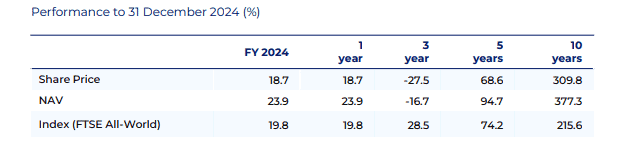
In the case of Scottish Mortgage, it’s delivered the goods. Over the 10 years to the end of 2024, the net asset value (NAV) had increased by 377%, versus 216% for the benchmark (the FTSE All-World index).

Source: Scottish Mortgage.

The trust has held three tech stocks for 10 years or more. These are Amazon, Tesla, and chip-making equipment giant ASML. All have done fantastically well over this time frame, though the trust has been selling down Tesla in recent months.

Another one worth mentioning is Nvidia, which it first bought in 2016. Due to the rapid rise of the chip maker, Scottish Mortgage has taken roughly £1.5bn of profit from an initial £64m investment. And it still has a decent-sized position in Nvidia left over!

Private investments

Second, roughly a quarter of the portfolio is in unlisted assets, which equates to 50 holdings. So the trust offers investors exposure to exciting growth companies not listed on the stock market.

While many are bite-sized, some holdings are very large. In fact, of the world’s 10 most valuable private firms, Scottish Mortgage owns half of them (SpaceX, ByteDance, Stripe, Databricks, and Epic Games).

With a 7.2% weighting in February, SpaceX is the largest holding in the portfolio. The space company’s valuation has ballooned to $350bn due to its dominance in the rocket launch market and fast-growing satellite internet business (Starlink).

Some of these firms could go public at very high valuations in the next couple of years, boosting Scottish Mortgage’s NAV in the process.

Low fees

The third reason to consider investing is the fee structure. According to the latest factsheet, the ongoing charge is just 0.35%. That’s low for a global equity fund that also offers exposure to unlisted firms like SpaceX. Many charge 0.75%–1%+.

Over time, lower fees can compound into significantly better net returns.

Deep AI exposure

Next, the trust offers a straightforward and diversified way to invest in the ongoing artificial intelligence (AI) revolution.

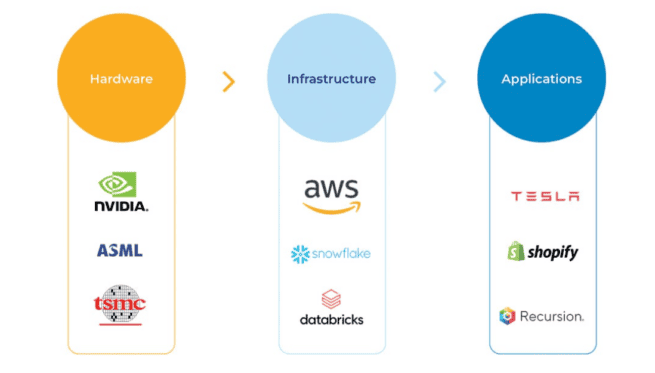
In the past 12 months, the trust’s managers have been buying or adding to stocks that they think are perfectly positioned to benefit from the technology. These include Taiwan Semiconductor Manufacturing (TSMC), which is the leading manufacturer of AI chips, Shopify, and social media giant Meta Platforms.

Source: Scottish Mortgage.

This high exposure to AI is one risk I see here though. If the technology fails to deliver the efficiency gains expected, then investors might become disillusioned with AI. In this situation, the value of the trust could fall sharply.

10% discount

Finally, the shares are trading at a 10% discount to NAV. While there’s no guarantee this gap will narrow (it could even widen), it offers long-term investors a chance to consider buying below fair value.

Down 83%! This FTSE 250 firm could now be a stock market takeover target

It’s been a torrid few years for shareholders of Oxford Nanopore Technologies (LSE: ONT). Since the biotech company listed on the UK stock market in late 2021, its share price has crashed by more than 80%.

This is sad to see as the FTSE 250 firm’s founders had ambitions to build a homegrown British giant in the healthcare space.

The sharp fall means Oxford Nanopore’s market cap now stands at just under £1bn — hardly the status of a giant!

Acquisition target

For those unfamiliar, Oxford Nanopore’s devices enable gene sequencing on handheld devices. It pioneered nanopore technology, which reads DNA or RNA in real time by detecting electrical changes as molecules pass through tiny pores. 

The stock market slide leaves it open to potential takeover bids, the firm’s co-founder and CEO Gordon Sanghera recently told the Financial Times. Especially as his anti-takeover share — a golden share allowing him to fend off bidders for three years after the IPO — has lapsed.

The FT mentioned that the company might be an attractive target for large US diagnostics specialists like Danaher or Thermo Fisher Scientific. The latter’s market cap is about 158 times larger than Oxford Nanopore’s, so the UK biotech could be a tasty morsel.

I note that analysts’ share price target is currently 174p, which is 67% above the current level. So it’s possible an acquisition could value the company significantly higher than today’s share price of 104p.

Of course, this is all just speculation. And I learned long ago not to invest on the basis of takeover potential alone. Yes, an acquisition may well happen, but it could be some time away and at a lower share price than I’d pay today.

Plenty of risk

To be fair, the company’s revenue growth has been strong, rising from £52m in 2019 to just over £183m last year. And management sees strong double-digit revenue growth continuing. So this is a definite positive here.

However, since 2019, the operating loss has nearly doubled to £152m. Therefore, Oxford Nanopore is still loss-making, and isn’t expecting to reach adjusted EBITDA breakeven till 2027. 

By then, it expects the gross margin to increase to at least 62%, up from 57.5% last year. Yet when the company will be reporting actual bottom-line profits is anyone’s guess at this point. This uncertainty around profitability is why I’ve never bought the stock.

Meanwhile, some analysts are flagging the possibility of slower-than-expected growth moving forward, which is a risk here.

Final thoughts

A switch stateside for Oxford Nanopore was mooted a while back, I seem to remember. But would a US listing really help?

I’m not convinced it would, as the US market has hardly been supportive of loss-making firms recently. For example, shares of rival Pacific Biosciences of California have lost 97% of their value in four years. Illumina stock is down 81% over the same period.

Admittedly, Oxford Nanopore has been growing faster than those two. But the shares that have been doing well across the pond (as here) are all profitable. The desire to buy ‘jam-tomorrow’ stocks while interest rates are high generally remains weak.

Therefore, I still have no desire to invest in the shares today.

This has to be one of the best UK stocks to buy, IMO! Here’s what the charts say

UK stocks have largely rallied from the bottom around two years ago. However, some have been left behind. One of those stocks is Jet2 (LSE:JET2).

While Jet2 is up 137% over five years, this comparison starts from a very low base. Instead, we can actually see that the airline’s stock is flat versus where it was in December 2020 — for context, the UK was in lockdown at the time.

In other words, zero share price growth in four-and-a-half years. And that in itself is a danger. I like stocks with momentum because they’re more likely to reach fair value quicker.

Nonetheless, this lack of momentum is a risk I’m willing to take with Jet2. I’ve recently added it to my portfolio. I simply believe the stock is vastly undervalued.

Here’s what the charts say

Jet2 stock trades around seven times forward earnings. That’s not expensive for UK-listed companies and it’s not particularly expensive for airlines. The global airlines average is currently around 7.4 times.

Source: TradingView — P/E

The above data shows the price-to-earnings (P/E) ratio fluctuating, but it’s back in line with where it was five years ago. We can also observe the impact of the P/E on earnings in 2020 and 2021, when it turned negative.

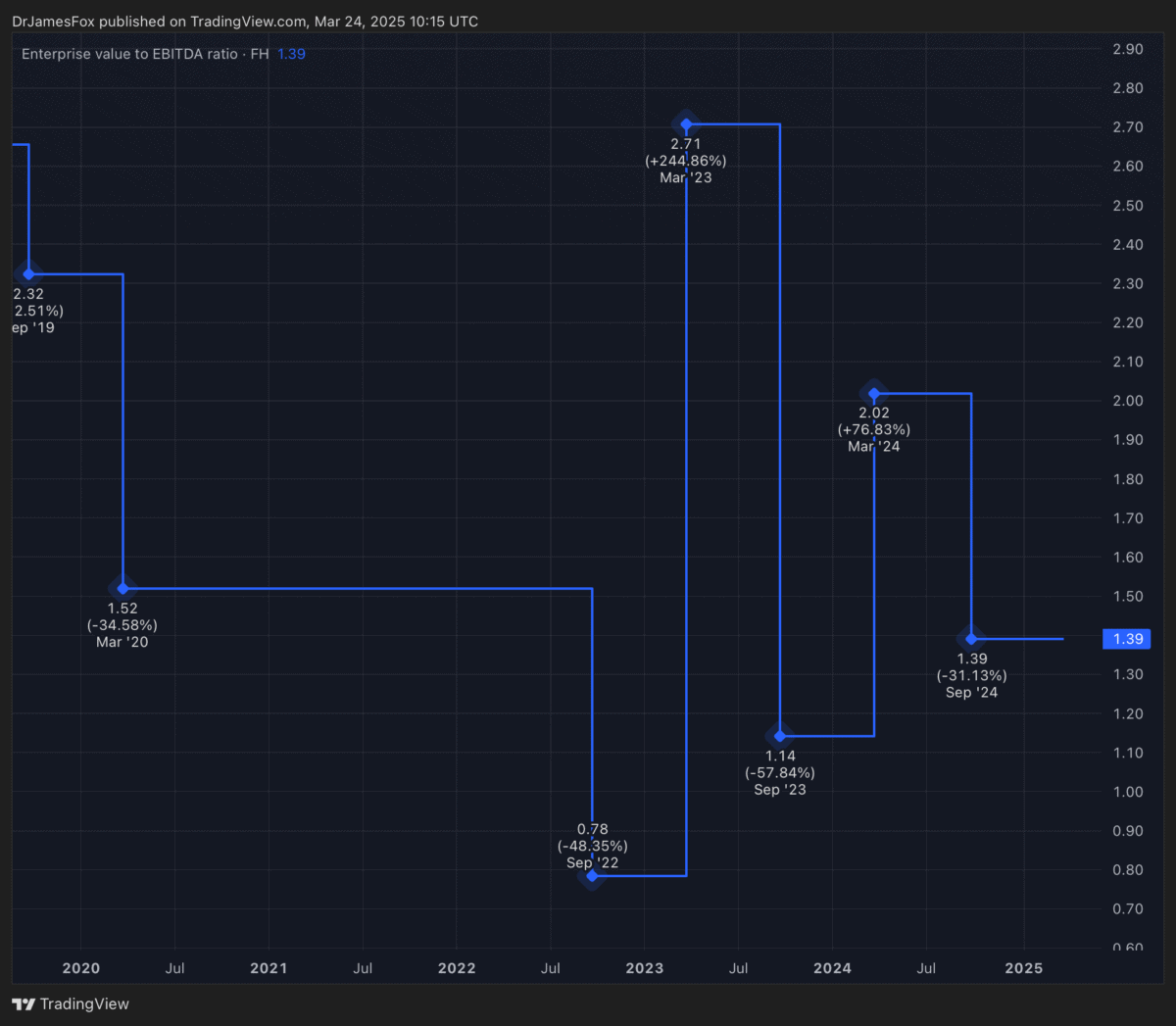
However, the real indicator of value is the EV-to-EBITDA ratio. Most airlines don’t have a net cash position, but Jet2 has £2.3bn in net cash. As a result, its EV-to-EBITDA ratio is actually rather close to one. In other words, it’s enterprise value is almost covered by just one year of EBITDA (earnings before interest, tax, depreciation, and amortisation).

Source: TradingView: EV-to-EBITDA

By comparison, IAG trades at 5.4 times forward earnings and with an EV-to-EBITDA ratio of 3.4. The inference here is that Jet2 has been vastly overlooked.

A company overview

Jet2, the UK’s largest inclusive tour operator and a leading leisure airline, is strategically positioned for growth despite facing industry challenges. Analysts anticipate earnings growth over the medium term, supported by Jet2’s expanding market presence and investments in fleet modernisation.

The Leeds-based company has a slightly older fleet, at 13.9 years, than some of its peers. And Jet2 plans to invest £5.7bn between 2025 and 2031 to upgrade its fleet, transitioning to a majority Airbus configuration and increasing capacity from 135 to 163 aircraft. The new A321neo aircraft are expected to enhance operational efficiency with lower fuel consumption and higher seating capacity.

This investment aligns with industry norms, representing approximately 11.4% of projected revenue for 2025 and declining further as revenue grows to an estimated £8.6bn by 2027. In fact, the company’s net cash position is forecast to hit £2.7bn by 2027.

However, investors should note potential risks. Rising costs, including wages, airport charges, and maintenance expenses, could pressure profit margins. Additionally, competitive pricing in the European leisure market and a trend towards later bookings may create challenges.

Despite these challenges, Jet2’s strong market position, cash position, valuation, and strategic investments are compelling. This is why I’ll continue looking to add to my position at current prices.

Forecast: in 12 months, the Barclays share price could be…

The Barclays (LSE:BARC) share price surged in 2024. The stock has been one of the FTSE 100’s standout performers, delivering a 65% return over the past year and 110% over two years. Yet despite this stellar run, analysts see even more potential, with the bank combining robust fundamentals and compelling valuation metrics. Let’s take a closer look.

Still discounted versus global peer group

At 297p, Barclays trades at a forward price-to-earnings (P/E) ratio of 7.7 times for 2025 – significantly below the S&P 500 Financials sector’s 17.9 times. This discount persists even when considering the company’s strong earnings growth prospects.

Barclays’ earnings per share (EPS) is projected to rise steadily throughout the medium term:

Year 2025 2026 2027 2028
EPS (£) 0.348 0.4055 0.5058 0.5657

This 62% cumulative EPS growth through 2028 is fuelled by:

  • Net interest income guidance of £12.2bn for 2025 (+9% yoy)
  • Operating margin expansion to 38.3% in 2025 (from 30.3%)

What’s more, these earnings growth figures point to a P/E-to-growth (PEG) ratio of around 0.6. This suggests the stock is vastly undervalued. Likewise, Barclays has a reported price-to-book (P/B) value of 0.7 times. This is well below the benchmark of one, and far behind US peers — some of which trade with P/Bs around two.

What’s more, Barclays pays a strong dividend by global standards. While the yield has fallen to around 3% as the share price has risen, the coverage ratio now stands at 4.6 times. This provides plenty of safety for future dividend hikes. What’s more, these dividend-adjusted PEG ratio (factoring in both growth and yield) sits around 0.4.

Analyst consensus: bullish but cautious

The 17 analysts covering Barclays show measured optimism:

Metric Value
Average price target 348.4p
High estimate 395p (+33%)
Low estimate 230p (-23%)
Consensus rating Buy (9 Buy, 6 Outperform, 2 Hold)

This broadly supports the valuation data above. However, there is an element of caution. Simply, the dividend-adjusted PEG ratio infers that the stock could be trading twice as high as it is today, and analysts don’t agree.

This might be a reflection of several things. The company’s operational resilience may be in question after February’s IT meltdown that has resulted in a £7.5m compensation bill. Likewise, impairment charges remain relatively high on a long-term basis. There could also be a limited fine related to motor finance mis-selling.

What’s more, Barclays is still a largely UK-facing bank. UK banking operations have actually been the business’s most efficient, with the bank planning to shift £30bn of risk-weighted assets towards the segment in the coming years. However, the UK is still a relative global laggard.

The bottom line

With analysts forecasting 17%-20% total returns (price appreciation + dividends) over the next year, Barclays shares offer both value and growth characteristics. Personally, I’m also bullish on Barclays. However, I fear macroeconomic issues and market forecasts will likely drag on the stock’s growth from here on. I also can’t see the Chancellor’s Budget being anything but a disappointment.

My conservative estimate sees Barclays pushing up to around 330p over the next 12 months. I already have a sizeable position in Barclays, but may add to it if an opportunity presents itself.

1 top stock offering incredible value right now!

With many shares coming off the boil in recent weeks, opportunities have started to appear. One I see is in Taiwan Semiconductor Manufacturing Company (NYSE: TSM), a growth company that is trading near value stock levels after falling 21% in two months.

Longer term though, shares of Taiwan Semiconductor, or TSMC, have done splendidly. They’ve soared more than 300% in six years, as the firm’s leading position manufacturing advanced microchips has made it integral to the digital revolution.

Recently, TSMC’s growth has been boosted by the artificial intelligence (AI) boom. It works closely with Advanced Micro Devices, Nvidia, Broadcom, OpenAI, and others, while also making the latest chips powering Apple’s iPhone 16 lineup.

Indeed, TSMC now commands roughly 67% of the global third-party foundry market — and more than 90% of advanced chips!

Surging AI demand

How is that translating into profits? Very nicely. Last year, revenue increased 30% year on year to $90.1bn, while earnings per share surged by almost 40%. The net profit margin reached an incredible 40.5%, up from 38.8% the year before.

However, it wasn’t all positive. Both its Internet of Things (IoT) and digital consumer electronics platform segments decreased 15% and 6%, respectively, in the fourth quarter. And the firm does still experience cyclical demand for auto, computer, and smartphone chip sales.

Yet any softness in parts of the business is easily being offset by surging demand for AI chips.

Chief executive CC Wei commented: “Even after more than tripling in 2024, we forecast our revenue from AI accelerators to double in 2025 as a strong surge in AI-related demand continues as a key enabler of AI applications.”

Weakening silicon shield

One unavoidable risk with TSMC is geopolitics. Its most advanced chip manufacturing — including its 3nm and upcoming 2nm nodes — still takes place in Taiwan, roughly 90 miles away from mainland China.

Historically, Taiwan’s dominance in chipmaking has arguably protected the island from a Chinese invasion (the so-called “silicon shield”). That’s because the result would be a chip shortage and chaos in global trade, thereby threatening China’s own prosperity. 

To reduce dependence on Taiwan, President Trump has encouraged TSMC to set up advanced fabrication facilities in the US. While this improves supply chain resilience for US customers, it might also weaken the silicon shield. 

In other words, if TSMC’s cutting-edge chipmaking moves abroad, Taiwan becomes less essential — and potentially less protected.

Meanwhile, the company’s colossal $165bn commitment (so far) to US manufacturing and research and development might lead to margin pressure down the road.

Bargain valuation

This dynamic might go some way to explaining the stock’s valuation. It’s currently trading at 16.5 times this year’s forecast earnings, falling to around 14 for 2026 and 11.5 by 2027.

Granted, there are geopolitical risks here, but this high-quality stock looks like it’s on sale to me. Especially as TSMC is set for further growth through its enabling of developing megatrends like AI, IoT, and robotics.

Also, electric and autonomous vehicles require many more semiconductors than petrol cars. Tesla collaborates with TSMC to produce chips for its Full Self-Driving system.

Unfortunately, TSMC shares aren’t eligible for a Stocks and Shares ISA. But I think they’re well worth considering for a self-invested personal pension (SIPP).

Down 21% in 6 months! Should I buy the dip in this FTSE 250 stock?

JD Wetherspoon (LSE:JDW) is an underperforming stock from the FTSE 250 index. It’s down 7% year to date and 21% in six months. Over four years, it’s lost more than half its value.

Yet Wetherspoons remains a leading pub chain in the UK. And it has bounced back to profitability since the pandemic, with a restored dividend. Long term, it should be able to take market share as more smaller rivals go under.

Should I buy some ‘Spoons shares on the dip? Here are my thoughts.

Resilient trading

On 21 March, the company reported its first-half covering the 26 weeks to 26 January. Revenue rose 3.9% to just over £1bn, with like-for-like (LFL) sales up 4.8%. This was driven by LFL sales growth across bar (+4.3%), food (+5.4%), and fruit machines (+12.4%).

During the period, two Wetherspoons pubs were opened (the Grand Assembly in Marlow and The Lion and The Unicorn in London’s Waterloo Station) while six were sold. It ended with 796 pubs.

In the seven weeks since the end of the period, LFL sales increased 5%. Considering the tough trading environment across the hospitality sector, I think this performance is strong. 

Unfortunately though, profits are under pressure. In the first half, operating profit decreased 4.3% to £64.8m. The operating margin fell to 6.3% from 6.8%, mainly due to labour and utility costs, which were £30.6m higher. 

Net profit came in at £24.9m, which was less than in the same pre-pandemic period of 2019/20.

Sobering outlook

Looking ahead, the company warns that increases in national insurance and the minimum wage will result in extra costs of approximately £60m per year. That amounts to roughly £1,500 per pub, per week.

Commenting on the results, Chair Tim Martin said, rather bleakly: “The combination of much higher VAT rates for pubs than supermarkets, combined with increased labour costs will weigh heavily on the pub industry.”

I wondered how long it would be before Martin got stuck into the different treatment of supermarkets. It took 59 words of his statement before they were mentioned.

He’s right to repeatedly point out the unfair pricing advantage though, and supermarkets do represent competition. It’s dramatically cheaper to stock up on a couple of crates from Tesco for the back garden than spend an afternoon buying pints in the beer garden of a pub.

Should I buy?

In addition to standard business taxes, Wetherspoons pays alcohol duty, fruit machine duty, the sugar tax, fuel duty, costs for premise, and, in some locations, TV licences. From 1 April, it will also pay higher national insurance and labour costs, as mentioned.

Given all this, I’m not surprised that the number of pubs in England and Wales has fallen below 39,000 for the first time. Clearly, they’re being taxed into oblivion.

But while I have sympathy with this, it doesn’t really get me bullish about investing.

Perhaps I’m missing out on an obvious bargain though. Because the stock is trading cheaply, like a ‘Spoons pint, at just 11 times earnings, while offering a well-supported dividend yield of 2.2%.

Meanwhile, the company’s long-term aim is to operate 1,000 pubs. Again, perhaps that will drive the share price higher.

However, given that costs are set to “weigh heavily” on the industry, I’m not keen to invest.

Financial News

Daily News on Investing, Personal Finance, Markets, and more!

Financial News

Policy(Required)