One-time ‘SPAC King’ Palihapitiya launches new blank-check vehicle with plan to ‘temper’ retail fervor

  • Chamath Palihapitiya has launched a $345 million SPAC that he said was more than five times oversubscribed.
  • The vehicle is designed to target companies in AI, energy, defense and decentralized finance.
  • Palihapitiya once helped ignited the SPAC boom in 2020, but his first wave of deals mostly ended poorly for retail investors who followed along.
  • The investor said he wants to temper retail investors’ involvement with his SPACs this time.
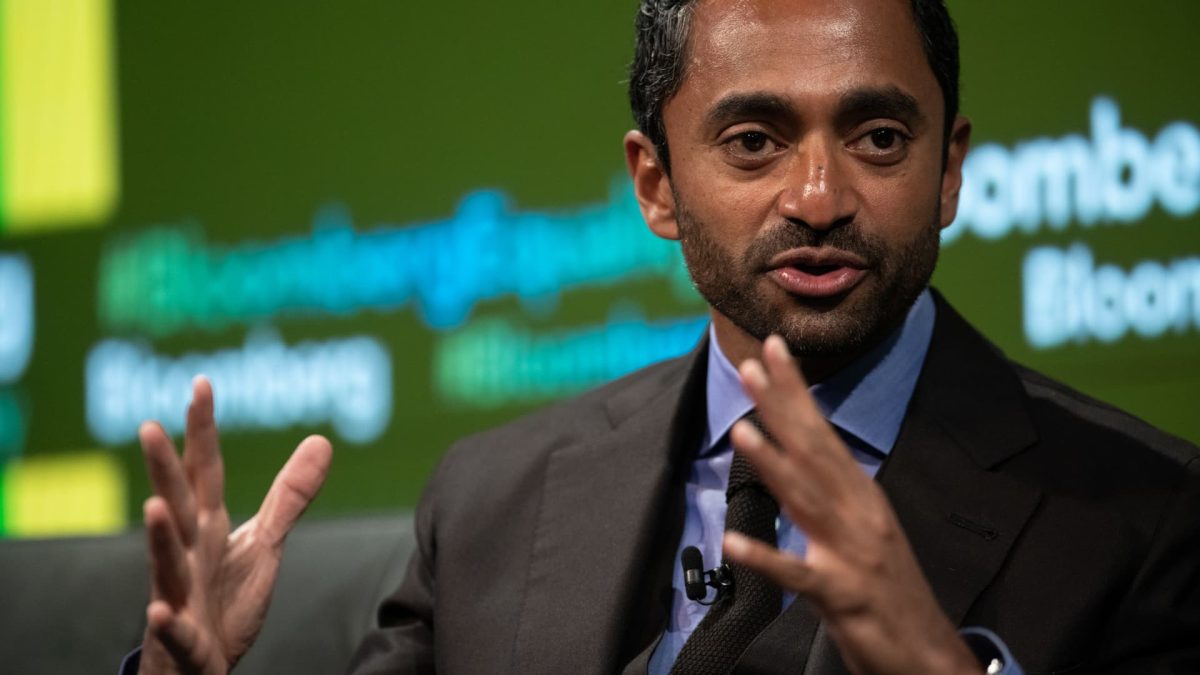
Venture capitalist Chamath Palihapitiya.
Mark Kauzlarich/Bloomberg via Getty Images

Chamath Palihapitiya, once dubbed Wall Street’s “SPAC King,” is back with a new blank-check vehicle and a promise to do better after a bruising track record.

Palihapitiya on Monday launched the American Exceptionalism Acquisition Corp. A (AEXA), a $345 million SPAC that he said was more than five times oversubscribed, drawing $1.4 billion in demand. The vehicle, which will trade on the New York Stock Exchange, is designed to target companies in AI, energy, defense and decentralized finance.

“These are areas where I believe American entrepreneurship can still lead the world, and where a disciplined, institutionally backed vehicle can add value,” the 49-year-old the Social Capital CEO and former Facebook executive said in a post on X.

The SPAC was up 3% in early trading Tuesday.

Palihapitiya once helped ignite the SPAC boom among retail investors during the pandemic in 2020, but his first wave of deals mostly lead to poor returns. Virgin Galactic lost more than 90% of its value, while Clover Health trades around only $3 compared to the $15 peak after regulatory scrutiny and a short-seller report. Opendoor, which had fallen into a penny stock earlier this year, became a meme name supported by retail traders, but the stock is still about half of its record price in 2021.

SPACs are special purpose acquisition companies, which raise capital and use the cash to merge with a private company and take it public, usually within two years.

Improving the SPAC structure

Now, Palihapitiya said AEXA is structured differently. The SPAC will carry no warrants, and his compensation vests only if shares rise at least 50% after a deal. Meanwhile, just 1.3% of the allocation went to retail investors, he said.

“I want to temper retail investors’ involvement with my SPACs,” he said. “This deal was built for institutional investors. Specifically, 98.7 percent went to large institutions, each picked explicitly by me.”

Palihapitiya’s return comes as he has recast himself both politically and publicly. A longtime Democrat donor who once floated a run for California governor, he has more recently aligned with President Donald Trump’s politics. At the same time, he has built a media platform through the All-In Podcast, where he and other tech investors debate politics and markets, often favoring the views of the Trump Administration.

SPACs are having a resurgence after a sharp, two-year slowdown as regulatory scrutiny, disappointing post-merger performance and rising rates dampened investor appetite. Many SPACs liquidated rather than find deals, and the once red-hot sector became a cautionary tale. Now, with traditional initial public offerings returning and the broader stock market charging ahead, dealmakers are dusting off the structure.

“No one can predict what will happen in the future so be safe out there and no crying in the casino,” Palihapitiya said.

Top Wall Street analysts favor these 3 stocks for their robust growth outlook

The Nvidia logo is displayed on a building at Nvidia headquarters on Aug. 27, 2025 in Santa Clara, California.
Justin Sullivan | Getty Images

Despite macroeconomic uncertainties, several companies are well-positioned to deliver strong returns to investors from rapid technological advancements and artificial intelligence (AI) adoption.

To pick attractive stocks with strong prospects, investors can track top Wall Street analysts, whose recommendations are based on in-depth research and analysis of a company’s financials and growth drivers.

Here are three stocks favored by the Street’s top pros, according to TipRanks, a platform that ranks analysts based on their past performance.

Nvidia

We start with semiconductor giant Nvidia (NVDA), which has strengthened its dominant position through continued innovation and strategic deals, such as the recently announced $5 billion investment in Intel and massive $100 billion investment in OpenAI.

Following a conversation with Nvidia’s CFO on the OpenAI deal, Evercore analyst Mark Lipacis reiterated a buy rating on NVDA, saying the chip company is the “AI ecosystem of choice, not just with its CUDA software stack, but also with its connectivity solution, NVLink, which we think is poised to become a de facto standard.”

The top-rated analyst increased his price target on Nvidia to $225 from $214 and said that Nvidia remains a top pick for Evercore. TipRanks’ AI Analyst has an “outperform” rating on Nvidia stock with a price target of $204.

Highlighting the key takeaways from his conversation with the company’s CFO, Lipacis said that Nvidia will be the preferred supplier to OpenAI, adding that the ChatGPT platform has underestimated demand for its solution and wants to get ahead of future demand. Nvidia is well-positioned to help OpenAI with this infrastructure buildout.

Lipacis noted that the deal specifies at least 10 GW (gigawatts) of AI infrastructure, and Nvidia management confirmed that, historically, the company’s total addressable market (TAM) was $30 billion to $40 billion per GW, although it could increase in the future. The analyst increased his 2026 revenue and earnings per share (EPS) estimates by 2% for Nvidia, but thinks that his forecast may be conservative.

Lipacis ranks No. 53 among more than 10,000 analysts tracked by TipRanks. His ratings have been successful 66% of the time, delivering an average return of 26.5%. See Nvidia ETF Exposure on TipRanks.

MongoDB

Next is database management software company MongoDB (MDB). The company recently held a MongoDB.local event in New York City, hosting an Investor Session focused on profitable growth and providing a 3- to 5-year financial framework.

Following the event, Needham analyst Mike Cikos reiterated a buy rating on MongoDB and increased his price target to $365 from $325. TipRanks’ AI Analyst is also bullish on MDB stock, giving it an “outperform” rating and a price target of $355.

Cikos said that while investors’ initial reaction to the high-teens revenue growth forecast was underwhelming, he expects both AI and competitive migrations to drive incremental growth for MongoDB.

The 5-star analyst noted that management plans to continue investing in the business, though at a slower rate than revenue and gross profit growth. MongoDB’s investments will mainly focus on developer awareness, research & development and its sales force.The company has also identified areas for optimization and expects its scale to drive profitable growth through efficiencies.

Cikos said that following the MongoDB.local event he is “incrementally more positive on MongoDB’s AI positioning,” driven by embeddings, which bridge data and Large Language Models (LLMs), and the continued integration of Voyage’s best-in-class models.

Cikos ranks No. 581 among more than 10,000 analysts tracked by TipRanks. His ratings have been profitable 59% of the time, delivering an average return of 14.1%. See MongoDB Ownership Structure on TipRanks.

CrowdStrike

Cybersecurity company CrowdStrike (CRWD) is this week’s third pick. The cloud-native platform offers security solutions for critical areas of enterprise risk — endpoints and cloud workloads, identity, and data.

Following CrowdStrike’s recently held Fal.Con 2025 event, RBC Capital analyst Matthew Hedberg reiterated a buy rating on CrowdStrike with a 12-month price target of $510, saying the commentary from management, partners and customers reinforced his bullish long-term thesis. CrowdStrike remains one of RBC’s top cybersecurity ideas, he added. TipRanks’ AI Analyst has a “neutral” rating on CrowdStrike stock with a target price of $543.

“Overall, we thought the event made a compelling case for the company’s positioning as we enter the agentic era,” said Hedberg.

The 5-star analyst mainly noted lucrative prospects in agentic security for CrowdStrike and the evolution of its agentic security operations center (SOC). He added that management views the agentic revolution as a huge opportunity (potentially over a 100x), with the rise of more identities and complexity creating new security needs.

Management sees a total addressable market (TAM) of $300 billion in 2030, up from $140 billion in 2026, with key tailwinds resulting from market consolidation, the evolving threat landscape and technological advancements. Helped by these tailwinds, Hedberg believes CrowdStrike is well-positioned for continued market consolidation as it secures an AI-led transformation.  

Hedberg noted that CrowdStrike is about halfway through its $10 billion annual recurring revenue (ARR) goal for fiscal 2031. While cloud, the Next-Gen Identity Security offering and the Next-Gen SIEM platform are the key drivers for the current ARR of $4.7 billion, management expects agentic SOC to be the main catalyst for achieving the $10 billion ARR target for fiscal 2031. CrowdStrike expects Agentic Everywhere to be the key driver for the newly introduced $20 billion ARR target for fiscal 2036.

Hedberg ranks No. 37 among more than 10,000 analysts tracked by TipRanks. His ratings have been successful 70% of the time, delivering an average return of 21.6%. See CrowdStrike Insider Trading Activity on TipRanks.

Trump is wielding the power of the state to back critical mineral companies. These are the possible next targets

  • The Pentagon’s equity stake in rare earth miner MP Materials has investors wondering where the Trump administration might invest next.
  • The federal government needs to invest in additional miners to diversify the rare-earth supply chain, Energy Fuels CEO Mark Chalmers said.
  • The MP deal could serve as a blueprint for interventions in other critical mineral markets like lithium, executives, analysts and lobbyists say.

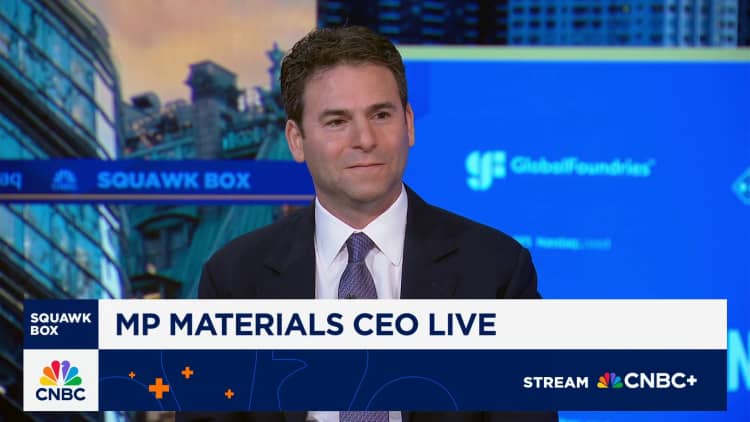
The Trump administration needs to strike multiple deals with U.S. miners to secure the nation’s supply chain against China, said Mark Chalmers, CEO of Energy Fuels, a miner focused on uranium and rare earth minerals.

The Pentagon decision to take an equity stake in MP Materials, the largest U.S. rare earth miner, in July and support the company with a price floor surprised many in the industry, Chalmers told CNBC.

But it was a necessary step that the White House should now follow with more deals to diversify the U.S. supply chain and reduce the risk that would come with backing a single national champion, the CEO said.

“One company doesn’t fix it,” Chalmers said of the MP Materials deal. “You have to have multiple deals to ensure that you don’t just have the company risk, because all companies aren’t going to deliver.”

The White House is “not ruling out other deals with equity stakes or price floors as we did with MP Materials, but that doesn’t mean every initiative we take would be in the shape of the MP deal,” a Trump administration official told CNBC.

Rare earths are key inputs in weapons platforms such as the F-35 warplane as well as consumer products like electric vehicles and smartphones. The U.S. is almost entirely dependent on China, which supplied 70% of rare earth imports in 2023, according to the U.S. Geological Survey

China has manipulated the market by suppressing prices to drive Western competition from the market, said Ryan Castilloux, founder of Adamas Intelligence, a critical mineral market research firm. The MP deal demonstrated that the U.S. is willing to break with free market ideals and push back against China by mimicking its model of strategic capitalism when necessary, Castilloux said.

“We’ve seen just how disadvantaged the free market view is versus a long term, industrial policy driven market — and something needed to give,” Castilloux, an expert on critical minerals, told CNBC.

Possible rare earth targets

Energy Fuels’ stock has surged nearly 200% since the MP deal on July 10, as investors speculate that it could be a deal target for the Trump administration. Critical mineral miner NioCorp Developments is also up almost 200%, Ramaco Resources has gained 140%, and USA Rare Earth is up more than 70%.

MP Materials will likely need more heavy rare earths as it develops a second facility to make magnets under the Defense Department deal, Castilloux said. Heavy rare earths are needed to produce magnets that can withstand high temperatures in EV motors and defense industry applications, he said.

Can the U.S. break China’s rare earth dominance?

Headquartered in Denver, Energy Fuels is the largest uranium miner in the U.S. and is forming a rare earth operation through mines it has acquired around the world. Its operation will produce heavy rare earths, Chalmers said.

Energy Fuels is focused on “providing a product that is attractive to the U.S government” and complements the strengths of MP Materials, the CEO said.

“The government cannot bet on one horse — it just doesn’t make sense,” Chalmers said. “We spend a lot of time in D.C. making sure they understand the merits of our strategy,” he said.

Trump eyes lithium

Other critical minerals like lithium, cobalt and graphite are ripe for federal investment to smooth out volatile price fluctuations that undermine U.S. miners, said Rich Nolan, CEO of the National Mining Association. Those minerals are all used in batteries, among other applications.

The Trump administration has proposed an equity stake in Lithium Americas, as the Canadian company renegotiates the terms of a $2.2 billion loan from the Department of Energy for its Thacker Pass mine in northern Nevada. The mine is expected to become one of the largest sources of lithium in North America, with the first phase of the project scheduled to start operations in late 2027.

Lithium Americas stock surged more than 90% this week on news of the potential government stake.

Albemarle CEO Kent Masters told CNBC that something “in the ballpark” of the MP deal could apply to the lithium sector. Albemarle, headquartered in Charlotte, North Carolina, is one of the largest lithium producers in the world.

“What you want to do is move the market such that private industry can invest behind it,” Masters told CNBC in July, pointing to Apple‘s offtake agreement with MP just days after the Defense Department deal.

MP Materials appears to be the U.S. rare earths champion, says Canaccord Genuity's George Gianarikas

Miners seek price floors

While it might take a government equity stake to move the market in some cases, the price floor established by the Pentagon in the MP deal is the “critical part” that allows private industry to invest and build out the supply chain, Masters said.

Price support from the federal government “sends a true market signal that these investments are long term, that they are here to stay,” the National Mining Association’s Nolan said.

Under the MP deal, the Pentagon set a price floor of $110 per kilogram for neodymium-praseodymium oxide, or NdPr, a key input in rare-earth magnets. The government pays MP the difference when the market price is below $110 but in turn takes 30% of the upside when the price is above $110.

The price of NdPr surged 40% in the wake of the MP deal, Castilloux said.

“It serves as a blueprint for any market where suppressed pricing is slanting the competitive playing field against the U.S. and its allies,” the analyst said of the price floor. The deal signals that “there is a way to break free of China’s artificially suppressed pricing,” he said.

Warren Buffett Watch: BYD bids Warren Buffett’s Berkshire an unfazed farewell: Selling is ‘normal’

Buffett Watch

(This is the Warren Buffett Watch newsletter, news and analysis on all things Warren Buffett and Berkshire Hathaway. You can sign up here to receive it every Friday evening in your inbox.)

Hours after we first reported last week that Berkshire sold off the remainder of its stake in BYD earlier this year, the Chinese electric vehicle maker confirmed the news and thanked Warren Buffett and Charlie Munger for believing in the company.

In a post on the Chinese social media site Weibo, BYD public relations executive Li Yunfei wrote, as translated by Google:

“In August 2022, Berkshire began gradually reducing its holdings of company shares purchased in 2008, and by last June, its stake had fallen below 5%…Investing in stocks involves both buying and selling, which is completely normal…We are grateful for Charlie Munger’s and Warren Buffett’s recognition of BYD, as well as for the investment, support, and companionship over the past 17 years…Praise to all long-term believers!”

BYD Dolphin Surf electric cars are parked infront of the venue where BYD carmaker holds a vehicle presentation event in Berlin, Germany May 21, 2025.
Annegret Hilse | Reuters

BYD Executive Vice President Stella Li, appearing on CNBC Europe’s Access Middle East this week, echoed the Weibo post, saying Buffett and Munger “loved” BYD and its management, but “they are investors, so naturally buying and selling is their business, so it’s not because they don’t like us.”

And Reuters quotes a special adviser to BYD, Alfredo Altavilla, as saying that Buffett “made a profit of 20 times the capital he invested. He did very well to do what he did.”

“We’ve been extremely glad to have had Buffett (as an investor), but the fact that he monetised [UK spelling] his position is exactly what Berkshire Hathaway does for a living: buying, earning and selling.”

Investors around the world, however, were not as accepting.

BYD shares fell more than 6% this week in Hong Kong.

 Second Japanese stake tops 10%

While Berkshire is closing out its Chinese investment, it continues to expand its holdings of Japanese “trading house” stocks.

This week, Mitsui said in a news release that it was “informed” by Berkshire that “they now hold 10% or more of the voting rights in Mitsui as a result of an additional acquisition of our shares.”

It did not, however, know the exact number of shares Berkshire now owns.

In a March 17 disclosure, Berkshire reporting holding a 9.8% stake of 285,401,400 Mitsui shares. They would be valued at around $7.3 billion at today’s close.

Late last month, a Mitsui official told Reuters Berkshire raised its stake but declined to give a percentage. 

At the same time, Mitsubishi said in a regulatory filing that Berkshire’s stake had increased to 10.2% from 9.7%.

We haven’t heard anything about Berkshire’s three other Japanese holdings, ItochuMarubeni, and Sumitomo, but it would not be a surprise to learn those stakes have also gone above 10%.

BUFFETT AROUND THE INTERNET

Some links may require a subscription:

HIGHLIGHTS FROM THE ARCHIVE

Why Berkshire created Class B shares (1996)

Leading up to the Berkshire board’s vote on adding Class B shares, Warren Buffett explains the thinking behind the move.

BERKSHIRE STOCK WATCH

Four weeks

Twelve months

BERKSHIRE’S TOP STOCK HOLDINGS – Sep. 26, 2025

Berkshire’s top holdings of disclosed publicly traded stocks in the U.S. and Japan, by market value, based on today’s closing prices.

Holdings are as of June 30, 2025 as reported in Berkshire Hathaway’s 13F filing on August 14, 2025, except for:

The full list of holdings and current market values is available from CNBC.com’s Berkshire Hathaway Portfolio Tracker.

QUESTIONS OR COMMENTS

Please send any questions or comments about the newsletter to me at alex.crippen@nbcuni.com. (Sorry, but we don’t forward questions or comments to Buffett himself.)

If you aren’t already subscribed to this newsletter, you can sign up here.

Also, Buffett’s annual letters to shareholders are highly recommended reading. There are collected here on Berkshire’s website.

— Alex Crippen, Editor, Warren Buffett Watch

Global casting call for top traders: From TV weatherman to dentist, FundSeeder finds hidden talent

  • FundSeeder is a platform founded by “Market Wizards” author Jack Schwager and Emanuel Balarie that searches for under-the-radar trading talent worldwide and provides them with capital to scale.
  • “There are lots of great traders globally that are completely unknown,” Schwager said.
Champpixs | Istock | Getty Images

Brian Lovern started his career pointing at storm systems on a green screen as a local TV weatherman in western Kentucky. More than two decades later, he was staring at natural-gas price charts, turning forecasts into profits, producing annual returns upwards of 100%.

Lovern, 49, had made the unusual jump from broadcast meteorology to Wall Street, working on weather desks at hedge funds and investment banks. But trading wasn’t part of the job.

“On the trade floors, in most cases, that’s not going to happen,” he said in an interview. “They kind of frown upon weather guys who trade.”

So in 2016, he started trading his own money. For four years, Lovern ran a strategy that combined his expertise in weather models with fundamentals like daily gas production and export flows. He scored his best year in 2018 with a 140% gain.

“It’s one thing to have the data and say, ‘this is what it shows.’ But interpreting it, and being able to make a good determination of how that data is going to change—that’s really where the money is,” he said.

His success didn’t go unnoticed. Lovern was identified as one of the top traders by FundSeeder, a platform founded by “Market Wizards” author Jack Schwager and Emanuel Balarie that searches for under-the-radar trading talent worldwide and provides them with capital to scale.

Finding ‘Wizards’

Schwager, a longtime trader in his own right and market historian best known for his “Market Wizards” book series, which profiled some of the most successful traders of the past half-century, including Paul Tudor Jones and Stanley Druckenmiller.

His books are required reading for many aspiring traders, making his endorsement a rare seal of legitimacy for investors outside Wall Street’s traditional pipelines.

“There are lots of great traders globally that are completely unknown,” Schwager said in an interview. “They don’t know anybody in the finance industry. They have no connections. They may be in an undeveloped or partially developed country, but they’ve been trading very successfully.”

Among the thousands of accounts FundSeeder has reviewed, Lovern stood out as one of the top performers. Earlier this year, the firm backed him with $3 million to scale his strategy. FundSeeder has also seeded a 35-year-old energy derivatives trader in the U.K., Adam Williams, with $10 million in March, and even funded a dentist in Europe who trades markets on the side.

Global casting call

FundSeeder is now expanding with the launch of the FundSeeder Accelerator, which aims to do for traders what Y Combinator did for Silicon Valley entrepreneurs: provide infrastructure, mentorship, and, crucially, capital to scale.

“It’s a global casting call for the next top fund manager,” Balarie, senior vice president of business development at RQSI, which bought FundSeeder last year. “We don’t believe that Wall Street as a monopoly on the best traders. The problem is not the lack of trading talent, but it’s really the barriers to entry that prohibits these traders.”

The financial backing could be critical for emerging managers who are trying to raise funds.

“There’s kind of a chicken and egg problem in hedge funds — you need money to raise money,” Williams said. “If we were to approach investors, let’s say we just started with $4 million, it will be significantly more difficult for people to write larger checks because they don’t want to be a certain percentage of the fund.”

Traders selected for FundSeeder Accelerator will present their strategies at an industry conference in Miami early 2026.

Day trading is about to get easier for smaller retail investors

A graph displaying the Apple stock price on a smartphone app.
Jaap Arriens | Nurphoto | Getty Images

Regulators are moving to dismantle one of the most controversial barriers for active retail traders — the $25,000 minimum equity rule for pattern day trading.

The Financial Industry Regulatory Authority on Tuesday approved amendments that would replace the long-standing threshold, making active day trading more accessible to smaller accounts. The change is pending approval by the Securities and Exchange Commission.

The $25,000 minimum equity rule mandates that traders must maintain a minimum account balance of $25,000 in a margin account to execute four or more day trades within a five-business-day period. The rule was put in place in 2001 amid the dot-com bubble and crash as regulators grew worried that small traders were taking excessive risks with volatile internet stocks.

FINRA is replacing this mandate with an intraday margin rule that applies the existing maintenance margin rules to intraday exposure. In other words, one’s intraday buying power will be based on the margin requirements for the positions they take on during the day, not a fixed equity minimum.

The regulators said the overhaul reflects how technology and market access have transformed retail trading since the rules were first adopted.

The rule change could lead to more options trading and boost activity for brokers like Robinhood.

Robinhood shares rebounded from an earlier loss and were higher by 1% in Wednesday trading following the FINRA news.

AI can now pass the hardest level of the CFA exam in a matter of minutes

  • Several artificial intelligence models are now advanced enough to pass the three-part chartered financial analyst exam, even the most difficult Level III test.
  • Previous research, particularly from two years ago, had found AI could clear Levels I and II of the exam, but it struggled with Level III, due to the essay questions.
  • The new study was developed by researchers from New York University Stern School of Business and GoodFin, an AI-powered wealth-management platform.
Mediaphotos | Getty Images

For humans to pass the prestigious, three-part chartered financial analyst exam, it typically takes around 1,000 hours of studying over the course of several years. New research found that the technology underpinning a slew of artificial intelligence models is now advanced enough to pass even the most difficult – Level III – mock exams in a matter of minutes.

The new study – developed by researchers from New York University Stern School of Business and GoodFin, an AI-powered wealth-management platform – evaluated 23 large language models on their ability to answer multiple choice and essay questions on mock CFA Level III exams. They found frontier reasoning models, including o4-mini, Gemini 2.5 Pro, and Claude Opus, were able to use “chain-of-thought prompting” to successfully pass.

Previous research, particularly from two years ago, had found AI could clear Levels I and II of the exam, but it struggled with Level III, due to the essay questions. However, the technology has evolved so rapidly that the researchers wanted to know whether the models could handle, “specialized, high-stakes analytical reasoning required for professional financial decision-making.” The third CFA exam is primarily focused on portfolio management and wealth planning.

“I think there’s absolutely a future where this technology transforms the industry,” said Anna Joo Fee, founder and CEO of GoodFin, which contributed to – but did not pay for – the research.

Still, Fee said she does not think the AI will ultimately replace the CFA.

“There are things like context and intent that are hard for the machine to assess right now,” Fee said. “That’s where a human shines, in understanding your body language and cues.”

Don’t miss these insights from CNBC PRO

Top Wall Street analysts recommend these dividend stocks for income investors

CANADA – 2025/01/27: In this photo illustration, the CVS Health logo is seen displayed on a smartphone screen. (Photo Illustration by Thomas Fuller/SOPA Images/LightRocket via Getty Images)
Thomas Fuller | Lightrocket | Getty Images

The U.S. Federal Reserve approved a much-anticipated rate cut this past week, and signaled that more are coming. As the economy gradually heads into a low-interest rate backdrop, many investors looking for income-generating investments will prefer buying dividend stocks that offer attractive yields.  

Backed by their expertise and in-depth analysis, top Wall Street analysts can help investors pick the right dividend stocks for their portfolios.

Here are three dividend-paying stocks, highlighted by Wall Street’s top pros, as tracked by TipRanks, a platform that ranks analysts based on their past performance.

CVS Health

Retail pharmacy chain CVS Health (CVS) has announced a quarterly dividend of $0.665 per share, payable on November 3, 2025. At an annualized dividend of $2.66 per share, CVS stock pays a dividend yield of 3.6%.

Following recently held conversations with CVS Health CEO David Joyner and CFO Brian Newman, Morgan Stanley analyst Erin Wright reiterated a buy rating on CVS stock with a price target of $82, expressing optimism about the value of the company’s integrated model and its turnaround potential. Interestingly, TipRanks’ AI Analyst has an “outperform” rating on CVS stock with a price target of $81.

Wright noted that one year into the CEO role, Joyner continues to focus on the stabilization and multi-year turnaround of the company. The 5-star analyst highlighted that CVS’ integrated model “generates value that should address the issues of healthcare affordability and access, and inconsistent care delivery in the U.S. by providing a more holistic solution.”

Management discussed how the integrated approach is improving CVS’ Stars (Medicare Star Ratings system) positioning, driving dominance with the new Pharmacy pricing models and facilitating biosimilar adoption. Wright noted that heading into 2026, CVS is successfully orchestrating a second turnaround year at its Aetna health insurance business and a successful pharmacy benefit manager selling season. Management also emphasized strength in the retail business, thanks to technology investments, store optimization and market share gains.

Commenting on capital deployment, Wright noted that CVS Health’s top priority is returning to its target leverage of low 3x, and that the company intends to hold its dividend until it reaches the target payout ratio (about 30% as of 2023). Importantly, CVS intends to restart share repurchases when it achieves its long-term target leverage.

Wright ranks No. 244 among more than 10,000 analysts tracked by TipRanks. Her ratings have been profitable 65% of the time, delivering an average return of 13.4%. See CVS Health Hedge Fund Trading Activity on TipRanks.

Williams Companies

This week’s second dividend pick is energy infrastructure provider Williams Companies (WMB). The company’s quarterly cash dividend of $0.50 per share reflects a 5.3% year-over-year increase. At an annualized dividend of $2 per share, WMB stock pays a yield of 3.4%.

Recently, Stifel analyst Selman Akyol hosted a conference call with Williams’ CFO John Porter. The top-rated analyst said afterward that “Williams continues to have an attractive runway for growth given its natural gas-centric strategy.” Akyol noted growing demand for natural gas, driven by an expected increase in LNG exports, power usage and data centers.

Akyol mentioned that Williams remains focused on capturing incremental data center opportunities, targeting 6 gigawatts in total capacity, with the Socrates project constituting only 400 megawatts. Furthermore, LNG exports continue to be the largest driver of natural gas demand volumes. Notably, WMB has about 10.5 billion cubic feet per day of export capacity under construction within the Transco corridor.

Despite solid growth opportunities, Akyol noted that WMB is focused on its dividend payments and maintaining a strong balance sheet, while keeping leverage in the 3.5x to 4.0x range. CFO Porter highlighted that Williams’ high-quality asset base supports a stable and growing dividend.

WMB is growing its dividend in the 5% to 6% range annually, compared to about 9% compound annual growth rate in earnings before interest, taxes, depreciation and amortization (EBITDA). Akyol noted that while, over time, management would like to grow dividends in line with cash flow growth, the timing of cash tax payments and robust growth opportunities are key reasons for the gap.

Overall, Akyol is bullish on Williams stock and reiterated a buy rating and a price target of $64. By comparison, TipRanks’ AI Analyst has a “neutral” rating on WMB stock with a price target of $63.

Akyol ranks No. 354 among more than 10,000 analysts tracked by TipRanks. His ratings have been profitable 66% of the time, delivering an average return of 10.6%. See Williams Statistics on TipRanks.

Chord Energy

Finally, let’s look at Chord Energy (CHRD), an independent exploration and production company with sustainable long-lived assets, mainly in the Williston Basin in North Dakota and Montana. The company paid a base dividend of $1.30 in the second quarter. Considering the total variable and base dividends of $5.34 paid over the past 12 months, CHRD stock offers a dividend yield of 5.1%.

This week, Chord Energy announced an agreement to acquire assets in the Williston Basin from Exxon Mobil’s XTO Energy Inc. and affiliates for $550 million.

Reacting to the news, Siebert Williams Shank analyst Gabriele Sorbara said it’s another favorable deal that further consolidates core assets in the Williston Basin. The top-rated analyst noted that the purchase adds incremental inventory, enhances operational efficiency and leverages CHRD’s execution in the basin. 

Sorbara expects the acquisition to add to cash flow and free cash flow (FCF) per share, adding that while the net debt/EBITDA ratio edges higher after the deal, it remains “comfortably” low and below Chord’s peers, reflecting CHRD’s superior capital returns. In fact, CHRD reiterated its framework of returning more than 75% of its adjusted FCF to shareholders via dividends and buybacks.

“We reaffirm our Buy rating on valuation, underpinned by its strong, stable FCF yield providing the capacity for superior capital returns while maintaining low financial leverage,” said Sorbara. The analyst reiterated a buy rating on CHRD stock with a price forecast of $140. TipRanks’ AI Analyst has an “outperform” rating on Chord Energy with a price target of $118.

Sorbara ranks No. 142 among more than 10,000 analysts tracked by TipRanks. His ratings have been profitable 57% of the time, delivering an average return of 24.4%. See Chord Energy Ownership Structure on TipRanks.

SEC to propose rule change on Trump’s call to end quarterly earnings reporting, says Chair Atkins

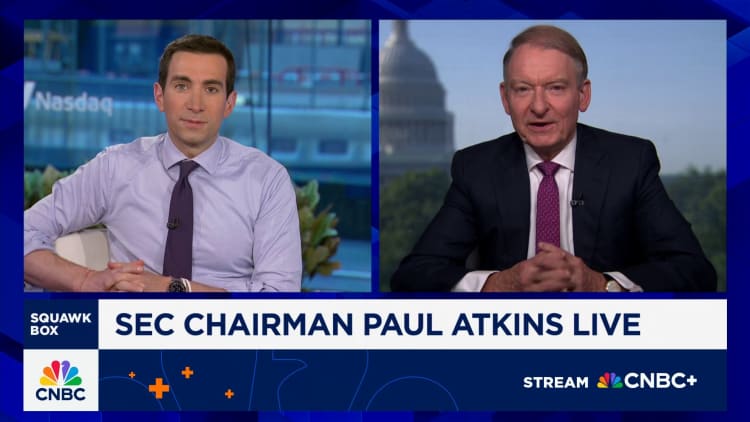
Paul Atkins, chairman of the U.S. Securities and Exchange Commission, said his agency will propose a rule change following President Donald Trump’s call to switch quarterly earnings reports to a semiannual schedule.

“I welcome that posting by the president, and I have talked to him about it,” Atkins said on CNBC’s “Squawk Box” Friday. “In principle, I think to propose change in what our rules are now, I think would be a good way forward, and then we’ll consider that and move forward after that.”

Atkins said if the rule change is approved, it will be left to companies to decide whether they switch to semiannual or stay with quarterly.

“For the sake of shareholders and public companies, the market can decide what the proper cadence is,” he said.

Current regulations require publicly-traded companies to report earnings on a quarterly basis, though providing forecasts is voluntary. Earlier this week, Trump advocated switching to a semi-annual schedule, saying it would “save money, and allow managers to focus on properly running their companies.” The rules can be changed by just a majority vote on the SEC, where Republicans currently hold a 3-1 voting majority, with one open seat. 

The issue has come under heated debate as opponents of less frequent reporting argue the lack of transparency would be a detriment to investors, especially retail investors who don’t have as ample resources as Wall Street institutions. Supporters say a six-month reporting schedule would free up companies to focus their businesses on the longer term basis.

Atkins noted that foreign private issuers already adhere to semi-annual reporting. Earlier this year, Norway’s sovereign wealth fund proposed switching to semiannual reporting, reasoning that lengthening the time frame would allow companies to focus on the longer term. The Long-Term Stock Exchange trading platform also has supported less frequent reporting.

“You have to realize that right now, semi-annual reporting is no stranger to our markets, foreign private issuers do it right now,” Atkins said. “There’s been a lot of discussion of the past few years about how this quarterly reporting kind of emphasizes a short term type of thinking.”

Watch CNBC's full interview with SEC Chairman Paul Atkins

NBA star Kevin Durant can’t unlock his Coinbase bitcoin account. His agent is thrilled

foreground of header

Watch Daily: Monday – Friday, 3 PM ET

  • Durant’s predicament has “only benefited” the hoopster, agent Rich Kleiman said.
  • “We’ve yet to be able to track down his Coinbase account info, so we’ve never sold anything, and this bitcoin is just through the roof,” Kleiman said Tuesday at CNBC’s Game Plan conference in Los Angeles.
Kevin Durant #35 of the Phoenix Suns looks on during the second half against the Houston Rockets at PHX Arena on March 30, 2025 in Phoenix, Arizona.
Chris Coduto | Getty Images

NBA superstar Kevin Durant can’t find the password to his Coinbase account, which holds bitcoin that he began buying in earnest when he was playing for the Golden State Warriors in 2016. His agent couldn’t be happier.

Durant’s predicament has “only benefited” the hoopster, agent Rich Kleiman said.

“We’ve yet to be able to track down his Coinbase account info, so we’ve never sold anything, and this bitcoin is just through the roof,” Kleiman said Tuesday at CNBC’s Game Plan conference in Los Angeles.
“It’s just a process we haven’t been able to figure out, but Bitcoin keeps going up … so, I mean, it’s only benefited us,” he said.

Durant, who will play for the Houston Rockets this upcoming season, began snapping up bitcoin around 2016, after the U.S. Olympic team legend and Kleiman attended a dinner where his then-teammates kept discussing the cryptocurrency.

“I just heard the word ‘bitcoin’ 25 times this evening, and the next day, we started investing in bitcoin,” Kleiman said. The agent did not say how much bitcoin Durant bought.

Bitcoin sold for between about $360 and $1,000 back in 2016, according to CoinGecko. The leading cryptocurrency is now trading at almost $116,000, or more than 11,000% above its highest price the year Durant was buying.

Stock chart icon

hide content
Bitcoin since 2020

Durant has been unable to access his Coinbase account for “a few years” due to a “user error on our end,” Kleiman told CNBC on Wednesday.

“We’ve already been working directly with the Coinbase team on Kevin’s account recovery, which is why it was easy for me to make a joke about it on stage,” Kleiman said.

Kleiman said that he and Durant are also investors in Coinbase Global, and that the company “has been a valuable resource in growing our business.” In 2021, the duo’s Thirty Five Ventures struck a multi-year deal with Coinbase to promote the trading platform, which includes creating content about digital assets for Durant’s sports and entertainment website, Boardroom.

Coinbase, in a statement to CNBC, said its users can reset their passwords using self-service tools within the trading platform’s app. The platform for buying, selling and storing cryptocurrencies also has an around-the-clock support team fielding account recovery requests and other inquiries, according to a spokesman.

Financial News

Daily News on Investing, Personal Finance, Markets, and more!

Financial News

Policy(Required)