How much would an investor need in an ISA for a £6,000 monthly second income?

Generating a reliable second income from an ISA is a goal for many investors, but how much capital is required? The answer depends on dividend yields and the power of compounding over time.

A £6,000 monthly income translates to £72,000 per year. But, the amount needed in an ISA to provide that depends on the average dividend yield of the portfolio. With a 5% dividend yield, an investor would require a portfolio worth £1.44m. At 4%, the figure rises to £1.8m. At 3%, it would take £2.4m to generate the same level of income.

Targeting a 5% yield strikes a balance between income generation and sustainability. However, simply chasing high yields can be risky, making diversification crucial.

Building the portfolio

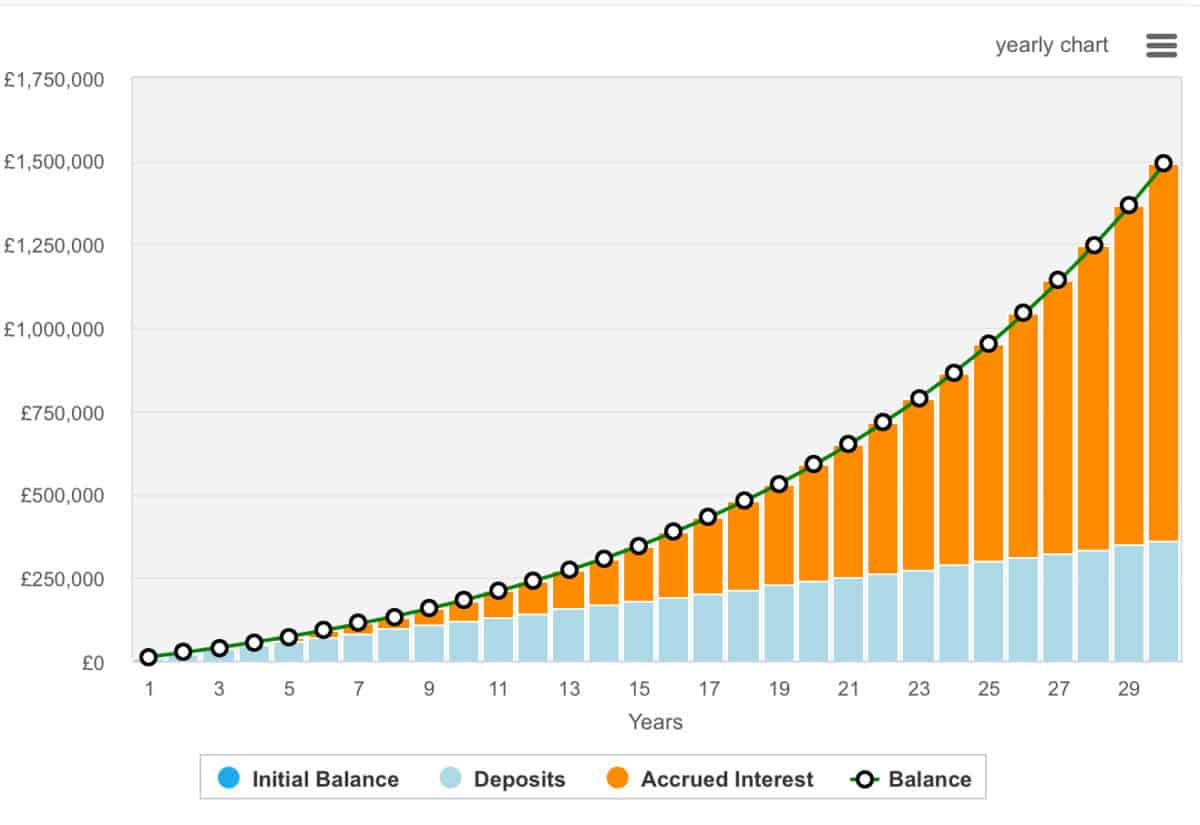
Building a seven-figure portfolio from scratch might seem daunting, but regular investing and compounding work in an investor’s favour. A consistent approach can turn even modest contributions into substantial sums over time. An investor starting with nothing but contributing £1,000 per month into a Stocks and Shares ISA could see their portfolio grow significantly.

Assuming an 8% annual return, including dividends and capital appreciation, the investment could reach £182,000 in 10 years. But that surges to £589,000 in 20 years, and to over £1.5m in 30 years. The key is reinvesting, allowing the power of compounding to take effect and accelerate wealth accumulation.

Diversification plays a crucial role in both building wealth and protecting income streams. A portfolio too heavily concentrated in one sector, such as financials or utilities, may expose an investor to sector-specific risks. Growth stocks are equally important in the portfolio’s early stages. Companies that reinvest profits rather than paying dividends can deliver superior capital appreciation, accelerating overall portfolio growth.

Finding diverisification

Novice investors may look at index tracking funds for diversification, but they can also look at Berkshire Hathaway (NYSE:BRK.B) as an alternative investment that offers both diversification and growth potential. Berkshire Hathaway, led by Warren Buffett, operates as a conglomerate with diverse business interests and investments, providing investors with exposure to multiple sectors and companies.

The company’s portfolio includes wholly-owned businesses across industries such as insurance, energy, and manufacturing, as well as significant stakes in publicly traded companies, like Apple. This diversity helps mitigate risk by spreading investments across various sectors, similar to a pooled equity fund. Berkshire Hathaway’s large cash reserves and ability to raise capital also position it for potential expansion and growth opportunities in new and promising markets.

However, investors should be aware of the risks associated with Berkshire Hathaway. One significant concern is the uncertainty surrounding future leadership and direction as Warren Buffett approaches retirement. The company’s success has been closely tied to Buffett’s investment acumen, and there are questions about whether future management can replicate his track record.

Despite this risk, Berkshire Hathaway’s long-term focus on value investing, strong financial position, and diverse portfolio make it an attractive option for investors seeking both diversification and growth potential in a single investment. It’s a stock that I’ve recently added to my daughter’s portfolio and mine.


Here’s how an ISA holder could invest £21k to target £1,500 worth of dividends a year

History shows that the most successful ISA investors are those ‘early birds’ who invest early in the tax year. Over time, they tend to achieve the greatest capital gains and the highest dividends, as their money is working for them for longer.

With the new fiscal period around the corner, I’m looking at ways that an individual could maximise their passive income in 2025/26. Here’s one strategy for investors to consider.

Choosing ISAs

It’s fair to say that most of us have heard of the Stocks and Shares ISA. Acccording to NatWest, 60% of Brits are aware of these tax-efficient products (though less encouragingly, just 38% understand how they work).

By comparison, the Lifetime ISA is recognised by fewer than half of us (44% in fact). And the number of people who understand how they operate is a paltry 22%.

This is a missed opportunity, in my view. Okay, these products have some significant downsides compared to the Stocks and Shares ISA. Peculiarities include withdrawal penalties before the age of 60, and a lower annual allowance of £4,000.

In addition, someone can only open a Lifetime ISA between the ages of 18 and 39, and contribute to one until they reach 50.

However, the Lifetime ISA also offers a large lump of cash from the government, up to a maximum of £1,000. This is an extremely handy weapon in helping investors to build long-term wealth.

Divide and conquer

If someone uses £4,000 of their £20,000 ISA allowance on a Lifetime ISA, they get an additional £1,000 from the government. This means they could have £5,000 in their Lifetime ISA, plus £16,000 in a Stocks and Shares ISA, totalling £21,000.

This is great as, naturally, the more money an individual has to buy shares, the greater dividend income they can potentially make. But of course, the exact amount will depend on dividend yields and the robustness of broker forecasts.

Let’s say someone invests £21,000 today in shares, trusts, and funds that yield a reliable 7.2%. They’d make £1,512 in dividends this year, which is £72 more than if they didn’t have that extra £1,000.

Over time, this can add up to a significant amount of money. The size of the dividends could also rise in value. When considering the compounding effect, too, where dividends are reinvested, the long-term benefit to investors’ wealth can be considerable.

A top fund

As I say, it’s important to remember that dividends are never guaranteed. However, one way that investors can target a dependable passive income is by diversifying.

The Global X SuperDividend ETF (LSE:SDIP), for instance, is one investment that can help investors achieve this. This exchange-traded fund (ETF) holds shares spanning different regions and sectors including energy production, real estate, and financial services.

Comprising 100 of the planet’s highest-yielding companies, the fund’s forward dividend yield is a whopping 11.1%. What’s more, it’s made monthly distributions for 13 consecutive years, underlying the strength it enjoys through that diversified approach.

One drawback is that the fund is sensitive to wider movements on share markets. It’s also worth noting that ultra-high company dividend yields can sometimes be unsustainable.

Yet the Global X SuperDividend ETF’s investment in scores of dividend shares helps balance out these risks. And over time, its diversified approach could yield a stable and reliable stream of dividends.

1 unique stock to consider buying for April and beyond while it’s 69p

I’ve long wished that SpaceX was available as a stock to buy. Alas, the space exploration giant prefers to remain private as it works towards making humans a multi-planetary species.

However, UK investors can get exposure to SpaceX through investment trusts. One that I think is worth considering for a growth portfolio is Schiehallion Fund (LSE: MNTN), whose top holding is SpaceX.

The quirky-sounding fund is named after the Schiehallion mountain in Scotland and currently has a $922m market-cap. It’s managed by Baillie Gifford, the asset manager best known for running Scottish Mortgage Investment Trust.

Unlike other investment trusts, Schiehallion aims for capital growth by investing in later-stage private businesses that it considers to have “transformational growth” prospects and the potential to become publicly traded. In other words, not start-ups in basements. A handful of holdings have already gone public.

While the share price has risen 34% over the past two years, it remains 70% off a peak reached in late 2021.

Strong year

On 26 March, the trust released solid results for the year to 31 January. The net asset value (NAV) return was 12.9%, while the share price increased 51%.

In the period, the share price discount to NAV narrowed from 39.6% to 19.2%. Perhaps the 5.2m shares it bought back at a cost of $4.2m helped (the fund is denominated in US dollars).

Schiehallion enjoyed a very strong final quarter of its financial year. This was driven in part by SpaceX’s valuation reaching a mammoth $350bn, making it the most valuable private company in the world. 

It first invested in SpaceX in 2019, meaning it has generated a more than six times return over that period. When I hear that, I think that’s a 500%+ return I’ve missed out by not being able to buy SpaceX shares myself!

Other private contributors to performance included Bending Spoons (+89%), which is an Italian consumer app acquirer, and Chinese TikTok owner ByteDance (+33%). I’m not familiar with the former, while everyone has heard of the latter, for better or worse.

Among public holdings, there were strong share price increases from Affirm, Wise, and Warby Parker.

The top 10 holdings have been growing revenue at 42% on average, with a healthy 58% gross margin profile. Roughly 40% of the portfolio is profitable on an EBITDA basis.

Top 10 holdings (January 2025)

Company % of net assets Description
SpaceX 9.4% Rockets and Starlink satellite internet constellation.
Bending Spoons 8.1% Acquirer of digital consumer applications.
ByteDance 6.2% Owner of TikTok.
Wise 6.1% International money transfer services.
Affirm 5.9% Consumer loans.
Tempus AI 3.4% AI-based precision medicine.
Stripe 2.9% Global payments processing company.
Databricks 2.8% Data analytics platform.
Wayve Technologies 2.6% Develops software for autonomous vehicles.
Warby Parker 2.6% Corrective eyewear retailer.

Risk

Now, it wasn’t all positive. One holding, Swedish battery maker Northvolt has gone under. Another, German real estate agency McMakler is also facing great difficulties.

Both holdings saw their valuations almost fully written down, which highlights the inherent risks of investing in developing growth companies. That said, more than 80% of the private firms within the portfolio have a cash runway of more than two years. That’s encouraging to know.

Nevertheless, Schiehallion is only suitable for risk-tolerant, long-term investors.

Foolish takeaway

Since the end of February, the share price has plunged 25% to $0.89 (69p). This means the NAV discount has widened to 31%, which I think offers a potentially attractive entry point.

Looking forward, Schiehallion’s managers are excited at the opportunities out there. And they say SpaceX has “arguably one of the most robust competitive advantages we have ever seen“.

Finally, the ongoing charge is 0.92%, which is reasonable.

Here’s how a £20k ISA could generate £1k of passive income each month!

Using a Stocks and Shares ISA to buy dividend shares is a common way for people to set up passive income streams.

It can also be very lucrative.

For example, a £20,000 ISA could generate a four-figure monthly passive income while sticking to blue-chip FTSE 100 shares. Here’s how.

Setting up for success

Let’s start with the basics.

One’s getting the right ISA. Fees and costs can eat into passive income streams. So it pays for an investor to choose carefully when deciding what Stocks and Shares ISA best suits their needs.

Next is the simple arithmetic question of what sort of investment could generate a monthly passive income of £1,000.

That’s £12,000 a year. From a £20,000 investment that suggests a 60% dividend yield, which I see as totally unrealistic.

By reinvesting dividends each year over the long run, though – something known as compounding – I do think the goal is achievable. For example, imagine an investor manages an average yield of 7%. After 32 years, their ISA ought to be generating over £1,000 of passive income each month.

Sure, 32 years is a while. But this is a long-term investing approach, which I think is understandable given the ambitious nature of the passive income goal.

Finding shares to buy

Still, the theory’s all well and good – but is a 7% dividend yield realistic while sticking to high-quality blue-chip companies? After all, it’s around double the average FTSE 100 yield right now.

I think that it’s achievable in today’s market, but as always it’s important that an investor doesn’t only focus on yield. No dividend is guaranteed to last. So I think the important thing is always to look first for brilliant businesses with attractive share prices and only later to zoom in on what their yield is.

An example of one such share I think investors should consider is M&G (LSE: MNG). The FTSE 100 asset manager recently grew its annual dividend per share, in line with its policy of aiming to maintain or grow the payout every year.

With a 9.9% yield, that has made M&G even more lucrative for shareholders. The market for asset management is huge and likely to stay that way in my view.

M&G’s strong brand combined with a customer base in the millions has proven a valuable formula when it comes to generating sizeable free cash flows that can help fund the dividend.

M&G’s cash generation potential is proven but one risk I see is that investors will pull out more funds than they put in. M&G has been struggling with that challenge over the past couple of years and I see it as a risk to future profits.

But I think there’s a lot to like about the company – and certainly the passive income potential of its chunky dividend yield.

How much might an investor need to invest in dividend stocks to earn £800 a month passive income?

Generating passive income by investing in dividend stocks is a popular strategy that investors use to aim for financial independence. With the right dividend-paying stocks or investment funds, it becomes possible to create a steady stream of income. 

But how much capital might be required to achieve a target of £800 per month in dividend income?

Understanding the required annual yield

To calculate the necessary investment amount, the dividend yield plays a crucial role. The yield represents the percentage return provided by an investment in the form of dividends. For example, if an investment offers a 5% annual yield, then every £1,000 invested would generate £50 per year in dividends.

Given the target of £800 per month, or £9,600 annually, the required investment will vary depending on the yield:

  • 4% yield: £240,000
  • 5% yield: £192,000
  • 6% yield: £160,000
  • 7% yield: £137,143
  • 8% yield: £120,000

The higher the yield, the lower the initial investment required. However, higher yields often come with increased risk, so diversification and careful stock selection are essential.

Aiming for an average yield of 6% is often considered a happy medium.

Selecting the right investments

A diversified portfolio can help balance risk while maintaining a sustainable yield. Those looking to build a passive income portfolio should include a mix of the following types of dividend-focused stocks:

Dividend-paying stocks are the obvious first choice. It’s best to go for those with a history of reliable dividends, particularly well-established companies with stable revenue and earnings growth.

Real estate investment trusts (REITs) are another good option as their regulatory structure offers attractive yields and consistent income streams.

Exchange-traded funds (ETFs) and investment trusts that specialise in dividends can offer diversification with the bonus of professional management.

Please note that tax treatment depends on the individual circumstances of each client and may be subject to change in future. The content in this article is provided for information purposes only. It is not intended to be, neither does it constitute, any form of tax advice.

One example

Income investors may want to consider a dividend stock like Legal & General (LSE: LGEN) — one of the UK’s largest financial services firms. The FTSE 100 company has a long track record of reliable dividend payments and currently offers an attractive yield of around 9%. It also benefits from a strong position in the financial services sector, earning steady revenue from pensions, asset management, and insurance.

It’s not the fastest-growing stock on the Footsie, but it has returned 4% per year on average over the past 20 years. Because its earnings are linked to financial market performance, stock market dips risk hurting its profits. Likewise, higher interest rates can impact investment portfolios and pension liabilities, affecting earnings.

Overall, its long-proven dedication to shareholder returns is what makes it a popular pick among income investors.

Optimising an investment

There are various tips and tricks to ensure an investment provides optimal returns. 

A Stocks and Shares ISA allows up to £20,000 of investments per year with no tax levied on the capital gains. This makes it an effective vehicle for passive income generation without concerns over dividend tax deductions.

Reinvesting dividends is a great to accelerate growth and enhance long-term returns. By compounding income through reinvestment, an ISA portfolio can grow more rapidly, potentially reducing the time needed to reach the desired income level.

Earning passive income requires careful planning and a well-balanced portfolio. But while there are some risks, a careful selection of stable dividend-paying stocks makes it possible for even a novice investor.

Just released: March’s small-cap stock recommendation [PREMIUM PICKS]

Premium content from Motley Fool Hidden Winners UK

In this service, we highlight what we believe to be the very best small-cap businesses listed on the UK market. Typically these will be companies valued at between £200m and £500m, and many of them could be listed on AIM, the so-called junior market run by the London Stock Exchange.

“The company’s founder remains CEO, has a large stake in the business, and sounds as enthusiastic as ever about growing the business.”

Ian Pierce, Hidden Winners

March‘s recommendation:

Redacted

Want The Full Recommendation? Enter Your Email Address!

At a P/E multiple of 6, is this FTSE 100 stock a no-brainer buy to consider in April?

Despite climbing 105% in five years, International Consolidated Airlines Group (LSE:IAG) shares trade at a price-to-earnings (P/E) multiple of 9. That’s well below the FTSE 100 average of 17. 

It’s also well below the multiple the stock traded at a year ago, which was 21. So is this a huge opportunity, or is something else going on?

Operational leverage

Nearly every business goes through ups and downs, but some more so than others. And airlines are some of the most volatile when it comes to earnings. The biggest costs are fuel, staff, airport fees, and aircraft. And importantly, these are the same whether a plane is 99% full or 60% empty. 

That can be great when things are going well. Being able to add more customers with almost no extra cost means almost all the revenue from ticket sales converts to profits. Equally though, earnings can evaporate quickly when demand drops and airlines end up flying fewer passengers at no real reduction in costs. And IAG’s P/E multiple is a reflection of this.

In general, the P/E ratio a stock trades at doesn’t actually tell investors much about how cheap it is. What it does say, is what the market’s expecting from the underlying business.

When a stock trades at a high multiple, it’s a sign investors are anticipating growth. Equally, a low P/E ratio is a good indication that investors think there might be difficult times ahead.

Turbulence ahead?

IAG shares trading at a P/E ratio of 9 means investors think this are about as likely as they’re going to get, at least for now. But it’s worth noting analysts don’t seem to agree. 

Earnings per share are forecast to increase from 46p in 2024 to 71p over the next three years. If that happens, the stock’s trading at a P/E multiple of around 4 based on 2028 earnings. 

Year (Anticipated) EPS Implied P/E Ratio
2024 47p 6.32
2025 53p 5.6
2026 58p 5.12
2027 64p 4.64
2028 71p 4.18

For my part though, I’m on the side of the market. I think there are a couple of reasons why investing based on an expectation of steady profit growth over the next few years is quite risky.

One is the possibility of a recession. The UK is IAG’s largest market and I think the chance of Britain entering an economic downturn in the near future is unusually high right now. Another is the risk of one-off events, such as the recent fire at Heathrow. The financial impact on IAG’s unclear, but it reminds me of the IT outage in 2017 that cost the firm £80m.

To some extent, all businesses face exogenous threats. But the risk is greater for companies with high fixed costs – such as IAG – where the impact on profits is more profound.

April opportunity?

Other things being equal, it’s better to buy shares at a lower earnings multiple than a higher one. But with cyclical businesses like IAG, other things aren’t equal.

Heading into April, a lot has been going right for IAG. But this is when the risks are greatest and investors need to be most wary. I think that’s what a low P/E multiple is – rightly – reflecting.

There are a few FTSE 100 stocks I’m looking to buy this month, but IAG isn’t one of them.

I think this struggling FTSE 250 discount retailer could skyrocket in 2025

The FTSE 250 harbours many hidden gems, and one that caught my attention recently is BME European Retail (LSE: BME).

It’s best known for its expansive network of discount stores, offering customers low-cost household goods, clothing, and other essentials. Operating across multiple European markets, it benefits from consumers’ increasing preference for budget-friendly shopping amid ongoing economic uncertainty.

Unfortunately, the company has been all over the news lately for all the wrong reasons. 

A string of issues

The share price has tanked 51% in the past year and is now at a five-year low, prompting the departure of short-lived CEO Alex Russo.

Last December, the company dropped out of the FTSE 100 after its market cap sank below £3bn. Then, in January this year, it revealed disappointing festive season sales before issuing a profit warning in February.

Both Canaccord Genuity and JPMorgan Chase have reduced their price targets for the stock this year.

Long story short, things haven’t been going great.

Recovery potential?

As the saying goes: when there’s blood in the streets, buy. With the price now at a five-year low and institutional investors threatening to intervene, there could be a great opportunity here.

A new CEO is likely to shake things up and investor intervention might get the cogs turning. If so, 2025 could be a year of strong recovery.

Despite all the problems, BME has instituted an aggressive expansion strategy targeting the UK, Spain, and France. It includes the construction of 50 new stores with a view to boosting revenue and brand visibility.

It’s also been working on its online presence, bolstering e-commerce platforms to complement brick-and-mortar stores. With online shopping taking off since Covid, this is a crucial factor for long-term growth.

What’s more, the falling share price isn’t indicative of bad financial performance. In its latest annual results, revenue climbed 10% to £5.48bn and earnings grew by 5.5% to £367m. While profit margins slipped slightly due to higher expenses, earnings per share (EPS) rose from 37p to 35p.

Now with a trailing price-to-earnings (P/E) ratio of 8.2, the stock looks significantly undervalued. Add to that a meaty 5.6% dividend yield and it has some attractive prospects for both value and income investors.

Risks to consider

The key risk, of course, is that it doesn’t recover. While discount retailers tend to fare well during economic downturns, a severe recession could still impact consumer spending. As we’ve already seen in 2022, inflationary pressures during such periods can cause logistical disruptions, impacting costs and margins. 

It also operates in a highly competitive industry, with rivals such as Lidl and Aldi fighting for market share. If a new CEO isn’t found quickly, operational efficiency may slip, giving rivals the advantage.

A promising value stock

With strong financials, a growing presence in Europe and favourable industry trends, BME European Retail could be one of the best FTSE 250 stocks to watch in 2025. 

While risks exist, the company’s strategic expansion and solid performance show promise. I’m optimistic that a new CEO and investor action can turn things around for the retailer. 

As such, I think investors looking for growth in the discount retail space should consider BME an attractive option.

How an investor could open a Stocks & Shares ISA before 5 April, and aim for millionaire status

An investor opening a Stocks and Shares ISA before the 5 April deadline has a golden opportunity to supercharge their wealth, harnessing the power of tax-free compounding. With platforms like Hargreaves Lansdown and AJ Bell, setting up an ISA is quick, and funding it before the tax year ends ensures that some, or all, of the £20,000 annual allowance is put to work. Once the clock strikes midnight on 5 April, any unused portion is gone for good.

How to get going

Growing a portfolio is all about smart choices and patience. Novice investors are often advised to pick a mix of global equities, index funds, and investment trusts spreads risk while capturing market gains. More experienced investors may prefer to invest in individual stocks. This is a riskier approach, but a diverse portfolio of well-chosen stocks can growth much faster than the index average. It quite simply pays to undertake thorough research and avoid common pitfalls like throwing good money after bad and emotional investing.

The magic happens with compounding. This is when we invest in companies that reinvest earnings for us — like growth-oriented tech stocks — and reinvest dividends ourselves. This leads to steady capital appreciation, which snowballs over time, turning modest investments into serious wealth.

Dream big, it’s achievable

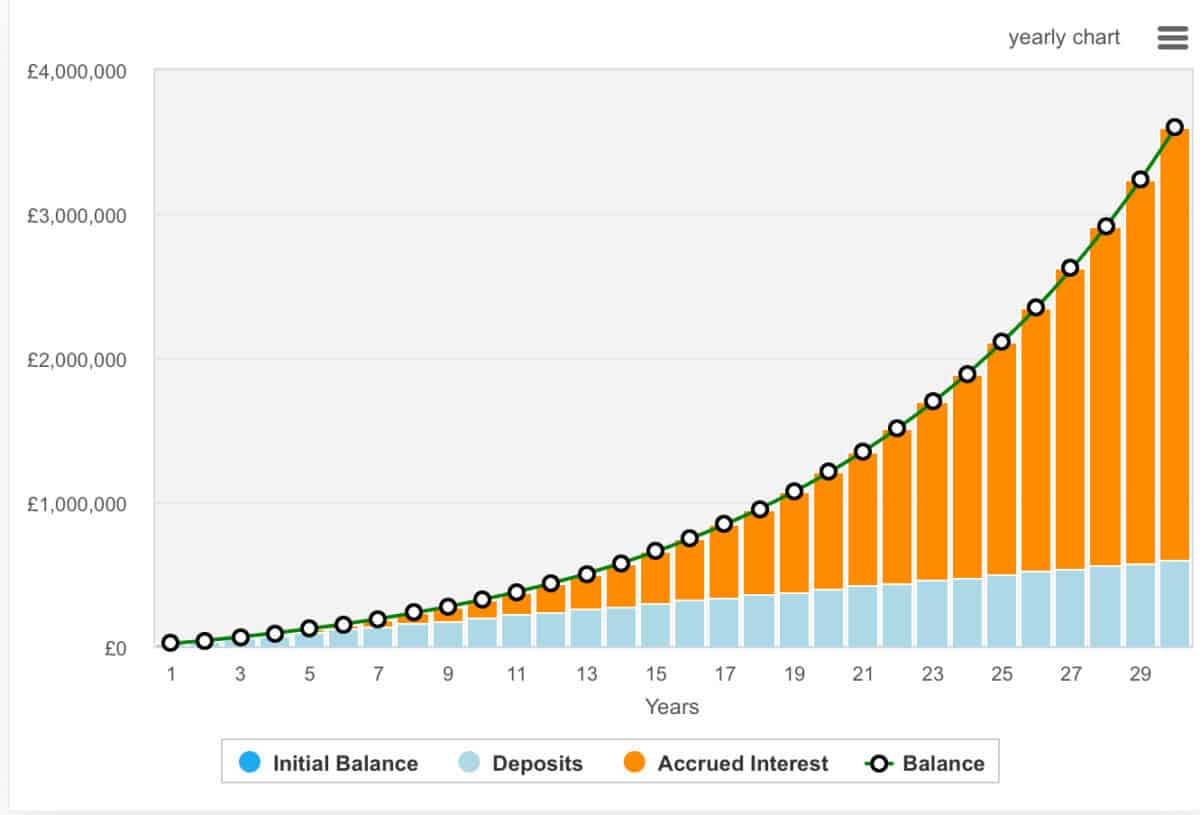
Hitting the £1m mark isn’t just a dream. It’s maths. With an average 7% return, a portfolio could double every 10 years. Using this formula, maxing out the ISA allowance each year puts millionaire status well within reach in under 25 years. More experienced investors may be able to achieve double-digit returns when averaged over the long run. In fact, 10% returns would mean hitting millionaire status in just 19 years. However, those of us making smaller contributions can get there too. It’ll just take a little longer. Thankfully, our investment will grow faster over time — that’s compounding.

Created at thecalculatorsite.com: 10% annualised growth, £20,000 annual contributions.

The real edge? No tax, ever. Unlike regular investment accounts, an ISA shields every gain and dividend from tax, letting the full force of growth and reinvestment work without interference.

Please note that tax treatment depends on the individual circumstances of each client and may be subject to change in future. The content in this article is provided for information purposes only. It is not intended to be, neither does it constitute, any form of tax advice. Readers are responsible for carrying out their own due diligence and for obtaining professional advice before making any investment decisions.

The practical bit

Market dips become buying opportunities, while diversification across sectors and regions provides stability. One investment that delivers both diversification and growth potential is The Monks Investment Trust (LSE:MNKS). This trust aims for long-term capital growth by investing globally in a diverse portfolio of quoted equities. The Monks team emphasises investing in adaptable companies that can navigate changing market conditions, spreading investments across four growth categories: Stalwart, Rapid, Cyclical, and Latent.

Monks’ top holdings include tech giants like Meta Platforms, Amazon, and Microsoft, with a significant allocation to US stocks. It’s actually a very diversified portfolio with the top five holdings accounting for just less than 20% — I’ve seen that figure much higher in other trusts. This diversification strategy has helped the trust deliver strong returns, outpacing its benchmark index in recent periods.

However, investors should be aware of the trust’s use of gearing, which stood at 4.96% as of the latest data. While gearing can amplify gains in favourable market conditions, it can also increase losses during downturns, potentially leading to higher volatility in the trust’s performance and share price.

Despite this gearing, it’s a stock that interests me a lot. In fact, it’s one I’ve added to my daughter’s SIPP.

3 things I’m doing ahead of the new 2025-26 ISA year

The new 2025-26 ISA year isn’t far away now, which means investors like myself will get a new £20,000 tax-free contribution limit to try and build long-term wealth with.

Here are three things I’m doing as the new ISA year approaches.

Please note that tax treatment depends on the individual circumstances of each client and may be subject to change in future. The content in this article is provided for information purposes only. It is not intended to be, neither does it constitute, any form of tax advice. Readers are responsible for carrying out their own due diligence and for obtaining professional advice before making any investment decisions.

Looking back

One is looking back to review my strategy. What worked? And perhaps more importantly, what didn’t? I already know one thing that didn’t work for me over the past 12 months. That was doubling down on companies where the underlying fundamentals weren’t really improving.

Take spirits giant Diageo (LSE: DGE), for example. This is a FTSE 100 stock I owned for a long time, despite it not performing as I had hoped. It’s down 47% in three years.

The firm’s been hit by a number of challenges, including high inflation, weak demand in Latin America, and an increasingly sober Gen Z.

Despite management warning about the tough trading conditions, I decided that the company’s legendary brands — including Guinness, Tanqueray, and Johnnie Walker — would underpin overall growth at some point.

Meanwhile, the stock looked good value and the dividend yield had increased to 3.5%. So I bought more shares in July at £23.The price now? About 12% lower at £20.22!

Thing is, Diageo still looks great value, on paper. The forward price-to-earnings ratio is 15 and the forecast dividend yield is 4%. Perhaps the bottom is in and sales will pick up.

However, after years of underperformance, my patience finally ran out and I sold my shares. But I’ve hopefully learnt my lesson from this value trap — avoid doubling down on a struggling stock when there’s no sign of recovery on the horizon.

Also, the UK small-cap side of my portfolio hasn’t done very well over the past year. Ashtead Technology and hVIVO have underperformed, as have most other AIM-listed shares. So I won’t be throwing good money after bad by doubling down on struggling small-caps.

Looking forward

So what do I plan on doing differently over the next year? Well, it’s the flip side of not adding to my losers. That is, I plan to add to companies in my portfolio that are doing well and getting stronger.

Some stocks I’m thinking about here include InterContinental Hotels Group, chipmaker Taiwan Semiconductor Manufacturing (TSMC), and Toast, the cloud-based restaurant management software company. I’d like to add to these at current valuations.

There is a caveat here though: valuation. There are other companies that I would like to own more shares of, but not at the current price.

Examples include Intuitive Surgical, Shopify, Games Workshop, Ferrari, and cybersecurity firm CrowdStrike. All excellent companies with strong competitive advantages, but their current market values already reflect this. So I’ll wait patiently to add to them.

Diversification

Most of the names above are growth stocks. So to stop my portfolio from becoming unbalanced, I plan to opportunistically add to high-yield dividend stocks. While no payout’s certain, I like the look of Legal & General from the FTSE 100 right now. It’s yielding a mouth-watering 8.7%.

Along similar lines, I plan to dig into investment manager M&G a bit more while its yield stands above 9%. That level of income could help boost my ISA returns over the next 12 months.

Financial News

Daily News on Investing, Personal Finance, Markets, and more!

Financial News

Policy(Required)