Up 125% in 5 years and yielding 6.5%! Are Aviva shares the FTSE’s best all-rounder?

All hail ​Aviva (LSE: AV) shares! They’ve been a standout performer in the FTSE 100 in recent past, delivering impressive growth and robust dividends.

While some stocks give investors high income, and others deliver heaps of growth, Aviva has done both. In spades.

Over the past year, Aviva’s share price has risen a modest 13%. Over five years though, it’s up a mighty 125%. That’s roughly double the FTSE 100’s 58% gain over the same period. 

Can it continue to beat the FTSE 100?

Better still, Aviva has consistently offered an attractive dividend yield, typically ranging between 6% and 7%, compared to the FTSE 100 average of about 3.5%.​

Past performance figures should always be approached with caution, especially these. Five years ago, the world was in lockdown and markets were in freefall. I wouldn’t expect an established blue-chip operating in a mature and competitive market, as Aviva does, to deliver a similarly stellar return over the next five years.

There’s still plenty to admire. Full-year 2024 results, released on 27 February 2025, showed operating profit climbed 20% to £1.77bn. The board is aiming for £2bn by 2026. It als rewarded investors by hiking the total dividend per share by 7% to 35.7p.

The £3.7bn acquisition of Direct Line is expected to enhance Aviva’s market position, potentially making it the UK’s largest home insurer and a leading player in motor insurance. But let’s not count our chickens just yet. Mergers can be complicated and don’t always unleash the expected value.

As the cost-of-living crisis drags on, general insurance will remain intensively competitive, while today’s volatile stock markets could hit assets under management.

Typically, a strong share price run shrinks the dividend yield, but Aviva still pays 6.45% on a trailing basis. Forecasts suggest this could rise to 6.77% in 2025 and 7.28% in 2026. 

Dividend income and growth too

FTSE 100 financial rivals like Legal & General Group and Phoenix Group Holdings offer higher yields of 8.2% and 9.2% respectively, but their share price performance has been vastly inferior.

So can Aviva maintain its momentum? Its diversified product range across insurance, wealth and retirement leaving it nicely placed. It should benefit from the aging population, as people have to make more pension provision themselves.

Analysts aren’t getting too excited though. The median target price for Aviva shares over the next year is 590p, suggesting a modest increase of just under 5% from today. Combined with the yield, this implies a potential total return of around 12%. Good but hardly stellar.

I’m also concerned that some of the recent share price growth is down to takeover speculation, with European insurers including Generali, Allianz, Intact Financial and Tyrg rumoured to be hovering. CEO Amanda Blanc dismissed it all as “market chatter”.

Sadly, I could no longer describe Aviva shares as a bargain, with a price-to-earnings ratio of almost 24. I still think it’s arguably the FTSE 100’s finest all-rounder though and well worth considering today but with a long-term view.

Of course, that’s just my opinion and Aviva may be played out after recent successes but investors who consider it could happily reinvest those juicy dividends while they wait for its next run of form.

A bull market could be coming for UK stocks! Here’s what I’m buying

UK stocks have traded at a discount to their US counterparts for a long time and to some extent this has been justified. But there are signs things are starting to change.

Investors have been moving away from US shares and into other assets – including cash and UK stocks. And I’ve been looking for opportunities ahead of a potential FTSE 100 bull market.

Fund flows

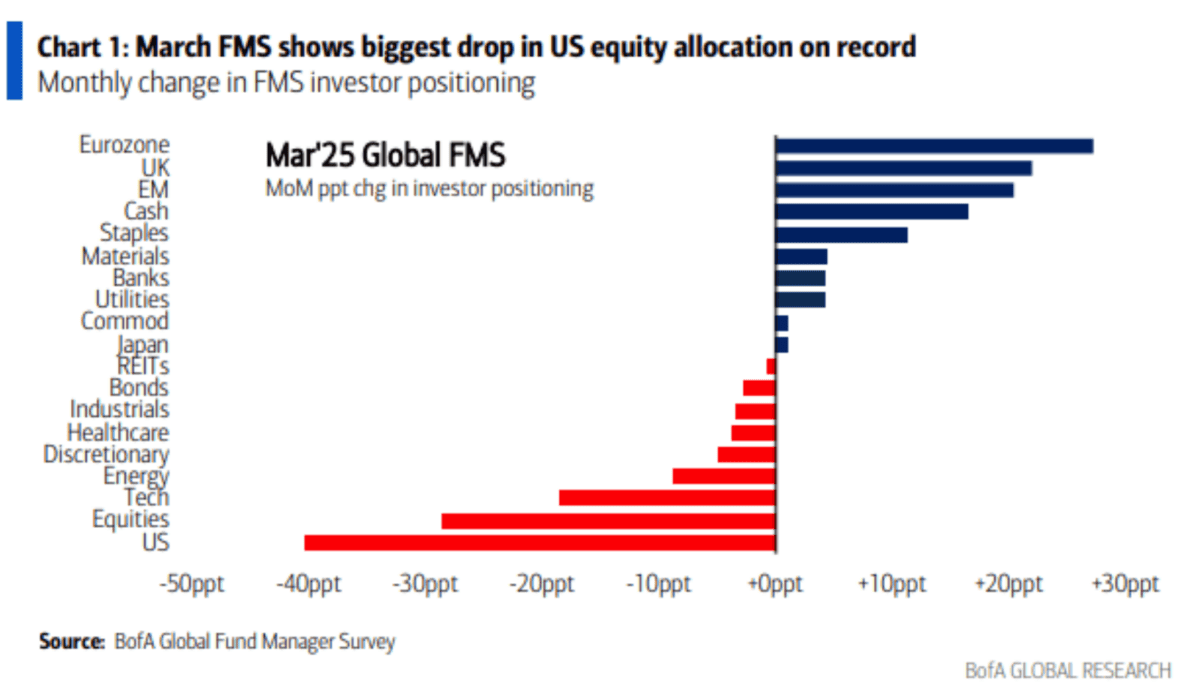
The results of Bank of America’s monthly fund manager survey for March generated some interesting data. The headline is that US stocks have been declining in popularity.

Participants reported moving from being 17% overweight US shares in February to being 23% underweight in March. That’s interesting, but there was something else that caught my eye.

Rather than where the money’s been taken from, I’m interested in where it’s been going to. And along with European equities, emerging markets, and cash, the answer’s UK stocks.

During March, investors went from being 18% underweight UK stocks to 4% overweight. And I think that’s a significant indication of improving sentiment. 

Valuation

Investing though, isn’t about being in front of the latest stock market trend. It’s about finding situations where a share price doesn’t reflect the value of the underlying business.

This involves looking for situations where the market’s underestimating a company. And the chances of this are best in markets where investors have a less positive outlook.

Despite the activity, UK shares still trade at a discount to their US counterparts. The S&P 500 trades at a price-to-earnings (P/E) ratio of 27, compared with 17 for the FTSE 100.

By itself, this doesn’t say anything about value. But it’s a sign investors still think US shares have better prospects, which is why I’m still mostly focusing on the UK for stocks to buy. 

Packaging

Macfarlane (LSE:MACF) is a manufacturer and distributor of specialist protective packaging. And I think it’s a strong business with shares trading at a relatively attractive price.

The firm doesn’t have the advantages of scale of other packaging companies and this creates risk. But its distribution business isn’t what makes it attractive from an investment perspective.

Macfarlane’s manufacturing division focuses on specialised markets like aerospace, medical devices, and automotive parts. These are often expensive and breakages can be costly.

This means designing and engineering bespoke protective packaging for these products can be highly lucrative. And a strong position in this industry is the big attraction of Macfarlane.

I’m buying

Regardless of whether or not investors are shifting from US equities to UK stocks, I think Macfarlane shares look good value. That’s why I’ve been buying them for my portfolio.

Revenues and profits fell slightly in 2024, due to a tough trading environment. That’s an ongoing risk to consider, but I think there are some important long-term strengths.

As the company expands, its operating margins have grown consistently over the last 10 years. And I think there could be more to come, making the stock attractive at today’s prices.

Could buying NIO stock at $3 be like investing in Tesla in 2010?

Tesla’s been a very enriching share over the past 15 years. Since 2010, it’s up about 20,500%, even after accounting for the recent 40% drop. For NIO (NYSE: NIO) however, the stock market story has been very different. It has lost over half its value since listing in 2018.

So far this year, NIO stock’s fallen 14% and now trades for just $3.75. For context, it reached $61 back in the pandemic tech bubble of 2021, meaning the peak-to-trough loss here is a staggering 93%!

However, the Chinese electric vehicle (EV) maker is still growing its sales strongly and plans global expansion. So could buying the stock at $3 be like me getting in on a young Tesla back in the day?

Things I like

NIO’s bread and butter is making smart, premium EVs. However, it’s also launched two sub-brands: Onvo, which targets the mainstream family market; and Firefly, a high-end brand focused on smaller cars. It has big plans to expand its brands internationally over the next few years, possibly emulating larger rival BYD‘s success.

The $7.8bn-capitalised company has pioneered battery-swapping technology, allowing customers to swap out a depleted battery for a new one in a few minutes. It now has 3,245 swap stations, and management says this gives it a “competitive edge” in the battery EV market.

It’s also built a number of NIO Houses, which are a blend of showroom and community hub for NIO users and the broader community. Many have libraries, cafés and conference rooms. I like distinctive companies like this, especially innovative ones run by founders (NIO’s William Li has been called the ‘Elon Musk of China’).

In 2024, revenue jumped 18.2% year on year to $9bn, with 221,970 vehicles sold (a 38.7% increase). Meanwhile, the vehicle margin improved to 12.3% from 9.5% for the previous year. And it’s targeting a doubling of NIO car sales in 2025.

And what I don’t like

On the other side of the ledger though, NIO reported a $3bn net loss last year. That was 8% higher than the year before, meaning the EV maker remains deeply unprofitable.

Moreover, it’s hard enough establishing one new car brand, never mind successfully marketing and scaling three of them. Then there are those NIO Houses, its own smartphone, a lifestyle brand called NIO Life, and more. My concern is that the firm’s trying to do far too much.

Another big fear I have is BYD’s new ultra-fast charging tech, which it says can deliver 250 miles of range in just five minutes. If so, that could one day make NIO’s battery-swap stations obsolete. This raises doubts in my mind about the strategy of continuing to roll out these costly stations worldwide. 

Falling knife

Unfortunately, I would say the negatives outweigh the positives here. While NIO keeps finding ways to raise funds, it also continues to incinerate cash at an alarming rate. That cannot continue for too many more years.

If NIO can swing to a profit at some point, the stock could explode higher. But what level will it be exploding from by then? $2? $1? It’s anyone’s guess at this point.

The stock still looks more like a falling knife to me than a huge Tesla-esque winner in the making. I’m not going to buy.

This top FTSE 100 trust has been dumping Tesla and Nvidia stock! Why?

One FTSE 100 firm I keep a close eye on is Scottish Mortgage Investment Trust (LSE:SMT). As a shareholder, this is clearly in my best interests. But it’s also interesting to hear the managers’ talk about technology trends and company developments.

It’s noteworthy then that in the past few months the growth-focused investment trust has been dumping its shares in both Tesla (NASDAQ: TSLA) and Nvidia (NASDAQ: NVDA). These have long been large and important holdings, so it’s quite the turnaround.

But why? Let’s take a look.

Drastic reductions

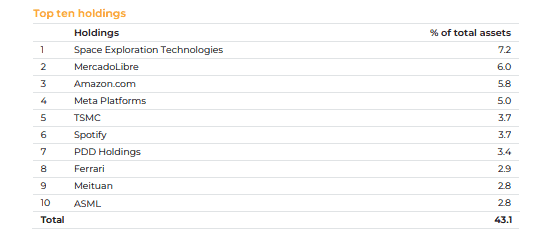
At the end of September, both Tesla and Nvidia were in Scottish Mortgage’s top five holdings.

Portfolio weighting (September 2024)
MercadoLibre 6.3%
Amazon 5.9%
SpaceX 4.6%
Tesla 4.2%
Nvidia 4.1%

Just five months later at the end of February, neither were in the top 10. This means the trust’s been aggressively reducing these positions.

Source: Scottish Mortgage February 2025.

Nvidia had been cut to around 2.6% of the portfolio, while Tesla wasn’t even in the top 30.

Tesla

Reports say that Baillie Gifford, the asset manager that runs the trust, had cut its stake in the electric vehicle (EV) maker to just 0.06% of the company’s shares.

Again, this is some turnaround as Baillie Gifford had once been Tesla’s largest outside shareholder, second only to CEO Elon Musk.

Scottish Mortgage first invested in Tesla in 2013 and was widely derided for doing so. But in the 10 years to the end of 2024, the stock had returned 3,439%. This is an example of the asymmetric returns that the FTSE 100 trust searches for.

It recently wrote: “A recent surge in the stock’s price following the US presidential election prompted us to reassess its upside opportunity, and we reduced the holding into share price strength”.

So the official reasons are profit-taking and less potential for share price rises. There has been no mention about Musk’s polarising political views and potential Tesla brand damage. It should be noted that Scottish Mortgage retains its large holding in SpaceX, another Musk-run firm.

Nvidia

Similarly, Nvidia’s been a massive winner for the trust since it first took a stake in 2016. By the end of last year, it had gone up 10,188%!

Explaining the reduction, Scottish Mortgage said: “While maintaining conviction in the long-term growth potential of AI, we reduced the position throughout the year, as after extreme share price growth the future returns potential offers less of a positive skew”.

Again, the reason here appears to be the crystallisation of gains and less potential for massive returns. The managers have also said that Nvidia’s vast competitive lead in the AI training stage is “less assured in the inference stage“.

My takeway

I’m happy that AI king Nvidia has seemingly been retained, if only as a smaller holding.

I also think the massive reduction — or even possibly complete disposal — of Tesla is understandable, despite the huge potential of robotaxis and humanoids. Sales in its core EV business are under pressure, yet the stock’s still valued extremely highly.

For investors wanting broad AI exposure, I think Scottish Mortgage shares are worth considering. While the trust could underperform if the AI boom runs out of steam, its focus on disruptive innovation and high-growth companies sets it up well long term, in my view.

3 cheap investment trusts to consider for a Stocks & Shares ISA before 5 April!

Still have some of this tax year’s Stocks and Shares ISA allowance left to use? Here are three dirt-cheap investment trusts I think investors should consider right now.

Schroder Income Growth Fund

As the name implies, the Schroder Income Growth Fund (LSE:SCF) is designed to provide investors with a rising dividend over time. This can be critical for long-term wealth building by protecting investors from inflationary impacts.

Dividends here have risen every year since the fund listed back in 1995.

In total, the Schroder Income Growth Fund has positions in almost 50 predominantly large-cap shares. This focus on market-leading companies with strong balance sheets (like Unilever, HSBC, and Legal & General) gives it excellent dividend visibility.

Today the fund carries a market-beating 5.3% forward dividend yield. And at 294p, its share price sits at a 9.8% discount to its net asset value (NAV) per share.

It may have fewer holdings than many other trusts, which in turn means higher risk. But I still think it’s worth considering at today’s prices.

BlackRock Latin American Investment Trust

The BlackRock Latin American Investment Trust (LSE:BRLA) is designed to capitalise on the region’s rising wealth and growing populations. More specifically, it’s focused on South America’s economic engine rooms of Brazil, Mexico, and Chile.

The fund invests across multiple sectors, helping it to spread risk and profit from a multitude of growth opportunities. Major holdings here include iron ore producer Vale, energy giant Petrobras, and retailer Walmart de México y Centroamérica.

Bear in mind, though, that more than 70% of the trust is invested in cyclical sectors like raw materials and consumer goods. This could leave it particularly vulnerable to periods of economic weakness.

At 307p per share, BlackRock’s Latin American trust trades at a decent 12.2% discount to NAV per share. Meanwhile, its forward dividend yield is a huge 6.2%.

I like it, even though an ongoing charge of 1.13% is higher than that of many other investment trusts.

Baillie Gifford US Growth Trust

The Baillie Gifford US Growth Trust (LSE:USA) is another regional fund I think’s worth a close look from ISA investors. Its high weighting of market-leading global innovators provides plenty to get excited about, in my view.

Major US-listed shares here include Amazon, Meta, Nvidia, and Shopify, though it also holds stakes in private companies. Indeed, Elon Musk’s SpaceX venture represents its largest single holding (11.1% of the total fund).

Once again, this investment trust is well diversified, with holdings spread across nine sectors including information technology, consumer goods, industrials, and telecoms. With a large weighting of technology shares, too, it provides exposure to high-growth areas like cloud computing, artificial intelligence (AI), and e-commerce as well.

Today this Baillie Gifford trust looks dirt cheap. At 227p per share, it trades at a 10.3% discount to its NAV per share. That’s attractive value in my book, even though a US recession could dent near-term performance.

£1,400 a year dividend income from a Stocks and Shares ISA? Here’s how

With the end of the tax year approaching, I’ve been thinking about how investors can make the most of their Stocks and Shares ISA. One idea? Use it to build a passive income stream from dividends.

By investing the full £20,000 allowance in a spread of FTSE 100 dividend stocks, an investor could generate a high income today that also rises steadily in the future. That’s tax-free inside an ISA, which makes it even more appealing.

Please note that tax treatment depends on the individual circumstances of each client and may be subject to change in future. The content in this article is provided for information purposes only. It is not intended to be, neither does it constitute, any form of tax advice. Readers are responsible for carrying out their own due diligence and for obtaining professional advice before making any investment decisions.

It’s ambitious, but not unrealistic. Plenty of FTSE 100 shares offer eye-popping dividend yields today. 

How to get a high yield from the FTSE 100

Legal & General Group yields 8.74%, while British American Tobacco yields 7.62% and Land Securities Group pays 7.37%.

It’s important to remember that high yields can be risky. Just because a company pays a big dividend today doesn’t mean it always will. The board needs to generate enough money to maintain payouts. Also, a high yield may be a sign of a falling share price and a struggling business.

That’s why I believe in building a balanced portfolio across different sectors, helping reduce risk if one stock stumbles.

One dividend stock that stands out to me as worth considering is Taylor Wimpey (LSE: TW). The housebuilder currently yields a mighty 8.37%, and that’s forecast to rise to 8.56% next year.

The board says it’s “committed to a sustainable ordinary dividend that grows over time”, although, as I said, that isn’t guaranteed.

Housebuilders have had a bumpy ride. High mortgage rates and the cost-of-living crisis have dampened demand, while sticky inflation has driven up the cost of labour and materials.

Labour’s promise to build 1.3m homes in the next five years could also increase supply, impacting prices. Although I suspect it will undershoot that ambitious target.

The Taylor Wimpey share price has actually fallen 20% in the last 12 months, which is a blow. As someone who holds the shares, I’m expecting it will recoup that loss and more, once inflation is finally beaten and interest rates start falling.

I’m backing the shares to recover

Today, Taylor Wimpey looks decent value, trading at 13.8 times earnings. For me, this is a solid long-term buy-and-hold stock. But the shares could take time to recover.

I wouldn’t consider putting all of a Stocks and Shares ISA into one or two high yielders. Diversification’s key. Adding a fewer lower yielders such as Sainsbury’s (5.54%) and BP (5.42%) could give me balance. By investing future ISA allowances an investor could aim to hold a minimum of 12 different stocks over time, eventually upping that to around 15.

By putting £20,000 into a well-balanced ISA and targeting a 7% average yield, an investor would potentially get dividend income of £1,400 in year one. Which isn’t a bad start.

Over time, if companies increase profits and dividends, that income could rise and rise. Especially if the investor ploughs all of their dividends back into their portfolio while working, and only draws on them as income after they retire.

The key here is patience. Avoid chasing short-term gains. Instead, target a steady, tax-free income stream that grows over the years. For me, that’s the real power of a Stocks and Shares ISA.

Here’s the BP share price forecast for the next 12 months

It’s been a tumultuous time for the BP (LSE: BP) share price. So what’s new?

Ever since the Deepwater Horizon tragedy in 2010, BP’s lurched from crisis to crisis. Oil price volatility, the pandemic, the energy shock and a wobbly green transition have given the board – and investors – a bumpy ride.

Most recently, BP’s been making a sharp pivot back to fossil fuels, a move that some investors will cheer as a return to its core business. Others worry it’s another misstep in a decade-long identity crisis.

CEO Murray Auchincloss is doubling down on cost-cutting and efficiency, promising to “fundamentally reset” BP’s strategy. But does that mean better returns for shareholders?

Can this FTSE 100 giant regain its throne?

BP’s share price is up 17% in the last three months, but still down 10% over the past year. That’s reflects weaker oil prices, but also a company that’s lost its way.

BP’s been squeezed between green activists who think it’s not doing enough on renewables and activist investors who think it’s doing too much. Now it’s made its choice.

The board’s cutting back on green projects, reallocating capital to higher-returning oil and gas businesses, and ramping up efficiency. It’s also targeting $20bn in asset sales and reducing its net debt from $23bn to between $14bn and $18bn by 2027.

But is the board merely flip-flopping between strategies, risking ending up with stranded fossil fuel assets in a rapidly changing energy market?

Auchincloss doesn’t really seem to be on top of events, more buffeted by wider forces. With activist investor Elliott hovering impatiently, he needs to get his game face on. No second chances here.

So what does the market think of his prospects? The 27 analysts covering BP shares have a median 12-month price target of just over 492p, suggesting a potential 11% upside from today’s 444p. 

It’s not exactly a rip-roaring vote of confidence.

At least investors receive dividends while they wait for BP to sort itself out. The yield’s forecast to hit 5.69% this year and 5.93% in 2026.

Dividends and buybacks too

Share buybacks continue, but the pace is slowing as earnings fall. Subject to board approval, BP expects to pay between $750m and $1bn in Q1 2024. That’s down from $1.75bn in the previous quarter.

I actually bought BP shares recently. At the time, the price-to-earnings (P/E) ratio was around six. An unmissable bargain, I thought. Soon after, BP’s earnings per share plunged 97% in full-year 2024, and suddenly that P/E ratio soared to over 240 times.

I’ve made a modest gain so far and got my latest dividend Friday (28 March), which I’ll automatically reinvest. I’m sticking with BP, and I can understand why investors would consider buying the shares today, despite that P/E shock.

Investors must treat BP as a pure fossil fuel play. It didn’t build a convincing renewables business when it was noisily committing to doing so, and certainly won’t bother now. At least it’s back on home ground.

Investors considering the stock can take their own view on that. For now, I’m holding, but I’m not impressed.

Ahead of this week’s ISA deadline, here’s what a spare £10k could achieve!

The coming week will see the end of one tax year. A new one will begin next weekend. By then, it will be too late to contribute to an ISA using the current year’s allowance. Once that contribution period ends, it is gone forever, although a new tax year and new ISA allowance is around the corner.

Each investor has to make their own choices about how much to contribute to an ISA and what to invest it in.

To illustrate some such choices, however, here is what £10,000 invested in a Stocks and Shares ISA today could potentially achieve.

Sizeable capital gains

Share prices can go up, move down or edge sideways over time.

For example, over the past five years, the FTSE 100 index has moved up by 57%. So a £10,00 investment in a FTSE 100 tracker fund five years ago would now be worth around £15,700.

I would welcome that sort of growth in my own portfolio. But the number is flattered by the fact that five years ago the FTSE 100 was still struggling as the stock market digested the implications of the pandemic.

Even if I wanted to target that sort of growth rate in coming years, though, my move would not be to track the index but rather to buy a carefully selected basket of individual shares.

Over the past five years, after all, some individual shares have done brilliantly. Nvidia is up 1,634%, for example. I think a savvy investor could spend time now trying to figure out what businesses look cheap relative to their long-term commercial prospects.

The sort of gain seen at Nvidia is exceptional. But it does happen – and some shares on sale today will end up soaring over the next few years. The job for an investor is trying to figure out which ones.

While capital gains are appealing for me, they can be cut down in size if an ISA’s dealing fees, account administration costs, and the like are high. So I think a smart investor will take time to compare different choices on the market when deciding what suits their personal needs best.

Passive income from proven blue-chip businesses

As well as the potential for capital gain, passive income is a reason many people like to use their ISA allowance buying dividend shares.

The average yield of the FTSE 100 is around 3.5%. On a £10,000 ISA that means around £350 per year.

But some FTSE 100 shares offer more. For example, I own shares in Lucky Strike manufacturer British American Tobacco (LSE: BATS).

Making and selling cigarettes is cheap to do but can be very profitable. That can generate sizeable cash flows that help support a juicy dividend.

British American has grown its dividend per share annually for decades and currently yields 7.6%.

A £10,000 ISA invested at a 7.6% yield would earn around £760 in dividends annually. An investor could compound them for 20 years. By then they would be earning around £3,290 of dividends annually.

Note that, while I own shares in British American, I do not only own those. Cigarette smoking rates are declining, and the company’s non-cigarette business strategy remains to be proven. Even a good business can run into difficult times.

So, I always keep my ISA diversified.

Could these super-high UK dividend yields be at risk?

My investment style has evolved over decades, but I mostly hunt for cheap shares and chunky dividend yields. But the problem with being a bargain hunter is that giveaways are hard to find.

Still, I keep sifting through the FTSE 100, hunting for undervalued stocks. I particularly enjoy unearthing cheap Footsie shares, as I see the UK market as undervalued in historical and geographical terms. Furthermore, almost all FTSE 100 member companies pay dividends to shareholders.

Dividends can be dicey

After companies pay out dividends, their cash piles are smaller. And repeatedly paying excessively generous dividends can weaken a company’s balance sheet. This might cause solvency problems at some firms, but companies usually respond by slashing future dividends.

As future dividends are not guaranteed, they can be axed at short notice. Thus, I pay close attention to dividend histories, looking for signs of potential pitfalls ahead.

Also, very high dividend yields can warn of future trouble. In particular, history shows that double-digit cash yields rarely last. Either share prices rise and yields fall — or dividends get cut, producing similar outcomes.

The FTSE 100’s highest yielders

For example, here are the FTSE 100’s five highest-yielding shares:

Company Business Share price* Market value* Dividend yield*
Phoenix Group Holdings Asset manager/insurer 575.3p £5.8bn 9.4%
M&G Asset manager/insurer 219.1p £5.3bn 9.2%
Legal & General Group Asset manager/insurer 242.7p £14.3bn 8.8%
Taylor Wimpey Construction 114.35p £4.1bn 8.3%
Vodafone Group Telecoms 72.1p £18.3bn 7.9%

*All figures as of 29 March

Disclosure: my wife and I own shares in four of these five ‘dividend dynamos’ in our family portfolio, excluding Taylor Wimpey. We bought these stocks for their bumper dividend yields. For now, we reinvest this cash into yet more shares, thus boosting our future returns.

Looking at the first three stocks above, I see their dividend payouts as pretty safe. These three asset managers generate billions of surplus capital from their operating businesses, enabling them to comfortably afford projected cash returns. Then again, one of these stocks provides an important lesson in dividend dangers.

Volatile Vodafone

For me, Vodafone Group (LSE: VOD) shares became a classic ‘value trap’. We bought this high-yielding stock in December 2022, paying 90.2p per share. Within two months, the share price had leapt above 102p, but it’s been downhill ever since. Over one year, this stock is up 5.8%, but it has slumped 37.7% over five years.

One problem for Vodafone is that its revenues are either stagnating or growly slowly in its major European markets, including Germany and the UK. Unfortunately, strong growth in emerging markets has failed to offset the group’s long-term earnings decline. At the peak of the dotcom bubble that burst in 2000, Vodafone was Europe’s largest listed company. Today, it’s worth a fraction as much.

One big problem for Vodafone shareholders arrived in May 2024, when the company announced that its yearly dividend would halve from 2025 onwards. Having been €0.09 (7.5p) a year for years, 2025’s payout will plunge by 50%. No wonder the shares have fallen since the loss of this income.

Despite this dividend setback, I remain a fan of CEO Margherita Della Valle, who is turning this tanker around through sales of non-core assets and tie-ups with other telecoms players. Hence, I will keep our Vodafone holding for now!

Top Wall Street analysts are confident about the prospects for these 3 stocks

A view of the Microsoft headquarters in Issy-les-Moulineaux, a suburb southwest of Paris, France, on Jan. 13, 2025.
Mohamad Salaheldin Abdelg Alsayed | Anadolu | Getty Images

Tariffs under the Trump administration have triggered concerns about the impact on demand and fears of a potential recession, roiling the stock market.

Amid the ongoing volatility, the pullback in several stocks with strong fundamentals presents a lucrative opportunity to build a position. Top Wall Street analysts are spotting attractive names with robust long-term growth prospects — and they are trading at compelling levels.

With that in mind, here are three stocks favored by the Street’s top pros, according to TipRanks, a platform that ranks analysts based on their past performance.

Microsoft

First on this week’s list is tech giant Microsoft (MSFT), which is considered to be one of the key beneficiaries of the ongoing artificial intelligence wave. MSFT stock is in the red so far this year due to pressures in the broader market and the weak quarterly guidance issued by the company.

Recently, Jefferies analyst Brent Thill reaffirmed a buy rating on MSFT with a price target of $550, saying that following the recent sell-off, the stock’s risk/reward profile looks attractive at 27-times the next 12 months’ earnings per share. Thill said that despite the recent underperformance, MSFT remains one of Jefferies’ favorite large caps. He sees multiple drivers for the stock to reboot, including the possibility of growth in Azure and M365 Commercial Cloud to stabilize or inflect as AI revenue becomes more significant.

The analyst noted Azure’s continued share gain against Amazon’s Amazon Web Services and solid AI-driven backlog growth, with MSFT seeing 15% backlog growth in the December quarter compared to Amazon’s and Alphabet’s Google Cloud’s 8% and 7% growth rates, respectively. For M365 Commercial Cloud, Thill expects Copilot to continue to experience a solid but gradual adoption that will become more material in Fiscal 2026.

Another driver highlighted by Thill was the continued expansion in MSFT’s operating margin despite significant AI investments. “MSFT’s margin in the mid-40s are still well above large cap peers in the mid 30s,” he said.

Finally, Thill contended that while Microsoft’s free cash flow (FCF) estimates have contracted by 20% since Q4 FY23, he sees the potential for positive revisions to FY26 estimates as capital expenditure growth starts to moderate and AI revenue grows.

Thill ranks No.677 among more than 9,400 analysts tracked by TipRanks. His ratings have been successful 57% of the time, delivering an average return of 7.5%. See Microsoft Ownership Structure on TipRanks.

Snowflake

Cloud-based data analytics software company Snowflake (SNOW) is this week’s second stock pick. The company delivered better-than-expected results for the fourth quarter of fiscal 2025 and issued a solid full-year outlook, driven by AI-related demand.

On March 23, RBC Capital analyst Matthew Hedberg reiterated a buy rating on Snowflake stock with a price target of $221. Following a meeting with the management, the analyst said that he has a “better appreciation for the company’s goal to be the easiest-to-use and most cost-effective cloud enterprise data platform,” for AI and machine learning (ML).

Hedberg views SNOW stock as an attractive pick, especially after the recent pullback, due to its superior management team, a $342 billion market opportunity by 2028, and the right architecture. He also highlighted other positives, including the strength of the core data warehousing and data engineering products and the progress made in AI/ML offerings.

“With 30% growth at a $3.5B scale, multiple idiosyncratic revenue drivers and margin improvement, SNOW remains one of our top ideas,” said Hedberg.

The analyst also highlighted that while Snowflake’s CEO Sridhar Ramaswamy is focused on product innovation, given his experience at Google and Neeva, he is also working equally as hard on improving the company’s go-to-market selling to both data analysts and data scientists.

Hedberg ranks No.61 among more than 9,400 analysts tracked by TipRanks. His ratings have been profitable 64% of the time, delivering an average return of 18.8%. See Snowflake Insider Trading Activity on TipRanks.

Netflix

Finally, let’s look at streaming giant Netflix (NFLX), which continues to impress investors with its upbeat financial performance and strategic initiatives. In fact, the company surpassed the 300 million paid membership mark in Q4 2024.

Recently, JPMorgan analyst Doug Anmuth reiterated a buy rating on Netflix with a price target of $1,150. The analyst noted that NFLX stock has outperformed the S&P 500 so far in 2025, reflecting optimism about the company’s 2025 revenue outlook, solid content slate and growing dominance in the streaming space.

Anmuth thinks that “NFLX should prove relatively defensive against macro headwinds,” given the robust engagement and affordability of the platform coupled with high engagement value. The analyst also highlighted that the company’s low-price ad tier at $7.99 per month in the U.S. makes the service widely accessible.

Aside from robust engagement, Anmuth expects Netflix’s 2025 revenue growth to be bolstered by organic subscriber additions and a rise in average revenue per member due to recent price hikes, with the higher prices expected to drive more than $2 billion in revenue from the U.S. and UK.  

The analyst also expects Netflix to gain from an attractive content slate in 2025, with key releases like The Residence, Harlan Coben’s Caught, Devil May Cry, The Clubhouse: A Year with the Red Sox, Black Mirror Season 7, and You Season 5. Overall, Anmuth has a bullish stance on NFLX due to multiple drivers, including expectations of double-digit revenue growth in 2025 and 2026, continued expansion in operating margin and a multi-year free cash flow ramp.

Anmuth ranks No. 82 among more than 9,400 analysts tracked by TipRanks. His ratings have been profitable 61% of the time, delivering an average return of 19.2%. See Netflix Options Trading Activity on TipRanks.

Financial News

Daily News on Investing, Personal Finance, Markets, and more!

Financial News

Policy(Required)