Top Wall Street analysts suggest these 3 dividend stocks for enhanced total returns

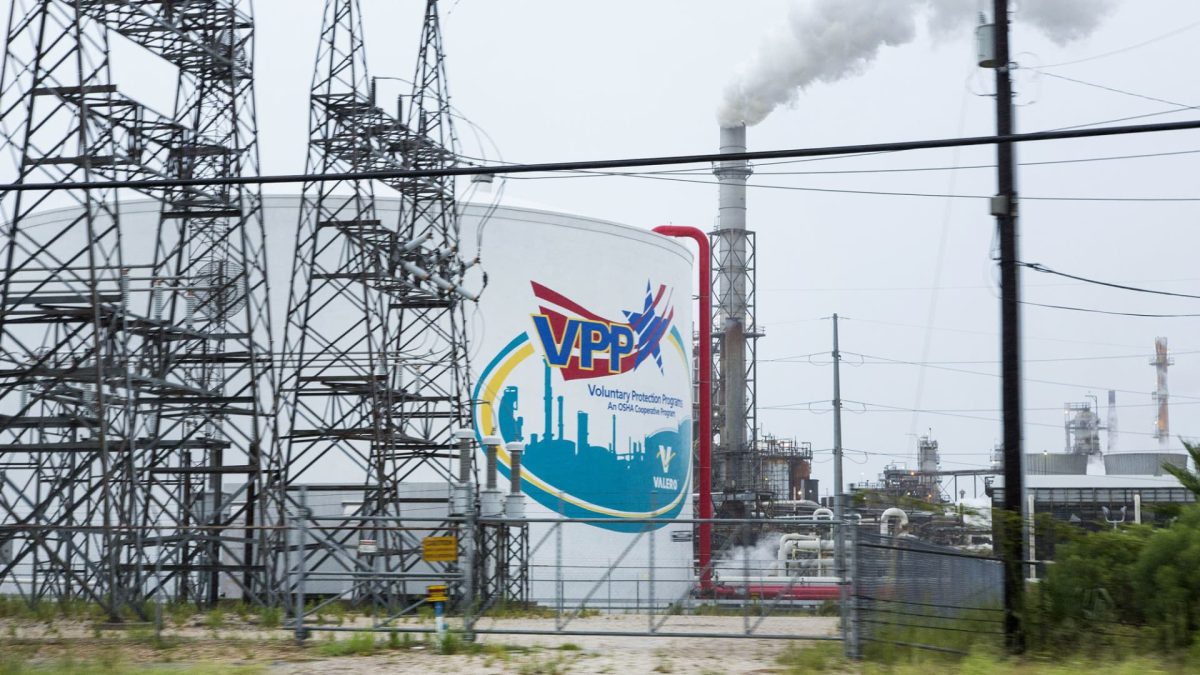
The Valero Energy refinery in Texas City, Texas.
F. Carter Smith | Bloomberg | Getty Images

The focus on dividend stocks is growing, as the U.S. Federal Reserve announced another rate cut. Investors can consider stocks that offer dividends and also have the potential to drive capital appreciation, enhancing the total return.

In this regard, recommendations of top Wall Street analysts can help us identify stocks that have solid upside and pay attractive dividends. The stock picks of these experts are backed by in-depth analysis of a company’s growth opportunities and ability to pay dividends consistently.

Here are three dividend-paying stocks, highlighted by Wall Street’s top pros, as tracked by TipRanks, a platform that ranks analysts based on their past performance.

Valero Energy

We start this week with Valero Energy (VLO), a manufacturer of petroleum-based and low-carbon liquid transportation fuels and petrochemical products. In Q3 2025, Valero returned $1.3 billion to stockholders via $351 million in dividends and $931 million in share repurchases. On Oct. 29, Valero declared a quarterly dividend of $1.13 per share. At an annualized dividend of $4.52, VLO stock offers a yield of 2.7%.

Valero Energy recently reported upbeat Q3 results, backed by strong refining margins. Keeping in view the Q3 performance, strong refining outlook, and the company’s attractive capital returns strategy, Goldman Sachs analyst Neil Mehta reiterated a buy rating on VLO stock and raised his price target to $197 from $180.

“We continue to view VLO as a key beneficiary of our more constructive refining outlook, given the company’s balance sheet strength, low-cost operations, and operational execution,” said Mehta.

The 5-star analyst noted that during the third-quarter earnings call, management discussed a constructive refining outlook, driven by limited net capacity additions and widening crude differentials. Mehta also highlighted that Valero’s non-refining businesses performed better than Goldman Sachs’ expectations. Looking ahead, Mehta believes that low inventories, resilient demand, and limited net refining capacity additions support tighter supply/demand expectations for 2026.

In particular, Mehta noted management’s continued focus on capital returns and commitment to allocating excess free cash flow to shareholders. The analyst expects a stronger refining backdrop to contribute to meaningful free cash flow generation, which could support about $4.6 billion of capital returns in 2026, implying a 9% capital return yield.

Mehta ranks No. 812 among more than 10,000 analysts tracked by TipRanks. His ratings have been profitable 58% of the time, delivering an average return of 8.7%.

Albertsons

We move on to the next dividend-paying stock, Albertsons Companies (ACI). The food and drug retailer recently announced upbeat results for the second quarter of fiscal 2025, driven by strong pharmacy sales and digital business. On October 14, Albertsons announced a quarterly dividend of 15 cents per share, payable on November 7. At an annualized dividend of 60 cents per share, ACI stock offers a dividend yield of 3.3%.

Following Albertsons’ better-than-expected fiscal second-quarter results, Tigress Financial analyst Ivan Feinseth reiterated a buy rating on ACI stock and modestly increased his price target to $29 from $28. The analyst is bullish on Albertsons as the company “accelerates growth through AI-powered digital sales, expanding loyalty ecosystem, and high-margin retail media platform.”

Feinseth highlighted that Albertsons is transforming from a traditional grocery operator into a data‑driven, digitally integrated food and wellness platform. This change is being fueled by the company’s e-commerce expansion, loyalty integration, and rapidly expanding Albertsons Media Collective advertising network, which Feinseth believes is well-positioned to become one of its most profitable long-term growth engines.

The top-rated analyst pointed out that ACI’s For U loyalty program is driving both digital engagement and spending growth. In fact, For U membership increased more than 13% year-over-year in Q2 FY25, reaching over 48 million active participants. The growing member base boosts ACI’s business as members transact more frequently, spend more, and are increasingly using cross-channel rewards, noted Feinseth.

Additionally, Feinseth highlighted that Albertsons is enhancing shareholder returns through ongoing dividend increases and share repurchases, including the recently announced additional $750 million accelerated share repurchase authorization. He expects ACI stock to deliver a total return of close to 50%, including dividends.

Feinseth ranks No. 296 among more than 10,000 analysts tracked by TipRanks. His ratings have been profitable 62% of the time, delivering an average return of 14.2%.

Williams Companies

Finally, let’s look at energy infrastructure provider Williams Companies (WMB). On October 28, Williams announced a quarterly cash dividend of 50 cents per share, payable on December 29, 2025, and reflecting a 5.3% year-over-year increase. At an annualized dividend of $2 per share, WMB stock offers a 3.5% yield.

Ahead of Williams’ Q3 results scheduled after the market closes on November 3, RBC Capital analyst Elvira Scotto reiterated a buy rating on WMB stock with a price forecast of $75. In a preview on the Q3 results of the companies in the U.S. midstream space, Scotto stated that Williams and Targa Resources (TRGP) are her favored names into the earnings.

Scotto noted that the secular tailwind for natural gas due to rising power demand for electrification and artificial intelligence (AI)/data center growth is driving the need for more energy infrastructure. The 5-star analyst believes that among the stocks within her coverage, “WMB is best positioned to benefit given its gas transmission asset footprint and its Power Innovation projects.”

Furthermore, Scotto expects WMB to deliver a CAGR (compound annual growth rate) of about 10% in its EBITDA (earnings before interest, taxes, depreciation, and amortization) from 2025 through 2030. The analyst looks forward to additional information on WMB’s recently announced Power Innovation projects and any new projects. Scotto expects an uptick in Q3 2025 numbers on a quarter-over-quarter basis across all business segments, with Transmission, Gulf, and Power driving the biggest absolute increase.

Scotto views WMB’s February analyst day as the next catalyst for the stock. The analyst expects WMB to increase its EBITDA growth target from the range of 5% to 7% to high single digits or more.

Scotto ranks No. 270 among more than 10,000 analysts tracked by TipRanks. Her ratings have been successful 64% of the time, delivering an average return of 13.7%.

Berkshire worries grow as Buffett’s CEO handover nears

Buffett Watch

(This is the Warren Buffett Watch newsletter, news and analysis on all things Warren Buffett and Berkshire Hathaway. You can sign up here to receive it every Friday evening in your inbox.)

Berkshire worries grow as Buffett’s CEO handover nears

Two months from now Warren Buffett will no longer be Berkshire’s CEO and investors appear to be getting increasingly nervous about the year-end transition.

On May 2, the Friday before Buffett’s surprise announcement at the annual meeting that he plans to step down, Berkshire’s B shares closed at an all-time high just under $540 per share.

At that point, they were outperforming the S&P 500 by 22.4 percentage points for the year.

Today, they are 10.9 percentage points behind the benchmark index, a slight improvement from Wednesday’s 12.2 percentage point gap, the biggest so far in 2025. 

The B shares have dropped 11.5% since Buffett broke the news. That’s still above their early August low when they were down almost 15%, but below their near-term closing high of almost $507 on September 4.

Analysts at Keefe, Bruyette & Woods are especially worried.

In a report dated October 26, they lowered their rating on Berkshire’s A shares to “underperform” (sell) from “market perform” (hold) and lowered their price target to $700,000 from $740,000.

The stock closed today at $715,740.

Under the headline, “Many Things Moving in the Wrong Direction,” Meyer Shields and Jing Li write, “We believe GEICO’s likely underwriting margin peak, declining property catastrophe reinsurance rates, lower short-term interest rates, tariff-related pressure on the rails, and the risk of fading alternative energy tax credits will drive underperformance over the next 12 months.”

They attribute the stock’s underperformance relative to the S&P and other insurance stocks in recent months “mostly” to Buffett’s May announcement.

There is also what they call Berkshire’s “historically unique succession risk” that reflects “Buffett’s likely unrivaled reputation and what we see as unfortunately inadequate disclosure that will probably deter investors once they can no longer rely on Mr. Buffett’s presence at Berkshire Hathaway.”

That is, Berkshire doesn’t operate like most other corporations, in part because it doesn’t issue forecasts or meet with analysts, but investors felt they could trust Buffett. Without him, Wall Street probably won’t give the company and new CEO Greg Abel as much leeway.

Warren Buffett and Greg Abel during the Berkshire Hathaway Annual Shareholders Meeting in Omaha, Nebraska on May 4, 2024.

In an article with a headline about Berkshire’s “New Normal … No ‘Buffett Premium,'” the Wall Street Journal quotes KBW’s Shields as saying, “There are people that have developed enormous confidence in Warren Buffett. For them, that’s where the investment thesis starts and stops.”

As a counterpoint, though, the Journal has Semper Augustus Investments Group president Chris Bloomstran arguing Berkshire was overvalued just before the May meeting, and that its YTD gain of more than 5% is significantly better than GEICO’s rival, Progressive, which is down 14%.

He’s been buying the stock and doesn’t think Buffett’s job shift is pushing the shares lower. “Everybody I know inside the Berkshire world has nothing but rave reviews and good things to say about Greg.”

And the Northstar Group’s Henry Asher told the paper that even if Abel’s stock picking ability doesn’t match Buffett’s incredible record, Berkshire’s operating companies won’t change.

“You’re not going to cancel your shipment on the Burlington Northern because Buffett isn’t there. The businesses will continue to produce mammoth amounts of cash flow, with or without Buffett.”

Annual shareholder letter will get new author

The Journals article also confirms what we expected: Greg Abel will be writing the annual letter to shareholders starting next year.

(Buffett has already said he won’t be on stage for next May’s meeting in his role as chairman.)

Buffett clearly foreshadowed the authorship change when he wrote in this year’s letter, before his May announcement, that “it won’t be long before Greg Abel replaces me as CEO and will be writing the annual letters.”

He will, however, have letters to his three children and to shareholders on November 10, presumably to accompany the gifts to family foundations that have become a Thanksgiving tradition in recent years.

DaVita position trimmed to keep stake at 45%

In a filing this week, Berkshire Hathaway disclosed it sold 401,514 shares of DaVita for $54 million on Monday.

DVA shares are down almost 8% this week after the dialysis company’s third quarter earnings came in below analysts’ expectations as patient costs increased and the volume of treatments declined.

For the year, the stock is down more than 20%.

This week’s relatively small sale, however, is almost certainly not a reaction to the stock’s weakness.

In a 2024 agreement with DaVita, Berkshire promised to keep its stake at or below 45% of the company’s outstanding shares.

In DaVita’s quarterly report this week, it reported that buybacks have reduced its outstanding shares from 75.5 million to 70.6 million, which would have increased Berkshire’s stake to 45.6%.

By cutting its share total to 31.8 million shares, (currently valued at $3.8 billion), Berkshire brings the stake percentage back to exactly 45.0%.

It has done similar sales in recent quarters to stay at the agreed upon level.

BUFFETT AROUND THE INTERNET

Some links may require a subscription:

HIGHLIGHTS FROM THE ARCHIVE

It’s Halloween. Here’s what scares Warren Buffett (2025)

Warren Buffett says the natural course of almost all governments is to devalue their currencies, and that’s “scary.”

WARREN BUFFETT: We wouldn’t want to be owning anything that we thought was in a currency that was really going to hell. And that’s the big thing we worry about with the United States currency.

I mean, the tendency of a government to want to debase its currency over time is — there’s no system that beats that.

You can pick dictators, you can pick representatives, you can do anything.

But — but the people — there will be a push toward weaker currencies.

And of course, that is — I mentioned very briefly in the annual report that fiscal policy is what scares me in the United States because it’s made the way it is.

And all the motivations are to doing a lot of things that will cause — can cause trouble with money.

But that’s not limited to the United States. It’s all over the world. And some places, it gets out of control, regularly.

You know, they devalue at rates that are breathtaking, and that’s continued. I mean, and you — people can study economics, and you can have all kinds of arrangements.

Sheets of one dollar bills run through the printing press at the Bureau of Engraving and Printing in Washington, DC.
Getty Images

But in the end, if you’ve got people that control the currency, you can issue paper money and you will, or you can engage in clipping currencies like they used to centuries ago.

There will always be people — it’s the nature of their job, I’m not singling them out as particularly evil or anything like that.

But the natural course of government is to make the currency worth less over time, and that’s got important consequences.

And it’s very hard to build checks and balances into the system to keep that from happening.

And we’ve had a lot of fun here in the last — either the first hundred days [of the second Trump administration] or the last hundred days, whatever you want to call it — watching what happens when people try to make sure that they aren’t running fiscal risks.

And that game isn’t over, and never will be over, you know, in finality.

If you look up and search the great inflations of post-World War II, it’s just a list that goes on forever and the same names keep popping up and everything.

So, currency is — the value of currency is a scary thing.

BERKSHIRE STOCK WATCH

Four weeks

Twelve months

BERKSHIRE’S TOP U.S. HOLDINGS – Oct. 31, 2025

Berkshire’s top holdings of disclosed publicly traded stocks in the U.S., Japan, and Hong Kong, by market value, based on today’s closing prices.

Holdings are as of June 30, 2025 as reported in Berkshire Hathaway’s 13F filing on August 14, 2025, except for:

The full list of holdings and current market values is available from CNBC.com’s Berkshire Hathaway Portfolio Tracker.

QUESTIONS OR COMMENTS

Please send any questions or comments about the newsletter to me at alex.crippen@nbcuni.com. (Sorry, but we don’t forward questions or comments to Buffett himself.)

If you aren’t already subscribed to this newsletter, you can sign up here.

Also, Buffett’s annual letters to shareholders are highly recommended reading. There are collected here on Berkshire’s website.

— Alex Crippen, Editor, Warren Buffett Watch

Exxon in advanced talks to power AI data centers with natural gas and carbon capture

  • Exxon is in advanced talks with power providers and tech companies to supply data centers with natural gas plants that use carbon capture technology, CEO Darren Woods said.
  • Exxon aims to capture 90% of the carbon dioxide emissions emitted by natural gas plants that power data centers, Woods said.
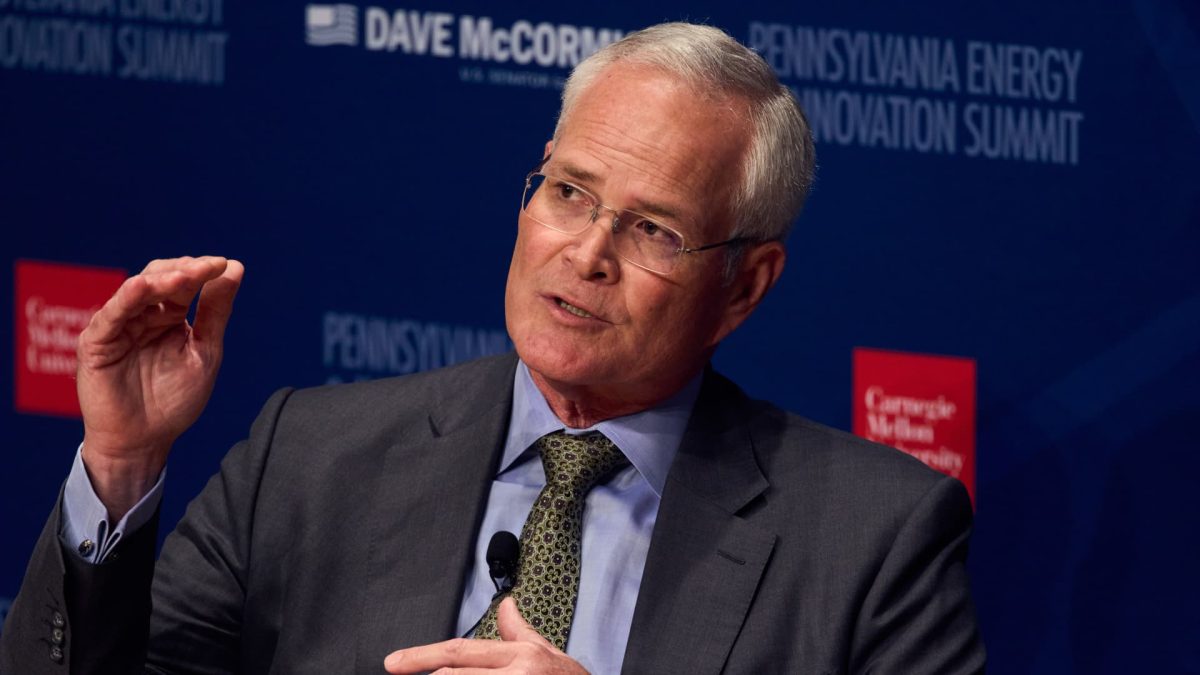
Darren Woods, chairman and chief executive officer Exxon Mobil Corp., speaks during a panel discussion at the inaugural Pennsylvania Energy and Innovation Summit at Carnegie Mellon University in Pittsburgh, Pennsylvania, US, on July 15, 2025.
Brian Kaiser | Bloomberg | Getty Images

Exxon Mobil is holding advanced talks with power providers and technology companies to cut the emissions of AI data centers that rely on natural gas by deploying carbon capture technology, CEO Darren Woods said on Friday.

“I’m hopeful that many of these hyperscalers are sincere when they talk about the desire to have low emission facilities, because certainly in the near to medium term we’re probably the only realistic game in town to accomplish that,” Woods said on Exxon’s earnings call.

Hyperscalers refers to companies such as Alphabet, Amazon, Meta and Microsoft that are building large data centers to train and run AI applications.

Exxon aims to capture 90% of the carbon dioxide emissions emitted by natural gas plants that power data centers, Woods said. The oil major is talking with power companies to decarbonize their plants, he said.

 “We’re pretty advanced in the conversations,” the CEO said.

The tech sector has mostly secured renewable energy to offset the emissions from their data centers, though they are now making major investments in nuclear power as well.

Some companies are turning to natural gas as well as they search for reliable power. Meta, for example, signed an agreement with the utility Entergy in Louisiana to power a data center campus with natural gas.

“We secured locations. We’ve got the existing infrastructure, certainly have the know-how in terms of the technology of capturing, transporting, and storing [carbon dioxide],” Woods said.

Shares of breast cancer therapy developer Olema Pharmaceutical could more than double from here

Monday – Friday, 2:00 – 3:00 PM ET

Wall Street is optimistic that Olema Pharmaceutical could be developing the next major breakthrough breast cancer treatment.

Earlier this month, the company announced promising clinical data for its lead candidate palazestrant, an oral medication that is being evaluated in several trials for estrogen receptor-positive, or ER+, breast cancer.

Shares of the clinical-stage biopharmaceutical company are up about 50% this year, and more than 70% over the past three months. Analysts polled by FactSet see plenty of upside ahead for Olema. Their average price target of $23.71 per share suggests the stock could skyrocket about 164% from its last closing price.

Olema was included in CNBC’s recent screen of companies headquartered in San Francisco, with market caps under $500 million, that have captured the market’s interest.

Stock chart icon

hide content
Olema stock performance over the past year.

Investors are bullish on palazestrant ahead of a primary readout from a key clinical trial expected in the second half of 2026. Those results could potentially lead to a submission to the U.S. Food and Drug Administration and subsequent commercialization of the therapy.

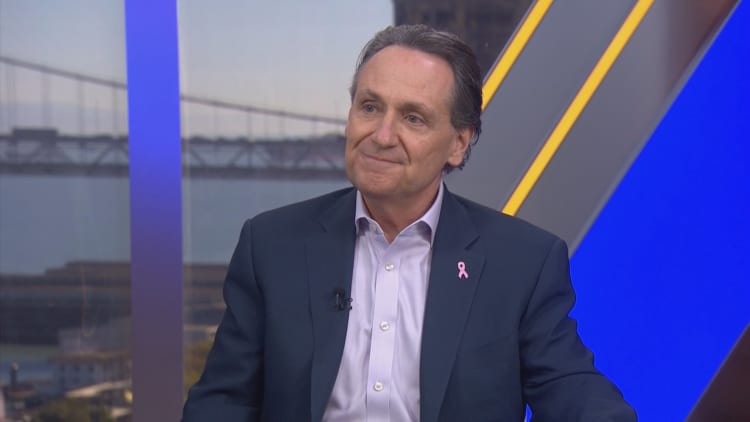
“You just have to look at our data. The best way to predict how a drug is going to do, or how a combination of drugs is going to do, is to look at the data produced with that drug or that combination,” Olema CEO Sean Bohen said on CNBC’s “Power Lunch.” “I think if [investors] take the time to sit down and look at that, they are going to see that there is a reason for the optimism the analysts have, and certainly for our investigators and the patients.”

Palazestrant is a part of the same therapeutic family as tamoxifen, another estrogen receptor-targeting therapy that was approved in 1997. However, Olema’s drug doesn’t have an agonist effect, which means it doesn’t spark a physiological response elsewhere in the body. Fulvestrant, another therapy in the family, also works to eliminate breast cancer but has distinct limitations given that it is injected, rather than taken orally like palazestrant.

Palazestrant is uniquely designed to shut off the estrogen receptor “all the time and completely … and thereby, delay the progression of the growth of the tumor and keep the disease stable for longer,” Bohen said.

“We’re focusing on the vast majority of patients who are diagnosed with breast cancer, which is the ER, estrogen receptor, positive or two negative population, or about 70%,” he said. “We’re taking one of the oldest validated molecular targets in cancer, the estrogen receptor … and what we’re doing is we’re improving on targeting that particular driver of the growth and proliferation of breast cancer to provide better therapy for breast cancer patients.”

Bohen explained that there have been other attempts to improve upon that, which haven’t really solved the problem. “So that’s what we’re trying to do,” he said.

This biotech stock has jumped nearly 50% in 3 months. Its CEO says business is ‘growing substantially’

Monday – Friday, 2:00 – 3:00 PM ET

It’s been a stellar few months for shares of San Francisco-based biotech company Rigel Pharmaceuticals, which has approved treatments for rheumatology and oncology — as well as potential new drugs in the pipeline.

The stock has jumped about 50% in just the last three months, earning it a spot on CNBC’s list of top performing stocks of companies based in the City by the Bay. To find the stocks, CNBC screened for names based in the area that had market caps above $500 million. We then screened for the top performers over the last three months via FactSet.

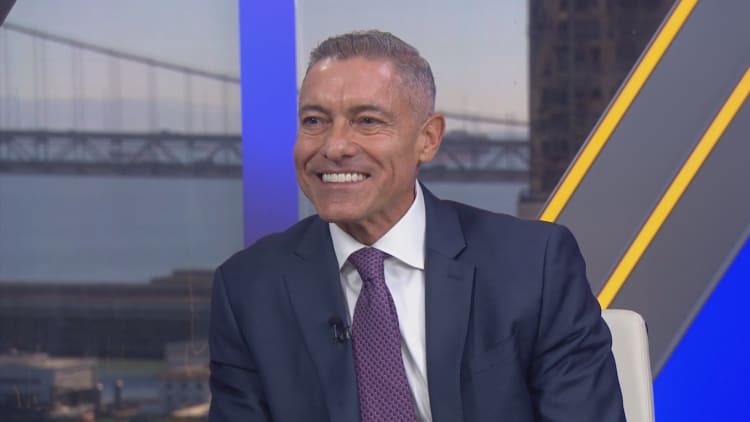
“We have a business that’s growing substantially,” CEO Raul Rodriguez said in an interview with CNBC’s Brian Sullivan. “[We] grew 30% on average for four years, and this year, about 50% … adding new products, growing those products, financially disciplined, so that we are profitable.”

Stock chart icon

hide content
Rigel Pharmaceuticals year to date

Rigel blew away analyst expectations when it reported second-quarter results in August. Its earnings were $3.28 per share, versus the $2.58 a share anticipated from analysts polled by FactSet. Revenue came in at $101.7 million, well above the $88.9 million consensus estimate. The company also lifted its full-year revenue guidance to a range of $270 million to $280 million, up from its prior forecast of $200 million to $210 million.

It also saw growth across the three drugs currently on the market. Tavalisse treats patients with low platelet counts due to chronic immune thrombocytopenia (ITP). Gavreto is a lung cancer treatment, while Rezlidhia is a targeted treatment for adults with acute myeloid leukemia (AML) that have an isocitrate dehydrogenase-1 (IDH1) mutation.

There are currently two clinical programs underway, with one being led by its partner Eli Lilly for an autoimmune and inflammatory disorder treatment called Ocadusertib. The other is for what Rigel is calling R835, which aims to treat patients with lower-risk myelodysplastic syndrome (LR-MDS), a type of blood cancer.

R835 is now in the early stages of clinical trials and Rodriguez hopes to present some data at the American Society of Hematology meeting in December.

“We’re starting a new phase of the trials, where we’re adding a substantially larger number of patients,” he said. “So by the end of next year, we’ll be able to say something much more definitive about this product and this indication.”

Rigel is expected to announce its latest quarterly results on Nov. 4.

Cytokinetics has been on a tear as the biotech pioneers more drugs to fight heart ailments

Monday – Friday, 2:00 – 3:00 PM ET

Investors are noticing ripe opportunity in Cytokinetics, a late-stage biopharma company targeting medicines for specialty heart diseases, that has seen shares skyrocket in recent months.

Shares of Cytokinetics have jumped about 69% over the past three months and are up 31% year to date. The stock is one of the top-performing San Francisco-based companies profiled by CNBC’s Brian Sullivan on Power Lunch this week from the City by the Bay.

The stock surged in early September after the company posted strong phase 3 trial results for its lead cardio drug called Aficamten, a cardiac myosin inhibitor, which showed an improvement in exercise capacity in patients with obstructive hypertrophic cardiomyopathy. Cytokinetics is now awaiting approval from the U.S. Food and Drug Administration for its drug, fueling strong investor interest in the company as this drug could disrupt a space dominated by publicly traded biotech giant Bristol Myers Squibb.

Stock chart icon

hide content
Cytokinetics stock performance over the past month.

Cytokinetics originally discovered and developed drugs that are tied to heart disease, and one of those drugs, called Mavacamten, was later acquired by Bristol Myers Squibb in 2020. Under the transaction agreements, Bristol Myers Squibb obtained the rights to use the drug for products it is developing or commercializing, while Cytokinetics gained capital which it then used to fund more clinical trials.

Now, Cytokinetics’ new drug is looking to compete directly with Bristol Myers Squibb, given that it targets the same disease.

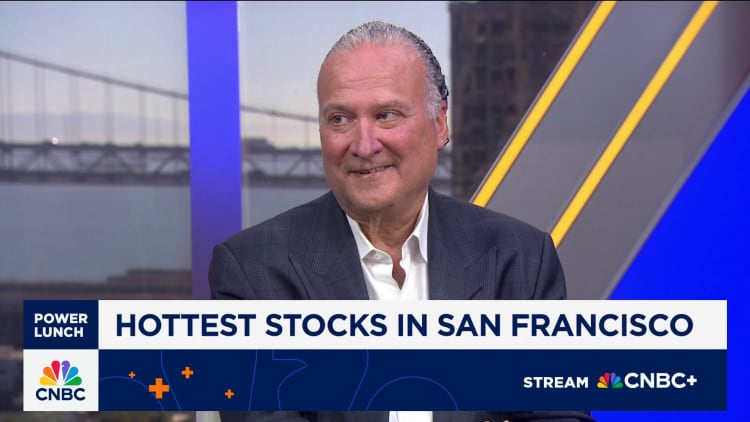
“[Bristol Myers Squibb] are actually commercializing a medicine that was discovered in our laboratories, and ultimately the subject of a company we formed that they acquired. They’re now selling that, doing a great job. Patients are benefiting from that medicine,” Blum said Tuesday on CNBC’s “Power Lunch.” We’re now in the process of developing a next-generation medicine that will hopefully enter the same space. It’s in front of the FDA for a potential approval later this year.”

Cytokinetics has received funding from specialized biotech financing firms, and uses a mix of royalty financing and partnerships to secure investments for its drug development.

“That journey required us to do a number of things as we invested in research at the moment, and ultimately did some financial engineering in order to support the billions of dollars that we’ve spent advancing a portfolio of potential medicines,” Blum told CNBC. He added that heart disease is the primary reason for hospitalization among Americans, especially an increasing aging demographic.

“Our pipeline, our portfolio of potential medicines directed to those diseases, we’re in a good position to build an enduring business starting with this first potential medicine,” he said.

This San Francisco-based satellite company’s stock has doubled in the past three months

Monday – Friday, 2:00 – 3:00 PM ET

Planet Labs stock has been on a tear over the last few months as investors bet on the company’s satellite data offerings.

Shares have surged since early September and are up more than 100% over the last three months, making it one of the best performers in CNBC’s screen of San Francisco-based companies. The stock has soared more than 215% this year, building on last year’s gain of more than 60%.

“We are starting to see investors wake up to the potential of our business,” Ashley Johnson, the company’s finance and operations chief, told CNBC’s Brian Sullivan in an exclusive interview on Tuesday.

Stock chart icon

hide content
Plant Labs in 2025

Sullivan is interviewing the leaders of top-performing San Francisco stocks all week. The interviews can be viewed on the Power Lunch’s homepage.

Johnson said Planet Labs documents everything going on across the planet with its hundreds of satellites. From there, the company utilizes artificial intelligence to help its customer base of governments and large companies to make decisions.

Historically, she said the industry has been more focused on “point-and-click” data that captures a place at any given moment in time. But Johnson said Planet Labs is “shifting the paradigm” by using large quantities of data and measuring things like the land surface temperature that are untraceable by the human eye.

Planet Labs uses machines “to do correlations over very large areas, and then derive really important decision-making capabilities from that,” Johnson said. “That is very different from: ‘Can I count how many cars are in this parking lot using this image that I took over that parking lot?'”

Johnson noted that each satellite costs around $300,000 to produce and launch, a price she says has been driven down by Silicon Valley’s innovation. In fact, she said the cumulative cost of Planet Lab’s more than 600 satellites is lower than what one from the traditional industry would have been a decade ago.

Planet Labs’ margins get a boost due to the fact that the company can sell the same data to multiple clients, Johnson said. She said the company is seeing heightened interest from governments looking for an edge amid geopolitical uncertainty.

To be sure, the stock hit a rough patch earlier this year with declines of more than 20% in both February and March.

But the majority of analysts have a buy rating on the stock, according to LSEG. Wall Street also expects the stock to run further, with an average price target implying 5% more upside.

Ray Dalio says a risky AI market bubble is forming, but may not pop until the Fed tightens

  • Ray Dalio warned that a bubble could be forming, but that it may not pop until the Federal Reserve tightens monetary policy.
  • He spoke at an investing summit in Saudi Arabia.

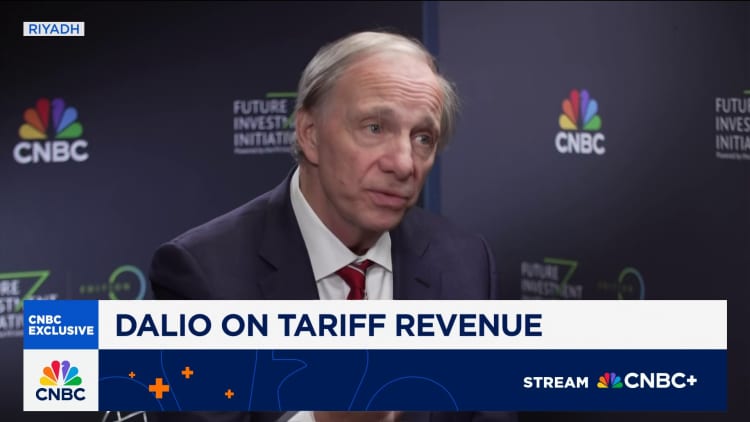
Bridgewater Associates founder Ray Dalio on Tuesday warned that a bubble could be forming around megacap technology in the U.S. amid the artificial intelligence boom, but said that it may not end until the Federal Reserve reverses its current easy policies.

“There’s a lot of bubble stuff going on,” Dalio told CNBC’s Sara Eisen in an exclusive interview from the Future Investment Institute in Riyadh, Saudi Arabia. “But bubbles don’t pop, really, until they are popped by tightness of monetary policy and so on.”

Added Dalio, “We’re going to be more likely to ease rates than to tighten rates.”

The hedge fund titan said he uses a personal “bubble indicator” that’s relatively high right now. Dalio joins a growing chorus of well-known market participants that have cautioned about the potential for a bubble tied to AI spending in recent months.

The Fed is set to cut rates for a second time this year on Wednesday and many investors expect the central bank it will do so again at its final meeting of the year in December.

The billionaire investor also pointed out that outside of AI-linked names, the market as a whole has done “relatively poorly” and there’s a “concentrated environment.” He noted that 80% of gains are concentrated within Big Tech. The three major indexes on Monday rallied to all-time closing highs, led higher by technology stocks with more good AI news expected from a series of Big Tech earnings this week.

Stock chart icon

hide content
S&P 500, all-time chart

Dalio said there’s a “two-part economy,” with the easing of interest rates because of weakening in some places while a bubble develops elsewhere.

He said monetary policy cannot aid both ends of this spectrum given the divergence, making it more likely that the bubble will continue. Dalio said the outcome could be similar to what was seen in 1998 to 1999 or in 1927 and 1928.

“Whether or not it’s a bubble and when that bubble is going to burst, maybe we don’t know exactly,” Dalio said. “But what we can say is there’s a lot of risk.”

AI is driving huge productivity gains for large companies while small companies get left behind

  • Large-cap companies are seeing steady AI-related productivity gains since the release of OpenAI’s ChatGPT model in 2022 in terms of their real revenue per worker, while small-cap names are seeing a decline, according to Wells Fargo.
  • Breakthrough advancements in AI this year have led major corporations, such as Amazon, to notably go all-in on the technology, finding ways to eliminate human roles that can be replaced by AI machines.
  • The performance of the S&P 500 versus the Russell 2000 small-cap index reflect this divergence in productivity gains.
Amazon Proteus robots demonstrate autonomous navigation using barcodes on the floor during the Delivering the Future event at the Amazon Robotics Innovation Hub in Westborough, Massachusetts, US, on Thursday, Nov. 10, 2022. 
Bloomberg | Bloomberg | Getty Images

Artificial intelligence is widening the productivity gap between large and small companies, lifting up bigger firms that are able to effectively scale the technology and cut costs tie to human workers.

Large-cap companies are seeing steady AI-related productivity gains since the release of OpenAI’s ChatGPT model in 2022 in terms of their real revenue per worker, according to a Wells Fargo analysis. Small-cap names are witnessing a decline over the same period, meanwhile, the firm found.

While productivity for the S&P 500 has soared 5.5% since ChatGPT, it’s down 12.3% for the Russell 2000,” Wells Fargo equity strategist Ohsung Kwon wrote in recent note to clients. “We see other examples of diverging trends in consumer, industrial, and financial markets.”

Wells Fargo analysis comparing real revenue per worker between Russell 2000 and S&P 500 indices
Wells Fargo

Breakthrough advancements in AI this year have led major corporations such as Amazon to notably go all-in on the technology, finding ways to eliminate human roles that can be replaced by AI machines.

The performance of the S&P 500 versus the Russell 2000 small-cap index reflect this divergence in productivity gains. The broad market index is up 74% since ChatGPT’s 2022 launch, while the Russell is only up 39%.

The biggest U.S. companies have been internally deploying AI tools over the past few years to improve their productivity, supply chains and, in some cases, cut headcount. A World Economic Forum survey published at the start of 2025 found that roughly 40% of companies around the world expect to reduce their workforces over the next five years in roles where AI can automate tasks.

Layoffs this year have been on the rise with several big-name companies, including Target, Meta, Starbucks, Oracle, Microsoft and UPS, having announced significant, and sometimes historic, cuts to their total headcount. Companies have mostly cited efforts to streamline operations and growth strategy as reasons for cuts, but many are nodding to AI as part of the reason that human worker roles can be axed now or in the future.

For one, Amazon has been a leader in robot deployment across its facilities, which the e-commerce giant has said is improving costs and delivery times. The New York Times reported in October that Amazon executives believe the company is on track to replace more than half a million jobs with robots, which they believe will save about 30 cents on each item Amazon selects, packs and delivers to customers. Morgan Stanley believes Amazon’s robotics efforts can save the company between $2 billion and $4 billion by 2027.

Klarna, which has been among the most transparent in how AI is affecting its headcount, has shrunk its workforce by about 40%, in part due to its AI investments. CrowdStrike in May announced cuts to 5% of the company’s global workforce, citing AI efficiencies and saying that the technology “flattens our hiring curve.” IBM’s CEO has forecasted 30% of non-customer-facing roles to be cut by 2028 and told the Wall Street Journal earlier this year that AI chatbots have replaced 200 HR employees, freeing up investments to hire more people in sales and programming.

Palo Alto NetworksWalmart and McDonald’s are other companies that have notably been leveraging AI in ways that analysts expect will improve margins, we previously reported.

A September Intuit QuickBooks Small Business Insights survey of 5,000 small businesses in US, Canada, the UK, and Australia revealed that 68% of businesses have integrated AI into their daily operations, with roughly two-thirds reporting an increase in productivity.

“The numbers don’t lie,” Wells Fargo’s Kwon said in his report.

Top Wall Street analysts pound the table for solid returns in these 3 stocks

Sheldon Cooper | Lightrocket | Getty Images

The stock market has been volatile lately as investors study the latest twists and turns in the the U.S.-China trade war as well as earnings of major American companies. Despite those challenges, investors can also choose to focus on stocks of companies that can navigate short-term pressures to deliver strong, long-term returns.

Tracking top Wall Street analysts can help investors pick some attractive stocks, as the recommendations of these experts are based on in-depth analysis of a company’s business fundamentals, opportunities and challenges.

Here are three stocks favored by the Street’s top pros, according to TipRanks, a platform that ranks analysts based on their past performance.

Pinterest

This first stock pick is social media company Pinterest (PINS), scheduled to announce third-quarter results on November 4. Heading into those numbers, TD Cowen analyst John Blackledge reiterated a buy rating on Pinterest and a $44 price target. TipRanks’ AI Analyst is also bullish on Pinterest, giving it an “outperform” rating and a price target of $40.

Blackledge expects Pinterest Q3 revenue grew by 16.6% versus the year-earlier quarter, in line with the Street’s consensus estimate and toward the high end of the company’s own guidance. “We expect EBITDA growth of 20% y/y, outpacing rev growth, driven by modest [cost of revenue] and R&D leverage,” said Blackledge.  

The 5-star analyst remains confident about his mid-teens, year-over-year revenue growth estimate through the second half of 2025 and 2026, partly supported by continued adoption by advertisers of PINS’ Performance+ campaign tools.

Following a digital ad check call with an agency that runs more than $4 billion annually in managed advertising spending, Blackledge noted that ad spend on Pinterest rose 63% year-over-year in Q3 2025, a slight slowdown compared to 66% in the prior quarter. A TD Cowen expert noted that solid uptake continues in PINS’ Performance+ campaign types.

In fact, some advertisers have shifted all their Pinterest spending to Performance+. Blackledge said Performance+, rolled out in late 2024 with automated creative tools, has expanded to include automated bidding tools and other artificial intelligence (AI)-driven automated features.

Blackledge ranks No. 522 among more than 10,000 analysts tracked by TipRanks. His ratings have been successful 56% of the time, delivering an average return of 12.5%. See Pinterest Statistics on TipRanks.

Uber Technologies

Next up is ride-sharing and delivery platform Uber Technologies (UBER). Recently, Evercore analyst Mark Mahaney reiterated a buy rating on UBER along with a 12-month price forecast of $150 after hosting a quarterly webinar with Harry Campbell, founder of The Rideshare Guy and The Driverless Digest Dude, where they discussed the latest trends across rideshare, delivery and autonomous vehicle (AV) ecosystems. Like Mahaney, TipRanks’ AI Analyst is also bullish on UBER stock, with an “outperform” rating and a price target of $108.

Campbell was constructive about rideshare supply dynamics, given solid and stable driver economics, Mahaney noted. Campbell continues to see consistent demand and strong driver supply, particularly at Uber, which he described as operating near “all-time highs.” Despite robust supply, pricing continues to be high, reflecting sustained demand elasticity and limited alternatives for consumers, particularly for airport and nightlife rides.

The top-rated analyst also highlighted Campbell’s commentary about early-stage shifts in AV partnerships — particularly Alphabet‘s Waymo’s evolving first-party vs third-party strategy and Uber’s expanding AV integration roadmap.

Mahaney further noted stable driver economics and widening platform margins. Notably, Uber’s “decoupling” of rider fares and driver payouts is driving incremental profit margin expansion, even with steady driver income.

Through incremental feature innovation, Uber is focused on enhancing ecosystem “stickiness.” Uber’s recent “Only on Uber” event rolled out small feature updates, including tip guarantees and safety enhancements. While not transformative, Mahaney said Campbell sees these efforts as part of Uber’s “broader push to create alternative income channels for drivers as AVs grow share over time.”

Mahaney ranks No. 473 among more than 10,000 analysts tracked by TipRanks. His ratings have been profitable 57% of the time, delivering an average return of 13%. See Uber Technologies Financials on TipRanks.

General Motors

General Motors (GM) jumped 15% on Tuesday after the Cadillac and Buick parent beat the Street’s revenue and earnings expectations despite a slight decline in sales. GM also raised its forward guidance, citing a lower-than-expected tariff impact.  

Following the Q3 results, Mizuho analyst Vijay Rakesh reiterated a buy rating on GM and raised his price target to $76 from $67. By comparison, TipRanks’ AI analyst has a price target of $66 and an “outperform” rating on GM.

We remain positive with reduced tariff burden/risk, improved profitability and [internal combustion engine] SUV/pickup onshoring tailwinds through C26E+,” said Rakesh.

The 5-star analyst noted that GM raised its 2025 guidance for earnings before interest and taxes (EBIT), earnings per share (EPS) and adjusted free cash flow, driven by a smaller-than-expected impact from tariffs, and said GM is rolling back some of its electric vehicle (EV) plans to boost profitability. That involves GM’s sale of its Michigan EV battery plant stake to LG Energy, while keeping two battery plants, and transitioning its Orion plant to gas engine production from an EV focus by 2027.

Rakesh believes that smaller EV losses, tariff challenges and warranty costs, and a higher combustion engine mix, will support GM’s target to return to 8% to 10% EBIT margin in the North America business. Other tailwinds include $5 billion in deferred revenue from OnStar and Super Cruise models, with about 70% gross margins, combined with a stable average selling prices.

Rakesh ranks No. 67 among more than 10,000 analysts tracked by TipRanks. His ratings have been successful 64% of the time, delivering an average return of 24.8%. See General Motors Insider Trading Activity on TipRanks.

Financial News

Daily News on Investing, Personal Finance, Markets, and more!

Financial News

Policy(Required)