I’m listening to Warren Buffett and buying cheap UK shares

Legendary investor Warren Buffett has been very successful. He has patiently refined his approach to selecting, buying, holding, and selling shares. I think I can also profit following Buffett’s principles, by buying cheap UK shares. Here is how.

Warren Buffett’s approach to valuation

Different investors use a variety of approaches to value a company’s shares. Many will look at its price-to-earnings multiple, for example.

5 Stocks For Trying To Build Wealth After 50

Markets around the world are reeling from the coronavirus pandemic… and with so many great companies trading at what look to be ‘discount-bin’ prices, now could be the time for savvy investors to snap up some potential bargains.

But whether you’re a newbie investor or a seasoned pro, deciding which stocks to add to your shopping list can be a daunting prospect during such unprecedented times.

Fortunately, The Motley Fool UK analyst team have short-listed five companies that they believe STILL boast significant long-term growth prospects despite the global upheaval…

We’re sharing the names in a special FREE investing report that you can download today. And if you’re 50 or over, we believe these stocks could be a great fit for any well-diversified portfolio.

Click here to claim your free copy now!

Buffett’s approach starts with considering how much profit a company might make in future. Clearly that can be difficult, as many variables could affect the outcome. So Buffett considers what factors may help a company sustain profits. For example, if it has a unique solution to a customer problem in the form of a patented technology or local monopoly, that could help.

Future risks

As those potential earnings are in the future, they have less value than the same money in hand today. Buffett discounts such future cash flows accordingly. If a company’s current value is markedly below likely discounted future profits, it may be an attractive investment for him.

The future profits are a projection. All sorts of problems might arise in the meantime to drag them down. That is why Buffett – and many other investors – look for a “margin of safety”. With such an approach, an investment could still turn a profit even if the company’s future profit is somewhat lower than projected.

Buffett summarises this approach as looking for great companies at good prices. So for him, “cheap” is not just about a price. It is about the possible future value one can unlock as an investor at a share’s current price.

Hunting for cheap UK shares

Using Buffett’s criteria, I think the UK stock market offers shares that might fit my criteria — at the right price.

For example, self-storage provider Safestore is a leader in its industry. Its well-established brand and the hassle of moving items between storage providers means that many customers will keep using its service for months or years. That is the sort of economic ”moat” Buffett likes. It gives Safestore pricing power. That helps explain why the company announced last week that revenue grew 15% last year. The total dividend for the year increased 35%.

Another company I think has a strong moat is vehicle sales platform AutoTrader. Its network effect means the more business it attracts, the more desirable it becomes to advertisers. That gives it pricing power. The iconic brand could keep it in pole position for car sales in coming years.

Risks and market fear

Such attractive attributes are often spotted by investors, though. Share prices can move up accordingly. But all companies also carry risks. Barriers to entry in self-storage are low, for example, which could hurt Safestore’s profitability if a new entrant launches a price war. Increased competition from platforms like ebay could hurt revenues and profits at AutoTrader.

When the market is fearful, such risks can drag down the share price of great companies a long way. Like Buffett, at those moments I would be happy to scoop up such shares for my portfolio. Those windows of opportunity can be narrow. So now is the time for me to make a shopping list of great companies I would like to buy, if their shares fall to a price I find attractive.

Is this little-known company the next ‘Monster’ IPO?

Right now, this ‘screaming BUY’ stock is trading at a steep discount from its IPO price, but it looks like the sky is the limit in the years ahead.

Because this North American company is the clear leader in its field which is estimated to be worth US$261 BILLION by 2025.

The Motley Fool UK analyst team has just published a comprehensive report that shows you exactly why we believe it has so much upside potential.

But I warn you, you’ll need to act quickly, given how fast this ‘Monster IPO’ is already moving.

Click here to see how you can get a copy of this report for yourself today


Christopher Ruane owns shares in Safestore. The Motley Fool UK has recommended Auto Trader. Views expressed on the companies mentioned in this article are those of the writer and therefore may differ from the official recommendations we make in our subscription services such as Share Advisor, Hidden Winners and Pro. Here at The Motley Fool we believe that considering a diverse range of insights makes us better investors.

5 most searched for property locations where house prices have also soared

Image source: Getty Images


The housing market is off to a positive start in 2022, according to property platform Rightmove. Figures show that property asking prices rose by 0.3% in January. It means that advertised house prices now average £341,019. That’s a 7.6% increase compared to January last year, and it’s the highest annual rate of growth since 2016.

But while we wait and see how house prices across the country continue to pan out, Rightmove has revealed the five most searched for house locations in the UK over the last 12 months.

1. London

The capital was the most searched for location by the end of 2021. But despite coming out on top, house prices in London experienced some of the slowest growth in the country in the year to October 2021 (the latest official government figures).

The government figures also show that the average house price in London last autumn stood at £516,285, a 6.2% change from October 2020. In comparison, the East Midlands saw the highest annual change – rising by 11.7%.

2. Cornwall

Lockdown saw homeowners reassess priorities and flock to the countryside in search of more space, so it’s little surprise that holiday hotspot Cornwall was the second most searched for property location. In fact, throughout the course of 2021, Cornwall and London took it in turns in positions one and two with the capital reasserting its popularity by the end of the year.

Rightmove reported that average house prices rose by 20% in the fishing town of Padstow, while St Ives saw increases of 15%. 

3. Devon

Another prime holiday destination, Devon is another popular region that has seen house prices rise.

Ashburton and Teignmouth in Devon saw the highest rises, with house prices going up by 27% since their previous peaks in 2016 and 2017, respectively. Average house prices stood at £343,328 in Ashburton and £285,238 in Teignmouth towards the end of last year.

4. Bristol

Overall, the South West enjoyed a 9.9% annual increase in house prices, bringing average house prices in the region to £298,600.

Figures also show that Bristol’s popularity has been slowly but consistently growing over the last ten years. According to data from Rightmove, of the top ten locations outside London where house prices rose most in the last decade, six are in Bristol.

Of those six, Easton has seen asking prices increase by 120% since 2010. Whitehall in Bristol has also seen prices rise by 102%, followed by Totterdown (88%). Meanwhile, Eastville and Arnos Grove have both experienced an 86% increase in asking prices over the last ten years.

5. Glasgow

Regeneration has helped the Glasgow property market, as has the promise of new jobs in the area.

Glasgow’s housing market was given a big boost in 2021 thanks to the sale of several properties with price tags of more than £1 million. Market buoyancy also filtered down to more modest houses with terraces and townhouses also being snapped up. There’s also a considerable range in house prices in Glasgow. Two-bedroomed homes are available for around the £180,000 mark in the East End, and properties in fashionable Finnieston cost up to £270,000.

Glasgow’s rise in popularity and subsequent increase in house prices is in part thanks to local regeneration. On top of that, is the promise of more jobs as Barclays announced its new Barclays Glasgow campus. Located in Tradeston, the campus will be home to tech teams, as well as operations and functions teams, with the aim of attracting 5,000 employees. Similarly, investment bank JPMorgan Chase is planning on increasing the size of its Glasgow office.

Homebuying resources to help you climb the property ladder

If you’re thinking of selling up, make sure you get the best price and avoid these ten issues that could decrease the value of your home. And if you’re looking to live by the sea, these coastal areas have seen the biggest house price increases in 2021.

Plus, if you’re looking for a mortgage or trying to work out what you can afford, we’ve put together these mortgage resources and a handy affordability calculator.

Was this article helpful?

YesNo


Some offers on The Motley Fool UK site are from our partners — it’s how we make money and keep this site going. But does that impact our ratings? Nope. Our commitment is to you. If a product isn’t any good, our rating will reflect that, or we won’t list it at all. Also, while we aim to feature the best products available, we do not review every product on the market. Learn more here. The statements above are The Motley Fool’s alone and have not been provided or endorsed by bank advertisers. John Mackey, CEO of Whole Foods Market, an Amazon subsidiary, is a member of The Motley Fool’s board of directors. The Motley Fool UK has recommended Barclays, Hargreaves Lansdown, HSBC Holdings, Lloyds Banking Group, Mastercard, and Tesco.


Why this FTSE 250 stock doubled its share price in 2021

2021 was a great year for many stocks, as recovery resumed. But some stocks clearly outperformed others. One of them is the FTSE 250 opioid addiction treatment provider Indivior (LSE: INDV), whose share price more than doubled during the year. It rose by 135% to be precise. To my mind, the stock was potentially a good one, even when I wrote about it around a year ago. 

Indivior’s improving financials

But I was hesitant to buy it because I was unsure of its financials. I wanted to see more stability before adding it to my investment portfolio. Cut to now, and that is exactly what has happened. For the first nine months of 2021, up to 30 September, it reported a 23% increase in net revenue compared to the same period in 2020. Moreover, it also reported positive net income, which is a comeback after it clocked losses in the year before. In fact, it is now so positive about the full-year 2021, that the company has actually upgraded its guidance for both revenues and pre-tax earnings.

5 Stocks For Trying To Build Wealth After 50

Markets around the world are reeling from the coronavirus pandemic… and with so many great companies trading at what look to be ‘discount-bin’ prices, now could be the time for savvy investors to snap up some potential bargains.

But whether you’re a newbie investor or a seasoned pro, deciding which stocks to add to your shopping list can be a daunting prospect during such unprecedented times.

Fortunately, The Motley Fool UK analyst team have short-listed five companies that they believe STILL boast significant long-term growth prospects despite the global upheaval…

We’re sharing the names in a special FREE investing report that you can download today. And if you’re 50 or over, we believe these stocks could be a great fit for any well-diversified portfolio.

Click here to claim your free copy now!

The FTSE 250 stock made gains through 2021

It is little wonder then, that investors gave it a thumbs-up. Its share price started 2021 on a somewhat uncertain note. Indivior had had a difficult year in 2020, when its net revenues had declined and it had swung into a loss. But by April 2021, signs of improvement were visible already, as its revenue started growing once again and it even reported profits.

Its share price continued to rise through the year as it financials improved. And by November last year, the stock was back to levels not seen since 2018. It did take a bit of a wobble in late November and December, when the Omicron variant created fresh panic in the financial markets. But it was able to shrug that off soon enough, and it ended the year at almost the highest levels in the year. 

Potential roadblocks ahead

In 2022 so far, the stock has corrected a bit. This could be correlated with a new report by the US Food and Drug Administration which states that using buprenorphine, a painkiller, in products to treat opioid use could be associated with severe dental problems, including teeth loss. Indivior’s products do use this. This could be playing on investors’ minds for sure. But I think there is more to its recent share price fall than that, because the price was falling even before the report was released. I expect that it could be on account of profit-taking, considering the big gains on the stock in 2021.

My assessment 

In fact, I still think there is upside to the stock. The opioid crisis is a big challenge, so demand for its treatment should stay strong. Moreover, Indivior has resolved its past issues, which included serious consequences from misrepresentation of the safety of its products. Interestingly, all analysts unanimously expect an increase in its share price over the next 12 months, as per a Financial Times compilation, with the average rise expected to be 30%. It goes without saying that all forecasts are subject to change, depending on evolving circumstances. This is particularly so now when we have still not put the pandemic behind us. 

Still, I think this FTSE 250 stock has come a long way. That in itself says a lot about the company’s ability to manage itself. I’d buy it now. 


Manika Premsingh has no position in any of the shares mentioned. The Motley Fool UK has no position in any of the shares mentioned. Views expressed on the companies mentioned in this article are those of the writer and therefore may differ from the official recommendations we make in our subscription services such as Share Advisor, Hidden Winners and Pro. Here at The Motley Fool we believe that considering a diverse range of insights makes us better investors.

3 things that could affect the GSK share price in 2022

Key points

  • Consumer healthcare split – will shareholders get a stake?
  • Departure of research boss is disappointing
  • Sales recovery seen in Q3 needs to continue

The GlaxoSmithKline (LSE: GSK) share price has risen this week after news emerged that Unilever has offered £50bn for Glaxo’s consumer healthcare business.

This is a big story, but I don’t think it’s the only thing that shareholders need to consider in 2022. In this piece I want to talk through three risks that could affect GlaxoSmithKline shares this year.

5 Stocks For Trying To Build Wealth After 50

Markets around the world are reeling from the coronavirus pandemic… and with so many great companies trading at what look to be ‘discount-bin’ prices, now could be the time for savvy investors to snap up some potential bargains.

But whether you’re a newbie investor or a seasoned pro, deciding which stocks to add to your shopping list can be a daunting prospect during such unprecedented times.

Fortunately, The Motley Fool UK analyst team have short-listed five companies that they believe STILL boast significant long-term growth prospects despite the global upheaval…

We’re sharing the names in a special FREE investing report that you can download today. And if you’re 50 or over, we believe these stocks could be a great fit for any well-diversified portfolio.

Click here to claim your free copy now!

#1: Consumer healthcare split

We already knew that Glaxo’s consumer healthcare division was going to be split from its parent company this year. The big question is how it will happen. I believe this is likely to affect the share price.

The current plan is for the consumer healthcare unit to be spun out into a new stock market listing. Shareholders will then receive shares in the new company, in addition to their existing Glaxo stock. 

Selling the consumer healthcare business to a private buyer would change the outcome for shareholders. GSK would be likely to receive most of the payment in cash. CEO Emma Walmsley would then have to decide what to do with the money.

One option would be to return all of the cash to shareholders. But I’d guess that Walmsley might choose a partial return, keeping some cash for future acquisitions. I think this could disappoint some shareholders, given Glaxo’s mixed track record in recent years.

In my view, the GSK share price is likely to be influenced by how the consumer healthcare split plays out. I’d guess that a stock market listing is the preferred option for most investors, especially now that former Tesco CEO Dave Lewis has been lined up to chair the consumer business.

#2: New product approvals

When Walmsley took charge at GSK in 2017, one of the first things she did was hire respected drug developer Hal Barron as chief scientific officer. Barron has now said he’s leaving to join an anti-ageing start-up in Silicon Valley.

Glaxo’s pipeline of new products has improved since Barron took charge of research. But developing new medicines is a slow process. I think it would have been reassuring to have Barron on board as GSK transforms to a standalone pharma business.

Investors will want to see continued evidence that the group is developing successful new products. Failed trials could hit investor sentiment.

#3: Will the recovery continue?

GlaxoSmithKline is one of the world’s largest vaccine producers, but the company’s efforts to produce a Covid-19 vaccine have not yet been successful. To make matters worse, the pandemic caused many routine vaccinations (sold by GSK) to be cancelled or postponed.

During the third quarter of last year, we saw this situation start to improve. Glaxo’s sales for the period rose by 10% to £9.1bn, while earnings were 3% higher. The rebound was led by a 41% increase in sales of shingles vaccine Shingrix.

Broker forecasts suggest GSK’s earnings will rise by a further 8% in 2022. I think that progress against this target could have a big impact on the Glaxo share price.

My view: there are lots of moving parts here. But if I was buying a pharma stock today, I’d certainly consider GlaxoSmithKline. I think the shares are reasonably priced and the outlook is improving.

FREE REPORT: Why this £5 stock could be set to surge

Are you on the lookout for UK growth stocks?

If so, get this FREE no-strings report now.

While it’s available: you’ll discover what we think is a top growth stock for the decade ahead.

And the performance of this company really is stunning.

In 2019, it returned £150million to shareholders through buybacks and dividends.

We believe its financial position is about as solid as anything we’ve seen.

  • Since 2016, annual revenues increased 31%
  • In March 2020, one of its senior directors LOADED UP on 25,000 shares – a position worth £90,259
  • Operating cash flow is up 47%. (Even its operating margins are rising every year!)

Quite simply, we believe it’s a fantastic Foolish growth pick.

What’s more, it deserves your attention today.

So please don’t wait another moment.

Get the full details on this £5 stock now – while your report is free.


Roland Head owns Unilever. The Motley Fool UK has recommended GlaxoSmithKline and Unilever. Views expressed on the companies mentioned in this article are those of the writer and therefore may differ from the official recommendations we make in our subscription services such as Share Advisor, Hidden Winners and Pro. Here at The Motley Fool we believe that considering a diverse range of insights makes us better investors.

1 surging former penny stock to buy in 2022!

Penny stocks are often seen as risky investments. I like to look for these small-cap contrarian options for my holdings. One could be a diamond in the rough and offer me lucrative returns in the longer term. Here’s one pick I would add to my portfolio today.

Former penny stock on the rise

The Shoe Zone (LSE:SHOE) share price has been surging recently. As I write, the shares are trading for 1,42p. At time last year, the shares were very much in the penny stock category, trading for 51p. A return of 178% over 12 months is impressive.

5 Stocks For Trying To Build Wealth After 50

Markets around the world are reeling from the coronavirus pandemic… and with so many great companies trading at what look to be ‘discount-bin’ prices, now could be the time for savvy investors to snap up some potential bargains.

But whether you’re a newbie investor or a seasoned pro, deciding which stocks to add to your shopping list can be a daunting prospect during such unprecedented times.

Fortunately, The Motley Fool UK analyst team have short-listed five companies that they believe STILL boast significant long-term growth prospects despite the global upheaval…

We’re sharing the names in a special FREE investing report that you can download today. And if you’re 50 or over, we believe these stocks could be a great fit for any well-diversified portfolio.

Click here to claim your free copy now!

Shoe Zone is a men’s, women’s, and children’s shoe retailer with over 500 stores in the UK and Ireland, and employs 4,000 people. In light of the recent e-commerce boom, it also has an online store and offering which is vital to success due to the changing shopping habits of consumers as well as evolving technology.

Why I like Shoe Zone

Retail and the high street have taken a beating over the past few years. Online disruptors to the retail market coupled with more choice have placed pressure on bricks-and-mortar retail. The tide seems to be turning somewhat, however. Recent economic conditions such as rising inflation and energy costs as well as the pandemic has placed pressure on the wallets of many households. Budget retailers like Shoe Zone seem to benefiting. Shoe Zone’s extensive store presence coupled with its online offering provide it with a good platform from which to reap the rewards of the need for budget footwear.

Shoe Zone’s performance recently and historically has been promising. I do understand past performance is not a guarantee of any future performance, however. Looking back, revenue increased year on year for three years prior to the pandemic affecting 2020 results. Most recent audited full-year results were released earlier this month. Before the audited results were released, the initial update in October caused the share price to surge and the Shoe Zone share price to surpass penny stock levels. Revenue was very close to 2020 levels which is encouraging due to 2020 trading being disrupted. Tellingly, online revenue increased substantially compared to 2020 levels. 2020 was a loss-making year whereas in 2021, Shoe Zone recorded a £14m profit. A big bonus for me as a potential investor is the company is debt free.

Risks and final thoughts

The biggest threat to Shoe Zone’s progress in 2022 and beyond is that of the pandemic. Many of its stores were closed when restrictions were tightened earlier in the pandemic. With the threat of new variants and fresh restrictions still lingering, this could impact the balance sheet and share price performance.

Overall I think Shoe Zone could be a good addition to my holdings and I would buy shares today. I wish I had bought them sooner when they were still a penny stock. I expect trading in the months ahead to be excellent, barring any restrictions, and would not be surprised to see 2022 results surpass 2021 and pre-pandemic results. At current levels, the shares look cheap too with a price-to-earnings ratio of just 10.

FREE REPORT: Why this £5 stock could be set to surge

Are you on the lookout for UK growth stocks?

If so, get this FREE no-strings report now.

While it’s available: you’ll discover what we think is a top growth stock for the decade ahead.

And the performance of this company really is stunning.

In 2019, it returned £150million to shareholders through buybacks and dividends.

We believe its financial position is about as solid as anything we’ve seen.

  • Since 2016, annual revenues increased 31%
  • In March 2020, one of its senior directors LOADED UP on 25,000 shares – a position worth £90,259
  • Operating cash flow is up 47%. (Even its operating margins are rising every year!)

Quite simply, we believe it’s a fantastic Foolish growth pick.

What’s more, it deserves your attention today.

So please don’t wait another moment.

Get the full details on this £5 stock now – while your report is free.


Jabran Khan has no position in any of the shares mentioned. Views expressed on the companies mentioned in this article are those of the writer and therefore may differ from the official recommendations we make in our subscription services such as Share Advisor, Hidden Winners and Pro. Here at The Motley Fool we believe that considering a diverse range of insights makes us better investors.

Will the BT share price skyrocket in 2022?

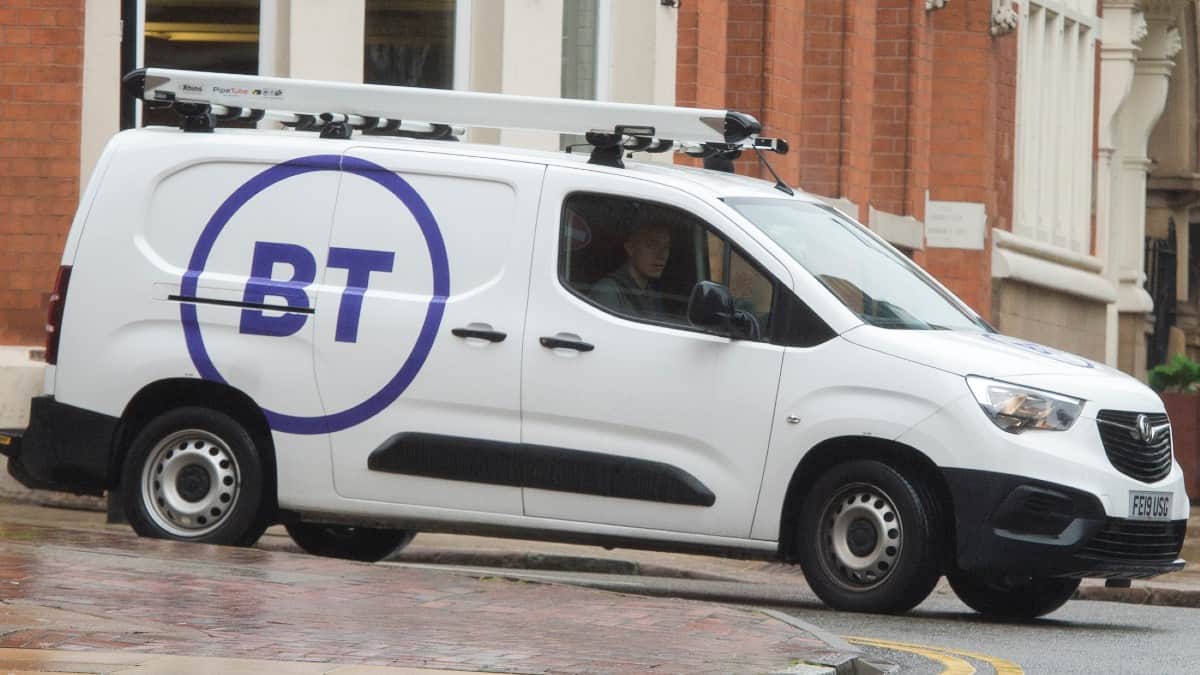
I’ve followed BT Group (LSE: BT-A) for years. With my background in telecoms, it’s one I’ve long wanted to want to buy. But BT has never failed to puzzle me, to irritate me, and simply to do things I can’t make sense of. By turning my nose up at it, I’ve missed a strong recovery since the depths of the Covid-19 crash. Over the past 12 months, the BT share price is up a very nice 37%. But it’s still down 50% over five years.

How do my BT frustrations stack up? The company has long been a popular choice for dividend investors. After all, in the year to March 2019, BT stumped up for a fat yield of nearly 7%. The Covid years saw that halted, but I reckon it was long overdue. I think BT has been reckless with its dividends.

5 Stocks For Trying To Build Wealth After 50

Markets around the world are reeling from the coronavirus pandemic… and with so many great companies trading at what look to be ‘discount-bin’ prices, now could be the time for savvy investors to snap up some potential bargains.

But whether you’re a newbie investor or a seasoned pro, deciding which stocks to add to your shopping list can be a daunting prospect during such unprecedented times.

Fortunately, The Motley Fool UK analyst team have short-listed five companies that they believe STILL boast significant long-term growth prospects despite the global upheaval…

We’re sharing the names in a special FREE investing report that you can download today. And if you’re 50 or over, we believe these stocks could be a great fit for any well-diversified portfolio.

Click here to claim your free copy now!

It’s all down to debt, which is massive. At the halfway point in 2021, BT’s net debt stood at £18.2bn. Yes, more than eighteen billion pounds — it’s worth spelling it out. That’s about equal to BT’s entire market cap. So if I bought BT shares today, I’d be buying half company, half debt.

Oh, hang on, it’s worse than that. There’s the pension fund deficit too. The last triennial valuation put it at £7.87bn at 30 June 2020. I don’t think a company should be shoving the biggest dividends it can into investors’ pockets when shouldering such huge liabilities.

Investor optimism

But investors, largely, don’t seem too worried about balance sheet, debt, deficits, and unpleasant things like that. No, they seem to be going mainly on the company’s operational outlook. And on that basis, I don’t think things look too bad. The BT share price gains of the past year suggest a lot of investors think the same.

There’s a modest trailing price-to-earnings of eight, which looks low. Admittedly, it comes after a number of years of falling earnings. But BT reckons it should halt any decline in EBITDA this year, expecting to post a 1% improvement. But even if it doubled to 16, it would still look modest by FTSE 100 standards.

Guidance does still suggest a 5% fall in pre-tax profit due to finance expenses. But if we really are at a turnround point, I think we might be close to a return to rising earnings. And when a company like BT gets back on the upward path, the investors often flock back.

Can the BT share price double?

Will it be enough for the BT share price to soar? I think that would depend partly on where the dividend yield goes, and BT has already announced an interim payment this year. If the full-year payout is big enough, I reckon we might see a significant uprating of the shares.

But then, of course, dour pessimists like me, with our obsession with sound balance sheet management, might still hold sway. I’d love to be persuaded that I should buy BT shares. But while the company continues to pursue an ambitious dividend policy at the same time as borrowing all those billions, I will keep away.

Should you invest £1,000 in BT right now?

Before you consider BT, you’ll want to hear this.

Motley Fool UK’s Director of Investing Mark Rogers has just revealed what he believes could be the 6 best shares for investors to buy right now… and BT wasn’t one of them.

The online investing service he’s run for nearly a decade, Motley Fool Share Advisor, has provided thousands of paying members with top stock recommendations from the UK and US markets. And right now, Mark thinks there are 6 shares that are currently better buys.

Click here for the full details


Alan Oscroft has no position in any of the shares mentioned. The Motley Fool UK has no position in any of the shares mentioned. Views expressed on the companies mentioned in this article are those of the writer and therefore may differ from the official recommendations we make in our subscription services such as Share Advisor, Hidden Winners and Pro. Here at The Motley Fool we believe that considering a diverse range of insights makes us better investors.
This FTSE 100 stock has dipped! Here’s why it’s now a bargain

Flutter Entertainment (LSE:FLTR) shares have tumbled in the past few months. Despite that, I believe it is a FTSE 100 bargain at current levels and I would buy shares for my holdings

Why the shares fell

It’s no secret that the rise of ethical investing has shone a spotlight on gambling firms such as Flutter Entertainment. In fact, in some instances, it has contributed to the share prices being detrimentally impacted. In addition to this, gambling stocks are often viewed as growth shares. Rising interest rates have meant investors are looking at defensive stocks to bolster their holdings. This has also caused issues for firms like Flutter Entertainment.

5 Stocks For Trying To Build Wealth After 50

Markets around the world are reeling from the coronavirus pandemic… and with so many great companies trading at what look to be ‘discount-bin’ prices, now could be the time for savvy investors to snap up some potential bargains.

But whether you’re a newbie investor or a seasoned pro, deciding which stocks to add to your shopping list can be a daunting prospect during such unprecedented times.

Fortunately, The Motley Fool UK analyst team have short-listed five companies that they believe STILL boast significant long-term growth prospects despite the global upheaval…

We’re sharing the names in a special FREE investing report that you can download today. And if you’re 50 or over, we believe these stocks could be a great fit for any well-diversified portfolio.

Click here to claim your free copy now!

As I write, shares in Flutter Entertainment are trading for 11,175p per share. At this time last year, shares were trading for 14,480p, which is a 29% drop over a 12-month period. The shares have dipped to current levels from as high as 16,915p in March, which is a 35% drop. Despite all this, I am still bullish on Flutter Entertainment shares.

FTSE 100 bargain

Gambling is a huge growth market and the pandemic saw many new customers sign up throughout Flutter’s different platforms. Although Flutter Entertainment itself may not be a household name, a lot of its brands are instantly recognisable. These include PaddyPower, Betfair, FanDuel, Sky Betting and Gaming and many more. Flutter currently has 14m active customers in 100 different markets supported by 14,000 employees. It is a global powerhouse. It also provides betting technology and software to other firms as another revenue stream.

One reason I particularly like Flutter is its propensity to grow and expand. It usually does this by acquisitions. For example, Flutter purchased a controlling stake in US fantasy sports company FanDuel. It has since grown to become one of the largest fantasy sports players in the US. Furthermore, Flutter recently purchased Tombola, an online bingo platform for £402m. These acquisitions give Flutter access to new customers and markets and can boost revenue.

Flutter’s performance has been positive in recent times. I do understand that past performance is not a guarantee of the future, however. Looking back I can see that revenue and operating profit have increased each year for the past four years.

FTSE 100 stocks have risks

Two main risks stand out for me that could affect Flutter shares and any potential returns. Firstly, the recent spotlight on gambling laws, especially here in the UK, highlighted by the discussions in parliament, could affect Flutter’s ability to operate and affect revenues and investor sentiment. This has already happened in the Netherlands and Flutter exited that market. Next, competition in most growth markets is intense and gambling and gaming is no different. All firms are vying for new customer sign ups and for these customers to spend their hard-earned cash on their respective platforms.

Overall I think Flutter is one of the best FTSE 100 stocks for me to buy right now. It has a huge operation and access to many different markets via its multitude of well-known brands. Flutter recognises opportunities to expand and strategically acquires brands and firms that can enhance its offering. Despite recent share price issues, I still think it would be a good addition to my portfolio and I would add shares at current levels which are cheaper than usual.

5 Stocks For Trying To Build Wealth After 50

Markets around the world are reeling from the coronavirus pandemic…

And with so many great companies still trading at what look to be ‘discount-bin’ prices, now could be the time for savvy investors to snap up some potential bargains.

But whether you’re a newbie investor or a seasoned pro, deciding which stocks to add to your shopping list can be a daunting prospect during such unprecedented times.

Fortunately, The Motley Fool is here to help: our UK Chief Investment Officer and his analyst team have short-listed five companies that they believe STILL boast significant long-term growth prospects despite the global lock-down…

You see, here at The Motley Fool we don’t believe “over-trading” is the right path to financial freedom in retirement; instead, we advocate buying and holding (for AT LEAST three to five years) 15 or more quality companies, with shareholder-focused management teams at the helm.

That’s why we’re sharing the names of all five of these companies in a special investing report that you can download today for FREE. If you’re 50 or over, we believe these stocks could be a great fit for any well-diversified portfolio, and that you can consider building a position in all five right away.

Click here to claim your free copy of this special investing report now!


Jabran Khan has no position in any of the shares mentioned. Views expressed on the companies mentioned in this article are those of the writer and therefore may differ from the official recommendations we make in our subscription services such as Share Advisor, Hidden Winners and Pro. Here at The Motley Fool we believe that considering a diverse range of insights makes us better investors.

Is it still a good time to buy shares in FTSE 100 mining company BHP?

Price inflation has become a challenge again. And the classic response from investors over previous decades has been to head for gold, commodities, real estate and selective stocks. 

All those asset classes can work as a hedge against inflation. But they’re never perfect. And they can also deliver good investments when inflation isn’t so much of a problem rather than being inflation-specific ideas.

5 Stocks For Trying To Build Wealth After 50

Markets around the world are reeling from the coronavirus pandemic… and with so many great companies trading at what look to be ‘discount-bin’ prices, now could be the time for savvy investors to snap up some potential bargains.

But whether you’re a newbie investor or a seasoned pro, deciding which stocks to add to your shopping list can be a daunting prospect during such unprecedented times.

Fortunately, The Motley Fool UK analyst team have short-listed five companies that they believe STILL boast significant long-term growth prospects despite the global upheaval…

We’re sharing the names in a special FREE investing report that you can download today. And if you’re 50 or over, we believe these stocks could be a great fit for any well-diversified portfolio.

Click here to claim your free copy now!

Each mining company is unique

On top of that, differing outcomes can arise for investors depending on the particular stocks they choose. For example, not all mining companies will likely do well at the same time. Sometimes specific operational challenges unique to a business can derail its potential to make money and sink its stock price — even if commodity prices are booming.

Meanwhile, FTSE 100 mining giant BHP (LSE: BHP) has been shooting higher. With the share price around 2,440p, it’s near an all-time high. Is it still a good time for me to buy the stock or am I too late?

To answer my own question, I’d first consider the stock in terms of its valuation. And one of the first things that I notice is City analysts expect earnings to decline by around 26% in the trading year to June 2023.

However, part of that prediction probably arises because the business is in a state of flux. In today’s operational review, the company said it expects to complete the merger of its petroleum business with Woodside Petroleum Ltd in June 2022.

In August last year, BHP announced the deal explaining the merged oil and gas portfolios of the two companies would create a global top 10 independent energy company by production”.

 BHP shareholders will still benefit from the merged assets after the deal completes. And that’s because the expanded Woodside business will be 48% owned by existing BHP shareholders. To achieve that, Woodside will issue new shares for BHP shareholders.

However, last year, BHP’s oil and gas assets delivered around 6% of overall underlying earnings. And that income will be absent in the years after the merger, which goes some way to explaining why analysts have marked down future earnings.

The price of iron ore matters a lot

But there’s no denying the price of iron ore affects BHP’s trading outcomes. Last year, the firm’s iron ore operations delivered around 70% of overall underlying earnings. But after peaking around May 2021, the iron ore price is around 45% lower than it was then. I think it likely analysts have been factoring in lower iron prices when making future profit assumptions.

And that’s one of the big uncertainties when considering mining stocks — the industry is highly cyclical. But right now, BHP is trading with a forward-looking earnings multiple of just over 12 for the trading year to June 2023 and the expected dividend yield is around 6%.

That valuation doesn’t look too demanding, and there’s potential for the price of iron ore to recover, thus boosting forward earnings. However, the share price has already risen by about 30% since mid-November 2021. And that move could be due to an investor reaction to inflation and the beginning of a recovery for iron.

On the balance of considerations, I’m happy to keep BHP on watch for the time being while waiting for dips, down-days and a better-value entry point.

I’m also considering these stocks right now…

Our 5 Top Shares for the New “Green Industrial Revolution”

It was released in November 2020, and make no mistake:

It’s happening.

The UK Government’s 10-point plan for a new “Green Industrial Revolution.”

PriceWaterhouse Coopers believes this trend will cost £400billion…

…That’s just here in Britain over the next 10 years.

Worldwide, the Green Industrial Revolution could be worth TRILLIONS.

It’s why I’m urging all investors to read this special presentation carefully, and learn how you can uncover the 5 companies that we believe are poised to profit from this gargantuan trend ahead!

Access this special “Green Industrial Revolution” presentation now


Kevin Godbold has no position in any of the shares mentioned. The Motley Fool UK has no position in any of the shares mentioned. Views expressed on the companies mentioned in this article are those of the writer and therefore may differ from the official recommendations we make in our subscription services such as Share Advisor, Hidden Winners and Pro. Here at The Motley Fool we believe that considering a diverse range of insights makes us better investors.

Worried about booking a holiday? Follow these 3 tips to reduce the risk of COVID disruption

Image source: Getty Images


Holiday bookings have surged in 2022 following the recent relaxation of UK travel rules. Fully vaccinated travellers now no longer have to buy costly PCR tests or take pre-departure tests before returning to England.

Despite the relaxing of the rules, holiday demand hasn’t yet returned to pre-pandemic levels. So if you’re one of those reluctant to book an overseas trip, how can you lower the risk of losing out to COVID-19-related disruption? Let’s take a look.

What are the current UK travel rules?

Under current travel rules, fully vaccinated travellers (and under-18s) now only need to take a lateral flow test on, or before, day 2 after arriving in England. These tests must be from a private, Government-approved provider. Free NHS tests cannot be used.

Non-vaccinated travellers are still required to take a pre-departure test before flying to England. These travellers also have to take a PCR test on day two and day eight after arrival, and self-isolate for 10 days.

Do note that the above rules apply to England only. If you live in another region of the UK, check the current travel rules for Scotland, Wales and Northern Ireland.

How can you lower the risk of COVID-19 travel disruption in 2022?

Travellers now face fewer hurdles than they did a month ago. However, the pandemic continues to show us that the situation can change quickly.

Whether a new Covid-19 variant is discovered, virus cases surge in a particular country or other nations close their borders to UK travellers, it certainly pays to keep these risks in mind when you next book an overseas trip. To help reduce the risk of losing cash, follow these three tips.

1. Book flexibly if you can

Due to the ever-changing travel rules surrounding the pandemic, a number of travel operators have implemented flexible policies that allow travellers to change their plans should they be impacted by Covid-19.

For example, should you or your party test positive for the virus, or you are legally required to self-isolate, then you shouldn’t be financially impacted as long as you book with a company that has a good flexible booking policy.

TUI and First Choice are two big-name holiday providers that have introduced flexible booking policies in response to Covid-19.

2. Get good travel insurance

When Covid-19 first kicked off, getting travel insurance to cover you for virus disruption was difficult. Thankfully, this has now changed, and a number of travel insurance providers are happy to cover issues related to Covid-19.

This means that there are now policies that will cover you should you fall ill with Covid-19 or be unable to travel because of it. However, travel policies can differ massively between providers, so always pay close attention to the wording of the policy.

3. Pay on a credit card where possible

An often overlooked way of ensuring you are protected from Covid-19 disruption is the added protection available if you for your trip on a credit card. This is all thanks to Section 75 of the Consumer Credit Act. It makes your credit card provider equally liable should you be unsuccessful in claiming a refund for a cancelled trip.

However, to get this extra protection, your trip must cost at least £100. That’s because Section 75 doesn’t apply to purchases under this amount.

Also, to qualify for Section 75 protection you need to ensure you spend £100 within a single transaction. For example, two one-way flights purchased separately that each cost less than £100 wouldn’t be covered. However, a return flight costing more than £100 would be covered.

If you don’t pay by credit card, then it’s also worth being aware of ‘chargeback’ protection. This can apply to purchases under £100, as well as those made on a debit card. However, chargeback protection is not legally binding, so it’s less valuable than Section 75.

For more information on Section 75 and the chargeback scheme, see our article that explains what a credit card chargeback is and how it works.

Keen for more travel tips? See The Motley Fool’s latest travel money articles.

Was this article helpful?

YesNo


Some offers on The Motley Fool UK site are from our partners — it’s how we make money and keep this site going. But does that impact our ratings? Nope. Our commitment is to you. If a product isn’t any good, our rating will reflect that, or we won’t list it at all. Also, while we aim to feature the best products available, we do not review every product on the market. Learn more here. The statements above are The Motley Fool’s alone and have not been provided or endorsed by bank advertisers. John Mackey, CEO of Whole Foods Market, an Amazon subsidiary, is a member of The Motley Fool’s board of directors. The Motley Fool UK has recommended Barclays, Hargreaves Lansdown, HSBC Holdings, Lloyds Banking Group, Mastercard, and Tesco.


Here’s a cheap growth stock I’m buying for the long term

Key points

  • Jubilee Metals Group is currently trading at a discount
  • Strong growth in earnings and profit before tax
  • Good choice for my long-term holdings

I’ve found that one of the best ways to increase the value of my portfolio is to find a relatively small stock with strong underlying fundamentals. I believe Jubilee Metals Group (LSE: JLP) is a top growth stock on the AIM 100 index. In brief, it is a metals retreatment and recovery company that processes the waste products from mining metals, like copper. It operates in South Africa, Zambia, Mauritius, and Australia. Let’s take a closer look.

Strong financials

The first reason I like Jubilee Metals Group is its solid earnings-per-share (EPS) record. For the year ending 30 June 2019, EPS was 0.48p. For the same period in 2021, the figure stood at a whopping 1.81. This means that in two years, EPS grew 377%.

5 Stocks For Trying To Build Wealth After 50

Markets around the world are reeling from the coronavirus pandemic… and with so many great companies trading at what look to be ‘discount-bin’ prices, now could be the time for savvy investors to snap up some potential bargains.

But whether you’re a newbie investor or a seasoned pro, deciding which stocks to add to your shopping list can be a daunting prospect during such unprecedented times.

Fortunately, The Motley Fool UK analyst team have short-listed five companies that they believe STILL boast significant long-term growth prospects despite the global upheaval…

We’re sharing the names in a special FREE investing report that you can download today. And if you’re 50 or over, we believe these stocks could be a great fit for any well-diversified portfolio.

Click here to claim your free copy now!

While this may not be an indication of future performance, it is evidence that the company has ample opportunity to expand its operations. This stock does not pay a dividend either, meaning that it retains these earnings to reinvest into the business. This will hopefully continue to drive growth.

The last five years, however, paint a mixed picture in terms of company revenue. For the years ended 30 June in 2017 and 2018, Jubilee Metals recorded losses before tax. In fairness, these losses narrowed significantly over the two years. While in 2017 this figure stood at £20.42m, the 2018 loss was a mere £2.4m.

Furthermore, profits before tax have accelerated for the same periods in 2019, 2020, and 2021. In fact, this has increased 541% from 2019 to 2021. This staggering growth simply supports the argument that the stock is functioning extremely well and is a no-brainer pick for me.  

Why this stock is a bargain

Elsewhere, the company has a price-to-earnings (P/E) ratio of 10.2. This data, taken with its most recent EPS, allows me to calculate the fair value share price of Jubilee Metals. Taking these figures into account, the shares would be worth around 18.46p each. Based on current pricing, shares in this stock are trading at a 13.3% discount. This truly makes Jubilee Metals a ‘cheap’ stock and is a major factor why I’m adding this to my portfolio. I sincerely hope the strong financials are soon reflected in the share price.

While the underlying data indicates bright times ahead for Jubilee Metals, an investment in this stock is not without its risks. Due to the nature of the business – metals recovery and retreatment – there is a constant exploration risk. A decision by the company to invest in exploration for metals waste may deliver inadequate returns. This means potential downside risk to the share price. The other risk is purely political in nature and concerns Jubilee’s areas of operation. There is the small possibility that the company could be impacted by civil unrest or war in these countries. This might again dent profitability and share price.

These remote risks aside, I like this company and its recent growth is extremely impressive. Given that it is currently trading at a discount, I will be buying Jubilee Metals for long-term growth.

FREE REPORT: Why this £5 stock could be set to surge

Are you on the lookout for UK growth stocks?

If so, get this FREE no-strings report now.

While it’s available: you’ll discover what we think is a top growth stock for the decade ahead.

And the performance of this company really is stunning.

In 2019, it returned £150million to shareholders through buybacks and dividends.

We believe its financial position is about as solid as anything we’ve seen.

  • Since 2016, annual revenues increased 31%
  • In March 2020, one of its senior directors LOADED UP on 25,000 shares – a position worth £90,259
  • Operating cash flow is up 47%. (Even its operating margins are rising every year!)

Quite simply, we believe it’s a fantastic Foolish growth pick.

What’s more, it deserves your attention today.

So please don’t wait another moment.

Get the full details on this £5 stock now – while your report is free.


Andrew Woods does not own shares in Jubilee Metals Group. The Motley Fool UK has no position in any of the shares mentioned. Views expressed on the companies mentioned in this article are those of the writer and therefore may differ from the official recommendations we make in our subscription services such as Share Advisor, Hidden Winners and Pro. Here at The Motley Fool we believe that considering a diverse range of insights makes us better investors.

Financial News

Daily News on Investing, Personal Finance, Markets, and more!

Financial News

Policy(Required)