3 ISA mistakes to avoid in 2025

An ISA can be a platform for building wealth over the long term – but that is never guaranteed. As well as making the right moves, it is important to try and avoid making the wrong ones.

Here are three mistakes I will be striving to avoid this year when making choices about what to do with my Stocks and Shares ISA.

1. Paying unnecessary costs

In a good restaurant or pub, you can get so caught up with what is going on inside that you do not pay much (or any) attention to the building itself.

An ISA can be a bit like that. Some investors focus so much on what shares to buy (or sell), or dividends coming in, that they pay scant attention to the ISA wrapper itself.

But there is a wide array of Stocks and Shares ISAs on the market and they can come with very different costs and fees. So I make sure to compare some of the options to try and make sure that I am getting what I need without spending more than I need to. I would rather the money in my ISA was used for investing, not keeping a stockbroker in clover!

Please note that tax treatment depends on the individual circumstances of each client and may be subject to change in future. The content in this article is provided for information purposes only. It is not intended to be, neither does it constitute, any form of tax advice. Readers are responsible for carrying out their own due diligence and for obtaining professional advice before making any investment decisions.

2. Trading too often

Legendary investor Warren Buffett has said his preferred holding time for a share is “forever” and indeed he has owned shares like American Express and Coca-Cola for many decades.

Another comment from Buffett that caught my eye was that he pins a large part of his success on one “truly good” decision every five years or so (and taking a long-term approach to investing).

That makes sense to me. It can be temping to keep chopping and changing the holdings in an ISA. But brilliantly successful investors like Buffett typically focus on buying stakes in outstanding companies and holding them for the long run.

3. Focusing too much on one share

One of the more interesting moves Buffett made last year was selling a significant chunk of his Apple (NASDAQ: AAPL) shares.

The reasons for that are not entirely clear, but one benefit is that it means his portfolio is now more diversified than it was before the sale.

Apple has been a phenomenally successful investment for Buffett, with his stake increasing in value by tens of billions of pounds since he bought it.

A lot of what has helped the share do well is still true. Apple has a strong brand, large customer base and proprietary technology that can help set it apart from rivals. No wonder it is massively profitable.

But – and I have seen this happen to shares in my ISA before – one risk of owning a great share is that it is indeed a great share. That can attract other investors, pushing the price up and meaning that the one share increasingly comes to dominate a portfolio.

That might not sound like a problem – but what happens if the price suddenly falls? Apple faces risks such as lower cost Asian competitors eating into its market share in developing countries. All shares face risks.

It is possible to have too much of a good thing when it comes to investing. That is why I like to keep my ISA diversified.           

3 UK shares to consider as a long-term investment for retirement

To retire comfortably, I’m searching for the best UK shares for long-term growth.

The UK market’s uniquely positioned to provide a stable foundation for long-term investment. Some of the top British stocks in 2025 have been around for over 100 years, delivering consistent value to investors since the 17th century.

Such well-established companies offer an excellent foundation to build on.

I’ve identified three FTSE 100 shares that fit the criteria, each boasting a strong dividend history, global reach, broad diversification and a sustainable business model.

Company Dividend Yield Revenue Growth Key Strengths Risk Factors
Unilever 3.5% ~7% Global reach Cost inflation
Diageo 3.1% ~6% Brand loyalty Economic sensitivity
Tesco 3.3% ~4.4% Market dominance Industry competition

A consumer goods giant

Unilever’s (LSE: ULVR) a consumer goods giant with a a £114.2bn market-cap and a diverse portfolio of globally recognised brands. The shares are up from around £10 in 2005 to £45 today, with revenue in 2023 reaching almost £60bn. Over the past 20 years, it’s held a consistent yield of around 3% with annual dividend growth of around 5% a year.

A key attraction is its stable and defensive nature. Historically, it’s remained resilient during economic downturns. 

But it still faces challenges. Rising inflation has revealed flaws in its model, with cash-strapped consumers opting for lower-cost alternatives. If it fails to address changes in economic behaviour, it risks losing market share to competitors.

It recently announced a restructuring effort to save £670m which includes 7,500 job cuts and the sale of its ice cream brands Ben & Jerry’s and Magnum.

A global brand leader

Diageo‘s (LSE: DGE) a worldwide distributor of premium alcoholic beverages, flaunting a portfolio of famous brands such as Guinness, Smirnoff and Johnnie Walker. Its focus on emerging markets in Asia and Africa has helped drive profits in recent years.

For over 20 years, dividends have grown at an average annual rate of 5.4%, achieving a yield between 2% and 4%.

However, the company risks losses as inflation has led to consumers shying away from premium brands. Revenue declined from £17.1bn to £16.1bn last year, bringing down net income by 17.5%. This trend’s exacerbated by the growing popularity of healthier, alcohol-free lifestyles among younger generations.

To avoid losing market share, a shift in focus to healthier products may be necessary.

A retail giant

Tesco’s the country’s leading supermarket chain, with over 4,270 stores across Europe. It commands a dominant market share and enjoys high turnover. As a highly defensive stock, it benefits from steady consumer demand even when the economy dips.

Revenue for 2023 came in at £68.19bn with an operating profit margin of around 3.8%. Its dividend yield sits around 4.3% and is well-covered by cash flow with a long history of payments.

Recently, it’s come under pressure to improve sustainability and reduce carbon emissions, resulting in higher operational costs and threatening profits. While this may limit short-term price growth, the long-term benefits are worth it.

Compounding returns

When thinking of retirement, the power of compounding returns cannot be understated. It makes it possible to snowball a small investment into something huge. Plus, focusing on multi-year gains (rather than monthly) helps avoid panic-selling during minor dips or short-term volatility.

I believe the above three stocks are worth considering for investors looking to achieve long-term growth.

Could this beaten-down FTSE 250 stock be on the cusp of a recovery in 2025?

One look at a long-term share price chart of abrdn (LSE: ABDN) would be enough to scare away many potential investors. Over the past 10 years, the stock has collapsed nearly 80% and it has long been relegated to the FTSE 250. But in the same way as a great company with a crazy valuation can sometimes make a bad investment, so the opposite also runs true.

Continuing woes

Its latest trading update back in October showed that the company continued to see redemptions from its funds exceed deposits. Since 2022, net outflows have totalled over £25bn.

Over the last few years, active fund managers have really struggled to match the stellar returns of passive investing strategies. Basically, unless a manager is invested in US equities and in particular the Magnificent 7 stocks, they had no chance of beating the market.

Undoubtedly, last year was a tough year for UK-listed equities. It was a similar story for most of the companies in the S&P 500 too. A risk-free rate of up to 5% from the Treasury market meant that investors had a real choice of where to put their money. Unless rates come down significantly in 2025, this trend will undoubtedly curtail fund inflows.

A shining beacon

Research from the Office for National Statistics, shows that today only 4% of pension funds and insurance companies hold assets in UK equities. This is down from the nearly 50% level of 30 years ago.

This long-term structural shift in capital allocation among institutional investors has forced the business to diversify in order to get closer to the end investor. interactive investor (ii), its direct-to-consumer (D2C) offering, has shown remarkable growth since it was acquired.

In H1 of 2024, ii delivered 4% organic customer growth to 422,000. Within this, SIPP accounts grew 17%. Net inflow of assets was 10% more than the whole of 2023.

Whether ii can ever become as big as Hargreaves Lansdown is debatable. Either way, I expect the D2C market to grow significantly in the coming years.

Active management

Despite the runaway success of ii, only a return to growth in both abrdn’s investments and adviser divisions is going to move the needle on its share price.

The recent spike in UK gilts, to their highest levels since 2008, portend challenging times ahead. US Treasuries have also been rising.

To me, what this volatility in the bond market is highlighting is the importance of having an active investment strategy. abrdn is a leader in this space. In H1, 89% of its bond funds outperformed a benchmark.

If equities begin exhibiting increased volatility too, then the dominance of passive investing flows could start being tested. With 73% of the MSCI World Index in US stocks, and the Magnificent 7 making up 23% of the entire index, then pretty much everyone is on one side of the boat.

I don’t know if the US stock market is going to crash, but what I do envisage is heightened volatility in the years ahead. And active managers thrive on volatility.

abrdn is a risky play. But with an 11% dividend yield on offer and a share price in the doldrums, I am starting to see real value, which is why I snapped up some more of its shares recently.

Warren Buffett says make passive income while sleeping! Here’s my plan to do so

Warren Buffett famously said, “If you don’t find a way to make money while you sleep, you will work until you die”.

While this can specifically apply to retirement, its broader meaning is about aiming for financial security at any point through income-generating assets like dividend stocks. In other words, passive income, which can flow in even when one is sleeping.

Here’s my simple plan geared towards achieving this goal.

Focus on the long term

Rome wasn’t built in a day, as the old cliché goes. It’s going to take time to construct a portfolio large enough to generate sizeable passive income.

To me, then, 2025 is just another year of building up my portfolio. This Foolish perspective helps me avoid taking unnecessary investing risks.

The opposite to this approach is to try and make as much money as quickly as possible. But this might lead me towards meme stocks, pre-revenue penny shares, and other high-risk/high-reward ideas.

Ironically though, following this get-rich-quick strategy means I could end up with far less than I started with. As Buffett also famously said, “Rule number one: never lose money. Rule number two: Never forget rule number one“.

Diageo on the rocks

The ‘Sage of Omaha’ invests in dividend-paying companies with strong brands, healthy profit margins, and pricing power. One FTSE 100 stock that I think ticks these boxes is Diageo (LSE: DGE).

A global leader in premium spirits, the company owns timeless brands like Tanqueray, Johnnie Walker, Gordon’s, and Guinness. Diageo has been able to steadily raise the price of these drinks over many years, supporting its healthy profit margins.

However, the firm has been impacted by a slowdown in the global spirits market, with many consumers cutting back on restaurants and nights out (thereby drinking less). There’s also been some downtrading to cheaper brands in its Latin American markets.

We don’t know how long this will last and things could get worse before they get better.

Meanwhile, weight-loss drugs have been shown to supress the desire for alcohol. Veteran fund manager Terry Smith (aka ‘Britain’s Warren Buffett’) dumped his Diageo shares last year partly because of this fear.

Over three years, the Diageo share price has dropped 39% due to this unpleasant cocktail of issues.

Buying the fear

Be fearful when others are greedy and greedy when others are fearful.

Warren Buffett

Recently, there’s been above-average share price volatility when companies report some operational or earnings setbacks. I’ve seen this with the stocks in my own portfolio.

For example, Novo Nordisk, the maker of Wegovy and Ozempic, suffered a 28% share price plunge in December after disappointing late-stage trial results for its next-generation weight-loss treatment. This was Novo stock’s sharpest drop ever! The month before, AstraZeneca stock fell 13% in a couple of days.

However, I still view these companies as high quality, including Diageo. The spirits supremo is now offering a 3.6% forward yield and I think the long-term income growth prospects remain strong (though dividends are never nailed on). The concern about weight-loss drugs looks a tad overblown to me.

My plan this year is to buy the fear whenever my favourite dividend-paying stocks suffer big share price pullbacks. By doing so, I hope to maximise passive income over the long run.

£5,000 invested in this FTSE 250 company 5 years ago is now worth over £24,000

Over the last five years, the FTSE 250‘s fallen by almost 6%. But one stock in particular has managed to outperform the likes of Alphabet, Apple, and Microsoft.

It’s up 393%, which is enough to turn a £5,000 investment in 2020 into something worth more than £24,000. And the company isn’t involved in artificial intelligence (AI) or even technology.

What’s the stock?

The stock in question is Premier Foods (LSE:PFD) – a manufacturer of both branded and non-branded food products. And there are three reasons the stock’s up so much over the last five years.

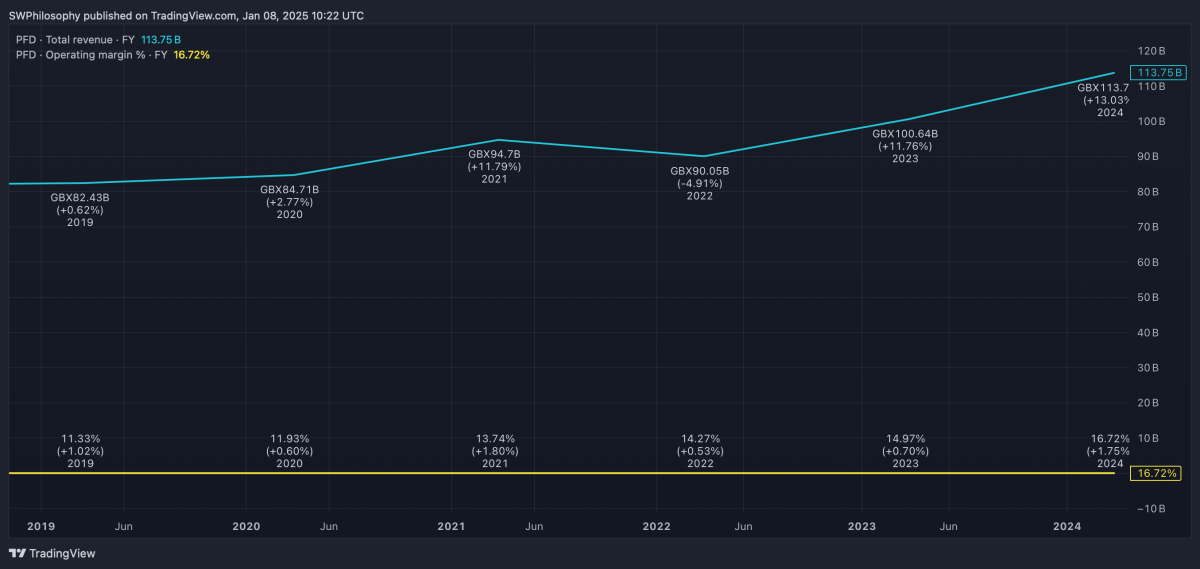
One reason is that revenues have grown. Since 2020, sales are up 35% in the firm’s branded foods division and 16% in its non-branded unit, resulting in overall revenue growth of around 33%.

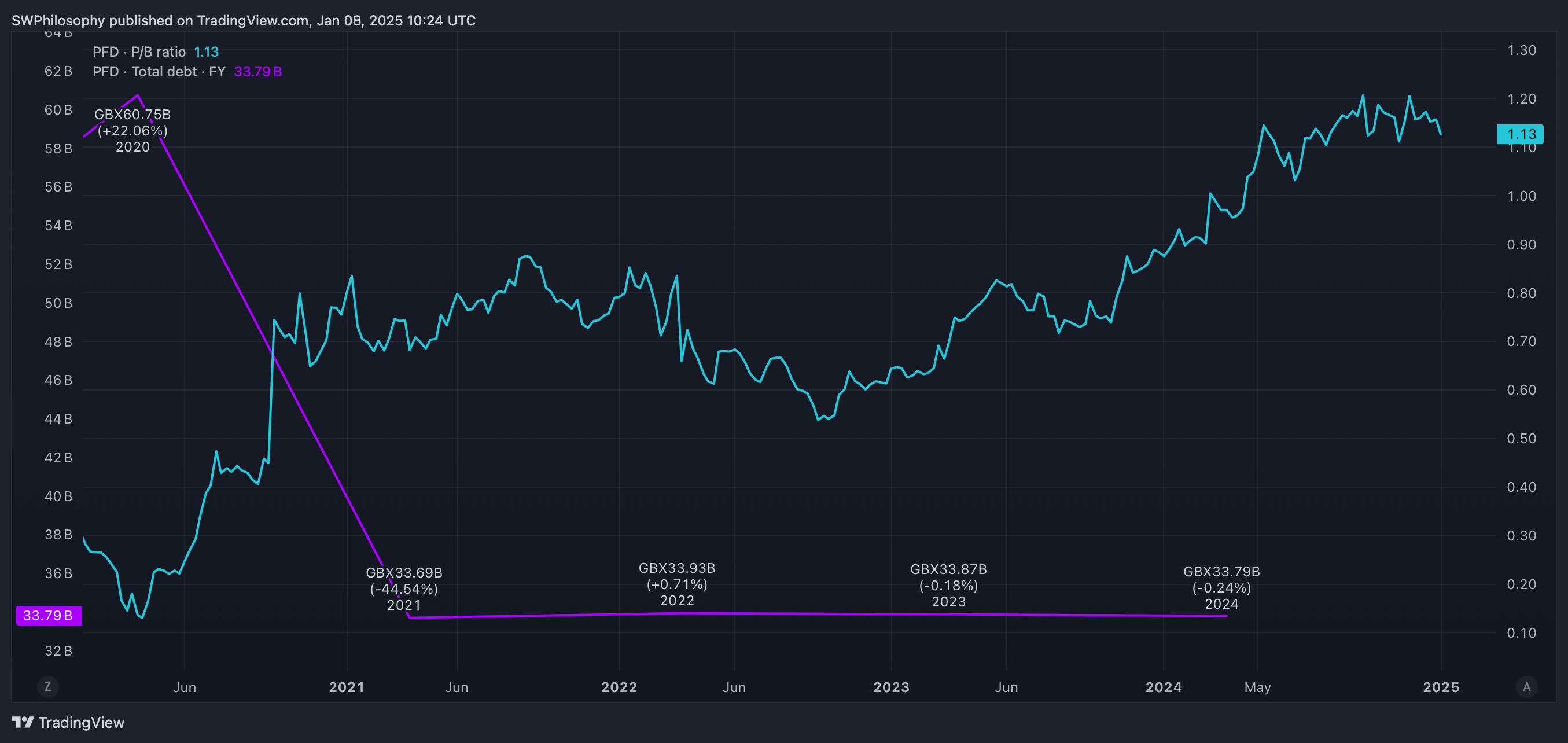
On top of this, margins have expanded. This is partly due to branded sales growing faster than non-branded ones, but also the result of Premier Foods reducing its long-term debt from £500m to £326m.

Premier Foods Revenue & Operating Margin 2020-24

Created at TradingView

The last reason is the stock now trades at a higher multiple. The firm made a loss in 2019, complicating the price-to-earnings (P/E) ratio. But on a price-to-book (P/B) basis, the stock’s gone from 0.3 to 1.12.

The outstanding returns for investors have therefore been driven by the underlying business as well as the stock market. The big question for investors though, is whether or not it can continue.

Outlook

I think it’s hard to see how shares in Premier Foods can do as well over the next five years as they have over the last five. A number of the catalysts pushing the stock along seem to have worn off. 

The firm’s balance sheet is much stronger than it was in 2020 and the stock’s trading at its highest P/B multiple in a decade. As a result, I don’t think either of these is likely to keep pushing the shares higher.

Premier Foods Total Debt & P/B ratio 2020-24


Created at TradingView

Despite this, there are still encouraging signs. In its latest update, Premier Foods reported revenues continuing to climb, with management indicating consumers are trading up to branded products.

As a result, margins are still expanding, leading to headline profits continuing to grow faster than sales. This is being masked to some extent by amortisation costs, but the underlying signs are very positive.

Investors would be unwise to overlook the risk of consumers trading up further – to fresher products. But for the time being, a shift away from non-branded products continues to help Premier Foods.

A missed opportunity?

For me, Premier Foods is something of a missed opportunity. Back in 2020, I anticipated a strengthening balance sheet leading to higher margins and the return of its dividend – but I didn’t invest. 

That’s been a big miss on my part. However, with the share price having climbed 393% in the last five years, attempting to make up for the error by buying the stock now might well be a mistake.

I expect Premier Foods to be a durable business going forward. But with some of the major catalysts behind the stock having run their course, I also think there are better opportunities for me at the moment.

I asked ChatGPT to name the best FTSE 100 stock and it picked this engineering giant

Artificial intelligence (AI) platforms like ChatGPT are already as ‘clever’ (in some ways) as the most intelligent human beings. You think this would make them rather good at picking stocks from the FTSE 100.

Having asked ChatGPT to name the best FTSE 100 stock to invest in, I was pleased to see it started by offering me some sensible financial advice.

The AI platform said: “Please note that past performance does not guarantee future results. It’s advisable to consult with a financial advisor to ensure these investments align with your personal financial situation and objectives.” It added that the FTSE 100 offers exposure to a range of UK companies.

Ok, not a great start

Although I only asked for one stock, the AI platform gave me five companies. This included Rolls-Royce (LSE:RR), NatWest, Barclays, Antofagasta, and Darktrace. That’s not a great start as Darktrace is no longer listed on the UK exchange having been acquired by Thoma Bravo in October 2024. This mistake does make me question ChatGPT’s competence. Darktrace isn’t even a bad pick, it’s simply an impossible pick!

However, I pushed further and asked it for the single best stock on the index. It responded with Rolls-Royce, saying: “The company’s strong performance, driven by a recovery in the aviation sector and increased military spending, has led to a share price surge of over 95% in 2024. Its position as a leader in aerospace and defence, combined with ongoing market recovery trends, offers significant growth potential.”

It went on to highlight a strong recovery in the aviation sector, cost-cutting initiatives as well as some discourse about the debt burden. In fact, it noted ongoing efforts to reduce the burden and suggested debt posed one of the biggest risks to the business.

Is it a good pick?

Personally, I still like Rolls-Royce as an investment opportunity, but I’m not convinced by the reasoning provided by ChatGPT. I’d argue that it’s the company’s valuation metrics — admittedly driven by trends in aviation, defence, and power systems — that make this company an interesting investment opportunity.

The stock is currently trading at 33 times forward earnings. But given very impressive growth forecasts, the company’s price-to-earnings-to-growth (PEG) ratio stands at just 1.1. Given the barriers to entry in sectors like aviation engines and defence, coupled with strong profitability grades, I’d suggest this PEG ratio is very attractive. One of its few peers, GE Aerospace, trades with a PEG of 1.3.

I’d also disagree with ChatGPT’s concerns about Rolls-Royce’s debt. Three years ago, debt was an issue. But now net debt stands around £800m. That’s pretty immaterial for a company with a market cap of £50bn.

Instead, as a risk factor, I’d point to the impact of inflation on production costs and the susceptibility of the aviation industry to deep downturns, as we saw during the pandemic. Outbreaks (like another respiratory illness, HMPV, in China) if serious enough could derail the upturn in civil aviation.

I hold Rolls-Royce shares, and have considering buying more in the past. However, given the recent share price appreciation, I believe I already have significant exposure to it. I probably won’t buy more at the moment.

Why I think right now could be the best time to buy UK stocks in over 20 years

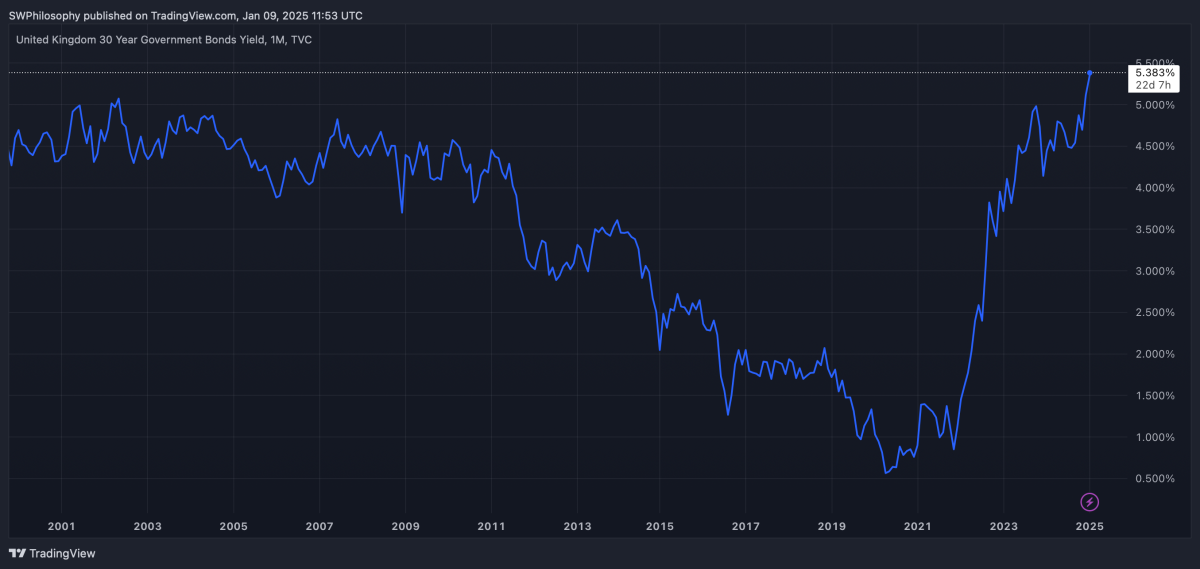
UK stocks have been falling as the government’s cost of debt continues to rise. Earlier this week, the yield on 30-year gilts reached 5.36% – its highest level in almost a quarter of a century.

UK 30-year gilt yield 2000-2025

Created at TradingView

A decent return on a relatively safe investment understandably makes investors wary about stocks. But I’m seeing it as an opportunity to be greedy when others are fearful.

Bond yields

Earlier this week, 30-year bonds from the UK government fell to the point they now come with a 5.36% yield. That means someone who invests £10,000 today might expect to get £536 a year until 2055.

While investment returns are never guaranteed, the risk with bonds is typically lower than stocks. So investors shouldn’t buy shares unless they think they’ll get more cash from the business over time.

This comes down to price. Compared to bonds, a company that’s going to be able to distribute £5.36bn a year for the next three decades is attractive when it has a market-cap of £60bn, but not at £150bn.

As a result, higher bond returns lead to lower share prices. This creates potential opportunities and with yields at their highest levels since 1999, this could be a great time to consider buying UK stocks.

Yet Bond yields don’t rise for no reason. The latest data from the Purchasing Managers’ Index (PMI) – a leading economic indicator – isn’t inspiring for Construction, Manufacturing or Services.

In other words, there are genuine reasons to be concerned about the UK economy that shouldn’t be ignored. So while I’m not making a wholesale bet on UK stocks, I’m looking for specific opportunities.

What I’ve been doing

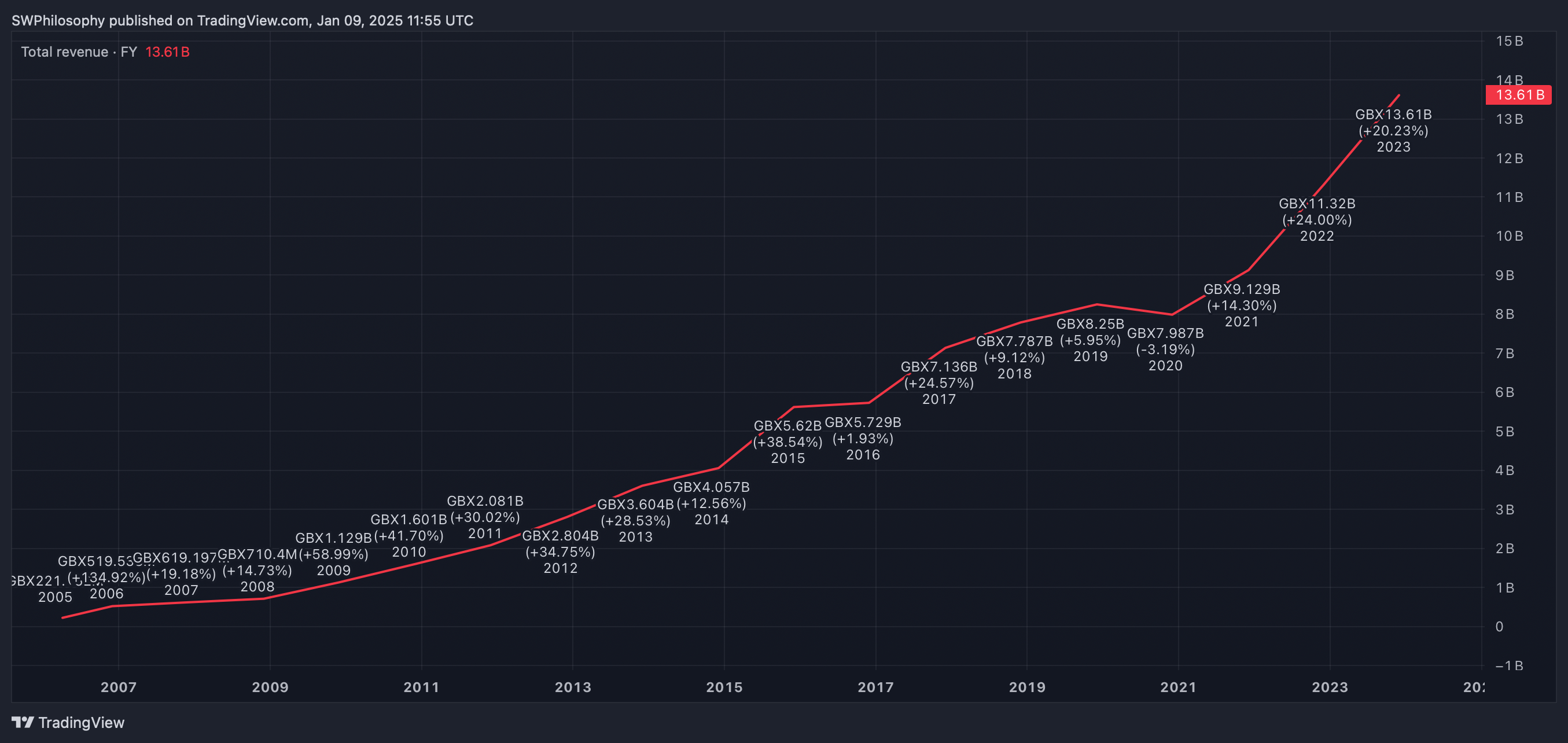
I’ve been buying shares in a company called Judges Scientific (LSE:JDG). Despite falling 10% over the last year, it’s been a long-term winner for investors – up almost 8,000% over the last 20 years.

The core of this spectacular return is revenue growth, which has been absolutely outstanding since 2005. And acquisitions have been a key part of this.

Judges Scientific Revenues 2005-25


Created at TradingView

Growing through acquisitions can be risky. And at a price-to-earnings (P/E) ratio of 38, the stock’s clearly trading at a level that reflects some high expectations in terms of future growth.

It’s worth noting though, that Judges Scientific’s investor materials offer an adjusted earnings figure that discounts amortisation and other one-off costs. On this basis, the current P/E ratio’s 24. 

The most recent update also reported lower profits as a result of sales being delayed to the second half of 2024. So I think the headline P/E number makes the stock look more expensive than it really is.

Moreover, the company’s model for focusing on scientific instrument businesses that it can integrate easily is one that’s been proven to work. And I think it should be repeatable in the future.

The importance of being selective

Investors are clearly pessimistic about UK stocks at the moment – and I think some of this is justified. But I’m also on the lookout for opportunities where shares are cheaper than I think they ought to be.

Judges Scientific’s one example. I’m pleased to have added it to my portfolio and I’m looking to buy more in the future.

Could 2025 be the year of the great Lloyds share price recovery?

As a shareholder, I guess I’m a bit biased in favour of the Lloyds Banking Group (LSE: LLOY) share price.

At just 53p, and on another slide after 2024’s gains turned tail in October, it just looks too low to me. And you know who else thinks the same? The current crop of analyst forecasts predict good days ahead for Lloyds shares.

One of them, at Deutsche Bank, has even pinned an 80p target on the shares.

Price targets

If that comes off, it could mean a 50% gain from today. And it might even propel Lloyds to the top of the FTSE 100 leader board in 2025.

Not all brokers are quite as optimistic as that though. Updated price targets in the last few months of 2024 were mostly in the range of 58p to 62p. And the overall broker stance is mediocre, with just a slight sway to the Buy side of things.

The City isn’t wildly optimistic overall. But the low end of the target range is at 53p, so at least nobody’s predicting a Lloyds share price fall. And that lowball price is from early 2024.

Rising sentiment

The more recent range, prior to the Deutsche Bank update, suggests the shares could gain between 9% and 17%. If Lloyds achieves that in 2025 on top of paying a forecast 5.4% dividend, I’d rate it as a fine result.

And if broker sentiment keeps on improving (and they’re right), we might even do better than that.

What would it mean for the Lloyds share price valuation? An 80p price would give us a price-to-earnings (P/E) ratio of around 12.

That’s based on earnings expectations for the 2024 year just ended, with results due on 20 February.

Fair price?

In my view that could be too expensive right now, in a year in which UK bank valuations are still under pressure.

Falling interest rates, should the Bank of England cuts actually continue in 2025, would be a bit double-edged. Yes, they could cut interest margins. But they’d surely also boost mortgage lending. I’m not overly worried about that.

But Lloyds’ involvement in the current car loan mis-selling investigation is a concern. The board has so far set aside £450m for it. But pessimists suggest it might cost Lloyds up to £1.5bn.

I really want to see what the board says about it at FY results time.

Future gains

If earnings grow as forecast, even an 80p price target could mean a P/E of only 9.6 by 2026. And I reckon that could be a seriously cheap valuation.

That is, providing Lloyds gets past its short-term threats, interest rates get back to normal, and we see hints of economic growth. Not too much to ask for, then.

Will we see a Lloyds share price gain in 2025? I don’t share the 80p bullishness, not in the short term. But I’m cautiously optimistic about a modest improvement.

I really hope the price stays low though, so I can buy more shares with my dividend cash.

1 growth stock that could soar 105%, according to Wall Street experts

Crispr Therapeutics (NASDAQ: CRSP) is a fascinating growth stock that I’ve been watching for a few years now.

In early 2021 it soared to a ridiculous $200, despite the gene-editing biotech having no products or revenue at the time. Fast-forward to today though, I can pick up the stock for just $39.

Importantly, Crispr Therapeutics had its first treatment approved a year ago. Perhaps this is why Wall Street analysts currently have an $80 price target on the stock — 105% higher than the present level!

The lowdown

CRISPR–Cas9 gene editing is a revolutionary technology that allows scientists to precisely modify DNA in organisms to fix mutations and potentially cure diseases.

In late 2023, Crispr Therapeutics and its partner Vertex Pharmaceuticals had the world’s first such therapy approved to treat sickle cell disease and transfusion-dependent beta-thalassemia.

This once-and-done treatment is called Casgevy, and sales will be split 60-40 in favour of Vertex, which is doing most of the commercial heavy lifting.

Despite this historic milestone, the stock has since fallen by 40%. That’s because Casgevy involves the infusion of genetically modified stem cells taken from the patient, and this takes time.

However, some 40 patients had begun to have their cells collected by mid-October. And the two firms see an addressable market of 35,000 patients in Europe and the US, with a further 23,000 in Saudi Arabia and Bahrain.

At a cost of about $2.2m per patient, with a recent plan announced to help US patients on Medicaid afford it, there’s significant revenue growth potential over the next few years.

Indeed, analysts forecast $1bn in revenue in 2027, up from basically nothing today. For context, the company’s market cap is currently a modest $3.5bn.

Risks to consider

Of course, there’s no guarantee that Wall Street targets come to fruition. If the innovative biotech suffers a setback in one of its ongoing clinical trials, the stock could fall sharply, along with brokers’ price targets.

Remember, gene-editing is truly revolutionary because it allows the alteration of the fundamental building blocks of life. Beyond eradicating diseases, it offers the potential to influence traits or even create entirely new organisms.

As Jennifer Doudna, the Nobel Prize-winning co-developer of this technology, wrote: “The power to control our species’ genetic future is awesome and terrifying. Deciding how to handle it may be the biggest challenge we have ever faced.”

Back in 2018, a rogue Chinese scientist used this technology to create the world’s first genetically edited babies that were, he claimed, immune to HIV. Crispr stock dropped around 40% after this bombshell. Something similar could happen again.

Finally, the company is expected to plough all available resources into progressing its pipeline. Therefore, the business is in no way optimised for profits yet. Investing in a loss-making firm obviously adds risk.

I’m bullish

What I like here, though, is the firm’s cash position of $1.9bn in September. That’s a big cushion, especially if Casgevy revenue starts coming in every quarter. It should be enough to fund the drugmaker’s existing pipeline for several years.

Speaking of which, this includes two cancer treatments and a potential functional cure for type 1 diabetes. That could be a big deal one day.

I’m considering buying a few shares later this month.

No savings at 40? How £10 a day could grow into £8,273 of passive income a year!

Popular ways to earn passive income include buying a property to let and starting an online business. However, these ventures normally involve a large amount of upfront capital or time to get off the ground.

In contrast, anyone can start investing in dividend-paying shares, even a 40-year-old starting from scratch with no savings.

Here, I’ll show how an insignificant-sounding £10 a day can eventually grow into a sizeable tax-free passive income stream.

Please note that tax treatment depends on the individual circumstances of each client and may be subject to change in future. The content in this article is provided for information purposes only. It is not intended to be, neither does it constitute, any form of tax advice. Readers are responsible for carrying out their own due diligence and for obtaining professional advice before making any investment decisions.

Making sacrifices

In recent years, the UK has become a much tougher place to live affordably and save money. We can see this cost-of-living crisis all around us, from derelict shops to half-empty restaurants and pubs.

What were once affordable treats are becoming incredibly expensive. For example, some Premier League clubs are tipped to be charging fans upwards of £13 for a pint of beer by 2030! A few cafes are already charging more than £5 for a single cup of coffee, while the price of fish and chips is through the roof.

Still, I firmly believe that a determined individual can save an extra tenner a day and start putting it to work in the stock market. That equals roughly £304 a month or £3,650 per year.

An illustration

The good news is that this figure is well inside the annual £20k Stocks and Shares ISA allowance. This means any income generated in this account would be free from the grubby mitts of the taxman!

Say a person invests their money at an average dividend yield of 6%. In other words, they ought to receive £6 per year back in dividends for every £100 they invest. This scenario would see regular £304 monthly investments turn into £137,000 in just under 20 years. And annual dividends of £8,273!

Year Balance
1 £3,748.32
5 £21,129.63
10 £49,405.84
15 £87,245.78
20 £137,884.17

Now, there are a few caveats here. First, a company’s dividend should trend upwards over time as its profits grow. This means an income portfolio’s yield should ideally be higher than 6% after two decades.

However, this isn’t assured because companies can run into trouble and cut their payouts. Therefore, diversification is an important tool to offset this risk.

Also, the above figures assume an investor reinvests dividends to really turbocharge compounding (earning interest upon interest). This would mean sacrificing the spending of cash dividends for the chance of a much higher passive income stream in future.

What stocks to consider?

One of my favourite UK income stocks is Legal & General (LSE: LGEN). This FTSE 100 financial services giant currently sports an enormous 9.7% forecast dividend yield for FY25.

The company boasts a strong brand in enduring industries like asset management, insurance, and pension products. All are poised for steady long-term growth due to a rapidly ageing population.

Meanwhile, Legal & General maintains a solid balance sheet, ensuring it can weather market shocks.

Admittedly, the share price performance — down 27% in five years — has been disappointing. A financial crisis of some sort could heap pressure on earnings, given the firm manages £1.2trn worth of assets.

However, the company has hinted that the board may increase the current £200m share buyback. That could support a rising share price, ideally.

On balance, I think the stock’s cheap valuation and sky-high dividend yield look attractive. I’m considering buying more shares in the coming weeks.

Financial News

Daily News on Investing, Personal Finance, Markets, and more!

Financial News

Policy(Required)