2 top ETFs to consider for kickstarting an Individual Savings Account (ISA)!

Creating a well-diversified portfolio is critical in helping investors to spread risk and capture growth and income opportunities. This used to be tough for new Individual Savings Accounts (ISAs). Buying a selection of shares requires extensive research and planning, as well as a tonne of transaction costs that can eat into profits.

Fortunately, the growth of the exchange-traded fund (ETF) has made diversifying much easier. Individuals now have thousands of these products — which spreads an investor’s capital across a basket of assets — to choose from.

Buying individual shares is still an important part of a winning portfolio, in my opinion. But ETFs are an effective weapon in building wealth and balancing risk, and especially for new investors.

2 top funds

With this in mind, here are two ETFs that new Stocks and Shares ISA or Lifetime ISA investors might want to consider today.

1. Xtrackers MSCI World Value ETF

The Xtrackers MSCI World Value ETF (LSE:XDEV) invests in shares using a value strategy. More specifically, it takes into account well-used metrics including the forward price-to-earnings (P/E) ratio, price-to-book (P/B) value, and enterprise value-to-cash-flow from operations (EV/CFO) ratio.

Investing in value shares can leave for significant capital appreciation. The theory is that they can rocket in price once the market wises up to their cheapness.

This isn’t the only advantage of investing in value stocks. Such a strategy can also provide investors with a margin of error, as their low valuations often limit the risk of price falls if the company encounters trouble.

The fund helps investors to manage risk in other ways too. It invests in large- and mid-cap companies from developed markets only (like the US, Japan and Britain). In total, it has holdings in more than 400 business spanning a multitude of sectors. These include Cisco Systems, IBM, Toyota and Shell.

With around 40% of earnings sourced from the US, it may be more vulnerable to a Stateside downturn than some other ETFs. But it’s still worth a very close look, in my opinion.

2. L&G Quality Equity Dividends ESG Exclusions UK ETF

Dividends are never, ever guaranteed. And especially during economic downturns when earnings can fall and companies’ financial foundations erode.

The snappily-titled L&G Quality Equity Dividends ESG Exclusions UK ETF (LSE:LDUK) is designed to circumvent these dangers and deliver a solid and reliable passive income over time. In its own words, the fund “seeks to invest in companies distributing income consistently and with the potential to sustain their dividend payouts.”

In doing so, it actively steers clear of firms with weak balance sheets and poor income statements. Major names here include Games Workshop, Barclays, Anglo American and Legal & General.

With a dividend yield of 4.5%, it has the potential to provide a larger passive income than the FTSE 100, whose average yield’s back at 3.6%.

On the downside, this fund invests in a relatively modest 38 companies. So it provides less diversification than ETFs that hold hundreds (or even thousands) of different shares. Still, I believe it could be a good potential buy for dividend-seeking ISA investors to research further.


Moderna’s meant to be a red-hot growth stock. What on earth’s gone wrong? 

When a growth company metamorphoses into something else over time, the stock returns can be substantial.

For example, Amazon started life as an online book store. Fast forward to today, books are a tiny fraction of the overall business. Much of Amazon’s value now comes from AWS, its cloud computing platform

Nvidia‘s another prime example of a company that’s transformed itself. Its graphics processing units (GPUs) were originally designed to improve computer game images, not power a global artificial intelligence (AI) revolution.

Both stocks have delivered massive returns over the past 20 years.

I thought something similar could happen with Moderna (NASDAQ: MRNA). Its vaccines gained widespread recognition during the pandemic when they were deployed to combat the Covid virus. However, the underlying mRNA technology has far-reaching potential beyond Covid, with applications that include vaccines for HIV, respiratory syncytial virus (RSV), and even personalised cancer treatments.

Alas, that investment case is looking threadbare right now, with Moderna stock falling 66% in the past 12 months. It took another 16% tumble on 13 January, adding insult to my already badly injured holding.

What’s gone wrong with this supposed growth stock? Let’s dig in.

Falling sales

The big problem is that Moderna’s revised its sales forecasts downward multiple times in recent months. It was at it again this week, when management lowered its 2025 sales guidance by $1bn.

It now sees revenue landing between $1.5bn and $2.5bn, rather than its previous September guess of $2.5bn to $3.5bn. For context, it achieved around $3bn in product sales last year.

These incredibly wide ranges tell us that the firm hasn’t really the foggiest about true demand for its two vaccines (Covid and RSV for adults aged 60 years and older). Whether because of vaccine fatigue or misinformation, less people are getting inoculated.

The firm had originally intended to break even on an operating cash basis by 2026. Then it was pushed back to 2028. Now, with sales still under huge pressure, even that might prove optimistic. Actual profits appear a distant prospect.

Some good bits

On the plus side, the firm’s identified cost reductions of $1bn this year and $500m in 2026. It expects to finish 2025 with about $6bn in cash. So Moderna isn’t in any immediate existential danger.

CEO Stéphane Bancel said: “We remain focused on our three strategic priorities: driving sales growth, delivering up to 10 product approvals over the next three years, and reducing costs across our business.”

It’s encouraging that Moderna’s still aiming to deliver up to 10 new products over the next three years, including three approvals this year. This includes potentially expanding its RSV vaccine to younger patients and a flu/Covid combination vaccine.

Should I sell?

I thought Moderna would use its pandemic windfall to rapidly diversify always from Covid sales before they evaporated. This hasn’t happened yet, and its new RSV vaccine’s struggling to get off the ground.

Looking ahead, there’s still Moderna’s late-stage personalised cancer vaccine, in development with Merck. This was shown to reduce melanoma spreading, or death, by 62% when combined with Merck’s Keytruda therapy. The companies have quickly expanded their research to other types of cancer. 

These cancer vaccines could still be revolutionary, so I’m going to keep holding my shares.

I’m ready to buy more shares of this 10p penny stock!

Finding and investing in market-beating penny stocks can help boost a portfolio. Due to the small market size of these businesses, an uplift in investor interest can quickly send their share prices rocketing.

Conversely, due to their often limited financial resources and profits (if any at all), they have the potential to crash and burn. Just because a stock’s 10p, it doesn’t mean it can’t fall to 5p in the blink of an eye!

One 10p penny stock in my portfolio is DP Poland (LSE: DPP). It operates Domino’s Pizza stores and restaurants across Poland and Croatia.

Worth barely a couple of hundred quid, this is currently my joint-smallest holding. I first opened a position back in November, with a view to buying more shares if the firm reported encouraging full-year results.

On 16 January, DP Poland released a trading update for 2024. Here’s what I liked about it.

A year of progress

For 2024, the company expects to report total system sales of £55.4m, which would be a roughly 24% jump over the year before.

In Poland, sales grew 15.9%, with a notable increase of 8.2% in Q4. Like-for-like (LFL) sales rose by an impressive 17.9%, driven by a 20% rise in deliveries (one of Domino’s’ key strengths). This was the third consecutive year of double-digit LFL growth.

Average weekly orders reached a record 827 for the year, a 13.2% increase. Meanwhile, 12 new locations were opened, four underperforming ones closed, and another three are set to open this month. The firm ended the year with 113 stores across Poland.

In Croatia, where it currently has a much smaller presence, total system sales increased by 40.2%.

CEO Nils Gornall commented: “2024 has been another year of outstanding growth for DP Poland, reflecting our continued focus on execution and operational excellence. With an expanded and optimised store network, the initiation of a franchising model, and a debt-free balance sheet, we are confident in our ability to capitalise on the opportunities ahead.”

The key takeaway here (pun intended) is that people in Poland and Croatia, like many other places around the world, are really liking their Domino’s pizzas.

Some concerns

However, I do see a couple of risks here. First, a return of inflation in Poland could heap pressure on consumers, leading to lower-than-anticipated sales. In the second half of 2024, inflation there fell 3.9%, but this is worth monitoring with a potential global trade war looming.

Also, the firm isn’t yet profitable, though it’s getting closer. It achieved consistent adjusted EBITDA profitability in Poland for the first time last year. But it’ll need to generate actual bottom-line profits for the stock to really do well in future.

The good news is that the company’s moving towards a franchising model, with the transfer of five stores to new franchise partners in 2024. This transition’s expected to accelerate this year, which is encouraging as this capital-light model has the potential to significantly boost profit margins.

I’m ordering in more shares

DP Poland’s debt-free and intends to open hundreds more Domino’s stores under a franchising model. It has a modest £99m market-cap, translating into a reasonable price-to-sales multiple of 1.9.

I plan to significantly increase my position in the coming weeks.

3 FTSE 100 shares to consider for kickstarting a Stocks & Shares ISA!

There’s no ‘right’ or ‘wrong’ way to go about building a Stocks and Shares ISA. But owning a diversified portfolio of shares from the FTSE 100, FTSE 250 and elsewhere can help investors generate a strong and stable return over time.

One effective way to diversify is by purchasing a selection of value, growth and dividend shares that provide a smooth return during all stages of the economic cycle.

With this in mind, here are three great Footsie shares for new and existing Stocks and Shares ISA investors to consider today.

Value

Emerging markets bank Standard Chartered looks cheap across a variety of metrics. In terms of profits, it trades on a forward price-to-earnings (P/E) ratio of just 8.3 times. Meanwhile, its price-to-earnings growth (PEG) value — at 0.6 — sits comfortably inside value territory of 1 and below.

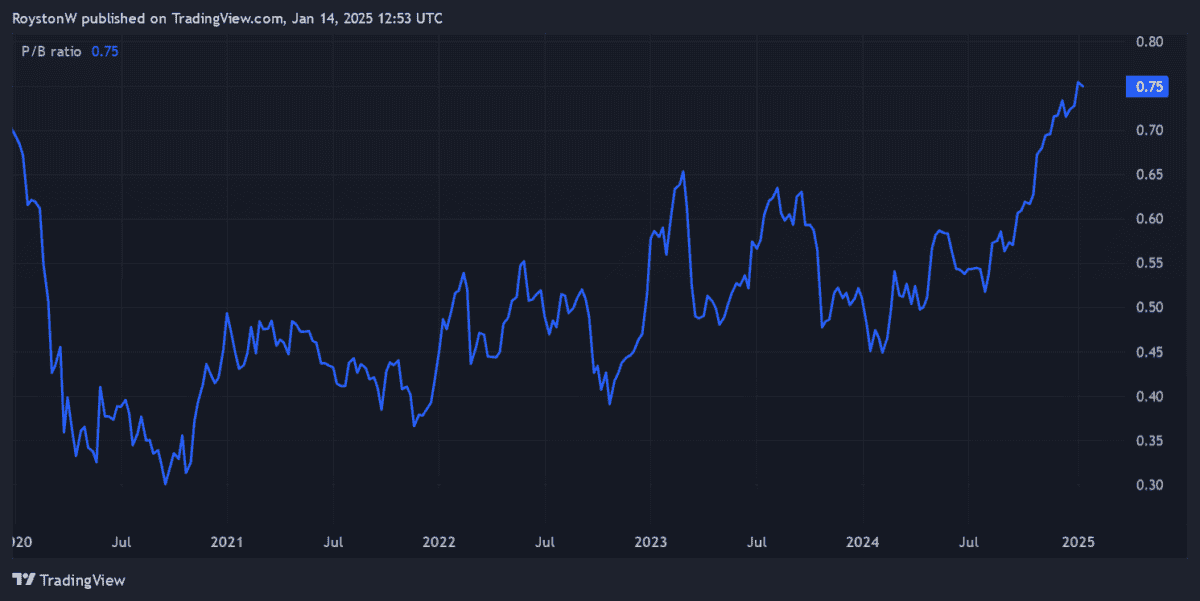
Standard Chartered shares also look cheap relative to the value of the bank’s assets. At around 0.8, this is also below the value threshold of 1.

Source: TradingView

It’s true that Asia-focused StanChart faces uncertainty as China’s economy splutters. However, it also has considerable long-term growth potential as rising regional wealth and population growth drive banking services growth.

The firm also has considerable exposure to Africa to help offset temporary trouble in China.

Growth

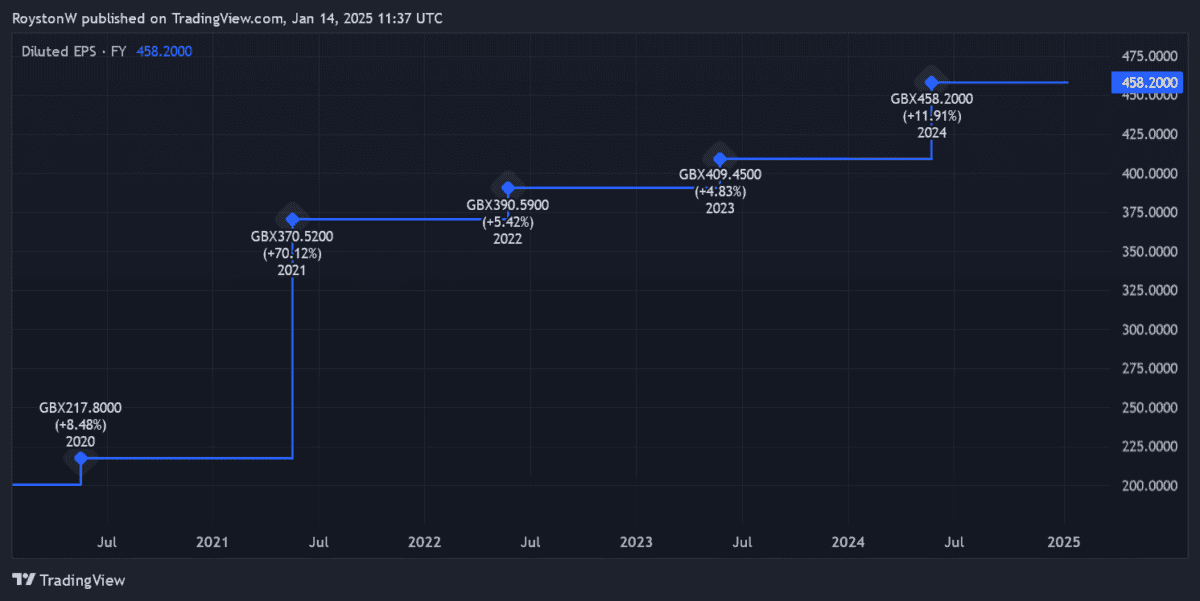
Tabletop gaming’s becoming increasingly mainstream, driven by market leader Games Workshop (LSE:GAW). Its miniatures and games systems are considered the gold standard of the industry. As the chart below shows, it continues to enjoy rapid earnings growth.

Games Workshop earnings growth
Source: TradingView

Games Workshop — which only entered the FTSE 100 last month — is best known for its Warhammer line of products. Hobbyists build, paint, and then do battle with their miniatures within a community of fellow enthusiasts.

It’s a niche yet highly lucrative business. Revenues totalled £299.5m in the six months to 1 December, up 14% year on year. With Games Workshop also enjoying sky-high margins, operating profit increased 33% to £126.1m.

While weak consumer spending remains a threat, City analysts think earnings here will rise 7% in this financial year (to May), and another 4% the following year. Over the long term, I think profits could rise significantly as the firm ramps up licencing of its IP to TV, film and video game producers.

Income

I think Legal & General‘s one of the Footsie’s hottest dividend stocks today. It’s why — along with Games Workshop — I hold its shares in my own portfolio.

It’s raised dividends every year for more than a decade, and has pledged to keep raising them until 2027 at least.

What’s more, the dividend yield on Legal & General shares is an enormous 9.9% for 2025 and 10% for 2026. To put this in context, the index average is way back at 3.6%.

Dividends are never, ever guaranteed. And shareholder payouts here could come under pressure if consumer spending weakens and/or competitive pressures rise.

But in my view, the firm’s rock-solid balance sheet leaves it in good shape to keep delivering large and growing dividends. As of last June, its Solvency II capital ratio was more than twice the regulatory minimum, at 223%.

FTSE 100 stocks just set a new record!

Breaking through the 8,500-barrier for the first time, FTSE 100 stocks hit an all-time high on Friday (17 January).

On one level, this seems a little strange. UK growth figures continue to disappoint, with the economy flatlining since April 2024. In addition, inflation remains above the Bank of England’s 2% target. And earlier this month, yields on 30-year government bonds hit a 26-year high.

Things appear to have got so bad there’s even speculation that the Chancellor might have to call an emergency budget to address another ‘black hole’ in the nation’s finances.

It really does seem very gloomy out there!

And yet the UK’s largest listed companies now attract a higher valuation than ever before.

What’s going on?

In my opinion, this optimism reflects the global nature of the FTSE 100.

It’s true that the UK economy isn’t going ‘gangbusters’ at the moment. But it’s estimated that 75% of the revenue of the companies in the index is earned overseas.

This means they aren’t reliant on one particularly territory and are less affected by one set of economic indicators.

In contrast, the more domestically-focused FTSE 250 remains 15% below its all-time high, achieved in September 2021.

And the best performer on the FTSE 100 over the past month, illustrates this point.

Doing nicely

Since 17 December 2024, shares in Airtel Africa (LSE:AAF) have risen 17%. And the secret to its recent success could be that the group doesn’t earn any revenue outside Africa. The threat of ‘Trump’s tariffs’ isn’t going to affect the group.

At 30 September 2024 (H1 25), it reported 156.6m customers in 14 countries, an increase of 6.1% from a year earlier.

During H1 2025, revenue was 19.9% higher. However, this was calculated using a fixed exchange rate (constant currency). Actual revenues were 9.7% lower, particularly due to the weak performance of the Nigerian naira.

Volatile exchange rates do illustrate one of the difficulties of doing business in this part of the world. It’s also a highly competitive sector and the necessary infrastructure can be expensive.

But despite these risks, the company’s attracting the interest of a major investor. On 27 December 2024, an entity closely connected with one of the company’s non-executive directors, Shravin Bharti Mittal, bought £15.75m of shares. It now brings the stake of Indian Continental Investment to just under 16%.

And in the telecoms industry, Africa seems like the place to be at the moment. During H1 2025, Vodafone – which derives 20% of its revenue from the continent – reported a 9.9% increase in its service revenue in the region.

Over the long term, economic growth in Africa is likely to outpace the rest of the world. And as incomes rise, consumers are likely to have more to spend on things like mobile phones.

Good news

As someone who mainly owns FTSE 100 stocks, I welcome the new high. But I’m not getting too carried away. I think the stocks in the index most likely to do well over the next 12 months are those that are less reliant on the UK economy, like Airtel Africa.

But as much as I think the group’s in a good position to benefit from the anticipated growth on the continent, I already own shares in Vodafone and don’t want more exposure to the sector.

3 mistakes to avoid when looking for shares to buy

I spend a fair bit of time hunting for brilliant shares to buy for my portfolio. Sometimes, however, what seems like a brilliant bargain comes along and I end up regretting my move later.

I’ve learned, to my cost, that I need to avoid these three potentially costly mistakes when looking for shares to buy.

Mistake one: investing in something you don’t understand

It used to be seen as a funny historical anecdote that, during previous stock market bubbles, investors had put money into companies that had not yet even decided what their line of business would be.

Fast forward to the past several years, though, and to me that looks a lot like what is now known as a special purpose acquisition company (SPAC).

That is an extreme way of buying shares in a company you do not understand, as you do not know what it does.

But there are other situations where a company may be very clear about its business model, but an investor does not understand it.

In such cases I think what is going on is not investing, but speculation. When Warren Buffett looks for shares to buy, he sticks to what he understands. So do I.

Mistake two: focusing on the business case, not the investment case

Is Judges Scientific (LSE: JDG) a great business?

I believe it is.

In fact, in some ways the business model is reminiscent of the one Buffett himself uses at Berkshire Hathaway. Judges buys up proven instrument-making businesses, provides some central support, and uses the cash they funnel back to the centre to help fund more acquisitions.

Like Buffett, Judges is careful not to overpay for acquisitions as that undermines the attractiveness. Ironically, though, that danger is exactly what puts me off adding Judges shares to my portfolio at the current price-to-earnings ratio of 34. It may not sound astronomical, but I do not think it is attractive.

A profit warning in November pointed to some of the risks involved, including difficult market conditions and customers delaying placing orders.

I would still like to own Judges shares – but only if I can buy them at what I see as an attractive price.

A good business does not necessarily make for a good investment. In this regard, valuation is crucial.

Mistake three: focussing too much on the positives

When a share falls to what seems like a bargain price, there can often be good reasons why.

Intellectually that is easy to understand – but emotionally it can be difficult to remember.

So when looking for shares to buy, I try to ask myself why other investors are willing to sell to me at what I see as a bargain price.

Only by honestly trying to understand the bear case as well as the bull case when it comes to what seems like a bargain share can an investor hope to avoid at least some value traps.

Why has the FTSE 100 just reached a new daytime high?

The FTSE 100 hit a new intra-day high on Friday (17 January), peaking at 8,508 points in the early afternoon. It might be even higher by the time you read this.

Stubborn inflation, rising business costs and threats of US trade tariffs don’t seem to be holding anyone back.

In fact, inflation news might actually have helped boost optimism. The UK’s December figure fell to 2.5%, not quite at the Bank of England’s 2% target but it’s the right direction.

US inflation outlook

And the US core consumer price index (CPI) dropped to 3.2% year on year, with 3.3% expected. Again still some way to go, but that’s positive.

Sterling falls will have helped boost UK stock prices too.

Multinational company earnings are closely tied to the US dollar, and the pound has slipped 9% from $1.34 in September to $1.22 as I write.

On the cards

I think bull market signs have been in the air for much of the past year, and I reckon it shows in the banking sector.

UK investors seem to have been largely inward-looking for the past few years. But a glance at what’s been happening to the Barclays (LSE: BARC) share price shows a big change.

Barclays shares are up 104% in the past 12 months. Crucially, it’s perhap the most outward-looking and diverse of the big Footsie banks.

Global banking

At Q3 time, Barclays reported a 6% rise in Investment Bank income, with a 3% boost for Global Markets income.

If the incoming US administration relaxes some regulations regarding investment banking as expected, the world outlook for the sector might get even brighter.

Analysts are already forecasting rises in earnings and dividends for Barclays in the next few years. The predicted dividend yield for 2024 is down to 3% after the share price rise, mind. So maybe the shares are fairly valued for now.

Though Friday’s bullish stock market is cause for cheer, there is a bit of a fly in the ointment.

Reasons for caution

The Christmas retail period was disappointing, which I think could put a drag on markets and perhaps even pull the outlook for the banks back a bit.

Forecasters had predicted a 0.4% month-on-month rise for retail sales in December. But figures just out from the Office for National Statistics instead show a 0.3% drop.

Food retailers faced the biggest hardship, with a 1.9% fall.

It raises the fear that the UK economy might have shrunk in the final quarter of 2024. Still, there’s a bright side even to that. Along with the drop in inflation, it surely boosts the chance of an interest rate cut at February’s Monetary Policy Committee meeting.

What does it mean?

So what should investors do about the booming FTSE 100? Sell up and pocket some profit? Or maybe pile in now it looks to be on the up?

I’m pleased to see the optimism, but it doesn’t change anything for me. I’m looking to invest in companies with great long-prospects at good prices. Same as always.

Can Rolls-Royce shares soar further in 2025?

Rolls-Royce (LSE: RR) shares have been on an impressive run for some time now. The company’s valuation has surged thanks to strong profit growth and ongoing demand across key industries including power systems and defence.

The price has almost doubled in the past 12 months alone and sits at £5.86 as I write on 17 January.

The gains haven’t been a flash in the pan either. A valuation increase of over 500% since the start of 2023 have propelled the group’s market cap to nearly £50bn.

With this recent growth and momentum, I thought I’d evaluate the company’s recent performance and several things I’d consider before buying.

Strong 2024 performance

Investors weren’t purchasing Rolls-Royce shares on a whim last year. The company’s strong share price gains were fuelled by robust financial results and achievement of key strategic priorities.

Half-year underlying operating profit of £1.1bn and underlying operating cash flow of £1.2bn were reflective of strong operational results and ongoing value creation in both new and existing markets.

Management also raised full-year guidance despite supply chain challenges, with forecast underlying operating profit of £2.1bn-£2.3bn and free cash flow of £2.1bn-£2.2bn.

Investors should also be pleased to see the reinstatement of shareholder distributions. The company is expecting to start with a 30% ratio of underlying profit after tax, with an ongoing payout ratio of 30%-40%.

Valuation

I’m always asking myself whether a company is overvalued, undervalued or just about the right price. I think that’s especially important for Rolls-Royce given the charge the shares have been on recently.

Let’s start with price-to-earnings (P/E) ratio. The stock is currently trading at a multiple of 21.2 which is at a premium to the FTSE 100 average of around 14.5. That in itself is not an issue, as P/E ratios will vary by industry.

For instance, investors might be more willing to pay for a defensive company compared to those in cyclical industries.

Nevertheless, Rolls-Royce looks a touch expensive. BAE Systems has a P/E ratio of 20.3 as I write, while across the Atlantic Lockheed Martin trades at around 17.6.

The reinstatement of dividends, upgraded full-year guidance and strong free cash flow generation are certainly factors. However, I’m wary of buying the stock at the current level despite a generally positive outlook.

Risks and opportunities

The company itself hasn’t shied away from the supply chain challenges it’s facing at the moment. Continued disruption could impact on production and costs, hurting margins and profitability.

International relations are delicately poised as we enter 2025. Any further shocks or unexpected moves from the incoming Trump administration could have serious impacts on defence spending and contracts.

On the plus side, Rolls-Royce may benefit from deglobalisation and efforts to bolster national security across the globe.

If management can continue to execute its strategic objectives and keep costs under control, shareholders could reap the rewards.

Verdict

There are several things I think investors should consider before buying Rolls-Royce shares. While I wouldn’t be surprised to see the company’s share price climb higher, I won’t be buying.

The stock looks a touch expensive and exposed to a fragile geopolitical environment. I’m more interested in defensive industries like pharmaceuticals to complement my current portfolio.

What on earth is going on with the Diageo share price in 2025?

The Diageo (LSE: DGE) share price has started 2025 the way it ended 2024 (and 2022 and 2023). Down!

Admittedly, we’re only two weeks into the New Year, but it’s not a great start. Shares of the premium spirits powerhouse are down 5%. With the FTSE 100 index off to a flyer this year, up nearly 4% already and just hitting a fresh record, Diageo shareholders like myself are left frustrated once again.

What’s going on here? And should I ring the bell and announce closing time on this stock? Let’s take a look.

Drip-drip of downbeat developments

There hasn’t been any single update that has sent the stock lower. Instead, there has been a steady stream of negative news and nothing good to counter it.

Last week, for example, we learned why fund manager Terry Smith dumped Diageo shares last year. He lost faith in the new management team after the build-up of unsold booze in Latin America, while also fearing GLP-1 weight-loss drugs like Wegovy were about to negatively impact the drinks industry.

We suspect the entire drinks sector is in the early stages of being impacted negatively by weight-loss drugs. Indeed, it seems likely that the drugs will eventually be used to treat alcoholism such is their effect on consumption.

Terry Smith, Fundsmith Equity Fund annual letter to shareholders, 2024

However, Fundsmith’s sale was back in the summer and the market has known about the lurking GLP-1 drugs issue for a while. So these are unlikely to be the sole reasons for the stock’s weakness this year.

Another negative development was that India’s federal investigating agency has alleged that Diageo made suspicious payments to a politician’s firm in order to attain favourable government decisions. We don’t know when this allegedly happened and Diageo said it’s cooperating with the agency. India is massive and likely to be an important growth market for it over the long term, so this news wasn’t welcome.

Earlier this month, US Surgeon General Vivek Murthy called for alcoholic drinks to carry cancer warning labels like cigarettes. It’s unclear whether this will be implemented, but some analysts fear alcohol firms might be heading the way of tobacco stocks — slow growth, declining customer base, higher regulation, and lower valuations.

Finally, there’s the looming threat of soon-to-be- President Trump’s tariffs, which could take a bite out of Diageo’s profits. It exports a load of Canadian whisky and Mexican tequila into America each year. So it’s in the firing line.

Should I throw in the towel?

The stock looks decent value, trading at 16.5 times forecast earnings for FY26 (starting July). The forward dividend yield is now approaching 4%, so perhaps there’s something in the tobacco stock comparisons. They’re bought primarily for the income rather than any expectations of long-term industry growth.

Diageo is due to report H1 2025 results in February, and one of my biggest fears is hearing management utter those dreaded words: GLP-1. If it says these are indeed having an impact, the stock would likely be crushed.

Still, I’m keeping hold of my shares and hoping for green shoots of recovery in the global drinks market, or at least something to be optimistic about. I get enough doom and gloom from the news — I don’t need any more in my portfolio!

As merger rumours swirl, should I pounce on Glencore shares?

What might talk of a potential merger with Rio Tinto (LSE: RIO) mean for Glencore (LSE: GLEN) shares?

Bloomberg News reported on Thursday (16 January) that the two were in early stage discussions just over a decade after Rio rejected a takeover bid by Glencore. But the firms did not comment.

As I write this on Friday morning, Glencore shares are up around 3% in early trading, while Rio is up under 2%. So neither share has jumped in a way that suggests the City is yet giving too much credence to the prospect of a deal.

Potential deal logic

Mega-mergers are nothing new in mining. The industry’s huge fixed costs and massive capital investment requirements, combined with a boom and bust cycle for some commodities, means that strategic combinations that can build scale and cut out costs can be attractive.

Glencore’s strength in copper boosts its appeal right now, in my opinion. Demand for the metal is expected to grow strongly due to its use in renewable energy projects.

But would a deal make sense for the firms?

We saw a tie-up between BHP and Anglo American last year collapsing because of the deal structure – driven in large part by regulatory concerns in South Africa.

I think a Glencore-Rio merger could also run into sizeable regulatory challenges given how large the combined business would be. Add to that the egos involved in mining and I doubt it would be easy to thrash out a combination between the two firms with contrasting cultures.

So for now, I see the deal chatter as interesting to hear about but not yet relevant to the long-term investment case for either miner.

How deal premiums work (or not)

While some people buy shares in companies hoping for a takeover, I see that as speculation, not investing.

Buying such shares as the price moves up in expectation of a deal, only to see the price collapse after it falls through, is a real risk in such situations.

If Rio was to bid for its rival, maybe Glencore shares would be valued at a premium, to help persuade shareholders to vote for the deal. But in a straight merger, that seems less likely to happen.

More likely, Glencore shareholders would simply receive a certain number of shares in the new, merged firm in exchange for their old Glencore ones.

Are the shares a bargain, deal or no deal?

So, for me as an investor, the investment case for Glencore needs to stand on its own two feet, whatever happens to the deal rumours.

I do like its copper assets and think they could be a substantial cash flow generator in the coming decade.

But the complex business has (like many miners) been very inconsistent in terms of financial results. Last year saw revenues fall and the business crashed to a $4.3bn post-tax loss following a mammoth profit the prior year.

That underlines the volatility of mining profits due to shifting commodity prices. Currently, metal prices are high and I reckon an uncertain global economic outlook could yet push them either way.

Until we reach a point where the metal price cycle gets much lower, I do not see Glencore shares as a long-term bargain for my portfolio so will not be investing.

Financial News

Daily News on Investing, Personal Finance, Markets, and more!

Financial News

Policy(Required)