Is it game over for the GSK share price?

If the GSK (LSE: GSK) share price was a video game, it would be flashing GAME OVER to me right now.

Shares in the pharmaceutical giant started 2025 trading at a 12-month low. Although they picked up slightly in January, they’re still down almost 10% over one year and 25% over five.

I can recall the days when, as GlaxoSmithKline, Motley Fool users saw this as the quintessential UK blue-chip. They loved its defensive resilience, solid share price, and beefy 5%+ yield. That must be more than a decade ago, I’m afraid.

I bought the shares on a couple of occasions last year, hoping the glory days might return. Instead, my stake quickly slumped 20% and stayed there. In my portfolio, only Ocado Group and Aston Martin have done worse, and they’re very different beasts. Or should be.

Can this defensive hero fight again?

The board has struggled to deliver the promised growth from spinning off consumer healthcare arm Haleon in July 2022. The idea was that focusing on pharmaceuticals and ramping up R&D spending would drive long-term gains. Instead, legal threats and political pressure have clouded the outlook.

The overhanging Zantac litigation case has dented investor confidence, even though GSK settled a major US class action last year. 

Attacks on big pharma by President Donald Trump’s proposed health secretary Robert F. Kennedy Jr. haven’t helped. US healthcare policy is now highly uncertain. It’s always something with GSK these days.

The shares do look good value trading at just 9.1 times earnings. That’s well below the FTSE 100 average of around 15 times. Even cheaper than when I bought them.

While the dividend yield isn’t what it was, it has crept back above 4%. It now beats the average FTSE 100 yield of 3.5% but that’s more down to the falling share price than GSK largesse.

It’s a FTSE 100 pharmaceutical flop

GSK has posted a string of drug trial wins lately. Its specialty medicines division saw strong growth in Q3, with sales up 19%. HIV treatments climbed 12%, and oncology revenue surged 94%. 

The success of new launches such as Jemperli in endometrial cancer and Apretude for HIV prevention suggests the drug pipeline is finally picking up.

However, vaccine sales have been a disappointment, with key product Shingrix falling. RSV vaccine Arexvy collapsed 72% due to US guideline changes and the prior-year launch boost fading. If this trend continues in the full-year results, GSK could struggle again.

I’ll have a clearer view when GSK publishes full-year results on Wednesday (5 February). The board is targeting turnover growth of 7% to 9% and core earnings growth of 10% to 12%. If it delivers, things may look up. An upgrade would be lovely. But a miss could make my portfolio look even messier.

GSK is lining up for major product launches in 2025, including its new meningitis vaccine and treatments for asthma and COPD. Let’s hope for some positive noise about them. It’s not quite game over for GSK yet. But nor is it game on.


Down 45% in a year, is the Ocado share price about to soar?

Online retail specialist Ocado (LSE: OCDO) has had a terrible year — its shares are now 45% lower than they were 12 months ago. The Ocado share price did jump earlier this month after its retail arm Ocado Retail (a joint venture with Marks and Spencer) issued an upbeat trading statement.

It has since drifted downwards again, but still, could this be year we see a turnaround in the share price?

Here’s why the market got excited this month

The statement showed strong performance from the retail operation, with revenues in the fourth quarter growing 18% year on year. For a mature market such as selling groceries, I regard that as excellent performance.

The number of customers also grew in double digits, which was largely the performance driver, rather than a significant shift in basket size or value.

That is fine, but it does raise a question of why Ocado was not able to get existing customers to buy more. Recruiting new customers is all well and good. However, it is typically more cost effective to sell a bigger number of items, or more costly items, to existing ones.

The company expects full-year revenue growth of 14%, resulting in “strong” growth in EBITDA (earnings before interest, tax, depreciation, and amortisation).

After a record Christmas, the company said that it expects this year it can “continue to show market-leading sales growth and volume momentum”.

Here’s why I’m less excited

That is indeed an excellent trading statement when it comes to sales. We need to wait until the release of the company’s full-year results next month to get the full profit picture, though.

But Ocado has two parts – and the Ocado Retail joint venture is only one of them. It has long been a decent performer. Indeed, in the (increasingly distant) days when Ocado actually made a profit, that reflected strength in the retail operation.

The other part of Ocado is the division that sells its online retail fulfilment capabilities to fellow retailers worldwide. This is the part of the business that I think has led to such a steep decline in the Ocado share price over the past five years.

The problem is that it has not yet shown that it has a viable business model in the long term. It has burnt through vast sums of cash setting up the infrastructure needed to service its clients, like distribution centres.

That should position it well to fulfil long-term contracts. And, hopefully, over the lifetime of such deals, the income will more than cover the costs.

However, while that is well in theory, in practice it remains to be seen. Shifts in the retail landscape – such as how long customers expect to wait before receiving delivery – could have significant impacts on the current model’s viability.

So while the Ocado Retail operation looks decent to me, it is lumped together with a consistently loss-making division that has yet to prove its long-term viability in my view.

The current market capitalisation of £2.6bn is not a bargain for those two businesses taken together, I feel. And I see no rational reason for the share to soar soon. I have no plans to invest.

How much would someone need to invest to earn a second income of £3k a month?

UK shares are a brilliant source of second income. Better still, once an investor’s bought a stock, they don’t need to lift a finger to earn it.

Many investors fixate on the growth opportunities available on the US S&P 500, but there isn’t much passive income to be had there. The average yield’s just 1.1%. By contrast, FTSE 100 shares now yield more than 3.5% on average.

UK companies paid a staggering £92.1bn in dividends to shareholders in 2024, up 2.3% on a headline basis, according to Computershare’s latest UK Dividend Monitor.

The FTSE is a brilliant source of dividends

This is a brilliant opportunity to tap into. While share prices and dividend payments aren’t guaranteed, over the longer run a diversified spread of them should compound and grow very nicely. 

The most common strategy is to reinvest every dividend while in the wealth-building stage, then draw them as income in retirement. Here’s how an investor could target a generous passive income of £3,000 a month, or £36,000 a year, by investing in UK dividend shares.

How much they need to invest to achieve this partly depends on the average yield across their portfolio. So with a 5% yield, they’d need £720,000 to hit that target income. I reckon that it’s possible to aim for an average portfolio yield of 7% while still focusing on high-quality companies. That cuts that target to around £514,000.

Let’s say our investor was starting from scratch. If they invested £1,200 a month and got an average total return of 7%, they’d have around £523,000 after 18 years. That’s quite a large monthly sum to invest. If they cut it to £500 a month, they’d build a similar sum but it would take around 28 years.

Currently, I can see eight FTSE 100 stocks with yields of 7%, or more. One of them pays income bang on 7% – Land Securities Group (LSE: LAND), or Landsec as it calls itself.

Landsec has a high yield but also carries risk

The company’s what’s known as a real estate investment trust (REIT). It owns a spread of high-quality commercial properties, ranging from office blocks to shopping centres, which should generate a steady, rising rental income from tenants.

Please note that tax treatment depends on the individual circumstances of each client and may be subject to change in future. The content in this article is provided for information purposes only. It is not intended to be, neither does it constitute, any form of tax advice.

As Landsec increase rents every year, it can pay more dividends too. There’s also scope for capital appreciation as property prices rise.

Like every stock, this one has risks. Commercial real estate’s cyclical. An economic downturn can hit occupancy rates and rental income, pressuring dividends.

Office block revenues are threatened by the work-from-home trend, while retail centre footfall can be volatile. Today’s higher interest rates are making the group’s debts costlier to service too. It has net debt of around £3.5bn.

The share price has fallen 15% over the past year, and 42% over five years. Our investor should only consider buying once they’ve built a diversified portfolio of at least a dozen stocks, starting with lower risk profiles.

By doing that, they could build a generous second income that could last for life, and increase every year too. There are risks, but also serious rewards.

Is the Diageo share price facing a lost decade?

For many years, I was enthusiastic about the investment case for brewer and distiller Diageo (LSE: DGE) – but not the share price. Too many other investors seemed to share my enthusiasm for the company, keeping the price above what I thought was an attractive buying level.

Then, the Diageo share price fell to what I thought was a decent point to buy – so I did.

Since then? It has basically kept falling. Sure it has moved about, but the long-term trend is not good. Over a year, down 15%. Over five years, down 19%.

As an investor, I see the value of trying to understand why other investors take the opposite view to me.

So far I have seen a lower Diageo share price as a temporary setback. But now I am wondering, might we be facing a lost decade?

Long-term underperformance

That might sound far-fetched, but bear in mind that the share is already significantly below where it was five years ago. In fact, it now stands where it did back in 2017. So it is not far off a lost decade already.

It does have a dividend and indeed that has grown annually for over three decades. The 3.3% yield looks attractive to me, although it is slightly below the average of Diageo’s FTSE 100 peers. And given the inflation we have seen over recent years, in real terms, Diageo has been a dog of late.

Seven or eight years in, can I write this off as a blip? Or am I kidding myself about what is really going on here?

Big challenges and no easy answers

The short-term explanation for Diageo’s woes has been pretty straightforward. People were boozing away during the pandemic lockdowns but things are on more of a normal footing now and economic challenges in Latin America have hurt sales there.

Stepping back, though, I see other warning signs of a potential step change in business expectations. Younger generations are drinking less alcohol than their parents and grandparents did. Beer sales are in long-term decline, while demand for pricy spirits is being buffeted by economic weakness in key markets.

As if that was not bad enough, recent reports of supply challenges for Guinness in England have got me scratching my head. I have not witnessed them first hand and when ordering a pint of the dark stuff at a pub in Inverness last month, the barman said supply was as normal.

But can it really be that Diageo has supply chain challenges in delivering a drink it (or its forebears) have been brewing for over 260 years? That hardly inspires confidence in management.

I’m getting nervous – and curious

Still, I am a long-term investor.

With over 8,700 years left on Guinness’ lease at its St. James’s Gate brewery in Dublin, that is just as well!

Diageo remains solidly profitable. It has expanded into non-alcoholic drinks such as Seedlip to try and meet shifting consumer demands. Its unique premium brands and production sites give it a strong competitive advantage.

On current form, we may indeed be seven or eight years into a lost decade for the Diageo share price. Over time, though, I believe its value will out – so I plan to hold my shares.

3 UK shares ChatGPT thinks will lead the next bull market charge

I have my own ideas about which UK shares will take off in the next bull run, but I fancied giving artificial intelligence (AI) a shot. So I asked ChatGPT to name three growth stocks it thought would benefit when the outlook brightens and investors get their mojo back. 

Its first suggestion didn’t surprise me. It’s the number-one FTSE 100 performer over the last year, and at the very top of my own shopping list. The other two did surprise.

I’m hungry to buy IAG

ChatGPT’s first pick was British Airways owner International Consolidated Airlines Group (LSE: IAG). It praised IAG’s “resilience amid past economic downturns” but I’m not sure I totally agree. IAG was on the brink during the pandemic, although that was an extreme case, to be fair.

The IAG share price has soared 110% in the last year, with people hungry to travel post-lockdown, while it’s whittled down debt to €6bn. That’s still high, but far from lethal.

Running an airline isn’t cheap, and IAG’s had to pour money into fleet modernisation to stay ahead of the competition. It’s exposed to volatile fuel prices, consumer downturns and geopolitical events, and always will be.

But with transatlantic routes – its niche – particularly buoyant, it looks good value trading at 7.7 times earnings.

I didn’t expect Bellway

Now for the first AI surprise: FTSE 250 housebuilder Bellway (LSE: BWY). My own play on the housebuilding sector’s Taylor Wimpey, so I haven’t paid much attention to the others. ChatGPT has a wider outlook.

My ‘bot buddy says builders will benefit from lower interest rates which “typically make mortgages more affordable and stimulate housing demand”

It added that Labour’s “commitment to addressing housing shortages, coupled with potential planning reforms, could further bolster the sector”.

ChatGPT highlighted Bellway’s strong balance sheet and strategic land acquisitions, while warning that it remains “exposed to fluctuations in the housing market and economic cycles”.

The Bellway share price has struggled lately, falling 4% over the last year, and 36% over five years. It looks a little pricey trading at 19 times earnings. The dividend yield‘s a modest 2%. With Taylor Wimpey at just under 12 times earnings and yielding almost 8%, I’ll stick with that.

Thanks ChatGPT, but no thanks.

AJ Bell shares are tempting but pricey

Finally, my chatbot chum picked out investment platform AJ Bell (LSE: AJB), saying that “as savings rates fall, individuals may seek higher returns through investments, driving growth”.

ChatGPT also praised its “user-friendly interface and diverse product offerings”, while warning it operates in a highly competitive industry with pressure on fees and margins. Stock mark volatility can also hit assets under management and associated revenues.

I’m wary. The AJ Bell share price has been going great guns, up 40% in the last year. It looks expensive though, trading at almost 22 times earnings.

Also, falling interest rates will cut margins on customer cash balances, a strong source of revenue lately. Of the three, IAG’s the one I want. It’s leading the charge right now, even without a bull market.

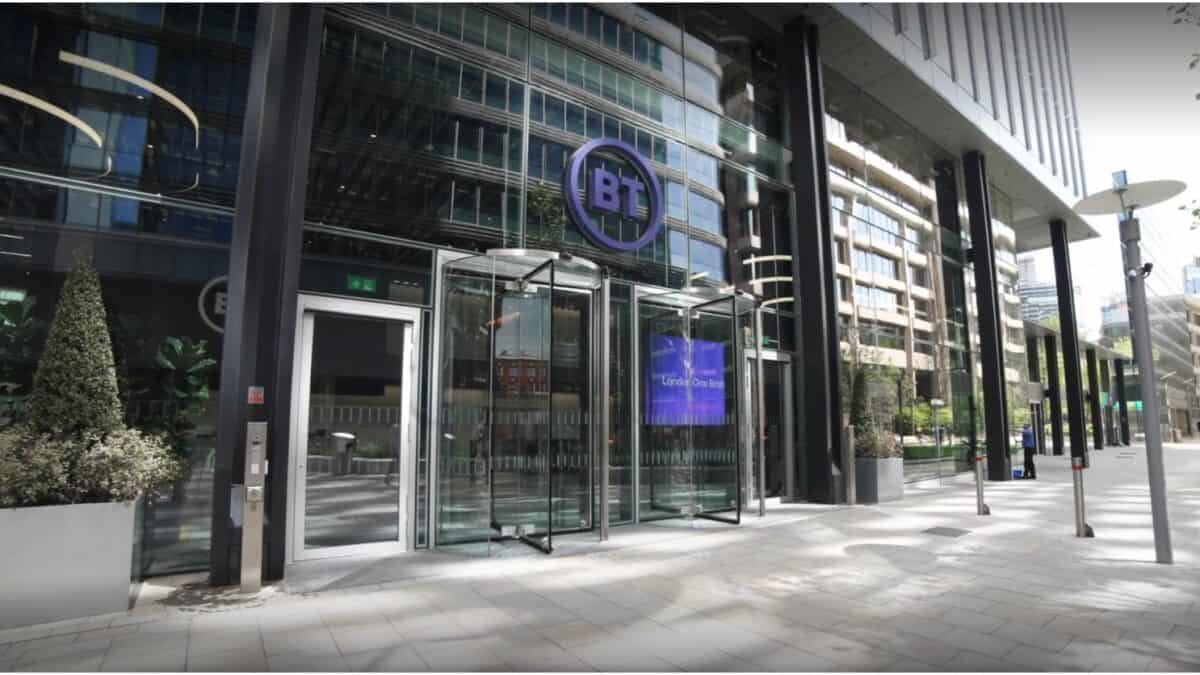
As the BT share price falls after the Q3 update, is it just a pause before it soars?

The BT Group (LSE: BT.A) share price quickly fell 4.5% on Thursday morning (30 January), in response to the telecom giant’s Q3 update, though it regained about half of that by close.

The dip will have been exaggerated a bit by optimism pushing the shares up the previous day in anticipation.

Openreach up

BT has been making a big thing of its Opeanreach full-fibre broadband rollout over the past year. And to be fair, I’m impressed how well it’s done. The connections have all been laid along my street, and I intend to sign up when it’s available.

In May last year, CEO Allison Kirkby famously told us: “Having passed peak capex on our full fibre broadband rollout and achieved our £3 billion cost and service transformation programme a year ahead of schedule, we’ve now reached the inflection point on our long-term strategy.”

That marked a key milestone, and the bulk of 2024’s share price gains came almost straight away.

Opeanreach is still storming ahead. The latest update told us of “over 1m premises passed in the quarter for a fourth consecutive quarter.” And it seems BT is on track to reach 25m premises by the end of 2026.

Revenue down

But then come the numbers with pound signs in front of them. Adjusted revenue in the quarter fell 3%, with a similar fall in the nine months to December 2024.

Adjusted EBITDA looked better, gaining 4% in the quarter and 2% year-to-date. But that was in part “driven by strong cost transformation.” And there’s only so much a company can do with cost reductions to boost profits. Long term, it has to come from growing revenue.

Still, this is just a single quarter. I’d never make a buy or sell decision on something so short term. And the CEO did tell us that “BT’s continued delivery means we remain on track to deliver our financial outlook for this year and our cash flow inflection to c.£2bn in 2027 and c£3bn by the end of the decade.

I just don’t think the negative market reaction is justified. But there’s one thing that always nags at me about BT.

Dividend puzzle

To my simple mind, dividends should come from cash surplus to operational needs and capital expenditure (capex). If a company can’t use it to generate superior returns, it should go back to shareholders through dividends or share buybacks.

But I’m not really seeing surplus cash here. Capex last year came in at £4.9bn, interest payments cost £865m, and BT repaid £1.68bn in borrowings. Net debt reached £20.3bn by 30 September 2024. Yet BT paid out £757m in dividends.

Still, if I wait until I understand 100% the reasoning behind a company’s shareholder strategy, I’ll probably never buy anything. So if I want to invest for dividends, maybe I should just stump up and pocket the expected 5.6%. I might just do that.

And I do see long-term potential in the BT share price now, though I’d say the main risk still comes from needing to see all this expansion to turn into bottom-line earnings growth.

Up 24% in January! Is this year’s best FTSE 250 stock the ideal buy in February?

January 2025 is almost over and the year’s first FTSE 250 winner is clear – global animal genetics specialist Genus (LSE: GNS).

Its shares surged nearly 24% last month, a remarkable turnaround after three tough years that saw them halve in value. Even after this rally, they remain down 18% over 12 months.

I’ve never analysed this stock before, so I’m coming at it fresh. What’s driving Genus, and is it too late to jump on board?

Can the Genus share price thrive in February too?

The catalyst for Genus’s revival was its half-year trading update on 15 January. The board reported strong performance in the first half of its financial year, with adjusted profit before tax expected to hit at least £35m, ahead of market expectations. Full-year profits should now be at the top end of analyst forecasts.

The group’s PIC division, which focuses on pig genetics, exceeded expectations in both the Americas and Asia. That’s particularly encouraging given weak Chinese sales in recent years. Meanwhile, its cattle-focused ABS division met expectations, helped by efficiency improvements from the company’s Value Acceleration Programme.

Genus’s PRRS-resistant pig programme also looks promising. This gene-editing technology, designed to combat a costly virus in the pork industry, is progressing through regulatory approvals. If commercialised, it could be a game-changer for Genus and the global livestock industry.

One issue is that Genus shares aren’t cheap, trading on a price-to-earnings ratio of 29 times. That’s roughly double the FTSE 250 average. 

Investors clearly pay a premium for growth potential, and many are happy to do so. Another downside is the modest 1.7% dividend yield, which won’t attract income seekers.

Paying a high valuation for a company with such potential can make sense. Genus has a competitive edge in a niche industry with strong global demand. 

While recent results are encouraging, risks remain. The Chinese market is still uncertain. Although PIC’s performance in Asia has improved, past struggles due to weak pork prices highlight potential volatility.

I’ll leave this little piggy for now

I already have exposure to China through miners like Glencore and luxury brands Aston Martin and Burberry. These stocks have all been hugely volatile, to put it mildly, and I’m unsure that I need more China-related risk.

Currency exchange rates are another challenge. The board expects an £8m to £9m impact on earnings from exchange rate movements this year, which could limit profitability.

Lastly, while PRRS-resistant pigs are exciting, regulatory approvals in key markets like the US, Canada, and Japan are still pending. Any delays or denials could hit the share price.

Genus is a fascinating company with a unique position in animal genetics. Its technology has huge potential, and the recent surge suggests growing investor confidence. However, after this rapid rise, I’m reluctant to go the whole hog and buy it.

If the stock dips or interim results on 27 February deliver further positive surprises, I might reconsider. For now, I’ll keep Genus on my watchlist and wait for a tastier entry point.

Is it game over for Nvidia stock?

Nvidia (NASDAQ: NVDA) has been the best-performing stock over the past two decades. In late 2022, it got a major shot in the arm when ChatGPT was released, triggering a tsunami of capital expenditure on artificial intelligence (AI) infrastructure by cloud giants like Amazon Web Services, Microsoft‘s Azure, and Google Cloud.

Put simply, they feared being left behind in the age of AI unless they whipped out their fat chequebooks and bought as many top-shelf Nvidia GPUs as they could get their hands on. This has seen GPU king Nvidia’s revenue surge from $27bn in FY23 to an expected $196bn in FY26 (starting in February)!

The widespread assumption has been that this AI expenditure would reach trillions of dollars by the 2030s. Until recently, that is, when little-known Chinese firm DeepSeek came along with a competitive open-source AI model that was reportedly trained on a shoestring $6m budget. 

This has raised serious doubts about AI models requiring ever-increasing amounts of computing power to train and run. Yet this is a big part of Nvidia’s bull story.

So, is it game over for the stock? Here’s my take.

Uncertainty

What I’ve found fascinating about the recent DeepSeek bombshell is how it has further entrenched investor’s already-formed views on Nvidia and the AI revolution. I believe psychologists call this ‘confirmation bias’.

In other words, Nvidia optimists simply see DeepSeek as yet another bullish signal. Cheaper models will lead to quicker widespread AI adoption, driving even more demand for data centres packed with Nvidia’s GPUs. They have a name for this: Jevons Paradox. This is the idea that as the cost of using a resource falls, demand will rise, not drop. 

For Nvidia bears though, DeepSeek is the red-hot pin that is ready to pop the AI bubble, bringing Nvidia’s share price crashing back down to earth.

Where do I stand? Well, all this has just further increased my uncertainty. This is why I reluctantly sold my long-held Nvidia position last year.

I have four basic worries. First, it took less than two years for Nvidia to become a $3trn+ company. To sustain such a valuation, it will one day need to regularly generate hundreds of billions in annual profit. But it’s not at all clear to me that AI investments will always be anywhere near this high.

Second, there’s China, where Nvidia makes around 15% of revenue. I think there will be increasing restrictions on Nvidia’s GPU workarounds for Chinese customers. Indeed, after DeepSeek, I wouldn’t rule out an outright ban.

Third, AI basically falls into two categories: training and inference (e.g., ChatGPT answering a question). As models evolve, demand may shift more toward inference.

Will that reduce demand for GPUs? Does Nvidia still have the same competitive edge there? I don’t know. Perhaps Meta Platforms, Microsoft, and the rest can compete more easily in this area.

Game over?

That said, I don’t think it’s game over for Nvidia stock. Investors can essentially gauge near-term GPU demand by listening to the major cloud providers. And Microsoft has just earmarked $80bn for annual AI spend, while Meta is planning as much as $65bn in 2025. These are figures representing around 30% of annual revenue!

More near-term growth seems certain for Nvidia then. Longer term though, I’m still uncertain, so not tempted to reinvest.

3 growth stocks helping the FTSE 100 have its best month in over 2 years

In contrast to the scary moves seen in certain stocks across the pond, the FTSE 100 has been strong in 2025. A rise of 5% means it’s on course for its best month in more than two years!

At least part of this is down to some heavy-hitters setting fresh 52-week highs.

London Stock Exchange Group

Shares in financial markets infrastructure and data provider London Stock Exchange Group (LSE: LSEG) are also up nearly 5% in January. But its value has been steadily rising for a while — 35% in the last year alone.

Look closer and this begins to make sense. This year, LSEG plans to roll out new AI features within products that it’s been working on with US tech titan Microsoft. If all goes to plan, this development could grow its market share.

The question is how much of this is now priced in. The shares now trade at a forecast price-to-earnings (P/E) ratio of 30. That seems high considering margins have been falling in recent years. The number of UK initial public offerings (IPOs) — another source of income for the company — has also been woeful.

With this in mind, it will be interesting to see the market’s reaction to full-year numbers, due at the end of February. This is before we’ve even considered what might happen if global markets have a sustained wobble. Worryingly, the stock proved pretty volatile during the post-pandemic tech crash.

Experian

Global data company Experian (LSE: EXPN) is another top-tier member that’s been doing the business for shareholders. In fact, it’s been flying in January – rising 14% as I type.

At least some of this is surely down to an encouraging update on trading for the three months to the end of 2024. “Another strong quarter” led to the company reporting an 8% increase in total revenue. Trading in North America was particularly robust, supported by its business-to-business segment.

Again, this isn’t a stock for value hunters. Experian shares change hands for 32 times FY25 earnings. So, this is arguably another candidate for a big fall if (and the key word is ‘if’) investor sentiment shifts downward for any reason. It’s also worth noting that competition in this line of work is growing.

Like LSEG, it goes on my watchlist for now.

Halma

Completing our trio of stocks experiencing great momentum is life-saving tech supplier Halma (LSE: HLMA). Its value has climbed by a similar percentage to Experian in January. Based on how it finished 2024, this isn’t much of a surprise.

Back in November, the company’s shares soared by almost 10% in a single day after it posted a 13% rise in half-year revenue (to £1.07bn) and 18% jump in profit (to just over £209m). In addition to maintaining its guidance for the full-year, management also elected to raise the interim dividend by 7%.

But Halma is far from cheap to buy. A P/E of 34 for the current financial year makes it the most expensive of the three. And it’s growth-by-acquisition strategy is naturally dependent on it finding enough good businesses to buy.

Broker Berenberg has a target price of 3250p but this is another one I prefer to buy when investors are fearful.

I’m watching all of them closely for now but not yet buying.

Apple’s share price was up 3% in aftermarket trading as Q1 results beat expectations

The Apple (NASDAQ: AAPL) share price is expected to enjoy further gains today after posting positive Q1 2025 results Thursday (30 January). The report, published after the US stock market closed, prompted a 3% price rise in aftermarket trading.

Earnings per share (EPS) was up 11% at $2.41, beating expectations of $2.35. Net income grew by 6% to $36.3bn. Revenue enjoyed moderate growth of 3.9% to $124.3bn, also beating expectations.

That’s a considerable improvement on the last quarter, which saw earnings miss expectations by almost 40%

Our record revenue and strong operating margins drove (earnings per share) to a new all-time record with double-digit growth,” said CEO Tim Cook.

Despite the positive results, JP Morgan Chase has lowered its price target for the stock to $260 from $265. Several other brokers have downgraded their ratings from Buy to Hold. Analysts at Barclays and Citigroup raised their price targets to $197 and $185 respectively.

Back on top

After briefly losing ground to Nvidia, Apple’s reclaimed its position as the largest company by market cap.

The share price was in decline for most of this year after peaking at $260 on 26 December. The expectation of positive earnings prompted a recovery earlier this week. It now has an above-average price-to-earnings (P/E) ratio of 39, suggesting a slight overvaluation. Usually, this would suppress further growth but with tech stocks, high P/E ratios are common.

Most pressing is the risk of losses posed by currency fluctuations, which analysts estimate could hurt the share price by 2.5%. Some analysts also feel Apple’s at risk of losing market share in certain regions, posing a threat to profits.

Chinese competition

One concern Apple’s been facing is a shift towards locally produced goods in China. The tech giant was aiming for a sales boost from the introduction of new artificial intelligence (AI) tools in the iPhone 16. However, the surprising success of Chinese AI competitor DeepSeek may have dented some of the impact. 

iPhone sales in China have already been in decline for some time, down 11.1% year-on-year. Revenue dropped to $15bn in the last quarter of 2024 and market share in the region fell 18% compared to Q4 2023. Overall, iPhone sales came in at $69.1bn, well below the expected $70.7bn.

Recent data reveals locally-produced smartphones are now outpacing foreign phones in the country. Chinese manufacturers Vivo and Huawei enjoyed an increase in market share by 8% and 15.5% respectively.

Looking ahead

Analysts have mixed feelings about Apple stock, with 12-month price targets ranging $188-$325. The average is around $248, representing only a 4.5% rise from the current price.

Despite the positive results, earnings are expected to follow a cyclical pattern of declines in Q2 and Q3. Historically, this hasn’t correlated with the share price, which is up 207% in the past five years. The company expects low-to-mid-single digit revenue growth in the next quarter, potentially offset by a stronger dollar.

The deployment of AI-enhanced features is now a top priority for the company if it hopes to regain market share in the East. However, the results are indicative of Apple’s resilience to the shifting economic landscape and threat of competition abroad.

For that reason, I think it’s worth considering.

Financial News

Daily News on Investing, Personal Finance, Markets, and more!

Financial News

Policy(Required)