3 FTSE 250 dividend stocks to consider for passive income in 2025

Dividend stocks have long been a preferred way for UK investors to generate passive income. As inflation puts pressure on the economic landscape, investors are increasingly drawn to the reliable income that such shares offer. 

Yields on the FTSE 250 are currently higher than normal as its performance lags behind the FTSE 100. This could be an opportunity.

My top UK dividend picks today

I’ve identified three UK stocks with attractive yields, strong financials and long-term potential that I think are worthy of further research.

Dunelm Group

The homewares and household goods retailer Dunelm Group operates approximately 80 stores across the country. It has a solid track record of increasing dividends for almost 20 years, from 3.8p a share to 43.5p. It has also paid a special dividend for the past four years, meaning its 4.5% reported yield has been closer to 8%.

But recent price activity has been less impressive, with the stock down 18% in the past five years. Most of the losses occurred during the 2022 market downturn, revealing the business’s sensitivity to economic troubles. This is a significant risk to consider as US trade policies could further disrupt the global economy this year.

Still, I feel the excellent dividend track record makes it worth considering.

OSB Group

OSB Group (LSE: OSB) is a UK challenger bank based in Kent that offers specialised mortgage and loan products. It’s been paying dividends for 10 years, with a yield typically between 6% and 9.4%.

Currently, it appears to be undervalued, with a price-to-earnings (P/E) ratio of only 4.27 and a price-to-sales (P/S) ratio of 0.76. Those are both well below average, suggesting room for growth.

However, that could be difficult as it faces strong competition from the UK’s many large, established banks. In times of economic unrest, citizens tend to favour the perceived safety of brands they recognise. That’s a risk OSB must overcome if it hopes to continue growing.

Recent performance has been staggered, with the bank’s net margin falling to 7.8% in H1 2023 before recovering to 16.14% in H1 2024. The bank’s enterprise value lags, having fallen to £5.79bn in H1 2024 after peaking around £7.87bn in H1 2023.

As a shareholder, it has served me well and I believe investors would be smart to consider it. 

Pets at Home

I’m not a pet owner but have long considered the potential of Pets at Home (LSE: PETS). Here’s why I think savvy investors should do likewise. 

It operates through various segments, selling pet accessories, grooming and vet services. Over the past decade, it’s made several large dividend increases such as a near-50% jump in 2022. This affirms its dedication to shareholder returns.

But recent results underwhelmed shareholders, dragging the price down to a five-year low in November 2024. High inflation has forced consumers to cut down on expenses, threatening the company’s bottom line. There are signs it may drop this year but if it rises again, Pets could suffer further losses.

The full-year dividend has grown at a rate of 21.8% per year, from 5.4p in 2015 to 12.8p last year. As the price has fallen 50% since 2021, the yield has increased from 1.8% to 5.8%. This adds to the stock’s attractive valuation, with a P/E ratio of 11.7 and a P/S ratio of 0.72.


How much would I need in an ISA for a £2k monthly passive income?

Through generous tax relief, Individual Savings Accounts (ISAs) can significantly boost our chances of making a large passive income.

I myself own a Cash ISA and a Lifetime ISA, in which I hold cash to reduce risk. They sit alongside a Stocks and Shares ISA that I use to buy shares, trusts and funds.

My tax savings give me more money to reinvest and compound wealth. Yet with savings rates on cash-based ISAs falling, leaving too much money in one of these low-yielding products could jeopardise my chances of retiring comfortably.

Please note that tax treatment depends on the individual circumstances of each client and may be subject to change in future. The content in this article is provided for information purposes only. It is not intended to be, neither does it constitute, any form of tax advice. Readers are responsible for carrying out their own due diligence and for obtaining professional advice before making any investment decisions.

Thinking about the future

None of us can be fully certain how much extra income we’ll need to live comfortably in retirement. It’s impossible to guess how large the State Pension will be a few decades from now, nor the age at which we’ll be able to claim this benefit. It’s also tough to predict what the future cost of living and social care will be.

That said, having a rough figure in mind can provide direction and motivation during the retirement planning process. With this in mind, I believe aiming for a £2,000 monthly passive income, in addition to the State Pension, could be a decent target to consider.

Executing a plan

There are various ways anyone could try to hit this figure. One option is to invest in high-yield shares, funds and trusts. This way, they could draw down a regular income while giving their portfolio space for further healthy growth.

Dividends are never, ever guaranteed. But someone with an ISA portfolio of £480,000 could achieve a £2,000 monthly passive income if they invested in assets with dividend yields of 5%.

A great fund

But what would be the best way of targeting a £480k portfolio? Buying US shares is a path I think’s worth serious consideration, given the S&P 500‘s average annual return of 12.5% over the last decade.

That’s far ahead of the 5.16% interest rate that the best-paying, easy-access Cash ISA (from Trading212) currently offers. Based on this, a monthly investment of £560 would be needed over 30 years to get to that £480,000 portfolio.

But as I said at the top, savings rates are dropping in response to falling interest rates, so that 5.16% return might not be around for long.

By contrast, investing in S&P 500 shares could require a much smaller monthly contribution to reach the same goal. If the index continues to deliver its historical 12.5% annual return, an investor would only need £123 a month to build that £480,000 portfolio.

While this return isn’t guaranteed, I’m optimistic a fund like the iShares S&P 500 ETF (LSE:CSPX) will continue to deliver double-digit yearly returns. This reflects the index’s high concentration of fast-growing tech shares (like Nvidia and Microsoft); a robust long-term outlook for the US economy; and likely interest rate cuts from the Federal Reserve.

By holding hundreds of large US multinational shares, the fund allows investors to balance risk while simultaneously chasing growth. As well as technology stocks, it also provides large exposure to financial services, consumer goods and healthcare companies.

It’s true that future returns could be impacted by new trade tariffs among major economies. Yet on balance, I believe considering putting more money in funds like this over a Cash ISA could be better for building long-term wealth.

1 under-the-radar value stock down 76% to consider for an ISA

Why might an investor buy a value stock in a Stocks and Shares ISA? Well, a good one offers steady earnings, dividends, and the potential for a share price recovery due to a low valuation.

By contrast, there’s the value trap. This is a stock that looks cheap on paper but stays that way due to weak growth, declining earnings, or other problems that prevent a proper recovery. One notorious example is BT Group, whose share price was higher decades ago than it is today. 

Here, I’ll highlight a small-cap stock that I think does look good value and might be worth considering for long-term investors.

Growing law firm

The share in question is AIM-listed Knights Group (LSE: KGH). This is a legal and professional services company that operates as a corporate-style business rather than a traditional partnership-based law firm.

What does that mean? One difference is that the group offers a wider range of services, spanning corporate law, real estate, employment, dispute resolution and more. It also offers advisory services in debt management and wealth planning, and is moving into growth areas like new homes and immigration. 

Over the past few years, it’s snapped up more than two dozen local law firms to expand its expertise and geographical presence. Indeed, it’s now among the leading legal and professional services businesses outside London. 

Revenue has grown briskly from £52.7m in 2019 to a forecast £164m this financial year (ending April). Earnings have also motored higher, growing at a compound annual rate of about 26% over that time.

The company also pays a dividend, with the forecast yield for next year sitting at 4.3%. This prospective payout is comfortably covered almost five times over by forecast earnings. While not guaranteed, this at least suggests there’s significant scope for dividend growth in future.

Some issues to bear in mind

As the chart above shows, the share price tumbled in early 2022. This came after the company issued a profit warning, blaming Covid-related office absences for disrupting operations. Fair enough.

But another factor since then has been higher interest rates. At the end of October, Knights had £50m in net debt, which is quite high for a company with a £101m market cap.

Now, the interest coverage ratio is around 4.1, meaning the debt is manageable and the firm can meet its interest payments. However, high rates could slow its acquisition-driven growth. In fact, next year’s forecast revenue growth of 6%-7% is well below that of earlier years.

Meanwhile, a sluggish UK economy probably isn’t helping business.

My verdict

That said, I see a lot of value here. The stock currently sits at 118p, having fallen 76% since September 2020. This leaves it trading at an ultra-low price-to-earnings ratio of 4.7 for next year!

Looking ahead, earnings seem set to grow strongly as Knights expands into higher-margin legal services, while strategically reducing lower-margin areas like insolvency. And the interim dividend was hiked 9.3% earlier this month, meaning there’s growing income on offer.

Finally, once interest rates come down, the share price could recover strongly as borrowing costs ease and the economy steadily improves (hopefully).

With strong earnings growth, rising dividends, and a dirt-cheap valuation, Knights looks to be positioned to do well when market conditions improve. I reckon it’s worth considering.

How much should an investor considering putting in the stock market to return £250 a week?

Investors often try calculating their passive income potential when investing in the stock market. This is a key part of formulating an income-based strategy, as the outcome relies on meeting certain criteria. Notably, it’s important to know how much to invest when aiming to achieve a specific return

For example, an investor wants to earn an extra £250 a week to supplement their current income. That equates to a return of approximately £1,000 a month (or £12,000 a year). How much would they need to invest to return £12,000 of income per year?

Formulating a strategy

An investment provides returns through both capital appreciation and dividends. Income investors typically prefer dividends due to the regular payments they deliver.

The best dividend stocks for passive income are those with a long track record of growth. This reduces the risk of a dividend cut in the near future.

A high yield is also important — but not so high that it’s unsustainable. Risk tolerance and diversification are also key criteria to consider. A less-diversified portfolio may provide higher returns at the risk of greater losses.

For example, diversifying into volatile US tech stocks can be risky. However, the opportunity for growth is good. Alternatively, low-volatility consumer goods or healthcare stocks are less risky but slow-growing.

How much to invest

Imagine a portfolio with a 7% average yield and 3% annualised growth. With £120,000 invested, that could return approximately £12k per year.

That amount could be reached by investing £200 a month for 20 years. It would require reinvesting the dividends to compound the returns so the investment grows exponentially.

By upping the monthly contribution to £300, the time could be reduced to 15 years. And an investor with already £20,000 in savings could further reduce it to only 11 years. Of course none of those returns are guaranteed.

What kind of stock meets those criteria?

Ideally, the portfolio should have 10 to 20 stocks with yields between 5% and 9%. They should span a range of different industries and geographical regions.

One example I think is worth considering is the FTSE 250 stock Investec (LSE: INVP). The international wealth management group is one of the largest companies on the index, with a market cap of £4.66bn. Larger-cap stocks tend to be less volatile.

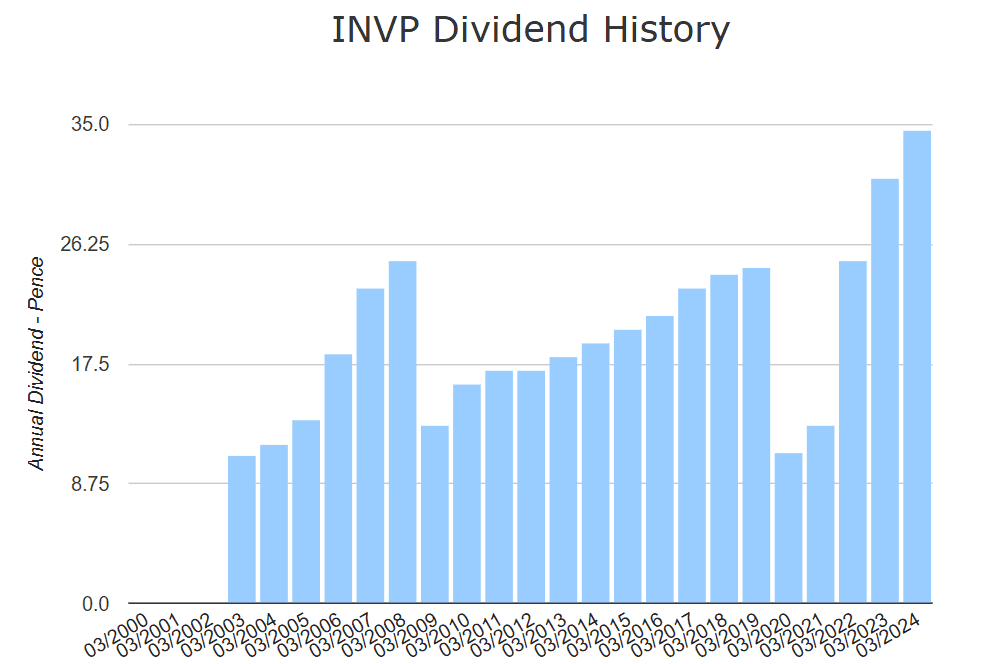
It maintains a fairly stable yield between 5% and 7%, which is higher than average. Although it has made two cuts in the past 20 years, dividends have grown at a rate of 6.9%.

Screenshot from DividendData.co.uk

As an investment firm, Investec is at higher risk from macroeconomic factors that lead to market volatility. These include interest rate changes, geopolitical conflicts and supply and demand issues. Profits may also suffer if a company it invests in defaults on its debt or falls into administration.

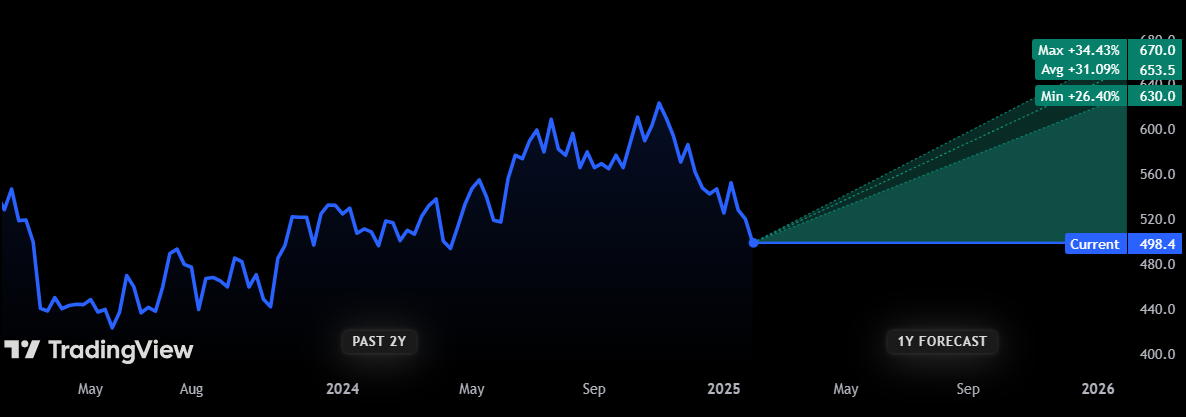
So far, it appears to have made good investment decisions. Analysts on average expect a 12-month price of 653p, 31% higher than today.

Investec stock market chart
Created on TradingView.com

The share price has increased at an annualised rate of 7.3% over the past decade. That makes it an attractive addition to an income portfolio, as dividend stocks typically have lower price growth. 

It also has good ratios, with a price of only 6.7 times earnings and a price-to-sales (P/S) ratio of 0.87. 

£20,000 invested in Shell shares 4 years ago is now worth…

Investing £20,000 in Shell (LSE: SHEL) shares four years ago would have been a smart move.

In February 2021, the world was still reeling from the Covid pandemic. Stock markets were volatile, economies were buckling and the Shell share price was trading at just 1,345p. Fast forward to today, and the stock price has surged to 2,661p. That’s an impressive 98% rise over the period.

So how much would an investor who put £20,000 into Shell shares back then have today? Let’s crunch the numbers.

At 1,345p per share, they’d have acquired around 1,487 shares (I’m leaving trading costs out). At today’s price of 2,661p, those shares would now be worth around £39,578. That’s nearly double the original investment.

The compounding power of dividends

Capital growth’s only part of the story. Shell’s continued to reward shareholders with dividends. I’ve totted up everything it’s paid to UK investors since 29 March 2021. If my maths’ correct, it works out as £3.47 per share. With 1,487 shares, that amounts to an extra £5,160 in total cash returns.

Adding up both the capital appreciation and dividend income, the total value of the investment today would be around £43,738. That’s a whopping 119% total return over four years.

I’m cherry-picking that performance period. Others won’t have done as well. The key question now is whether Shell can maintain its momentum.

The company benefitted massively from the energy crisis triggered by Russia’s invasion of Ukraine in 2022. Soaring oil and gas prices boosted its revenues and profits. But with energy prices having settled, the stock’s performance has slowed. Over the past year, the shares are up just 9%.

The global energy transition’s a big challenge. Shell’s invested in renewables, but with mixed success. 

Just last week, it wrote down $1bn on its US wind business. CEO Wael Sawan’s made it clear that the company’s green energy division must start to deliver meaningful returns.

At a trailing price-to-earnings (P/E) ratio of 7.6, Shell shares don’t look expensive. That’s roughly half the average FTSE 100 P/E of around 15 times.

This suggests the market’s pricing in risk, possibly due to uncertainty over the future of fossil fuels. As ever, where energy prices go in the short term is anybody’s guess. Especially with the world bracing for a potential trade war.

Can it keep rewarding shareholders?

On the income front, the stock currently offers a trailing dividend yield of 4.1%. That’s attractive for investors seeking passive income, although it’s worth remembering dividends are never guaranteed.

In its Q4 results, released on 30 January, Shell announced a 4% dividend hike alongside a $3.5bn share buyback (its 13th consecutive quarterly buyback of $3bn or more). The forward yield’s 4.8%. That’s good, albeit below its average 10-year yield of 5.7%.

However, profits fell 16% to $16.1bn across 2024, raising concerns about whether these payouts can be sustained. Net debt grew by $3.6bn over the quarter, now standing at $38.8bn. However, that’s down from $43.5bn at the start of 2024.

Shell faces challenges but it seems further down the energy transition road than rival BP. Volatility’s baked in, but I think it’s worth considering by investors with the patience to withstand short-term share price volatility.

Is now the perfect moment to scoop up Nvidia stock?

Sometimes you miss big, big chances in life. Take Nvidia (NASDAQ: NVDA) as an example. I looked into Nvidia stock around seven or eight years ago without buying any. Over the past five years alone however, the chipmaker has soared by 1,755%.

I missed out in a big way.

Despite that meteoric rise though, Nvidia sells on a price-to-earnings (P/E) ratio of 46. That is not exactly a bargain in my book, but still far cheaper than the 188 of Tesla. Indeed Nvidia’s P/E ratio is around half the of Intuitive Surgical. That is a successful but far smaller firm that has long been using forms of artificial intelligence (AI) in automating surgery procedures.

With Nvidia stock losing a fifth of its value in under a fortnight, could now be a smart moment for me to add some to my portfolio?

Why the share’s been falling

A key reason for that fall this year has been concerns on Wall Street that the US model of spending massively on chips to ramp up AI capability might be overkill. The catalyst for those concerns has been the launch of a Chinese AI tool DeepSeek.

But whatever happens with DeepSeek, I am sceptical that it is as bad news for Nvidia as the stock price tumble suggests.

For now at least, I expect large companies in the US and elsewhere to keep spending massively on chips specially designed to help them ramp up and support their AI offering. That should be good news for Nvidia. It has unique manufacturing capabilities and proprietary chip designs as well as a large customer base.

I think having the right chips will be central to many large businesses’ AI strategy over the next several years. So I see DeepSeek as a limited risk to Nvidia’s business.

Potential value, but thin margin of safety

Still, that does not necessarily mean Nvidia is attractively priced. Clearly this is a fast-moving market. Earnings at the chipmaker have soared and its most recently reported quarter showed net income growing 109% year-on-year to $19bn. That has helped the P/E ratio stay in double not triple digits.

If earnings fall, the prospective P/E ratio will be higher than 45. I see that as a risk, as some recent earnings growth has been driven by businesses investing upfront in AI infrastructure that once in place may be used for years.

The market shudder DeepSeek has caused suggests to me that a fair bit of money in AI stocks right now is about investors being scared of missing out. That is rather than a sober and deep-rooted long-term understanding of how big the AI chip market is likely to be and what share of that market Nvidia should be able to command.

I think Nvidia has deep strengths and would happily buy the stock at the right price. But even after the recent fall, I think there is too little margin of safety for me at the current price. I will not be investing.            

After its recent high, is the FTSE 100 set to keep going?

Last week the blue-chip FTSE 100 index hit a new all-time high.

That will no doubt have had many investors cheering. But others may be wondering whether it means the index is now overpriced and so primed for a tumble.

Here is my take — and what it means for my portfolio.

Lots of market uncertainty right now

Just as pride comes before a fall, a boom can come before a stock market crash.

However, that boom can last for years or even decades, with record after record potentially being set along the way.

So, a FTSE 100 record does not necessarily indicate that we are at the top of the market, or perhaps even anywhere near it.

That said, the current geopolitical and economic environment is resulting in a lot of market uncertainty in London and elsewhere.

Things could go either way from here

In practical investment terms, that means it is possible that the blue-chip index could keep moving upwards from here.

As poor performers risk getting relegated from it while fast-growing businesses take their place, I do think the index is not a good proxy for the market overall. Indeed, over the past five years the FTSE 100 has moved up 15% while the FTSE 250 has fallen 4%.

I think the blue-chip index might keep going up and the recent high suggests substantial confidence among at least some investors. However, I also fear that slow growth and economic uncertainty could mean that sooner or later we see a sharp reversal.

I’m largely ignoring the index

That might matter to me more if I was investing in the FTSE 100 overall.

Instead, I prefer to invest in individual shares. So the movements of the index as such are not that high on my radar.

Still, might not a high FTSE 100 price mean that individual shares are poor value?

In practice, not necessarily.

Within those 100 shares, at any given moment some may look overpriced to me but others could look undervalued. Indeed, that is how I see it at the moment.          

An example is a share I have been buying more of in 2025, after it has fallen 10% since the start of the year: JD Sports (LSE: JD).

It is 49% lower now than it was five years ago. The sportswear retailer has clearly lost a lot of its shine in the City. It no longer has the big cash pile it used to. And it has issued multiple profit warnings and adding hundreds of new shops each year is eating into earnings.

But I also think that store opening programme could help fuel further growth. The big US acquisition that used up much of that big cash pile could too.

Even after the profit warnings, JD still expects to deliver profit before tax and adjusting items of £915—£935m. That makes its market capitalisation of £4.4bn look cheap to me.

This Q3 revenue boost could be just what the Vodafone share price needs

The Vodafone (LSE: VOD) share price has put shareholders through a painful five years, falling 55%.

The telecom giant’s turnaround plans have been ambitious. But what we really need is actual financial improvement, starting with revenue. And with a Q3 update on Tuesday (4 February), we might just be seeing the start of that.

What we know

Group service revenue growth accelerated to 5.2% in the third quarter. This was driven by a step-up in the UK and strong performance in Türkiye and Africa, whilst Germany is impacted by the TV law change.”

Those are the words of CEO Margherita Della Valle, who went on to say: “We are on track to grow in line with our full-year guidance for this year, which we reiterate today.” That guidance suggests annual adjusted EBITDAaL (EBITDA tweaked for some non-standard measures) of approximately €11bn (£9.2bn). Adjusted free cash flow should be at least €2.4bn (£2.0bn).

The company has hit a few key milestones. The disposal of Vodafone Italy completed in December, with some of the €8bn cash going to reduce debt. There’s also a further share buyback on the cards.

The merger with Three received Competition and Markets Authority approval in December, and should complete in the next few months. But it could take a while to see how smoothly the integration goes. In past years, I’ve seen poor integration between Vodafone’s various businesses as one of its key weaknesses.

What it means

Does all this mean we should consider buying Vodafone shares now? Let’s check valuations. We’re looking at a forecast price-to-earnings (P/E) ratio of 12 for this year, dropping to under nine by 2027. That starts a bit above BT Group’s multiple of 10, but that’s also expected to drop to around nine.

Net debt is similar, and massive at over £20bn in both cases. But Vodafone’s market cap, at £18bn, is around 30% ahead of BT. On the debt score, I’d say Vodafone looks a bit better, but not by a lot.

The whole cash/debt/dividend/buyback approach is the thing that concerns me most. Vodafone has completed €1.5bn in share buybacks so far this year, and has plans for up to another €2bn. And the dividend, despite being slashed this year, is back above 6% after the share price fall.

What next?

Vodafone and BT have been doing this for years. They’ve been paying dividends, going big on capital expenditure, and building up massive debts. Shareholders have pocketed dividends, but they’ve paid for it in the share price.

The Vodafone share price has fallen 70% in the past 10 years. And even adjusted for returns, investors are down 50%. Vodafone, over the past decade, has been destroying shareholder value.

Saying that, I’m cautiously optimistic that the company really can turn things round. And I do think the current year could be a pivotal one. I reckon investors, especially those aiming for long-term dividend income, could do well to consider it. Personally, I’ll wait for the proof of the pudding, with FY results due on 20 May.

I’ve bought these dividend-paying blue-chips for lifelong passive income

Retirement’s edging a little closer by the day and, in preparation, I’m nudging my portfolio away from growth and towards passive income.

I plan to generate that income by investing in a spread high-quality dividend-paying blue-chip stocks. These are companies with strong balance sheets, reliable earnings and a history of rewarding shareholders. 

By carefully selecting shares with sustainable and growing dividends, I’m hoping to build a portfolio that should provide a steady stream of income for the rest of my life. It’s not without challenges though.

Can these FTSE 100 shares secure my retirement?

I’m not sure I’ve got the balance quite right. I’ve a spread of FTSE 100 dividend stocks, including Lloyds Banking Group, Legal & General Group, Unilever, M&G, BP, Taylor Wimpey and GSK. In my view, these companies offer solid yields and potential long-term share price growth as well. 

Yet I’m over-exposed to the financial sector, with Lloyds, Legal & General, and M&G all falling into this category. Oh, I also hold insurer Phoenix Group Holdings

I’ve found FTSE 100 financials difficult to resist, given their ultra-high yields and low valuations, but I might have overdone it. To reduce risk and enhance stability, I need a bit more diversification across different industries.

With that in mind, I recently bought oil and gas giant BP (LSE: BP). Its shares looked brilliant value, trading at less than six times earnings. Its dividend yield of 5.36%’s also highly attractive. Better still, the board has been serving up a heap of share buybacks.

But I have worries. The BP share price has struggled as energy prices retreat. It’s down 8% over one year and 7% over five.

While long-term investors will still be comfortably ahead, thanks to those dividends, it’s a disappointing showing.

BP shares have jumped 7% in the last month as energy prices pick up, but it faces a world of uncertainty right now. What impact will Donald Trump’s tariffs have? How will UK windfall taxes and Labour energy secretary Ed Miliband’s stance towards fossil fuels affect the sector?

The BP share price isn’t my only concern

We’re also waiting to see what Trump will do about war in Ukraine. If there’s a peace deal and gas starts flowing back into Europe, energy prices could retreat again. So could BP earnings.

My biggest worry is that BP can’t seem to decide how to tackle the renewables transition. Can it afford those share buyback and dividends while it pumps money into green energy?

While I’m not selling, these uncertainties mean I’ll be keeping a close eye on its performance before increasing my exposure.

BP isn’t the only FTSE 100 stock with risks. Every single company I’ve mentioned in this piece comes with risks and rewards. That’s why diversification’s important.

Some of those risks may come through, others may not. But by investing in a spread of high-yielding dividend shares, and allowing compounding to work its magic, I’m hopefully setting myself up for financial security and a growing second income for life.

As weak sales and tariff threats drive the Diageo share price lower, is it time for investors to consider cutting their losses?

The Diageo (LSE:DGE) share price continues to fall on Tuesday (4 January) as the company’s latest update is in. And it’s not hard to see why – results are uninspiring and the outlook is gloomy.

Volumes are down, costs are up, and the impact of tariffs is likely to make this worse. I’m planning to stay the course with this one, but I wouldn’t blame anyone else for cutting their losses and moving on. 

Return to growth?!

Debra Crew talked about the company’s return to growth, but investors have to look carefully to see what she’s talking about. The only reported number that’s higher than it was a year ago is tax.

Source: Diageo 2025 Interim Results

Revenues were down 1%, but this was the result of an unfavourable shift in foreign exchange results. Without this, sales actually increased 1% — so there we are, growth.

The trouble with this is it’s likely to be wiped out by just about any kind of inflation. Sure enough, continued overhead investments meant operating profits were down on the same basis.

On top of this, the firm’s balance sheet is becoming a concern. Increased borrowings over the last five years combined with falling profits mean Diageo’s leverage ratio is – by its own standards – too high.

Tariffs

The big reason the Diageo share price has been falling lately is the threat of tariffs from the US. And the latest results confirmed what everyone already knew – these are likely to be a problem.

The firm’s recent performance in the US has been driven by Crown Royal and Don Julio. One of these is made in Canada and the other is made in Mexico, which puts them right in tariff territory. 

There isn’t really much of a way around this, so Diageo is going to have to try to tough it out. But the higher costs are likely to weigh on both sales and profits until something changes.

The firm is withdrawing its guidance for organic sales growth of between 5% and 7% over the medium term as a result of incoming tariffs. But I think investors should question how likely that was anyway.

Short-term problem?

Diageo’s problems just seem to keep coming, but they do look temporary. And the firm’s competitive advantages – the scale and the strength of its brand portfolio – are still intact.

On the subject of tariffs, Goldman Sachs has suggested these might not last as long as many are anticipating. In other words, they’re a negotiating tool. I think it might be right about this.

Furthermore, tequila has to be produced in Mexico (just as Scotch whisky has to be made in Scotland) so it’s not as though rivals have scope to cut into Diageo’s competitive position. That’s also important.

In the meantime, one number that isn’t down is the interim dividend, which is staying fixed. But over the long term, investors are going to need more than this to make the stock a good investment.

Foolish takeaways

In short, I think the long-term outlook for Diageo is still reasonably promising. But the big question is when the near-term challenges are going to subside. 

Waiting brings an opportunity cost. So investors need to figure out how long they’re prepared to wait for what could ultimately be limited sales growth.

Financial News

Daily News on Investing, Personal Finance, Markets, and more!

Financial News

Policy(Required)