Does buying growth or income shares make more sense for a SIPP?

A Self-Invested Personal Pension (SIPP) can be something that matures over decades, making it ideal for the long-term approach to investing.

Some investors see that as an opportunity for dividends to pile up. Others think that a long timeframe can provide the perfect opportunity for small but promising companies to burst forth and show their true potential.

So when deciding what to do with a SIPP, ought an investor to consider growth shares, income shares or both?

Are growth shares different to income shares?

It helps recognise that a lot of shares in fact offer both growth and income opportunities. So sometimes the same share may have both growth and income potential.

That said, tobacco producers are classic examples of what are seen as income shares by many investors. Mature businesses in fading markets may have limited opportunities to invest profits in growth, so share them out as dividends.

By contrast, a growing company like NIO continues to burn cash but is building a business that, if it grows in the right way, could end up being worth much more than it is now.

The thing is, it can be hard to know ahead of time just how well (or otherwise) a growth share might do. Some could be the next Amazon or Tesla. Many will not and may end up disappearing without trace down the line.

Setting objectives as an investor

In that sense then, it may not make too much sense to focus on an investor’s specific objectives when it comes to growth or income.

After all, the income withdrawal opportunities in a SIPP are different to, say, a Stocks and Shares ISA.

In short, the objective in a SIPP is basically to build total value over time.

Put like that, I think buying either growth or income shares – or a mixture of both – could be a suitable strategy in a SIPP.

Learning from billionaire pensioner Warren Buffett

I do see one big difference between many growth shares and some well-known high-yield income shares.

While some growth shares do spectacularly well — hello Nvidia (NASDAQ:NVDA) — many do not.

By contrast, income shares that have been paying dividends for decades already rarely crash to zero in a matter of months. It could happen, but more typically they slowly fizzle out, reducing dividends over the course of some years and perhaps finally cancelling them altogether.

So weighing risk and reward is essential in allocating a SIPP. To quote Warren Buffett, the first rule of investing is do not lose money and the second rule is not to forget the first one.   

At the right price, incidentally, I would happily buy Nvidia for my SIPP. It is a growth share, sure. But it is throwing off huge amounts of cash. While its dividend yield now is tiny, I see plenty of scope for the payout to grow over time.

I also think business growth could continue thanks to the chipmaker’s proprietary technology, large client base and strong AI-related demand.

But rampant competition is a key risk – and I do not think the Nvidia share price today offers me any margin of safety.

If the price falls to the right level though, I will happily add it to my SIPP both for its proven growth prospects and, potentially, growing income streams.


Is it game over for the Greggs share price?

We’ve had our fun with the Greggs (LSE: GRG) share price. Is it time to grow up and move on?

Greggs defied sceptics to become a national treasure, establishing itself as a fixture on every high street. It’s now popping up at railway stations and airports too, as the FTSE 250 group’s ambitious board looks to increase store numbers from 2,500 to 3,500.

The high street bakery chain has come a long way from its humble beginnings in 1951. The Greggs share price has come a long way too.

Investors took notice and sank their teeth into it. There’s a huge appetite for Greggs on the Fool website. It attracts more readers than articles on much bigger companies. That made me a little suspicious. Were investors getting carried away? Were they distracted by its brand rather than examining its investment prospects?

Can this FTSE 250 treasure still shine?

Greggs shares continued their upwards trajectory despite my doubts, but then I had a second worry. They were starting to look expensive. Trading at more 22 times earnings last year, I feared they were overvalued.

The first blow landed on 1 October. Q3 total sales rose 10.6% but that marked a drop from 13.8% in the first half.

This trend continued in the group’s latest trading update, published on 9 January. While full-year 2024 total sales jumped 11.3%, through £2bn for the first time, Q4 like-for-like sales growth slipped to a wafer-thin 2.5%. Greggs said this reflected “more subdued high street footfall”.

The board’s still pushing on, opening a record 226 new shops, while closing underperformers with an impressive lack of sentimentality. The net addition was 145 shops.

Greggs is now bracing for a double blow in April, when Budget hikes to employer’s National Insurance and the Minimum Wage will drive up workforce costs. Plenty of other retailers will share its pain. Greggs may be better placed to absorb it. The margin squeeze is priced in now. It’s a known risk.

However, as its recent update showed, consumers are feeling the pinch. They may even have to cut back on affordable treats like a trip to Greggs. With the Bank of England forecasting consumer price inflation will rebound to 3.7% in the summer, the cost-of-living crisis isn’t over yet.

Lower valuation, higher yield

Given these concerns, it’s reasonable to question whether the enthusiasm surrounding Greggs’ stock was overblown

The shares have declined by 20% over the past 12 months. However, they now appear more attractively valued, trading at about 17 times earnings and offering a trailing dividend yield of 2.9%. This improved valuation may entice bargain hunters.

Greggs is showing resilience, innovation and adaptability by expanding its menu and trying out new snacks to compete with fast-food chains. 

While Greggs faces significant challenges, its current valuation and bullish initiatives may present an opportunity. I understand why investors might consider buying them but personally, I won’t. For me, the fun’s gone.

The FTSE 100’s full of passive income opportunities to consider!

Passive income gets a good press. Robert Kiyosaki, author of Rich Dad Poor Dad, once wrote: “The moment you make passive income and portfolio income a part of your life, your life will change. Those words will become flesh.”

And Warren Buffett’s a fan. The billionaire famously said: “If you don’t find a way to make money while you sleep, you will work until you die.

Although given that the 94-year-old’s still working, I’m surprised he hasn’t followed his own advice! He must enjoy what he does.

But where to invest?

A global view

At 31 January 2025, according to the London Stock Exchange Group, the dividend yield of the FTSE All-World Index was 1.82%. This index covers 4,247 stocks listed on 48 stock exchanges, with a combined market cap of $80.7trn.

However, I believe it’s possible to do better by choosing UK stocks.

For example, when the final dividends for 2024 are declared, AJ Bell reckons the average yield on the FTSE 100 will be 3.6%.

But using an average can hide disparities. According to Trading View, based on data from the past 12 months, 26 stocks are currently (14 February) yielding less than the FTSE All-World Index.

Ironically, the bottom four – Rolls-Royce Holdings, International Consolidated Airlines Group, Halma, and Marks & Spencer Group – have all seen their share prices soar over the period, by 103%, 143%, 37%, and 51%, respectively. Clearly, not everyone’s on the lookout for passive income opportunities.

But those that are will be pleased to learn that 19 Footsie stocks presently offer a return above 5%.

I should point out that this information needs to be treated with caution. Dividends are never guaranteed. There are many examples of companies cutting their payouts in response to falling earnings or other problems.

One possible option

However, there’s one FTSE 100 stock that caught my attention this week. On 14 February, NatWest Group (LSE:NWG) announced its results for 2024.

Compared to 2023, pre-tax earnings, loans to customers, deposits, and its net interest margin were all higher. And its impairment charge — an estimate of the cost of potential bad loans — was lower.

But what impressed me most was the announcement of a 26% increase in its dividend, to 21.5p.

And the news gets better.

From 2025, the directors plan to pay out 50% of the bank’s earnings by way of dividend, instead of the 40% currently returned.

If the analysts are correct, shareholders could receive 26.4p (2025) and 30.4p (2026) over the next two years. Based on the 2026 figure, this implies a current yield of 7.2%. However, the most optimistic analyst is forecasting earnings per share of 67.3p, which suggests a return of 33.7p. If realised, that’s a yield of 8%.

But such a generous dividend can only be maintained if earnings continue to grow.

And history shows that the profits of banks can be volatile. That’s because they tend to be a barometer of the performance of the wider economy. And NatWest, with 90% of its loans made to UK-based consumers and companies, is particularly exposed to the domestic economy. The UK’s struggling to grow at the moment, which could prove to be a problem.

However, despite the risks, I think NatWest’s a stock that investors looking for a healthy level of passive income could consider.

Here’s the most likely cause of a stock market crash in 2025

Theoretically, the stock market could crash for any number of reasons. A big political event, a pandemic, or a financial crisis could send share prices plunging without notice. 

In practical terms, however, there are some things that are easier to anticipate than others. And one thing in particular stands out to me as an obvious potential threat in 2025. 

Inflation

As I see it, the biggest risk with the stock market right now is the possibility of US inflation picking up. This is worth keeping a close eye on for investors on both sides of the Atlantic. 

The US is introducing 25% tariffs on imported steel and aluminium. And while that might benefit the likes of Alcoa and Steel Dynamics, it could be a problem for other businesses.

The obvious examples are international steel companies, which might see lower demand. But restricting imports could cause input costs to rise for manufacturers.

If businesses look to pass these on, the result will be higher prices for US consumers. In other words – tariffs could give rise to inflation.

Share prices

If this happens, investors are likely to look for better returns from their assets. In the case of the bond market, this means higher yields.

US inflation is currently 3%. But if it reaches 3.5% (where it was a year ago) investors buying bonds with a 4.5% yield (the current US 10-year level) don’t stand to make much in real terms.

Higher inflation is therefore likely to weigh on bond prices. And if this happens, bonds could start looking attractive compared to stocks – causing share prices to come down as well.

The US currently makes up more than half of the global stock market. So a stock market crash across the Atlantic could weigh on share prices everywhere else – including the UK. 

What should investors do?

Forecasting a stock market crash is nearly impossible. But one thing investors can do is look for shares that are already trading at prices that reflect some pessimistic assumptions.

Diageo (LSE:DGE) is an obvious example. The stock is currently at its lowest price-to-earnings (P/E) multiple in a decade, meaning it’s already cheap compared to where it usually trades.

There are reasons for this. A lot of the FTSE 100 firm’s products have to be produced in certain geographies, meaning there’s no way to make them in the US – and thus no way around tariffs.

This is a definite risk, but the scale of Diageo’s distribution network is an important asset. Over the long term, this should be a big advantage when it comes to competing for market share.

Eyes open

I think it’s important for investors to pay attention to what’s going on in the stock market. This can help make sense of why share prices are moving the way they are. 

Right now, the biggest risk I see is the threat of inflation picking up in the US. But this may or may not result in a stock market crash – and I don’t think betting on this is a good idea.

A better plan, in my view, is looking for opportunities where investors are already factoring this in. And I think Diageo is an example of a stock that’s worth considering at today’s prices.

Down 55% but can these 2 UK blue chips now double like the NatWest share price?

The NatWest (LSE: NWG) share price had a stellar year, rising 113% in 12 months. Yet that followed years of stagnation, as the FTSE 100 bank struggled under the weight of past scandals and government ownership.

That’s often the case with recovery stocks. Buying them can be lucrative, but turnarounds take time. Investors often have to sit back and watch their holdings drift lower before any rebound materialises. 

Yet, when the recovery comes, the rewards can be spectacular. For NatWest shares, the turning point came almost overnight last February, as earnings and margins picked up, impairments fell, and investors celebrated handsome stock buybacks.

Is Croda the next big FTSE 100 recovery play?

Investors who bought in early and waited were handsomely rewarded. Even better, dividends helped them accumulate more shares while prices were low.

Today, NatWest still looks decent value with a price-to-earnings (P/E) ratio of less than 12, and the shares could continue to climb. But I can’t see them doubling again. 

Investors who fancy investing in recovery stocks need to find them before they take off rather than afterwards. These two FTSE 100 firms are still down in the dumps. Could they do a NatWest?

Shares in specialist chemicals firm Croda (LSE: CRDA) and gaming giant Entain (LSE: ENT) have plunged 56% and 59%, respectively, over three years. Over the last year, they’re down 33% and 28%. That’s a dire run.

Croda was once a FTSE 100 darling, producing high-performance chemicals for industries ranging from cosmetics to pharmaceuticals. However, slowing demand, rising costs, and post-pandemic stocking issues have hammered its share price.

The stock still isn’t cheap, trading at 19 times earnings, well above the average FTSE 100 P/E of 15. I expected it to be lower, but earnings have taken a beating too.

With 27 years of consecutive dividend hikes, Croda is a true Dividend Aristocrat. Yet today’s 3.4% yield is relatively modest. So can it deliver some growth?

With inflation easing and economic conditions stabilising, demand for Croda’s products could rebound. But the recovery is in the balance. As inflation and trade worries hit sentiment, demand in key markets may remain weak.

Or does Entain offer better value?

Entain, owner of betting brands like Ladbrokes and Coral, has been hit by concerns over tightening regulations in key markets, alongside intense competition. An acquisition made for growth hasn’t paid off yet. Give it time.

Entain shares trade at 15.8 times earnings, roughly in line with the FTSE 100 average. Its 2.5% dividend yield isn’t exactly to die for. Like Croda, investors need to believe in future growth rather than banking on income.

Entain is looking to expand into new markets and strengthen its digital offerings, but progress has been slow. The industry remains highly competitive. Stricter gambling laws, affordability checks, and increased compliance costs could hit profit growth, and the Entain share price could remain bumpy.

Croda and Entain have potential for recovery. Both stocks require catalysts to reignite growth. NatWest shows how quickly a turnaround can happen – but only after years of underperformance.

For now, neither Croda nor Entain looks like a screaming buy to me. Brave investors might consider them though. If they’re willing to hold through the turbulence, the rewards could suddenly be worth it. As NatWest was.

Barclays shares could offer investors a growing passive income

When Barclays (LSE:BARC) issued its Q4 trading update earlier this week, its share price fell 5%. But I think the bank’s future plans could make it interesting for passive income investors.

Overall, I thought the report was pretty strong. But the thing that really caught my eye was its proposed approach to capital returns over the next couple of years. 

Capital returns

Barclays is in the process of returning £10bn to investors between the start of 2024 and the end of 2026. It completed around 30% of this in 2024, leaving a further £7bn or so to come. 

With the bank currently having a market cap of around £42bn, that means investors stand to get around 16% of their investment back over the next couple of years. That’s not bad at all. 

The current dividend yield, however, is around 2.8% and Barclays doesn’t plan to increase its overall dividends in the next couple of years. So where’s the rest of the return coming from?

The answer is share buybacks – in 2024, the firm used £1.8bn to reduce its share count by 4.5%. And its plan to do this should continue to push the dividend higher in the next couple of years. 

Share buybacks

In 2024, Barclays distributed a total of £1.2bn in dividends and it plans to maintain this in 2025 and 2026. But the amount each shareholder gets depends on the outstanding share count. 

The bank started 2025 with 15.1bn shares outstanding. But if the remaining £4.6bn of its capital return plan gets used for share buybacks, this number could come down to around 13.5bn.

That could take the dividend per share from around 7.95p right now to 8.88p by the end of 2026. And at today’s prices, that’s a yield of just over 3%. 

In other words, the bank’s plan to repurchase shares should increase the dividend per share without Barclays having to distribute more cash overall. That’s well worth noting for investors.

Outlook

The outlook for Barclays is also positive. The firm is aiming to increase its return on tangible equity (ROTE) – a key measure of bank profitability – from 10.5% in 2024 to 12% by 2026. 

Combining that with a reduced share count could make for a great passive income opportunity. But things are rarely as straightforward as this when it comes to banking.

There are all kinds of things that get in the way of smooth returns from bank stocks. Interest rates moving sharply, changes in regulation, and unforeseen liabilities are all potential issues.

That’s not to say investors should ignore what Barclays is planning to do entirely. But it would be unwise to forget that it operates in an industry where the outlook can change dramatically.

Should I buy the stock?

Despite the recent decline, Barclays shares are up more than 100% over the last 12 months, driven partly by share repurchases. And I think there could be more to come.

Ongoing buybacks might push the share price higher as well as facilitating dividend growth. So while there are inevitable risks, I think passive income investors should take a closer look.

3 top tips to consider for building a second income in retirement!

There are plenty of ways that investors can target a second income in retirement.

Some methods may be more successful than others. There’s also no blueprint for investors to follow, as the strategies someone adopts will depend on their individual circumstances, financial goals and risk tolerance.

That said, certain ‘golden rules’ exist when it comes to saving or investing. Regardless of personal situation, they can be powerful weapons in creating long-term wealth.

1. Bypass the taxman

The first thing to consider is using a Self-Invested Personal Pension (SIPP) or Individual Savings Account (ISA) to invest. Within the ISA category, a Stocks and Shares ISA and/or Lifetime ISA can be used to buy shares, trusts and funds listed in the UK and overseas.

With both an ISA and a SIPP, an investor doesn’t pay a single penny in tax on any capital gains and dividends. And given the large annual allowances on these products — £20k on a Stocks and Shares ISA, and a sum equivalent to one’s yearly earnings (up to £60k) — the savings can be considerable.

As dividends and share prices (hopefully) grow, the amount saved on taxes could grow considerably too. Over two-to-three decades we could be talking many tens — or even hundreds — of thousands of pounds.

Please note that tax treatment depends on the individual circumstances of each client and may be subject to change in future. The content in this article is provided for information purposes only. It is not intended to be, neither does it constitute, any form of tax advice. Readers are responsible for carrying out their own due diligence and for obtaining professional advice before making any investment decisions.

2. Diversify

With an ISA and/or SIPP set up, the next thing to consider is creating a diversified portfolio of shares and other assets. This reduces risk, provides exposure to different investing opportunities, and typically delivers a smoother return over the economic cycle.

A trust like the The City of London Investment Trust (LSE:CTY) could be an effective stock to consider targeting this. Dating back to 1932, this is one of the oldest London-listed trusts, and has around £2.4bn worth of assets.

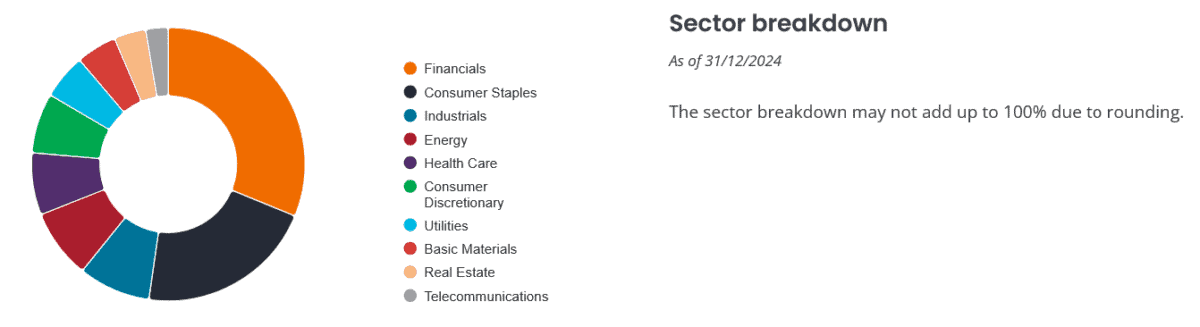
It’s focused on delivering a blend of growth and passive income through exposure to 10 different sectors. Some of its largest holdings include HSBC, Shell, RELX, Unilever and British American Tobacco.

Source: City of London Investment Trust

Almost 90% of the fund is tied up in UK equities, which could leave it vulnerable if market appetite for British assets trends lower. But I’m confident it could continue to be an effective diversification tool over the long term.

Since 2005, the trust has delivered an average annual return of 6.4%. If this continues, a £500 monthly investment over 30 years creates a retirement fund of £553,089.

3. Buy dividend shares

Once they hit retirement, an investor has a number of options open to them to add a second income to their State Pension.

They can buy an annuity, or draw down a percentage from their portfolio. Alternatively, they might invest their money elsewhere (like in buy-to-let property for a regular rental income).

Another option is to target a passive income from high-yield dividend shares. This can deliver a steady stream of cash through regular dividend payments as well as provide scope for capital appreciation.

Additionally, this method offers the possibility of dividend growth over time, which can help mitigate the eroding impact of inflation on an individual’s passive income.

2 top growth shares to consider for a Stocks and Shares ISA

With markets at record highs — even in the usually sluggish FTSE 100 — it can be challenging to find quality growth stocks trading at reasonable valuations. However, I think these two fit the bill, and could therefore be worth thinking about for a Stocks and Shares ISA.

Uber

First up is Uber Technologies (NYSE: UBER). Hardly a week goes by without me using its app for taxis or food delivered. I recently booked train tickets on there for a trip to London and got 10% off a ride at the other end.

At the end of December, there were 171m active monthly users (14% more than the year before). Gross bookings grew 18% in Q4 (or 21% at constant currency rates), helping revenue jump 20% to $12bn.

While growth is nothing out of the ordinary for Uber, what is new is the company’s profitability. It has gone from incinerating billions a year to generating nearly $7bn in free cash flow last year. Profits are expected to head much higher in future.

Star hedge fund manager Bill Ackman recently took a massive $2bn stake in the stock. He has an excellent track record of spotting high-quality businesses that prove to be undervalued.

Ackman said: “We believe that Uber is one of the best managed and highest quality businesses in the world. Remarkably, it can still be purchased at a massive discount to its intrinsic value.”

The stock’s trading at a forward price-to-earnings (P/E) multiple of 30, which is reasonable for a market leader growing the bottom line very strongly.

What could go wrong? Well, if self-driving taxis from Waymo and Tesla ever become mainstream, Uber’s driver-based model could be disrupted. This is a genuine long-term risk, assuming these deep-pocketed firms build their own networks.

That said, Uber has partnered with several leading autonomous vehicle (AV) companies, spying a $1trn+ market opportunity in the US alone. The thinking is that if AVs eventually drive down the per-mile cost because there are no drivers to pay, both bookings and Uber’s profits could explode higher.  

Source: Uber Q4 2024

Ashtead Technology

The second stock is AIM-listed Ashtead Technology (LSE: AT.). This is a company that rents out specialist subsea rental equipment to the global offshore energy industry. That includes both renewables (wind turbines) and oil and gas.

Fuelled by an acquisition-driven growth strategy, revenue soared 52% to £168m last year, with underlying operating profit coming in higher than expected at £46.6m. The compound annual growth rate in earnings over the past five years stands at 41%.

In the trading update for 2024, CEO Allan Pirie said: “With one of the largest and most technologically advanced rental fleets in the industry and a continued focus on operational excellence, we remain confident in the Group’s ability to generate substantial long-term value for shareholders.”

Risks here include economic downturns or global energy price shocks, which could slow exploration and lower demand for rented equipment. The firm’s also a small-cap valued at £426m, so doesn’t have the financial firepower of a firm like Uber.

Nevertheless, I like the risk/reward set-up here. The share price is down 33% in six months, leaving the stock on a low forward P/E ratio of 11.6. At 531p, I think the stock could be a hidden gem and is worthy of further research.

Here’s the dividend forecast on Vodafone shares through to 2027!

Last spring, Vodafone (LSE:VOD) bowed to what many considered to be inevitable and cut the dividend on its shares.

The FTSE 100 firm announced plans to cut the annual dividend for this financial year (to March 2025) by a whopping 50%. It said the decision to rebase cash rewards “at a sustainable level…. ensures appropriate cash flow cover and sufficient flexibility to invest in the business for growth“.

While disappointing to income investors, Vodafone sought to soothe the blow by pledging share buybacks and stressing its “ambition to grow [dividends] over time“.

So should I consider buying Vodafone shares for a passive income?

Down, then up

Financial year ending March Predicted dividend Dividend yield
2025 4.5 euro cents 5.2%
2026 4.2 euro cents 4.9%
2027 4.3 euro cents 4.9%

As the table shows, dividends are tipped to fall again next year before rising modestly in financial 2027. But on the plus side, the dividend yields on Vodafone shares still surpass the FTSE 100 average of 3.5%.

But how realistic are current forecasts? The first thing to look at is dividend cover, for which I’m seeking a figure of two times or above for a wide margin of error.

Vodafone doesn’t score highly here for this year, even after the planned debasement. Cover is just 1.4 times.

In better news, dividend cover rises to a sturdy 1.9 times and 2.1 times for financial 2026 and 2027, respectively.

Debts high but falling

Given the company’s still-high debts, this improvement is essential to me as a potential dividend-seeking investor. As of September, Vodafone’s net debt was €31.8bn.

This debt is still higher than I’d be looking for. However, free cash flow remains robust (this is tipped at €2.4bn or above for financial 2025). And the business is taking a proactive approach steps to slash borrowings.

Offloading Vodafone Spain helped bring net debt down by around a billion and a half euros in six months. Vodafone Italy’s sale in December has been used to reduce the total still further, Vodafone says.

The business is also undergoing significant restructuring to mend the balance sheet. Its decision this month to buy another €480m worth of shares underlines the confidence it has that things are going to plan.

Taking a broader view

When it comes to future dividends, there are less risky passive income shares for investors to choose from. Vodafone’s debts are still high, and its operations remain as capital-intensive as ever.

Vodafone also continues to struggle in its biggest market. While group service revenue growth accelerated to 5.2% in quarter three, the decline in Germany worsened to 6.4%.

But while I wouldn’t buy Vodafone shares just on the basis of near-term dividends, I think it could be a top stock to own for its overall long-term outlook.

As with other telecoms shares, I think earnings and dividends could rise strongly over the long term as the digital economy continues to grow. I also like its vast exposure to African markets where demand for data and mobile money services is booming. Organic service revenues here leapt 11.6% in quarter three.

Finally, its tie-up with Three provides tantalising sales opportunities and the possibility to get costs further under control.

Given its low price-to-earnings (P/E) ratio of around 10 times, I think Vodafone’s shares are worth serious consideration.

2 FTSE 250 shares to consider to target dazzling returns to 2040!

I think these FTSE 250 shares could provide exceptional returns over the next decade and a half. Here’s why I think they’re worth serious consideration today.

1. NextEnergy Solar Fund

Investing in electricity generators could be a great long-term play as global power demand rapidly increases.

In a fresh report this week, the International Energy Agency (IEA) predicted worldwide energy demand growth “will be the equivalent of adding an amount greater than Japan’s annual electricity consumption every year between now and 2027“.

The IEA also upped its growth forecasts for the period, to 4% each year from 3.4% previously. It says demand will be driven by increases in data centres, electric transport, industrial production, and air conditioning.

These are long-term trends that mean shares like NextEnergy Solar Fund (LSE:NESF) could prove great investments over time. This particular company, as the name suggests, generates power from renewable sources which it sells to energy suppliers.

With the fight against climate change stepping up, investing in renewable energy stocks could be a safer bet than companies that generate power from ‘dirtier’ sources.

There is danger in this approach, though. Power generation can sink when solar radiation levels fall, putting NextEnergy’s profits in jeopardy.

However, the FTSE 250 firm’s broad geographic footprint helps reduce this threat at group level. Roughly 85% of its solar assets are in the UK, though they are spread up and down the country. It also produces power in parts of Southern Europe.

I think NextEnergy shares are extremely attractive at current prices. At 66.3p, the fund trades at a 30.4% discount to its net asset value (NAV) per share.

It also has a 12.3% dividend yield, which is one of the largest on the FTSE 250.

2. Springfield Properties

Housebuilders like Springfield Properties (LSE:SPR) also have significant long-term potential as the UK’s population grows.

The Office for National Statistics (ONS) research predicts the number of Brits will leap almost 5m in the decade to 2032. Such potential growth provides excellent opportunities for creators of residential property.

The government plans to build 300,000 new homes between now and 2029 under its current strategy.

Like the rest of the UK, Scotland — which is Springfield Properties’ target market — suffers from a chronic homes shortage that will take years to soothe. Government statistics showed new home starts north of the border fell 17% in the 12 months to last June, to the lowest level since the 1980s.

Given uncertainty over interest rates, there is peril in buying these shares in the near term. But recent signals from the Bank of England (BoE) over rate cuts are encouraging, leading me to believe homebuyer interest could keep improving. Mortgage product wars are also intensifying in a boost to peoples’ afforability.

Springfield is already benefitting from the BoE’s rate-cutting cycle that started last summer. Its latest trading statement revealed “an increased number of private housing reservations” between June and November from a year earlier. Selling prices have also remained robust across its portfolio.

With an undemanding price-to-earnings (P/E) ratio of 12.3 times, I think Springfield Properties could be a great way to consider capitalising on a fresh housing boom.

Financial News

Daily News on Investing, Personal Finance, Markets, and more!

Financial News

Policy(Required)