When considering UK stocks for passive income, investors often seek out well-established businesses with long track records of dividend growth. These may not be the highest-yielding dividend stocks but rather ones that promise consistent returns.
For investors who rely on dividend payments for regular income, stability is key. When dividends are cut or reduced, the unexpected loss of income can be disruptive.
Here are three reliable UK dividend stocks that often pop up in the portfolios of income investors.
Tesco
The UK’s favourite high street grocery chain suffered minor losses this week after a glitch affected its online delivery service. However, the stock remains up 52% over the past two years, reflecting an impressive recovery after suffering losses in 2021 and 2022.
Major US broker Citi Group recently reiterated its Buy rating for Tesco (LSE: TSCO), with a price target of £4.25.
In 2024, revenue grew 4.39% to £68.19bn and operating profit increased 88.12% year on year to £2.8bn. The growth underlies strong performance for the company, reflected in an 11% dividend increase to 12p per share. It now sports a yield of 3.33%, that, while not particularly high, has been growing steadily.
In December 2024, its market share hit a seven-year high but it still faces stiff competition in the UK retail sector. Rivals like Asda and Lidl all offer low-cost alternatives that could regain favour in a high-inflationar environment.
Unilever
The global consumer goods giant Unilever (LSE: ULVR) is a popular option for both its income and defensive properties. Like Tesco, its yield seldom rises above 4% but it experiences low volatility even during economic downturns.
While its performance lags that of US rivals like Procter & Gamble, its diversified product portfolio and global reach provide a stable foundation for dividend income. Some of its top-selling brands include Dove soap, Magnum ice cream, and Hellmann’s mayonnaise.
Still, it must maintain a careful balance between profits and low prices or it could risk losing market share to competitors. The outcome of US trade tariff decisions could also threaten its future profits.
Dividend-wise, it’s solid, making reliable payments for over 20 years and increasing them at a rate of approximately 5% per year. During the same period, the share price has grown at an annualised rate of 7%.
Legal & General
Despite recent struggles, Legal & General (LSE: LGEN) remains a favourite among income investors. Its enduring dedication to shareholders is reflected in a yield that fluctuates between 8% and 10%.
Historically, this yield has been backed by strong earnings from its insurance, pension, and asset management businesses. However, recent struggles have hurt the company’s profits, with 2023 earnings missing expectations by 34%. Subsequently, its payout ratio is now unsustainable at 356%, raising the risk of a dividend cut.
Earlier this month, the company agreed to sell part of its US business and 20% of its UK business to Japanese firm Meiji Yasuda. The sale should bring in £2.3bn for L&G, helping it fund a planned £1bn share buyback programme.
The strategy should help turn its fortunes around, reaffirming its position as a top UK dividend stock.
Greatland Gold (LSE:GGP) shares are consistently among the most traded in the UK. And that got me interested because it’s not even on the FTSE 100. So, what on earth is going on?
Well, part of the reason has to do with soaring gold prices. This surge has reignited interest in gold miners, and Greatland Gold is one that has stood out to investors. The UK-based miner, once a speculative explorer, has pivoted to production after acquiring the Telfer gold-copper mine and a 70% stake in the Havieron project in Western Australia.
The stock is now up 21.5% over the past 12 months, meaning a £10,000 investment made then would now be worth £12,500. Unfortunately, there’s no dividends to add to that. Nonetheless, this rise, coupled with its huge trading volume, suggesting it’s a stock requiring further attention.
A strategic shift
Greatland’s December 2024 acquisition of Telfer and Havieron marked a watershed momentum. Telfer, an operational mine with 11.5m tonnes of run-of-mine ore stockpiles, immediately positions Greatland as a mid-tier producer, generating near-term cash flow to fund Havieron’s development.
The latter is a world-class deposit with 8.4m ounces of gold equivalent and projected all-in sustaining costs (AISC) of $818/oz — among the lowest globally. By integrating Telfer’s infrastructure, Greatland aims to de-risk Havieron’s development while extending Telfer’s mine life through exploration.
This dual-asset strategy has created some cautious optimism among investors and analysts. Analysts note that Telfer’s existing operations could deliver 426,000 gold-equivalent ounces over 15 months, funding Havieron without further equity dilution — a relief for shareholders after several capital raises.
Cheap for a reason
Greatland’s stock valuation reflect its transition. The stock trades at 23.4 times 2025 earnings — reasonable for a growth-focused miner — with a price-to-book ratio of 2.87 times, below sector averages. Analysts’ average price target of 14.33p implies 66% potential from current levels (approximately 8.6p), though targets vary widely (7p to 19p).
However, risks loom. While a debt facility and Telfer’s cash flow mitigate near-term liquidity risks, Havieron’s capital intensity leaves little margin for error. Berenberg highlights “technical execution risks” at Havieron, and maintains a Hold rating despite gold’s rally.
However, Greatland stock is somewhat disconnected from gold’s rally, and that stems from its operational overhang. Unlike pure producers benefiting immediately from higher prices, Greatland’s value hinges on delivering Havieron by 2026 and getting it operational in 2027. Delays or cost overruns could pressure its balance sheet, especially if gold retreats from record highs.
Nonetheless, the math is compelling. At steady-state production, Havieron could generate 258,000 gold-equivalent ounces annually for 20 years, while the company is exploring ways to extend the Telfer mine. Combined, these assets could position Greatland as a top-10 global gold producer by decade’s end.
High risk, high reward
Greatland’s success hinges on flawless execution. For risk-tolerant investors, the stock’s discount to net asset value (NAV) and sector peers presents a compelling bet on gold’s momentum and management’s delivery. Conversely, conservative investors may prefer established miners with less risk attached. Personally, I’ll keep watching from the sidelines. Clearly there’s a lot of potential, but it’s not my usual investment.
When it comes to growth stocks, the S&P 500’s probably the first place investors look. The UK stock market doesn’t have anything that matches up to Amazon, Nvidia, and Microsoft.
Despite this, there are some quality growth companies in the FTSE 100. And looking where other investors aren’t paying attention is a good strategy for finding a bargain.
UK tech stocks
Rightmove (LSE:RMV) doesn’t have the same scale as the big US tech companies. But I don’t think the quality of the business is in any way inferior.
First of all, the company’s been growing steadily. Over the last 10 years, revenues have more than doubled and operating margins have consistently been above 70%.
By any standard, that’s impressive. But the really impressive thing about the business is that it’s managed to achieve this without having to reinvest the cash it generates.
Rightmove’s largely an online operation, which means it doesn’t have to use its profits for replacing machinery or upgrading properties. And this is a big positive for shareholders.
This means 90% of the cash the company generates through its operations becomes available to investors. And the firm keeps growing while paying dividends and buying back shares.
That’s a powerful combination. And while the share price has largely gone sideways over the last five years, I think the business is still in a strong position.
Risks and rewards
Rightmove’s attractiveness is built on its competitive position. It’s the UK’s largest online property marketplace by far and this allows it to maintain such huge margins.
Investors should note however, that the competitive threat has been ramping up recently. CoStarGroup – the US property data and analytics firm – has set its sights on the UK market.
Rightmove won’t be easy to disrupt. As the UK’s largest platform, it should continue to appeal to buyers and sellers and rivals have previously found it hard to attract one without the other.
Despite this, I don’t think either the company or its investors should be complacent. CoStar’s a much bigger business and its knowledge and resources should be taken seriously.
Closer to home, there are also other issues to consider. Inflation looks like it’s picking up again and this could dampen activity in the property market, which is where the firm gets its revenues.
It would be unwise to pretend investing in Rightmove doesn’t come with risks. But while it retains its market-leading position, I think the business has good scope for growth.
One for the watchlist
At a price-to-earnings (P/E) ratio of 26, Rightmove shares aren’t exactly being overlooked. But they’re clearly better value than they were five years ago.
Even compared to the likes of Alphabet and Meta, the business has maintained huge operating margins. And it’s shown the ability to grow while distributing cash to its shareholders.
This all comes from Rightmove’s dominant market position. While this remains intact, I think it should at least be on the ‘under consideration’ list for investors looking to for stocks to buy.
As a long-term investor, a SIPP naturally appeals to me as an investment platform.
After all, a personal pension is something many people contribute to for decades – and that in turn could help fund retirement over the course of decades.
With the right approach, I think it is possible for an investor to turn a £100k SIPP into one that is worth over £1m in just three decades.
So, someone in their early thirties today who puts £20k a year into a SIPP for the next five years could potentially retire with a SIPP valued at over one million pounds.
How did I figure that out? Simple – compounding £100k at 8% annually for 30 years would mean the SIPP grows in value to £1m.
Aiming for consistently strong performance
Incidentally, if that compound annual growth rate was just a bit higher (9%), the same timeframe would turn the £100k into £1.3m. Compounding really is powerful stuff, especially over a long timeframe.
But I will stick with the 8% figure as it is more easily achievable. It might not sound much: the FTSE 100 has risen 13% in the past year alone, as well as offering a dividend yield of 3.4%.
However, we are talking about a compound annual growth rate over 30 years – and some of those years may be very bad ones in the market.
Even taking the rough with the smooth, I think 8% is achievable. It could come from a combination of capital growth and dividends.
Maybe one share could deliver on it but that approach is unnecessarily risky. With £100k, a SIPP would have ample scope for diversification and any smart investor would take that approach.
Some of the shares picked would do better than others over time. But the point is to focus on buying a mixture of attractively priced shares in outstandingly good businesses that have promising long-term commercial prospects.
Is Diageo a bargain on a 30-year timeframe?
To illustrate, one share in my SIPP is Diageo (LSE: DGE).
At first blush, it may seem like an odd choice to try and demonstrate my approach above. Over the past five years, the Diageo share price has fallen 30%.
The dividend performance has been more reassuring, with the payout per share growing annually for decades. However, while the yield of 3.7% is attractive, taken together with the share price decline, it falls far short of the 8% compound annual growth I discussed.
However, past performance is not necessarily a guide to what to expect in future.
Diageo is going through a rough patch. While Guinness sales have been soaring, many of the firm’s spirits brands have been finding current market conditions tough. They could get tougher, due to consumers reining in spending and younger generations drinking less alcohol than their forebears.
Still, I reckon the alcohol market will remain strong in the long term. Diageo’s premium brand portfolio gives it pricing power. That helps is profit margins and cash generation, in turn funding the dividend.
Its brands and facilities, like Talisker distillery, are unique assets, giving Diageo what I believe to be a sustainable competitive advantage for the coming decades. That is why I have been buying what I see as a blue-chip bargain for my SIPP this year.
We all like to think beginner’s mistakes are something other people make, not ourselves. But the stock market can be a complicated place and there are very few investors who get it right all the time.
Secondly, saving up £200k could take a long time for many people.
If someone was to start investing with £2k, they could potentially begin much sooner. Time matters, because a long-term timeframe can help increase the opportunity for investments to grow in value.
Getting ready to invest
That is not guaranteed to happen, of course. Shares can soar but they can also crash. Dividends can be axed, but they can also be doled out on an unprecedented scale.
So a vital first step for any new investor is learning at least the basics of how the market works. Concepts like valuing shares and keeping a portfolio diversified to reduce risks may seem basic, but they are important.
Before someone can start investing, they need a practical way to do it.
What, then, about the step of deciding what shares to buy?
Before people start investing, they may think they can trounce the market. In practice, even beating it, let alone trouncing it can be challenging. It is possible, though.
So I think it makes sense for an investor to stick firmly to areas they understand. It helps to have a consistent standard of what to look for when assessing potential shares to buy.
Deciding the right level of risk is important. As some new investors overrate their capabilities, they take bigger risks than really suits them, sometimes without realising it.
I reckon a smart approach is to start with a high focus on risk management – it can be less costly than focusing too much on the potential rewards of a share and not properly assessing its risks.
Putting the theory into practice
Pulling those ideas together, I think insurer Aviva (LSE: AV) is one share someone new to investing could consider starting with.
The company is in a market that is both large and likely to stay that way: insurance.
In recent years, it has increasingly focused on its core UK market. That brings the advantage of playing to its strengths, but also concentrates risks so Aviva’s performance is now more closely tied than before to how the UK insurance market performs.
It has a large customer base, strong brands, and deep industry experience. The forthcoming acquisition of rival Direct Line could see those strengths become even more compelling.
However, one risk I see with the merger is that it distracts Aviva management from the core role of running the existing business.
Aviva cut its dividend per share back in 2020. But it has been growing lately and the current yield is £6.90 annually for each £100 invested (6.9%).
In exchange for breaks on corporation tax, these entities must pay 90% of profits from their rental operations out in the form of dividends. Many of these property investment trusts even regularly exceed this threshold.
There are other reasons why REITs can be a terrific source of long-term income, too. These include:
Robust cash flows that can be paid straight out in dividends.
Predictable rental income thanks to multi-year tenant contracts.
Inflation-linked leases that protect against rising costs.
The potential for dividend growth as rents rise and new properties are acquired.
Safe as houses?
With a focus on the highly stable residential lettings market, The PRS REIT (LSE:PRSR) can offer even greater income reliability to investors. In the last financial year (to June 2024), rent collection was 99%, while occupancy was a healthy 96%.
PRS REIT might be dependable but it’s by no means boring. Ripping rent growth across its portfolio of roughly 5,500 homes is sending earnings through the roof.
Revenue and adjusted profit were up 17% and 90% respectively in fiscal 2024. Results have been especially impressive because of the REIT’s focus on family homes, a segment where market shortages are especially acute.
A stream of industry data since then implies that trading conditions remain ultra supportive for the company. Office for National Statistics (ONS) data on Wednesday (19 February) showed UK private rents kept rising at a robust pace, up 8.7% in the 12 months to January.
Government plans to supercharge housebuilding between now and 2029 could impact future growth rates. But I believe rents may still rise sharply up to then (and potentially over the long term) as Britain’s population rapidly increases.
Investors can currently grab a market-beating 3.8% dividend yield with PRS REIT shares.
Big cheese
Profits at Tritax Big Box REIT (LSE:BBOX) are (in theory) more susceptible to economic downturns. But it’s another top investment trust that’s worth considering, in my opinion.
I actually currently hold this REIT in my own portfolio.
Tritax owns and lets out large warehouse and logistics assets across the UK. It therefore has considerable long-term growth potential as the e-commerce segment steadily grows.
But this is not all. Changes to supply chain management has boosted sector demand following the pandemic, and could continue if new trade tariffs come in that increase onshoring.
Tritax also has an opportunity to profit from rapid expansion in the data centre sector. Last month it acquired a 74-acre site near Heathrow Airport which it considers a “prime EMEA data centre location“.
As with the residential property segment, Tritax’s market is also grossly undersupplied and therefore experiencing significant rental growth. The business enjoyed annualised rental growth of 5.1% on reviewed leases during the six months to June, latest financials showed.
Tritax Big Box shares currently boast a healthy 5.6% dividend yield for 2025. I expect the company to remain a great dividend stock over the long term.
There’s no question about it, my favourite FTSE 100 stock is private equity specialist 3i Group (LSE: III).
How could it be anything else? It’s the first UK blue-chip to double my money since I started populating my self-invested personal pension (SIPP) two years ago.
I bought 3i Group shares in August, September, and October 2023 at an average entry price of 2,051p. I’ve been thrilled to see them steadily climb to 4,103p.
However, now I’ve got a decision to make. I took a relatively big position in 3i Group, and today it’s even bigger. Almost 9% of my entire SIPP. If the 3i share price takes a hit at some point, I’ll feel it.
Should I cash in my 3i Group shares?
There’s an argument that no one should invest more than 5% of their entire portfolio in one single stock. So I guess I should sell for the sake of diversification. Yet I’m reluctant to wave this one goodbye.
However, I do have one concern. 3i’s impressive performance can be largely attributed to its significant stake in just one company: European discount retailer Action.
More than 72% of 3i’s portfolio is now in Action. Which means that around 6% of mine is. And it’s not a company and I know that much about.
While 3i invests in a spread of companies, they’re on a much smaller scale. The latest update was dominated by Action, with the board merely noting that “the majority of our remaining Private Equity portfolio companies are performing resiliently, despite a difficultmacroeconomic environment”.
On 30 January, 3i Group reported that the retailer had “produced another outstanding result” with net sales up 22% to €13.78bn for the year to 29 December. Operating EBITDA jumped 29% to €2.08bn. It also paid 3i a £215m dividend.
And it expanded its footprint by adding 352 new stores during the year, bringing its total to 2,918.
This strong showing didn’t do much for 3i shares though, which barely shifted. This suggests investors have already priced in the positive performance, or maybe they share my concerns over concentration risk.
Can I find more Action elsewhere?
Analyst perspectives seem to reflect that. The nine brokers offering one-year share price forecasts have produced a median target of 4,253p. If correct, that’s a modest increase of just over 3.5% from today.
CEO Simon Borrows expects a strong full year and highlighted the group’s “well-funded balance sheet” with gross cash of £792m and an undrawn revolving credit facility of £99m. Gearing is a mere 2%. All seems well.
3i hasn’t just done well on my watch. It’s up 250% over the last five years, the best performer on the entire index, ahead of second-placed Rolls-Royce which grew 176% over the same timescale (Rolls is the easy winner over two and three years though).
The shares are up 68% over 12 months and 30% over three months, so it’s still rolling along.
I’m a long-term buy-and-hold investor but common sense dictates I take some of my winnings, to bring my stake back to 5% of my SIPP. I don’t really want to though. There are plenty of FTSE 100 stocks I’d love to buy right now, but they’ll have to go some to live up to my favourite.
Putting money into a Stocks and Shares ISA, then buying stakes in great businesses can be a good way to try and build long-term wealth, earn passive income, or both.
However, while some investors become millionaires on the back of their ISA, others look at their statements and wonder why they ever bothered.
Part of this could potentially be avoided by watching out for and avoiding some beginner’s mistakes – errors that can also dog the performance of more seasoned ISA investors.
Here are three.
1. Not having a clear goal
In most activities, it helps to know where you are aiming to go.
Even if you change your mind along the way, having a clear direction can help you make rational choices that hopefully move towards that specific objective until you alter it.
It is the same with investing.
For example, consider dividends. If a share has a dividend yield of 8.7%, does that sound attractive? Legal & General (LSE: LGEN) has that.
What about a share that loses value, falling 24% in just five years? Is that attractive? Again, Legal & General has done that.
There are lots of things that help determine an investment strategy, from how to balance between growth and income objectives to deciding what valuation metric to apply when considering shares to buy.
Different investors can make their own choices about what works for them. But having a clear goal will help them do that.
2. Speculating instead of investing
Now, someone might think that because the Legal & General share price has fallen almost a quarter in five years, it is attractive, because maybe it will bounce back.
Maybe it will.
But allocating an ISA on that sort of logic is not investing at all. It is speculating.
There are lots of good reasons to own Legal & General shares in my book, which is why I do.
The market for retirement-linked financial products is huge and resilient. Legal & General has a strong brand and big customer base.
It has been consistently profitable in recent years and used its cash flow generation to help fund generous dividends.
But there are also good reasons not to like Legal & General shares. Profits have been falling. The dividend per share is still growing, but at a slower rate than before.
Different investors seeing the same share in a different light is what makes a market a market.
But speculating, whether on momentum or businesses you do not understand, is not investing.
In my ISA, I aim to follow some basic principles of how to be a good investor. Avoiding even one costly mistake (such as investing in the ‘next big thing’ without understanding its business) could make a big difference to my ISA’s long-term performance.
3. Try to build wealth for yourself, not your stockbroker!
A simple way to try and improve an ISA’s performance is choosing the right one in the first place (and then reviewing that choice from time to time).
Fees, costs, and commissions can eat into an ISA badly over time.
So I think a canny investor will weigh up the different options available rather than paying an ISA provider through the nose for no reason!
2025 has started well for the London stock market. We have seen the flagship FTSE 100 index of leading British shares hit an all-time high, for example.
Despite that, I have been buying FTSE shares lately. Here are three reasons why.
Don’t confuse the broad market with specific opportunities the market offers
If you told me car prices or house prices had hit an all-time high, I would wonder whether that meant now might be a bad time to splash the cash.
What about shares?
A high property market does not mean there are not individual bargains – and when it crashes, some properties may still be overvalued.
It is the same with the stock market.
The FTSE 100 can ride high but it is a sum of 100 parts. Not all of those individual parts will be doing equally well.
The same story is seen in the FTSE 250 and FTSE 350. The performance of an index is not necessarily correlated to the performance of an individual share within it.
Taking the long-term investing approach towards wealth creation
As an example, consider retailer JD Sports (LSE: JD).
Over the past year, the FTSE 100 index is up 13%. But JD Sports – a member – has been going the other way.
In fact, the the share price is now 26% below where it was 12 months ago.
There are reasons for that.
A series of profit warnings has shaken City confidence in the retailer’s prospects as well as the credibility of its outlook. The economic outlook remains subdued, which may damage consumers’ willingness to shell out on pricy trainers. Performance at Nike has been underwhelming and Nike is a key part of JD’s product offering.
Still, the company remains solidly profitable. It has a large customer base, global reach, and a proven business model.
It has been taking steps like buying a US rival and opening new shops that cost cash in the short term, but can hopefully generate it in the long term.
As a long-term investor, I think is as good a time as any to buy into what I see as great businesses — if I can do so at an attractive price.
Even within the FTSE 100, I see some such opportunities. JD Sport is one example, which is why I have been buying it.
Money sitting idle is largely unproductive
I do not buy shares for the sake of it. If I do not see any opportunities I like, I am happy to let the money sit in my Stocks and Shares ISA gathering dust and perhaps some fairly meagre interest. But if I can try and make my money more productive, I do.
So, rather than waiting for years, this February I am actively looking for shares to buy.
If I find none, fine. But in fact I continue to see value in some FTSE companies so am striking while the iron is hot.
Past efforts to jump start a “renaissance” of nuclear power plants in the U.S. have stalled in the face of long delays, steep cost overruns and camceled projects.
Westinghouse Electric says its big AP1000 reactor should become cheaper to build after lessons learned at projects in South Carolina and Georgia.
Nuclear advocates see growing electricity demand from the tech sector as a catalyst that could lead to new construction again.
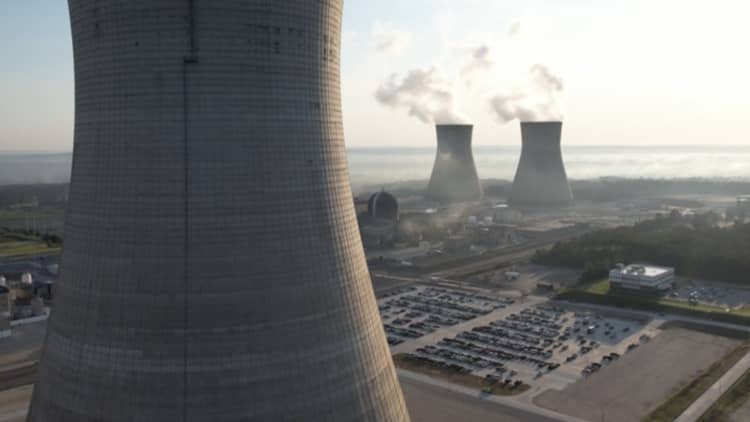
Cooling towers and reactors 3 and 4 are seen at the nuclear-powered Vogtle Electric Generating Plant in Waynesboro, Georgia, U.S. Aug. 13, 2024.
Megan Varner | Reuters
Expanding two power plants in Georgia and South Carolina with big, new reactors was supposed to spark a “nuclear renaissance” in the U.S. after a generation-long absence of new construction.
Instead, Westinghouse Electric Co.’s state-of-the-art AP1000 design resulted in long delays and steep cost overruns, culminating in its bankruptcy in 2017. The fall of Westinghouse was a major blow for an industry that the company had helped usher in at the dawn of the nuclear age. It was Westinghouse that designed the first reactor to enter commercial service in the U.S., at Shippingport, Pennsylvania in 1957.
Two new AP1000 reactors at Plant Vogtle near Augusta, Georgia started operating in 2023 and 2024, turning the plant into the largest energy generation site of any kind in the nation and marking the first new operational nuclear reactor design in 30 years. But the reactors came online seven years behind schedule and $18 billion over budget.
In the wake of Westinghouse’s bankruptcy, utilities in South Carolina stopped construction in 2017 on two reactors at the V.C. Summer plant near Columbia after sinking $9 billion into the project.
But today, interest in new nuclear power is reviving as the tech sector seeks reliable, carbon-free electricity to power its artificial intelligence ambitions, especially against China. Westinghouse emerged from bankruptcy in 2018 and was acquired by Canadian uranium miner Cameco and Brookfield Asset Management in November 2023
The changed environment means South Carolina sees an opportunity to finish the two reactors left partially built at V.C. Summer eight years ago. The state’s Santee Cooper public utility in January began seeking a buyer for the site to finish reactor construction, citing data center demand as one of the reasons to move ahead.
“We are extraordinarily bullish on the case for V.C. Summer,” Dan Lipman, president of energy systems at Westinghouse, told CNBC in an interview. “We think completing that asset is vital, doable, economic, and we will do everything we can to assist Santee Cooper and the state of South Carolina with implementing a decision that results in the completion of the site.”
Tech as a nuclear catalyst
The United States has tried to revive nuclear power for a quarter century, but the two reactors in Georgia mark the only entirely new construction across that period despite bipartisan support under every president from George W. Bush to Donald Trump.
A fresh start was supposed to have begun more than a decade ago, but was choked off by a wave of closures of older reactors as nuclear struggled to compete against a boom of cheap natural gas created by the shale revolution.
“We went from an environment in the aughts of rising gas imports and rising gas prices to fracking technology unlocking quite a bit of affordable natural gas here in the U.S., and companies didn’t really value the firm clean attribute of nuclear back then,” said John Kotek of the Nuclear Energy Institute, an industry lobby group, and former assistant secretary at the Office of Nuclear Energy under President Barack Obama.
What’s different in 2025 is the tech sector’s voracious appetite for power translating into a willingness to pay a premium for nuclear. But recent investments in nuclear have focused on restarting abandoned reactors and attempting to bring online smaller, next-generation modular reactors that many believe are the future, if they can be designed and built more cheaply.
The troubled nuclear plant at Three Mile Island near Harrisburg, Pennsylvania that almost melted down in 1979 is expected to resume operations in 2028 after owner Constellation Energy struck a power purchase agreement with Microsoft last September. Constellation wants to restart Unit 1, which shut for economic reasons in 2019, not the Unit 2 reactor that was the site of the accident.
Alphabet and Amazon invested in small nuclear reactors a month later. Meta Platforms, owner of Facebook and Instagram, asked developers in December to submit proposals for up to 4 gigawatts of new nuclear power to meet the energy needs of its data centers.
But while the recent focus in the U.S. has been on restarts and commercializing small reactors, Lipman said the extent of potential demand that has emerged from data centers over the past year has led to renewed interest in Westinghouse’s large AP1000 reactor design.
In any event, there are no operational small reactors in the U.S. today, though startups and industry stalwarts, including Westinghouse, are racing to commercialize the technology. And there only so many shuttered plants in the U.S. in good enough shape to potentially be restarted.
Gargantuan undertaking
Meanwhile, meeting the demand for power is a gargantuan undertaking. Meta’s need for new nuclear power, for example, is nearly equivalent to the entire 4.8 gigawatts of generating capacity at the Vogtle plant, enough to power more than 2 million homes and businesses. Large nuclear plants with a gigawatt or more of capacity — the size of the AP1000 — will be essential to power large industrial sites like data centers because of their economies of scale and low production costs once they’re up and running, according to a recent Department of Energy report.
Georgia Gov. Brian Kemp called for another reactor at Vogtle the same day he dedicated the plant expansion in May 2024. Southern Company CEO Chris Womack believes at least 10 gigawatts of large nuclear are needed. Southern is the parent company of Georgia Power which operates Vogtle.
“The people that are going to own and operate AP1000s traditionally are investor-owned electric utilities,” Lipman said. “When they look at the marketplace for a large reactor, AP1000 is where they turn because it’s got a license, it’s operational.”
Still, nobody in the U.S. is on the verge of signing an order for a new AP1000, he said. Westinghouse is focused on deploying reactors in Eastern and Central Europe, where nuclear projects are seen as a national security necessity to counter dependency on Russian natural gas after the invasion of Ukraine.
FILE PHOTO: In this Sept. 21, 2016, file photo, V.C. Summer Nuclear Station’s unit two’s turbine is under construction near Jenkinsville, S.C., during a media tour of the facility.
Chuck Burton | AP
In addition to the two units in Georgia, Westinghouse also has four operational reactors in China.
But South Carolina’s search for someone to complete the partially built reactors at V.C. Summer will likely draw investment from Big Tech “hyperscalers” building data centers, and large manufacturers like the auto industry, Lipman said.
“That kind of asset attracts industry that relies on 24/7, 365 energy and that’s what you get with an AP1000,” Lipman said. There are ongoing discussions within the industry about whether the tech sector might act as a developer that invests capital in the upfront costs of building new plants, he said.
What went wrong in the South
Any attempt to build new AP1000s in the U.S. again will almost certainly meet with skepticism after the experiences in South Carolina and Georgia.
Lipman said the challenges that the AP1000 construction faced in the South have been resolved. Back then, Westinghouse agreed to the projects before the reactor design was complete, and supply chains weren’t fully formed due to a long period in which U.S. construction was dormant, he said.
“One big lesson learned, maybe the big lesson learned, is designs need to be complete before they hit the field, meaning they have to be shovel ready,” Lipman said. The design for the AP1000 is complete and Westinghouse has its supply chain in place, he said.
“We have winnowed over our list of suppliers,” Lipman said. “They are supporting us globally, and so it’s really easy then to have them make more equipment for deployment.”
“You’re getting economies of scale,” he said.
Ironically, given the overruns in Georgia, the original aim of AP1000 was reduce costs by creating a standardized design that requires less construction materials compared to older reactor types, Lipman said. Components of the plant are prefabricated before being assembled on site, he said.
“You basically assemble, kit-like, major portions of the plant in a modular fashion, a bit like aircraft and submarines are done,” Lipman said. “That was not fully shaken out completely at the Vogtle site.”
The Department of Energy under the Biden administration argued in a September report that future AP1000 builds should be less expensive because they won’t incur costs associated with the first-of-a-kind project in Georgia. Support from the department’s loan office, tax credits under the Inflation Reduction Act, and shorter construction timelines would substantially reduce costs, according to the report.
Trump plans for nuclear
While President Donald Trump is supportive of nuclear, it’s unclear whether the industry will receive support through DOE loans and the investment tax credit under the Inflation Reduction Act (IRA). Those tools were pillars of the Biden administration’s plan to help reduce the cost of new AP1000s.
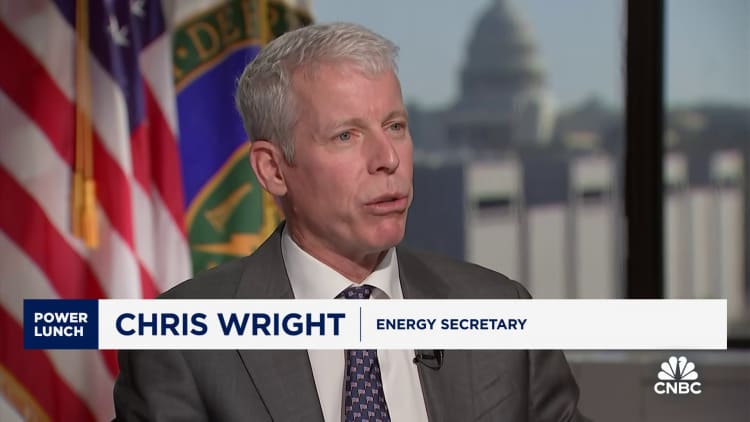
Trump issued an executive order on his first day in office that directed federal agencies to remove obstacles to development of nuclear energy resources. The same order, however, paused all spending under the IRA. Two weeks later, Secretary of Energy Chris Wright made commercializing “affordable and abundant nuclear energy” a priority in a Feb. 5 order.
“The long talked about nuclear renaissance is finally going to happen, that is a priority for me personally and for President Trump and this administration,” Wright told CNBC in a Feb. 7 interview. Wright was previously a board member of Oklo, a nuclear startup that aims to disrupt the status quo of the industry by deploying micro reactors later this decade.
Wright emphasized commercializing small reactors and said private capital would drive the construction of new plants. Before the November election, Trump was skeptical of building large reactors, citing the cancelled project in South Carolina.
“They get too big and too complex and too expensive,” he told Joe Rogan in an October interview.
Lipman said the first Trump administration was pro-nuclear, and he expects the president will support the industry in his second term.
“If there’s going to be gigawatt scale deployment in the U.S., decision making needs to accelerate,” Lipman said. “The business model, the investment climate, any legislative changes that might be in the offing at the state level or the federal, now is the time to address those pertinent issues.”
— CNBC’s Gabriel Cortes contributed to this report.
Financial News
Daily News on Investing, Personal Finance, Markets, and more!