Autographed Warren Buffett books fetch as much as $100,000 at Berkshire meeting auction

  • A signed book auction at the Berkshire Hathaway annual meeting raised more than $1.3 million for a local charity focused on the homeless community in Omaha.
  • CEO Warren Buffett matched every dollar donated through the auction.
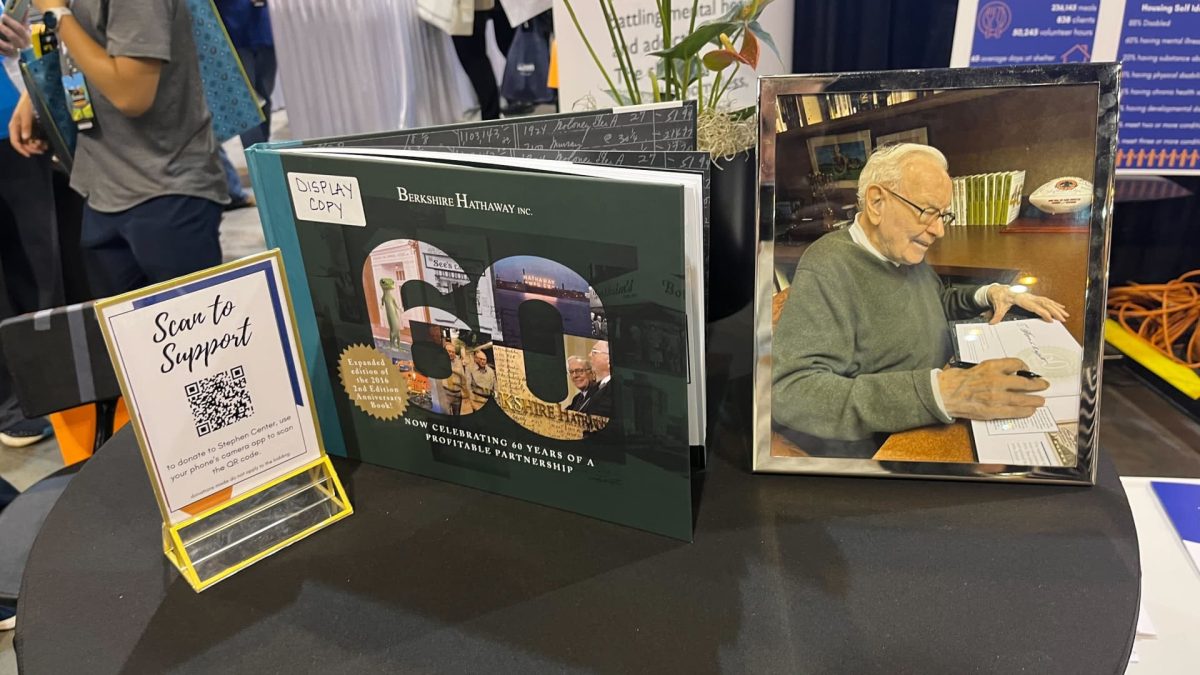
The Berkshire Hathaway 60th Anniversary book seen at the Berkshire Hathaway Annual Shareholders Meeting in Omaha, Nebraska on May 2, 2025.
Alex Harring | CNBC

OMAHA, Neb. — Transpacific wire transfers. Checks arriving unexpectedly in the mail. People standing at the ready, poised to shell out tens of thousands of dollars.

Such was the scene in the months leading up to and during Berkshire Hathaway‘s annual meeting last weekend. The chance to obtain memorabilia signed by legendary CEO Warren Buffett sent shareholders on a mad dash to participate in a silent auction during what turned out to be a monumental gathering.

In true Buffett fashion, it was all for a local charity serving his native Omaha.

Attendees of the annual meeting could buy an exclusive anniversary book titled “60 Years of Berkshire Hathaway” on site. However, 18 copies signed by Buffett and author Carrie Sova, were only available via an auction to benefit Stephen Center, a shelter serving the Nebraska city where Berkshire is headquartered.

Buffett pledged to match every dollar raised for the organization, which offers housing and addiction recovery programs. With the 94-year-old’s contribution, the event raised more than $1.3 million, according to Chris Knauf, CEO of the Stephen Center.

“There are truly no words that can adequately express mine and our gratitude for this incredible generosity,” Knauf told CNBC in an interview. “It’s just phenomenal.”

In the first phase, eight books were auctioned online ahead of the meeting, with the highest bid $100,000. Then, on Friday and Saturday, 10 books were auctioned during the “Berkshire Bazaar of Bargains” event. More than 50 bids came in, with some as high as $60,000.

The book took on an unexpected significance after Buffett shocked the investing world during the event with a surprise announcement that he planned to step down from the CEO role at year-end.

Warren Buffett does a walkthrough of the Berkshire Hathaway Annual Shareholders Meeting in Omaha, Nebraska on May 3, 2025.
David A. Grogen | CNBC

Knauf said two additional signed books were set aside for donors who were friends with the late Charlie Munger. Buffett’s longtime business partner was featured prominently in the publication. That brought the total number of signed copies supporting the Stephen Center to 20.

One of the winning bidders was Matthew Rodriguez, a 43-year-old real estate professional. Rodriguez said he monitored the online auction’s leaderboard, then pulled the trigger with a $50,000 bid about 15 minutes before it closed.

“It’s going to be a pretty priceless artifact in my library,” Rodriguez said.

As a self-proclaimed “fan boy” of Buffett, Rodriguez said he was excited to support an organization with the billionaire investor’s stamp of approval and liked that every dollar he could contribute would be matched. Because Rodriguez lives in Omaha, he was also familiar with the Stephen Center’s local impact.

Wires from Singapore

Rodriguez was one of several donors to quickly reached out to the center after Buffett first announced the initiative in the company’s annual shareholder letter released in February. The “Oracle of Omaha” shared details about the book and the plan to fundraise for the local group in the letter, but did not explicitly lay out the steps for obtaining a signed edition.

Before shareholders realized there was an auction, some sent checks directly to the charity in case it ended up being first-come, first-serve, Knauf said. When Stephen Center representatives called to let them know the process, some who weren’t planning on coming to the meeting told them to keep the money as donations, citing their affection for Buffett, he said.

“What Mr. Buffett has done for me, what Mr. Buffett has done for my family, is immeasurable,” Knauf recalled hearing in these conversations with shareholders. “If the least we can do is write a check for this charity, then we want to do it.”

The Stephen Center ended up collecting more than $45,000 from donors tied to Buffett and the annual meeting outside of the auction. Beyond monetary support, Knauf said he expects Buffett’s selection of the center to help spread awareness of the role of shelters play in local communities.

“We are a homeless shelter and addiction recovery campus in Omaha, Nebraska,” Knauf said. “Did I ever think that we would be doing wire transfers from Singapore? I did not.”

Shareholders enter the venue on the day of the Berkshire Hathaway Inc annual shareholders’ meeting, in Omaha, Nebraska, U.S., May 3, 2025.
Brendan McDermid | Reuters

Helping the homeless

A portion of the funds will help support a renovation of the space housing an addiction recovery program, Knauf said. Other donations will go toward construction of a women and children’s center, he said.

These plans come as the organization tries to aid the growing community of unhoused people in Omaha, Knauf said. He pointed to data from an annual count showing the homeless population has grown nearly 10% from last year, with what he called a particularly substantial spike in families, children and senior citizens.

For shareholder Jay Ji, this mission hit close to home after his family experienced economic troubles as a child. The investment manager placed a winning bid of around $20,150 and toured the Stephen Center to see first-hand where the money would go.

“I want to just do my part,” the 43-year-old said. “I’m more determined to try to find ways to to make sure that … fewer families will experience those kind of hardships, and whenever possible, to deploy some resources to help.”

In addition to the signed books, Buffett said during his famous annual question-and-answer session that Berkshire sold around 8,000 copies of the anniversary book at the meeting.

A legacy of giving back

Also new to this year’s gathering was a gigantic claw crane, which shareholders could pay $10 for a chance to win prizes tied to Berkshire’s holding companies. Proceeds from the crane benefit Hope Center for Kids, an Omaha-based organization providing after-school and summer care for children.

Both efforts underscore Buffett’s decades-long emphasis on charitable giving. For more than two decades, Buffett had auctioned off a private lunch to benefit San Francisco-based nonprofit Glide. The final winner of this event in 2022 shelled out more than $19 million. Taken together, the Berkshire CEO’s 21 lunches collectively raised more than $53 million.

The Pilot truck simulator seen at the Berkshire Hathaway Annual Shareholders Meeting in Omaha, Nebraska on May 2, 2025.
Alex Harring | CNBC

Buffett has long pledged to give 99% of his personal fortune to charity. He argued against creating family wealth dynasties by leaving colossal inheritances in a letter last year.

“I’ve never wished to create a dynasty or pursue any plan that extended beyond the children,” Buffett wrote in the letter. “I know the three well and trust them completely. Future generations are another matter. Who can foresee the priorities, intelligence and fidelity of successive generations to deal with the distribution of extraordinary wealth amid what may be a far different philanthropic landscape?”
Don’t miss these insights from CNBC PRO

Top Wall Street analysts are bullish on these 3 dividend stocks for stable returns

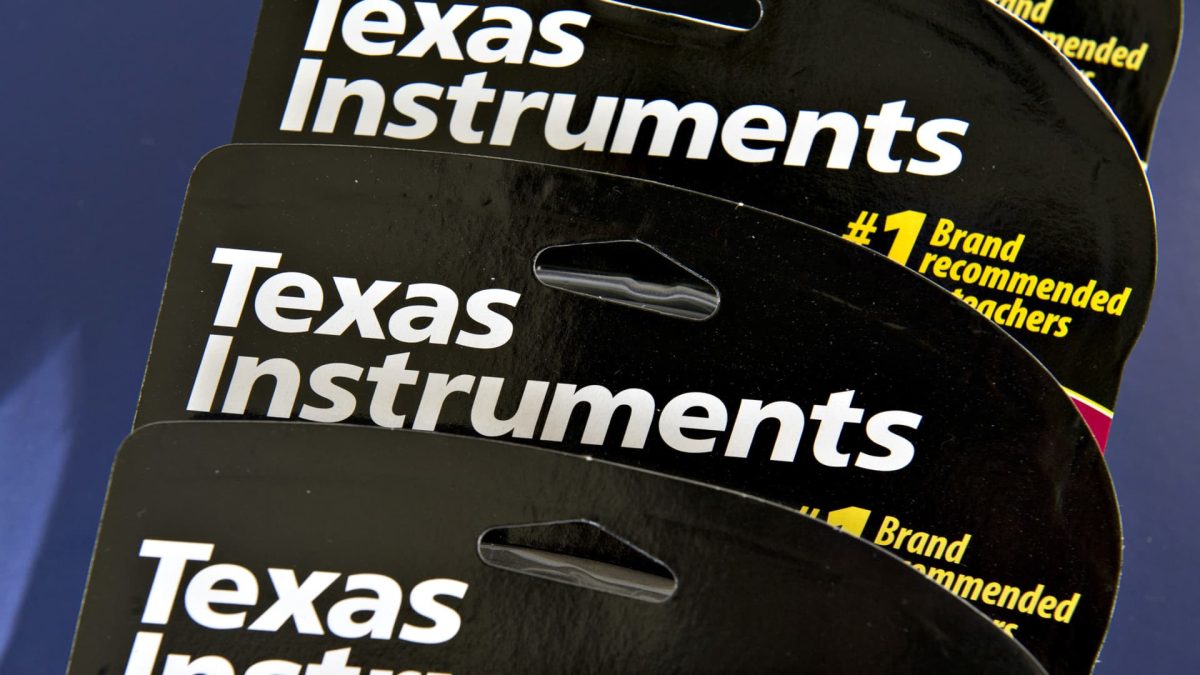
The Texas Instruments Inc. logo is seen on scientific calculator packages in Tiskilwa, Illinois.
Daniel Acker | Bloomberg | Getty Images

Investors with concerns about the risks facing the economy may want to add some stable income to their portfolio in the form of dividend-paying stocks.

To this end, Wall Street experts’ recommendations can help pick lucrative dividend stocks that have the ability to make consistent payments despite near-term pressures.  

Here are three dividend-paying stocks, highlighted by Wall Street’s top pros on TipRanks, a platform that ranks analysts based on their past performance.

AT&T

This week’s first dividend stock is telecom giant AT&T (T). The company recently reported first-quarter results, driven by strong postpaid phone and fiber net subscriber additions. The company retained its full-year guidance and stated that it plans to commence share buybacks in the second quarter, given that its net leverage target of net debt-to-adjusted earnings before interest, taxes, depreciation and amortization is in the 2.5-times range.

AT&T offers investors a quarterly dividend of $0.2775 per share. With an annualized dividend of $1.11 per share, AT&T stock offers a dividend yield of 4.0%.

In reaction to the company’s Q1 print, RBC Capital analyst Jonathan Atkin raised his price target for AT&T stock to $30 from $28 and reiterated a buy rating. The analyst noted that the company exceeded estimates even after excluding $100 million of one-time EBITDA benefits.

Atkin added that AT&T’s revenue surpassed expectations, thanks to the strength in both wireless and wireline businesses. Among other positives, the analyst noted that the company promptly addressed the slowdown seen in January and delivered robust postpaid phone net additions of 324,000, with gross additions growing 13% and helping to overcome higher churn.

“Management signaled confidence in its execution amidst a challenging environment by reiterating guidance and introducing a buyback program that commences in Q2,” said Atkin.

Atkin ranks No. 85 among more than 9,400 analysts tracked by TipRanks. His ratings have been successful 69% of the time, delivering an average return of 11.3%. See AT&T Hedge Fund Trading Activity on TipRanks.

Philip Morris International

We move to Philip Morris International (PM), a consumer goods company that is focused on transitioning completely to smoke-free alternatives from cigarettes. The company reported solid results for the first quarter of 2025, driven by strong demand for its smoke-free products.

Philip Morris rewarded shareholders with a quarterly dividend of $1.35 per share. At an annualized dividend of $5.40 per share, PM stock offers a yield of nearly 3.2%.

Encouraged by the results, Stifel analyst Matthew Smith reaffirmed a buy rating on PM stock and increased the price target to $186 from $168, noting strong momentum across the board. The analyst said that three growth engines – smoke-free product mix, pricing and volume growth – boosted Philip Morris’ Q1 performance and drove a 10% rise in organic revenue, 340 basis points of gross margin expansion and 200 basis points of increase in operating profit margin.

“Each of these engines support durable growth in 2025 and beyond as smoke-free continues to increase as a portion of PMI’s portfolio, now over 40% of revenue and gross profit,” said Smith.

The analyst expects 170 basis points of operating profit margin expansion in 2025, driven by smoke-free products, including Iqos and Zyn. In particular, Smith noted that Zyn’s Q1 U.S. volumes benefited from robust demand and earlier-than-anticipated improvement in supply chain capacity. He now expects 824 million cans for 2025, reflecting a 42% growth. Also, Zyn’s capacity is expected to reach 900 million cans this year, supporting potential upside to his estimates, especially in the second half of the year when inventories are expected to normalize.

Smith ranks No. 642 among more than 9,400 analysts tracked by TipRanks. His ratings have been successful 64% of the time, delivering an average return of 15%. See Philip Morris Ownership Structure on TipRanks.

Texas Instruments

This week’s third dividend stock is Texas Instruments (TXN), a semiconductor company that designs and manufactures analog and embedded processing chips for several end markets. The company’s first-quarter earnings and revenue easily surpassed Wall Street’s estimates, reflecting strong demand for its analog chips despite the threat of tariffs. Also, TXN’s guidance for the June quarter was better than the consensus estimate.

Meanwhile, Texas Instruments pays a quarterly dividend of $1.36 per share. At an annualized dividend of $5.44 per share, TXN stock’s dividend yield stands at 3.3%.

Reacting to the strong Q1 results, Evercore analyst Mark Lipacis reiterated a buy rating on TXN stock with a price target of $248, saying, “We’re buyers of TXN post a beat and raise 1Q25 print.” He stated that TXN remains a top analog pick for Evercore.

Lipacis contended that while bears will argue that the upside to Texas Instruments’ Q1 results and Q2 2025 outlook were due to tariff-driven order pull-ins, his analysis shows that the company’s inventories have overcorrected in the supply chain. In fact, numerous checks by his firm indicate that many entities in the supply chain have now taken their inventories well below normal levels.

The analyst expects TXN to be early into the upward revision cycle, given that it was the first large-cap analog company to enter the inventory correction phase. He expects the company to deliver upside surprises through 2025 and into 2026. Additionally, he expects TXN stock to sustain a premium price-earnings multiple as it is exiting its capital expenditure cycle, which will drive its free cash flow per share higher from a trailing 12 months’ trough of $1 to $10.30 by 2027.

Lipacis ranks No. 69 among more than 9,400 analysts tracked by TipRanks. His ratings have been profitable 58% of the time, delivering an average return of 20.4%. See Texas Instruments Technical Analysis on TipRanks.

Berkshire meeting ‘bazaar’ features Buffett Squishmallows, 60th anniversary book and giant claw machine

The welcome sign at the Berkshire Hathaway Annual Shareholders Meeting in Omaha, Nebraska on May 2, 2025.
David A. Grogen | CNBC

OMAHA, Nebraska — Berkshire Hathaway shareholders are getting more bang for their buck at this year’s meeting with the annual shopping event more interactive than ever.

The conglomerate’s yearly convention kicked off Friday with a shareholder-only shopping event, called the “Berkshire Bazaar of Bargains.” With over 20,000 square feet of showroom space at the CHI Health Center in downtown Omaha, the exhibit hall is offering goods from a myriad of the conglomerate’s holdings, including Warren Buffett-themed apparel from Brooks Sports and Berkshire chocolate coins from See’s Candies.

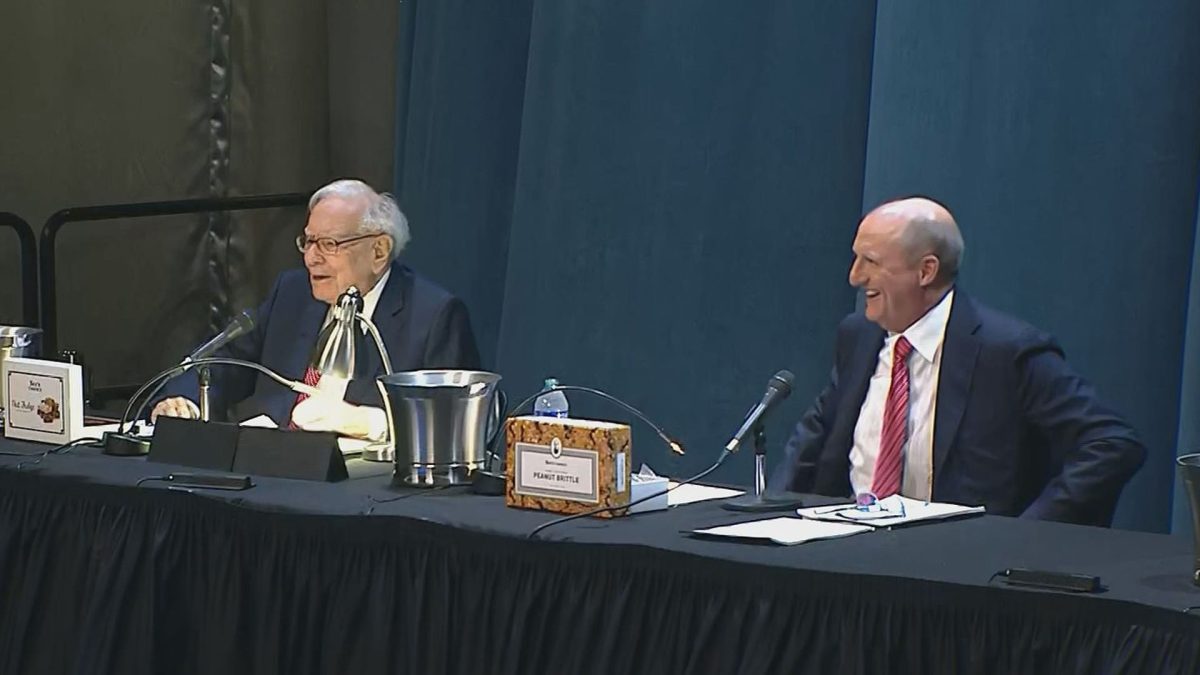
Buffett will take the stage 9am ET Saturday to address the most pressing issues investors face, including tariffs, the market volatility as well as the state of the economy. The 94-year-old investment legend will answer shareholder questions along with his designated successor, Greg Abel, and Berkshire’s insurance chief, Ajit Jain. The Q&A session will be broadcast exclusively on CNBC.

Plush Warren, Charlie and Omaha

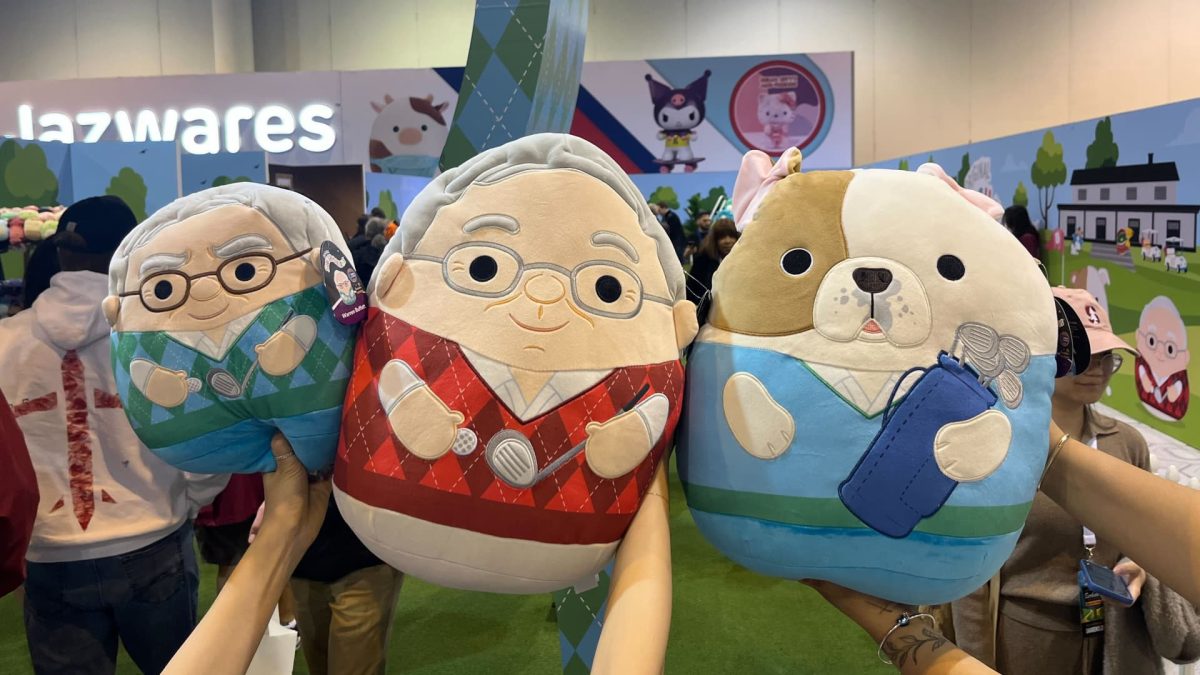
Squishmallows in the images of Warren Buffett, Charlie Munger and Omaha at the Berkshire Hathaway Annual Shareholders Meeting in Omaha, Nebraska on May 2, 2025.
Alex Harring | CNBC
The Squishmallow shopping display at the Berkshire Hathaway Annual Shareholders Meeting in Omaha, Nebraska on May 2, 2025.
Yun Li | CNBC
The Squishmallow shopping display at the Berkshire Hathaway Annual Shareholders Meeting in Omaha, Nebraska on May 2, 2025.
Yun Li | CNBC

Plush toy phenomenon Squishmallows once again stole the show. The ones modeled after the “Oracle of Omaha” and the late Charlie Munger became the biggest hits at the shopping event, as shareholders snapped up over 1,000 snuggly dolls per hour.

This year, Squishmallows also introduced a new limited-edition dog character called “Omaha.”

Squishmallow, Omaha, at the Berkshire Hathaway Annual Shareholders Meeting in Omaha, Nebraska on May 2, 2025.
Alex Harring | CNBC
The Squishmallow shopping display at the Berkshire Hathaway Annual Shareholders Meeting in Omaha, Nebraska on May 2, 2025.
Yun Li | CNBC

Berkshire inherited Squishmallows parent Jazwares through its acquisition of Alleghany in the fourth quarter of 2022. These squishy toys became an instant sensation during the pandemic partly thanks to celebrity endorsements. In 2022 alone, the firm sold a whopping 100 million Squishmallow units — with prices ranging from $5 to $30.

At the shopping event, the company put on display its newest product — pillows for both kids and adults —slated to launch this summer. Berkshire shareholders get to buy special edition pillow cases featuring Buffett and Munger’s cartoon figures.

One very special book

The Berkshire Hathaway 60th Anniversary book seen at the Berkshire Hathaway Annual Shareholders Meeting in Omaha, Nebraska on May 2, 2025.
Yun Li | CNBC
The Berkshire Hathaway 60th Anniversary book seen at the Berkshire Hathaway Annual Shareholders Meeting in Omaha, Nebraska on May 2, 2025.
Alex Harring | CNBC

Only one book is for sale at Berkshire’s book store Bookworm this year, 60 Years of Berkshire Hathaway, to commemorate the decades since Buffett took over what was then a failing Massachusetts textile company

Berkshire is selling 5,000 volumes of the limited edition book. Proceeds from an auction of copies signed by Buffett and author Carrie Sova will benefit the Stephen Center, a charity for homeless youth and adults in South Omaha.

Satisfying the sweet tooth

See’s Candies display at the Berkshire Hathaway Annual Shareholders Meeting in Omaha, Nebraska on May 2, 2025.
David A. Grogen | CNBC

See’s Candies, one of Berkshire’s most-iconic brands, had shelves of themed chocolate concoctions available for purchase.

Tied to the camping theme for this year’s meeting, See’s sold a box of toasted marshmallow-flavored chocolates. The box was adorned with an illustration of Buffett next to a campfire. Other items for sale included chocolate coins with wrappers embossed with Buffett’s face, as well as the company’s famous peanut brittle.

Room for dessert?

The Dairy Queen display at the Berkshire Hathaway Annual Shareholders Meeting in Omaha, Nebraska on May 2, 2025.
David A. Grogen | CNBC

Dairy Queen, which Berkshire Hathaway acquired in 1998, provided a sweet treat for attendees while they racked up steps at the bazaar. The ice cream chain’s Dilly Bars were sold for $1, while the Buster Bar went for $2.

Running shoes

The Brooks Running display at the Berkshire Hathaway Annual Shareholders Meeting in Omaha, Nebraska on May 2, 2025.
David A. Grogen | CNBC
Brooks Running shoes on display at the Berkshire Hathaway Annual Shareholders Meeting in Omaha, Nebraska on May 2, 2025.
Alex Harring | CNBC
Brooks Running hats on display at the Berkshire Hathaway Annual Shareholders Meeting in Omaha, Nebraska on May 2, 2025.
Alex Harring | CNBC

Long lines formed at Brooks Running as shareholders gravitated towards the 2025 special edition of its running shoes with special “Berkshire Hathaway” branding on the side and the insoles. Many shareholders are also set to participate in the Brooks “Invest in Yourself” 5K fun run and walk on Sunday, the morning following the annual meeting.

Live from Omaha

Signage at the Berkshire Hathaway Annual Shareholders Meeting in Omaha, Nebraska on May 2, 2025.
Alex Harring | CNBC

Attendees waited in line to take photos in front of CNBC’s stage, where reporters like Mike Santoli and Becky Quick have been reporting. CNBC is the exclusive broadcaster for the meeting and has a livestream available online in English and Mandarin.

Claw Crane

The Pilot truck simulator seen at the Berkshire Hathaway Annual Shareholders Meeting in Omaha, Nebraska on May 2, 2025.
Alex Harring | CNBC

Feeling lucky? New to the bonanza floor this year was a gigantic claw machine.

For $10, attendees could try their luck at scooping up prizes tied to several of Berkshire’s holding companies. Proceeds go to the Hope Center for Kids, an Omaha-based organization providing after-school and summer care for children.

Living the lavish life

The NetJets display at the Berkshire Hathaway Annual Shareholders Meeting in Omaha, Nebraska on May 2, 2025.
David A. Grogen | CNBC

NetJets, which Berkshire bought in 1998, took shareholders inside a private plane. The private jet operator also sold company-branded gear.

Getting it all home

Crowds at the Berkshire Hathaway Annual Shareholders Meeting in Omaha, Nebraska on May 2, 2025.
Alex Harring | CNBC

Not enough space for plush toys, jewelry, running shoes and books in your carryon? AIT Worldwide Logistics has you covered. The shipper offered shoppers the service of having their purchases packed and sent home. It should be a popular service, with attendees seen lugging around Squishmallow bags that were equivalent in size to a child.

Bling-bling

A jewelry display from Borsheims is seen at the Berkshire Hathaway Annual Shareholders Meeting in Omaha, Nebraska on May 2, 2025.
Yun Li | CNBC
A jewelry display from Borsheims is seen at the Berkshire Hathaway Annual Shareholders Meeting in Omaha, Nebraska on May 2, 2025.
Yun Li | CNBC

About 14 miles away from the main convention center, there’s a separate shareholder-only shopping event at jewelry story Borsheims. Berkshire shareholders browsed through one-of-a-kind jewelry, engagement rings and watches available for purchase at a discount. This 24-carat black diamond necklace from Ruchi New York is selling for about $25,000.

60 years at Berkshire: See Warren Buffett’s ‘Woodstock for Capitalists’ over the decades

In this seven image composite, shareholders gather prior to the start of the Berkshire Hathaway annual meeting in Omaha, Nebraska, U.S., on Saturday, May 1, 2010.
Daniel Acker | Bloomberg | Getty Images

Berkshire Hathaway‘s annual meeting is far different — and larger — than it was six decades ago, when Warren Buffett took over what was then a failing Massachusetts textile company.

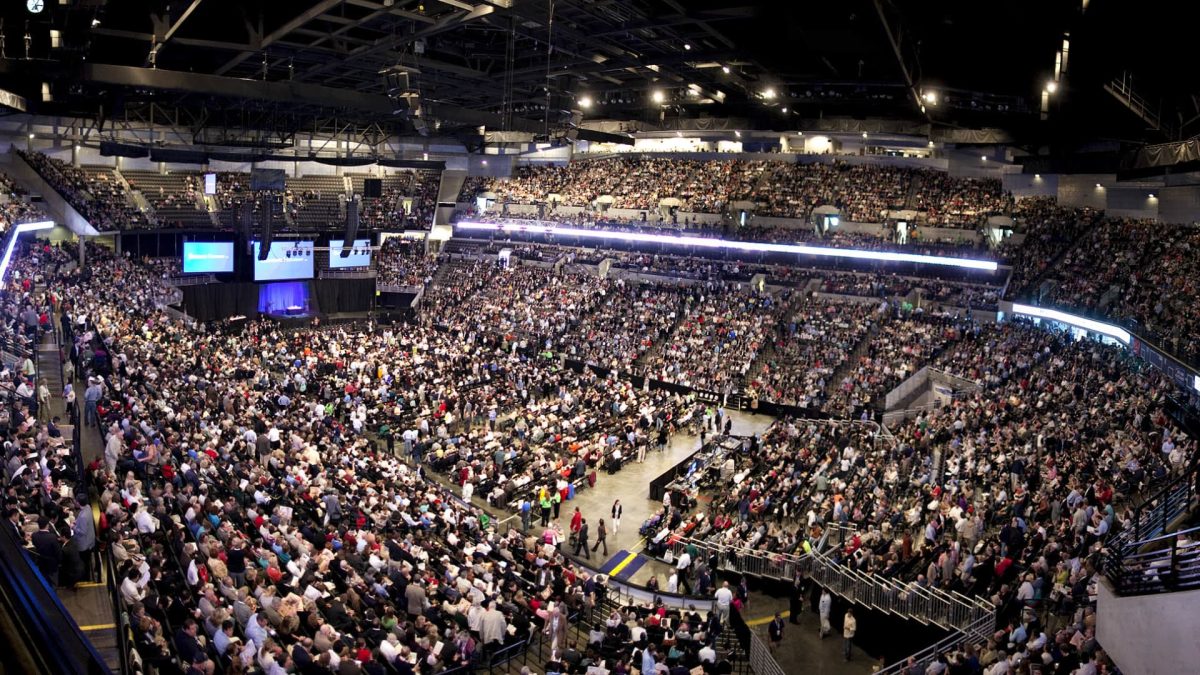
Today’s “Woodstock for Capitalists” began with just a dozen attendees in 1965. Sixty years later, the Omaha, Nebraska gathering attracts as many as 40,000 people from around the world.

Nowadays, attendees begin lining up outside the CHI Health Center in the early morning hours on Saturday to hear from Warren Buffett, the 94-year-old chief executive officer. Known as the Oracle of Omaha for dispensing investment wisdom, Buffett is also famous for sharing insights into business and strategy, not to mention advice on softer topics such as friendship and life, to a rapt audience.

This year’s shareholder meeting is Buffett’s second without Charlie Munger, his close friend and business partner who died in 2023. Greg Abel, Berkshire Hathaway Energy chairman and Buffett’s successor, will join him for questions on stage. Insurance Chief Ajit Jain will also join the pair for part of Saturday’s question-and-answer event.

The event has ballooned into a weekend-long array of activities, including a shopping event known as the “Berkshire Bazaar of Bargains,” featuring products made by the conglomerate’s subsidiaries. A 5-kilometer run and value investing conferences have become hallmarks of attendees’ weekend itineraries.

“You’ve just got event after event after event,” said Christopher Bloomstran, president of Semper Augustus Investments Group. Bloomstran, who’s attended the annual meeting for more than two decades, called it a “rite of passage” for new investors.

This year, the company is selling 5,000 volumes of a limited edition book, “60 Years of Berkshire Hathaway,” marking Buffett’s tenure as CEO. Proceeds from an auction of copies signed by Buffett and author Carrie Sova will benefit the Stephen Center, a charity for homeless youth and adults in South Omaha.

The meeting itself will look different than what many attendees remember from years past, according to the 2024 shareholder letter. Buffett will make opening remarks at 8 a.m. local time Saturday, but there will be no movie introduction, a popular feature in prior years. The question-and-answer period will only have a half-hour break and end at 1p.m., though the shopping area will remain open until 4 p.m.

News outlets have covered the event for decades. The event will be broadcast exclusively by CNBC this year and webcast in English and Mandarin.

Regular attendees often say there’s a magic and camaraderie to the in-person experience that keeps them coming back to Omaha, where Berkshire is headquartered, despite being able to livestream the event at home.

“It really is special,” said Adam Mead, CEO of Mead Capital Management and author of “The Complete Financial History of Berkshire Hathaway.” “‘I’m not a religious person, but it has that feel of going to church.”

The following are a collection of moments from meetings throughout the years compiled by CNBC in honor of Warren Buffett’s 60 years leading Berkshire Hathaway.

Warren Buffett, CEO of Berkshire Hathaway, attends the company’s annual shareholders’ meeting with his daughter (left) and his wife, both named Susan. Buffett and his wife separated in 1977 but remained friends and business partners.
Mark Peterson | Corbis | Getty Images
Berkshire Hathaway’s CEO Warren Buffett (L) and his business partner Vice Chairman Charles Munger answer questions at a news conference May 4, 2003 in Omaha, Nebraska.
Eric Francis | Getty Images
Warren Buffett, chairman of Berkshire Hathaway, plays the ukulele for a crowd of shareholders at the Fruit of the Loom booth during the Berkshire Hathaway annual meeting in Omaha, Nebraska, Saturday, April 30, 2005.
Eric Francis | Bloomberg | Getty Images
In this seven image composite, shareholders gather prior to the start of the Berkshire Hathaway annual meeting in Omaha, Nebraska, U.S., on Saturday, May 1, 2010.
Daniel Acker | Bloomberg | Getty Images
Warren Buffett, chairman of Berkshire Hathaway Inc., sings a song with University of Nebraska cheerleaders during an event at the Berkshire Hathaway annual shareholders meeting in Omaha, Nebraska, U.S., on Saturday, May 5, 2012.
Daniel Acker | Bloomberg | Getty Images
Warren Buffett, chairman of Berkshire Hathaway Inc., holds a large ping pong paddle as he plays table tennis with Ariel Hsing, a member of the 2012 U.S. Olympic team, during an event at the annual shareholders meeting in Omaha, Nebraska, U.S., on Sunday, May 6, 2012.
Daniel Acker | Bloomberg | Getty Images
Warren Buffett, Berkshire Hathaway Inc. chairman and chief executive officer, right, talks with Bill Gates, billionaire and co-chair of the Bill and Melinda Gates Foundation, as they tour the exhibition floor during the Berkshire Hathaway Inc. annual shareholders meeting in Omaha, Nebraska.
Daniel Acker | Bloomberg | Getty Images
Caricatures of Warren Buffett, Berkshire Hathaway Inc. chairman and chief executive officer, and Charles Munger, vice chairman of Berkshire Hathaway Inc., appear on a special edition package of Heinz ketchup and mustard during the Berkshire Hathaway Inc. annual shareholders meeting in Omaha, Nebraska, U.S., on Saturday, May 2, 2015.
Daniel Acker | Bloomberg | Getty Images
The Brooks Invest in Yourself 5K Run at the 2018 Berkshire Hathaway Annual Shareholder’s Meeting in Omaha, NE.
David A. Grogan | CNBC
Warren Buffett speaks with the media during the 2019 BHASM in Omaha, NE on May 4th, 2019.
Gerard Miller | CNBC
A salesperson wears pins of Warren Buffett, CEO of Berkshire Hathaway, and Vice Chairman Charlie Munger during the annual Berkshire shareholders meeting in Omaha, Nebraska, May 3, 2019.
Johannes Eisele | AFP | Getty Images
Display for Brooks showing Warren Buffett at the Berkshire Hathaway Annual Shareholder Meeting in Omaha, Nebraska.
Yun Li | CNBC
Warren Buffett walks the floor ahead of the Berkshire Hathaway Annual Shareholders Meeting in Omaha, Nebraska on May 3, 2024.
David A. Grogen | CNBC

Berkshire investors hope for Buffett’s guidance at annual meeting with tariffs shaking markets, economy

Warren Buffett and Greg Abel during the Berkshire Hathaway Annual Shareholders Meeting in Omaha, Nebraska on May 4, 2024.

Warren Buffett has been mum about tariffs and the recent market turmoil, but will finally speak his mind when the 94-year-old investment legend kicks off Berkshire Hathaway‘s annual shareholder meeting on Saturday.

Tens of thousands of rapt shareholders will descend on Omaha, Nebraska this weekend for the annual gathering dubbed “Woodstock for Capitalists.” This year’s meeting marks the 60th anniversary of Buffett leading the company, and is the second without Buffett’s long-time partner Charlie Munger, who died in late 2023.

The biggest event in the Cornhusker State next to a Nebraska-Oklahoma football game, this year’s meeting comes as markets have turned uncertain after President Donald Trump’s aggressive rollout of the highest tariffs on imports in generations. (Many were suspended for 90 days afterward.) Wall Street economists left and right are sounding the alarms that a recession may be in the offing, as recent data pointed to signs of economic weakening.

“Because Berkshire owns so many businesses, they’re basically on the front lines of everything in terms of the economy falling off. Is it even worse than what the numbers are already showing?” said Steve Check, founder of Check Capital Management, which counts Berkshire as its largest holding. “I hope, more than anything, that he speaks out against the way tariffs have been done. Everyone is looking for what Warren Buffett has to say.”

Investors’ north star

The “Oracle of Omaha” may have already let his actions do the talking. Berkshire has sold more stock than it’s bought for nine straight quarters, dumping more than $134 billion worth in 2024. That was mainly due to reductions in Berkshire’s two largest equity holdings — Apple and Bank of America. As a result of the selling spree, by December Berkshire’s enormous pile of cash had grown to yet another record, at $334.2 billion.

The world is eager to hear if Buffett, the most famous advocate of value investing, used the April market meltdown to hunt for bargains and lay the groundwork for deals. Although Buffett doesn’t make predictions of short-term market direction, investors will listen closely for any signals of his continued confidence in the U.S. economy — despite the tariff shock.

“I think the big question on everyone’s mind is what will Warren do with the pile of cash that they are sitting on and, more specifically, when can it be deployed, as he can help investors gauge when the all clear sign is lit,” said David Wagner, a portfolio manager at Aptus Capital Advisors and a Berkshire shareholder. Many investors, he noted, “tend to view Warren as the north star.”

Buffett will make a few introductory remarks at 9am ET Saturday, followed by an hours-long question-and- answer panel. Buffett’s designated successor, Greg Abel, and Berkshire’s insurance chief, Ajit Jain, will join Buffett on stage in the morning, with Buffett and Abel alone in the afternoon. The Q&A session will be broadcast on CNBC and webcast in English and Mandarin.

Big Apple question

Shareholders are also curious for Buffett to explain his motivation in slashing his longtime Apple stake. After a head-turning selling spree for four quarters in a row, Berkshire’s Apple holding has stayed at an even 300 million shares since the end of September, leading many to speculate that Buffett is done selling the stock for the time being.

At last year’s annual meeting, Buffett suggested that the sale was for tax reasons following sizable gains. He also implied that selling down Apple could be tied to his wanting to avoid a higher tax bill in the future if rates went higher to fund the yawning U.S. fiscal deficit. With a change in government in Washington, shareholders want to hear Buffett’s reasoning today.

“You can’t use that explanation anymore because it clearly does not apply,” said David Kass, a finance professor at the University of Maryland. “If he sold more, it would indicate that he probably felt it was fully valued, or Warren Buffett being the genius that he is, he was able to see ahead at some of the risks that could face Apple, in case there’s a trade war and tariffs.”

Berkshire’s first-quarter earnings report, due Saturday morning, will show the conglomerate’s top equity holdings, which could give investors a hint as to whether the Apple stake was adjusted again.

Top Wall Street analysts pick these stocks for robust growth potential

Ticker seen at Charles Schwab headquarters located on 211 Main St. seen on Monday, Nov. 25, 2019, in San Francisco, Calif. (Photo By Liz Hafalia/The San Francisco Chronicle via Getty Images)
Liz Hafalia | The San Francisco Chronicle via Getty Images

Global stock markets continue to be volatile, influenced by the news around wavering tariffs and trade tensions. While the Trump administration’s relaxation of certain tariffs could provide some relief, the ongoing uncertainties and macro challenges might continue to weigh on investor sentiment.

Given this scenario, investors can take cues from the recommendations of top analysts and pick some attractive stocks that have the ability to thrive despite short-term headwinds.

With that in mind, here are three stocks favored by the Street’s top pros, according to TipRanks, a platform that ranks analysts based on their past performance.

Charles Schwab

First on this week’s list is financial services company Charles Schwab (SCHW), which offers a wide range of brokerage, banking, and advisory services through its operating subsidiaries. On April 17, the company announced better-than-expected revenue and earnings for the first quarter of 2025.

Following the upbeat results and a positive conference call, TD Cowen analyst William Katz raised his 2024-2026 earnings estimates. He also reaffirmed a buy rating on Charles Schwab stock and increased his price target to $95 from $88, saying, “SCHW remains our top pick.”

Katz noted that management’s commentary was essentially bullish, highlighting positives like solid momentum in new business trends/demographics and operating leverage. He added that April started on a robust note for the company, thanks to strong trading, continued rise in client cash, relatively durable client margin balances, and likely solid net new assets (NNAs).

The analyst believes that despite positive EPS revisions and ongoing market volatility, his model is still conservative when it comes to key drivers like NNAs/client cash.

Katz sees the possibility for additional P/E multiple expansion, driven by robust/more consistent management execution, favorable organic growth dynamics, notable operating leverage, and rapid improvement in balance sheet flexibility.

Katz ranks No. 323 among more than 9,400 analysts tracked by TipRanks. His ratings have been profitable 58% of the time, delivering an average return of 10.2%. See Charles Schwab Financials on TipRanks.

Netflix

Next up is streaming giant Netflix (NFLX), which recently posted a significant earnings beat for the first quarter of 2025. Higher-than-expected subscriptions and ad dollars helped boost revenue and earnings in the quarter.

Impressed by the Q1 print, JPMorgan analyst Doug Anmuth reiterated a buy rating on NFLX stock and raised the price target to $1,150 from $1,025. “NFLX continues to play offense in its business, while the stock remains defensive in the uncertain environment,” said the analyst.

Anmuth noted that on the offensive side, Netflix offered solid content in Q1 2025, with “Adolescence” and three films breaking into the streaming platform’s all-time most popular list. He added that the company is strategically raising prices, including the recently announced increase in France and the upcoming hikes in the U.S. and U.K. Another positive highlighted by Anmuth was the rise in Netflix’s advertising business, supported by growing user scale and monetization.

On the defensive side, the analyst pointed out Netflix’s subscription-based model, low churn, strong engagement and high entertainment value. Its low-priced ad tier ($7.99/month in the U.S.) also makes the service very accessible. While Netflix is not directly hit by tariffs, Anmuth noted that the company’s shareholder letter and interview highlighted its commitment to international programming and production in Latin America, Asia, Europe, and the U.K.

Overall, Anmuth is bullish on Netflix stock due to several positives, including the expectation of double-digit revenue growth in 2025 and 2026, a continued rise in operating margin despite growth investments, and a dominant position in the streaming space.

Anmuth ranks No. 81 among more than 9,400 analysts tracked by TipRanks. His ratings have been successful 59% of the time, delivering an average return of 18.3%. See Netflix Hedge Fund Trading Activity on TipRanks.

Verra Mobility

Finally, let’s look at Verra Mobility (VRRM), a provider of smart transportation solutions like integrated technology to help customers manage tolls, violations, and vehicle registrations and school zone traffic cameras.

Recently, Baird analyst David Koning upgraded Verra Mobility stock to buy from hold with a price target of $27. The analyst highlighted the company’s solid market position. He finds a tough macro environment as a good time to upgrade the stock, because he views “high-quality companies as less pressured by investors during tougher/uncertain times.”

While Koning acknowledged the potential impact of macro pressures on travel volumes, he is bullish on Verra Mobility due to its strong moat. Specifically, the analyst noted the solid position of the company’s Commercial unit via its rental vehicle toll transponders and the moat in its Government unit through products like speed/red light/school zone cameras.

Additionally, Koning emphasized the renewal of the New York City (NYC) contract, which accounts for nearly 16% of Verra Mobility’s total revenue. The analyst also thinks that states/municipalities may require more cameras during a challenging macro environment to drive more ticket revenue.

Koning expects Verra’s EPS estimates to be largely intact in a market where the earnings estimates of many companies could be lowered. At a valuation of 15x the 2026 EPS estimate, the analyst finds Verra stock attractive, given that it is a high-moat business.

Koning ranks No. 232 among more than 9,400 analysts tracked by TipRanks. His ratings have been profitable 55% of the time, delivering an average return of 13.2%. See Verra Mobility Ownership Structure on TipRanks.

Americans are getting flashbacks to 2008 as tariffs stoke recession fears

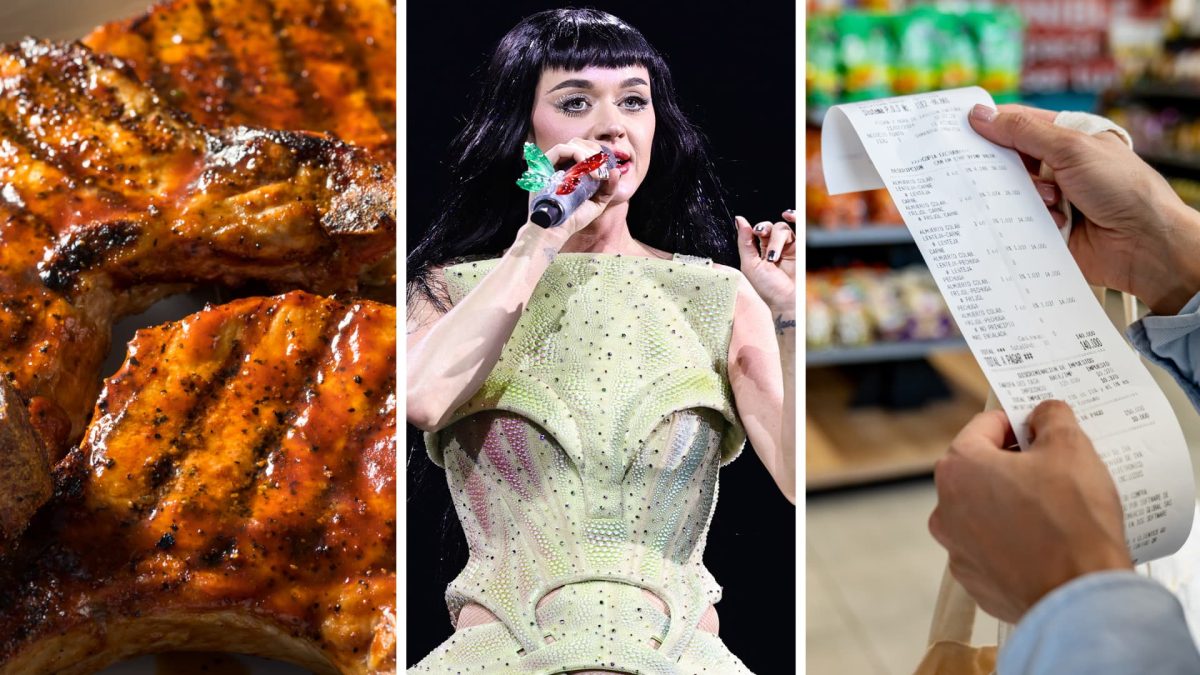
Homemade barbecue pork chops. Katy Perry performs onstage during the Katy Perry The Lifetimes Tour 2025. A woman checks her receipt while exiting a store.
iStock| Theo Wargo | Hispanolistic | Getty Images

A few weeks ago, as Kiki Rough felt increasingly concerned about the state of the economy, she began thinking about previous periods of financial hardship.

Rough thought about the skills she learned about making groceries stretch during the tough times that accompanied past economic downturns. Facing similar feelings of uncertainty about the country’s financial future, she began making video guides to recipes from cookbooks published during previous recessions, depressions and wartimes.

The 28-year-old told followers that she is not a professional chef, but instead earned her stripes by learning to cook while on food stamps. From Rough’s yellow-and-black kitchen in the Chicago suburbs, she teaches viewers how to make cheap meals and at-home replacements for items like breakfast strudel or donuts. She often reminds people to replace ingredients with alternatives they already have in the pantry.

“I keep seeing this joke over and over in the comments: The old poors teaching the new poors,” Rough told CNBC. “We just need to share knowledge right now because everyone is scared, and learning is going to give people the security to navigate these situations.”

The self-employed consultant’s videos quickly found an audience on TikTok and Instagram. Between both platforms, she’s gained 350,000 followers and garnered about 21 million views on videos over the last month, by her count.

President Donald Trump’s announcement of broad and steep tariffs earlier in April has ratcheted up fears of the U.S. economy tipping into a recession in recent weeks. As Americans like Rough grow increasingly worried about the road ahead, they are harking back to the tips and tricks they employed to scrape by during dark financial chapters like the global financial crisis that exploded in 2008.

Google is predicting a spike in search volumes this month for terms related to the recession that came to define the late 2000s. Searches for the “Global Financial Crisis” are expected to hit levels not seen since 2010, while inquiries for the “Great Recession” are slated to be at their highest rate since the onset of the Covid pandemic.

Porkchops, house parties and jungle juice

On TikTok, a gaggle of Millennials and Gen Xers has stepped into the roles of older siblings, offering flashbacks and advice to younger people on how to pinch pennies. Some Gen Zers have put out calls to elders for insights on what a recession may feel like at this stage of life, having been too young to feel the full effects of the financial crisis.

“This is, potentially, at least on a large scale, the first time that millennials have been able to be the ‘experts’ on something,” said Scott Sills, a 33-year-old marketer in Louisiana. “We’re the experts on getting the rug pulled out from under us.”

Those doling out the advice are taking a trip down memory lane the to tail-end of the aughts. Cheap getaways to Florida were the norm instead of lush trips abroad. They had folders for receipts in case big-ticket purchases went on sale later. Business casual outfits were commonplace at social events because they couldn’t afford multiple styles of clothing.

Porkchops were a staple dinner given their relative affordability, leading one creator to declare that they “taste like” the Great Recession. They drank “jungle juice” at house parties, a concoction of various cheap liquors and mixers, instead of cocktails at bars.

“There’s things that I didn’t realize were ‘recession indicators’ the first time around that I thought were just the trends,” said M.A. Lakewood, a writer and professional fundraiser in upstate New York. “Now, you can see it coming from 10 miles away.”

 Customers shop for produce at an H-E-B grocery store on Feb. 12, 2025 in Austin, Texas.
Brandon Bell | Getty Images

To be sure, some of the discourse has centered around how inflationary pressures have made a handful of these hacks defunct. Some content creators pointed out that the federal minimum wage has sat at $7.25 per hour since 2009 despite the cost of living skyrocketing.

Kimberly Casamento recently began a TikTok series walking viewers through recipes from a cookbook that was focused on affordable meals published in 2009. The New Jersey-based digital media manager said she’s found costs for what were then considered low-budget meals ballooning between about 100% and 150%. In addition to sharing the price changes, the 33-year-old gives viewers some tips on how to keep costs down.

“Every aspect of life is so expensive that it’s hard for anybody to survive,” Casamento said. “If you can cut the cost of your meal by $5, then that’s a win.”

‘A very human thing’

This type of communal knowledge-sharing is common during times of economic belt tightening, according to Megan Way, an associate professor at Babson College who studies family and intergenerational economics. While conversations about how to slash costs or to make meals stretch typically took place among neighbors in the late 2000s, Way said it makes sense that they would now play out in the digital square with the rise of social media.

“It’s a very human thing to reach out to others when things are feeling uncertain and try to gain on their experience,” Way said. “It can really make a difference for feeling like you’re moving forward a little prepared. One of the worst things for an economy is absolute fear.”

Read more CNBC analysis on culture and the economy

Way said that Americans are quick to look back to the Great Recession for a guide because that downturn was so shocking and widely felt. However, she said there’s key differences between that economic situation and what the U.S. is facing today, such as the absence of bad debt that sparked the housing market’s crash.

Still, she said there’s broad uncertainty felt today on several fronts — be it tied to the economy, geopolitics or domestic policy priorities like slashing the federal workforce or limiting immigration. That can reignite the feeling of unpredictability about what the future will bring that was paramount during the Great Recession, Way said.

In 2025, it’s clear that economic confidence among the average American is rapidly souring. The University of Michigan’s index of consumer sentiment recorded one of its worst readings in more than seven decades this month.

With that negative economic outlook comes rising stress. When Lukas Battle made a satirical TikTok about feeling like divorces were increasingly common around the time of the Great Recession, the 27-year-old’s comments were abuzz with people talking about their parents splitting recently. (Though divorce has been seen as a cultural hallmark of the financial crisis, data shows the rate actually declined during this period.)

“There’s a second round of divorces happening as we speak,” Battle said.

Cultural parallels

That’s one of several parallels social media users have drawn between the late aughts and today. When videos surfaced of a group dancing to Doechii’s hit song “Anxiety,” several commenters on X reported feeling déjà vu to when flashmob performances were common.

Disney‘s reboot of the animated show “Phineas and Ferb,” which originally premiered in the late 2000s, similarly put the era top of mind.

Lady Gaga performing at Coachella 2017
Getty Images | Christopher Polk

“Recession pop,” a phrase mainly referring to the subgenre of trendy music that dropped during the Global Financial Crisis, has caught a second wave over the past year as Americans contended with inflation and high interest rates.

Now, in 2025, as the chorus of voices projecting a recession ahead grows, pop music has some familiar sounds.

In 2008, artists such as Miley Cyrus, Lady Gaga and Katy Perry regularly appeared on the music charts. Both Cyrus and Gaga have released new songs this year. Perry kicked off a world tour this week.

“It’s almost a permission to feel good, whether that’s through song or something,” said Sills, the marketer in Louisiana. “It’s not necessarily ignoring the problems that are here, but just maybe finding some sort of joy or fun in the midst of all of it.”

Amazon and Nvidia say all options are on the table to power AI including fossil fuels

  • Tech and fossil fuel companies gathered in Oklahoma City to discuss how the U.S. can meet the growing energy demand from artificial intelligence.
  • Amazon and Nvidia executives said all options are on the table including gas.
  • The idea of using coal, however, was met with unease by the tech executives.
Anton Petrus | Moment | Getty Images

OKLAHOMA CITY — Amazon and Nvidia told a room of oil and gas executives this week that all options are on the table to power artificial intelligence including fossil fuels such as natural gas.

The tech and energy industries gathered in Oklahoma City at the Hamm Institute for American Energy to discuss how the U.S. can meet the growing energy needs for AI data centers

The Big Tech companies have invested mostly in renewable power in an effort to slash their carbon dioxide emissions, but they are now navigating a changed political environment. President Donald Trump has ditched U.S. commitments to fight climate change as he seeks to increase fossil fuel production, particularly natural gas.

There is now growing public acknowledgment from the tech industry that gas will be needed, at least in the near term, to help fuel AI.

“To have the energy we need for the grid, it’s going to take an all of the above approach for a period of time,” Kevin Miller, Amazon’s vice president of global data centers, said during a panel discussion Thursday. “We’re not surprised by the fact that we’re going to need to add some thermal generation to meet the needs in the short term.”

Amazon remains focused on slashing its carbon emissions, Miller said. It is the largest corporate purchaser of renewable energy and is investing in advanced nuclear and carbon capture technology to reduce the environmental impact of its energy consumption, the executive said.

But those advanced technologies will not come online until the 2030s and Amazon needs steady and secure power now, Miller said.

“We’re very explicit that meeting customers’ demands for capacity is first and foremost in our priority list, and so having access to power is first and foremost what we focus on,” Miller said. “And we have a goal to be net-zero carbon as a company by 2040 and are very focused on that.”

Nvidia is also focused on environmental impact but wants “all options on the table” as AI faces an energy crunch, said Josh Parker, the chipmaker’s senior director of corporate sustainability.

“At the end of the day, we need power. We just need power,” Parker said at the panel. “We have some customers who really prioritize the clean energy, and some customers who don’t care as much,” the executive said.

Anthropic co-founder Jack Clark called for data center developers to be realistic about the energy sources that are currently available. Anthropic estimates that 50 gigawatts of new power is needed by 2027, equivalent to about 50 nuclear reactors. AI demand can help drive the development of “new and novel sources” of power over the longer term, he said.

The idea of using coal, however, was met with unease. Trump recently signed an order that aims to boost coal production, citing demand from AI. The Amazon and Nvidia executives did not answer directly when asked during the panel whether they thought coal had a role play in powering AI.

“You have a broader set of options than just coal,” Clark said. “We would certainly consider it, but I don’t think I’d say it’s at the top of our list.”

Catch up on the latest energy news from CNBC Pro:

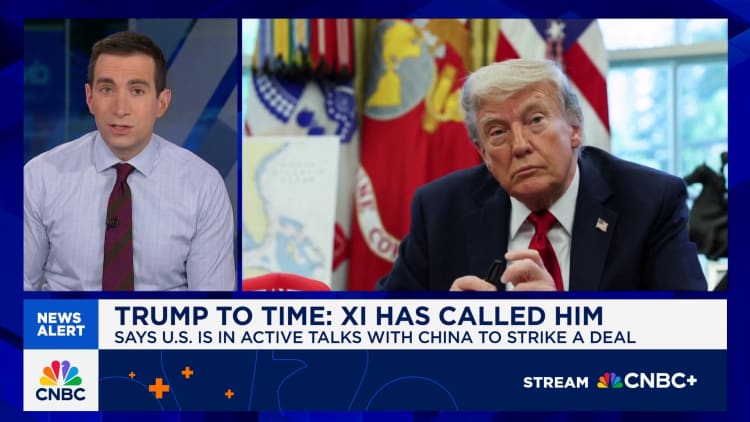
Trump insists bond market tumult didn’t influence tariff pause: ‘I wasn’t worried’

  • President Donald Trump denied that an aggressive bond market sell-off influenced his decision earlier this month to hold off on aggressive “reciprocal” tariffs against U.S. trading partners.
  • “No, it wasn’t for that reason,” Trump told Time magazine. “I’m doing that until we come up with the numbers that I want to come up with.”
US President Donald Trump speaks during a bilateral meeting with Prime Minister of Norway Jonas Gahr Store in the Oval Office of the White House in Washington, DC, on April 24, 2025.
Saul Loeb | Afp | Getty Images

President Donald Trump denied that an aggressive bond market sell-off influenced his decision earlier this month to hold off on aggressive “reciprocal” tariffs against U.S. trading partners.

“I wasn’t worried,” Trump said in a Time magazine interview during which he was asked about financial market tumult after his April 2 “liberation day” announcement.

In the decree, Trump slapped 10% across-the-board duties against all U.S. imports and released list of tariffs against dozens of other nations. The extra levies were based on trade deficits the U.S. had against the respective countries and raised fears about inflation, a potential recession and disruption of long-held trade agreements.

Markets recoiled following the release. Treasury yields initially headed lower but quickly snapped higher. The 10-year yield rose half a percentage point in just a few days, one of its quickest moves ever, as investors also ditched stocks and the U.S. dollar.

Ultimately, Trump issued a 90-day stay on the reciprocal tariffs to allow time for negotiation. But he said it wasn’t because of the market tumult.

“No, it wasn’t for that reason,” Trump told Time in the interview from Tuesday that was published Friday. “I’m doing that until we come up with the numbers that I want to come up with. I’ve met with a lot of countries. I’ve talked on the telephone. I don’t even want them to come in.”

Yields have since moved lower, with the 10-year most recently around 4.28%, about a quarter percentage point higher than its recent low. Trump had said when he made the decision to hold off that the bond market had gotten the “yips.”

“The bond market was getting the yips, but I wasn’t. Because I know what we have,” he said. “I know what we have, but I also know we won’t have it for long if we allowed four more years of the gross incompetence. This thing was just running — it was running as a free spirit. This was — this was the most incompetent president in history.”

Though negotiations over tariffs are ongoing, Trump added that he would consider it a “total victory” even if the U.S. has levies as high as 50% still in place a year from now.

Get Your Ticket to Pro LIVE

Join us at the New York Stock Exchange!
Uncertain markets? Gain an edge with 
CNBC Pro LIVE, an exclusive, inaugural event at the historic New York Stock Exchange.

In today’s dynamic financial landscape, access to expert insights is paramount. As a CNBC Pro subscriber, we invite you to join us for our first exclusive, in-person CNBC Pro LIVE event at the iconic NYSE on Thursday, June 12.

Join interactive Pro clinics led by our Pros Carter Worth, Dan Niles, and Dan Ives, with a special edition of Pro Talks with Tom Lee. You’ll also get the opportunity to network with CNBC experts, talent and other Pro subscribers during an exciting cocktail hour on the legendary trading floor. Tickets are limited!

Coinbase ends PayPal stablecoin fee as payment race heats up

  • Coinbase is removing fees for purchases of PayPal’s dollar-backed stablecoin
  • Coinbase and PayPal will collaborate on “stablecoin based solutions” for payments and commerce as well as potential use cases for PYUSD in decentralized finance.
  • Earlier this week, stablecoin titan Circle, which has a revenue agreement with Coinbase, debuted a payments network for financial institutions, challenging a major part of PayPal’s business.
Omar Marques | Lightrocket | Getty Images

Coinbase is removing fees for purchases of PayPal‘s stablecoin as part of a broader effort to increase the use of the coin, and an attempt to boost on-chain payment opportunities for consumers and institutional users. 

In a blog post Thursday, Coinbase said it aims “to accelerate the adoption, distribution, and utilization of the PayPal USD (PYUSD),” the U.S. dollar-pegged stablecoin that has lagged the market since it launched in 2023. With a market cap of only about $730 million, it PayPal USD controls less than 1% of the market for stablecoins tied to the dollar. Tether’s USDT and Circle’s USDC, dominate the market with 66.5% and 28.3% shares, respectively, according to CryptoQuant.

PayPal said the companies will also collaborate on “stablecoin based solutions” for “moving or managing money around the world, particularly in commerce,” as well as potential use cases for PYUSD in decentralized finance and other on-chain platforms.

“We are excited to drive new, exciting, and innovative use cases together with Coinbase and the entire cryptocurrency community, putting PYUSD at the center and driving further utility and adoption for digital currencies among developers, customers, and other users,” said Alex Chriss, PayPal president and CEO.

Stablecoin race

The race for payment stablecoins has been heating up on expectations that Congress will pass its first piece of crypto legislation, focused on stablecoins, in the third quarter. Historically, stablecoins are primarily used for trading and borrowing in the crypto market. More recently, stablecoins have become more appealing to institutions aiming to transfer value, particularly in dollars, across the globe more cheaply and efficiently outside the traditional financial system.

Earlier this week, USDC issuer Circle – which earlier this month filed to go publicdebuted a payments and remittance network aimed at financial institutions, challenging a major part of PayPal’s business. Ripple, the cross-border payments company and creator of the XRP cryptocurrency, launched its Ripple USD stablecoin (RLUSD) in December. 

PayPal’s two-sided network of more than 430 million consumers and merchants, “offers an unprecedented opportunity to increase stablecoin adoption globally,” Coinbase CEO Brian Armstrong said in a statement.

The crypto exchange operator has long set its sights on building a global economy that runs on cryptocurrency, using stablecoins as a means to diversify its revenue away from crypto trading. Coinbase has an agreement with Circle to share 50% of the revenue from the USDC stablecoin — and Armstrong said on the company’s most recent earnings call that it has a “stretch goal to make USDC the number 1 stablecoin.”

Crypto payments integration

Coinbase also has big ambitions for Base, its self-built network for Ethereum-compatible applications.

“We’re moving with haste to integrate crypto payments across our entire suite of products – we think that will be a big business over time – and we’re also solidifying Base as the number one chain … for start-ups to build on-chain,” Armstrong said on the earnings call.

“We can really fuel a lot of [stablecoin] growth by driving more partnerships with global and local players like Stripe and Yellow Card to do more global adoption,” he said on the same call with analysts and investors. “We’ve been adding a number of additional stablecoin trading pairs on our platform.”

As part of Thursday’s update, Coinbase users will also be able to redeem their PYUSD for dollars directly on the Coinbase platform, mirroring a USDC capability. Previously, users were required to move their PYUSD onto one of the PayPal platforms (PayPal, Venmo or Paxos) for redemption.

On Wednesday, PayPal introduced a 3.7% annual rewards rate on PYUSD balances, paid in more PYUSD, to boost adoption of the stablecoin.

Don’t miss these cryptocurrency insights from CNBC Pro:

Get Your Ticket to Pro LIVE
Join us at the New York Stock Exchange!

Uncertain markets? Gain an edge with CNBC Pro LIVE, an exclusive, inaugural event at the historic New York Stock Exchange.

In today’s dynamic financial landscape, access to expert insights is paramount. As a CNBC Pro subscriber, we invite you to join us for our first exclusive, in-person CNBC Pro LIVE event at the iconic NYSE on Thursday, June 12.

Join interactive Pro clinics led by our Pros Carter Worth, Dan Niles and Dan Ives, with a special edition of Pro Talks with Tom Lee. You’ll also get the opportunity to network with CNBC experts, talent and other Pro subscribers during an exciting cocktail hour on the legendary trading floor. Tickets are limited! 

Financial News

Daily News on Investing, Personal Finance, Markets, and more!

Financial News

Policy(Required)