An industry focused on death faces an existential crisis

  • The small, family run companies that make memorialization products like gravestones are facing dual challenges of tariffs and the growing preference for cremation.
  • Industry members are racing to adapt their businesses for these changes.
Strathroy | Istock | Getty Images

For nearly a century, John Dioguardi’s family has been making custom headstones and other memorial markers at Rome Monument in western Pennsylvania. Recently, he’s wondered how much time his business has left.

Dioguardi has been trying to adapt for more than a decade as the rise in cremations has hurt demand for the traditional burial markers his business has become synonymous with. This year, they’ve been dealt another blow: President Donald Trump‘s broad and steep tariffs, which have driven up costs for granite coming to American graveyards from around the world.

“I hope this all works out,” Dioguardi said. “I have no idea if it will.”

Rome Monument is part of a fabric of small, family run companies that make memorialization products facing the dual challenges of levies and cremations. Members of the blue-collar industry are in a fight to survive the social, political and economic shifts throwing their livelihoods into a state of disruption. 

‘A gut punch’

As Dioguardi watched the White House’s trade relationship with China fluctuate in recent months, he shifted two-thirds of his supply chain out of the Asian country. Most of it went to India, which has seen a relatively lower tariff rate for much of the year.

Craftsman working with compressed air at tombstone.
Kzenon | Istock | Getty Images

Dioguardi said bringing production to the U.S. would likely still be more expensive — even with new tariffs — due to higher labor costs. There’s another simple reason to look internationally: Some types of granite, like the multi-colored aurora found in India, come only from certain regions abroad.

“God gave the different parts of the world certain yummies,” Dioguardi said. “We have nothing like that in our country.”

Trump’s levies have altered the bottom lines in the industry, leaving businesses struggling with how to mitigate the additional costs.

In September 2024, Milano Monuments’ Jim Milano paid around 29% custom duties and taxes on a container coming in from China to his Cleveland-based business. A year later, that rate nearly doubled to 59%.

He’s talked with fellow memorial monument suppliers about adding an addendum to large orders telling buyers that the price could be later adjusted depending on if tariff rates move. For now, Milano said he and many peers are covering the tariffs out of pocket. He’s taken a pay cut as a result.

“There’s just so many crazy things that have come up in the last several years,” said Milano, whose business has been around for half of a century. “But this tariff thing has been like a gut punch.”

In recent months, Milano has found himself rushing to communicate with his ordering controller when he sees a headline about higher levies to ensure his containers hit the water before they would take effect.

Milano’s showroom and a memorial made by the business.
Courtesy: Jim Milano

Because the monument industry produces specialty products, it typically runs on lead times of several weeks or months. Importers can see significantly different levy rates if the White House adjusts its trade policy between when memorial products are first ordered by customers and the granite is actually shipped to the U.S.

“The uncertainty part is the hardest part we struggle with,” said Nathan Lange, president of Monument Builders of North America, a trade group representing hundreds of business with an average lifespan of more than seven decades.

Granite wholesalers have similarly needed to recalibrate their sales practices. At Kentucky-based PS Granite, operations chief Parthi Damo said they have delayed printing annual marketing materials for next year because they aren’t sure if tariff rates could change again, which would mean prices need to be adjusted. Damo said he may switch to making new documents every 60 days in case they need to keep updating prices.

Trump has argued that foreign countries or, in some cases, the companies importing their products should eat the tariffs. Data shows that businesses have largely absorbed cost increases in the short term.

blank stone gravestones and grave slabs in outdoor rural granite workshop.
Krimkate | Istock | Getty Images

But memorial creators said that their smaller margins and lower volumes make it tougher to cover the costs than it would be for large retailers. Because the businesses work with shoppers feeling emotions around death, industry members say they need to be especially sensitive when deciding whether to pass down costs to consumers.

“It’s hard,” Milano said. “We can’t go back to a grieving family and say, ‘You know what, we got to add an additional $1,000 to your family’s memorial to cover the tariffs.'”

A changing business

Even before the tariffs ramped up, the industry was busy reorienting itself for a future with fewer traditional burials.

The U.S.’ five-year cremation rate has surged to more than 60% in 2024, up from under 40% a decade and a half prior, according to the Cremation Association of North America. The organization expects more than two out of every three bodies will be cremated in an average year between 2025 and 2029.

Dioguardi has considered expanding the work radius around his Pennsylvania headquarters to buoy demand for grave site products, a broader trend which he said has prompted a wave of acquisitions within the industry. Dioguardi and his peers have emphasized alternatives like pedestal memorials for people remembering a cremated loved one.

He’s also worked on less conventional monuments: Dioguardi recently helped a cemetery install a “rainbow bridge” memorial that contains the ashes of pets.

“Cremation has changed our business tremendously,” Dioguardi said. “It’s created new opportunities. It has closed some other doors.”

Read more CNBC analysis on culture and the economy

If monument builders need to raise prices to account for tariffs, Milano worries it could push more consumers to opt for cremations. Beyond granite, he said levies on production materials have also taken a bite out of profits.

To be sure, Canada’s monument industry is feeling the heat more intensely with a five-year cremation average expected to surpass 80%. Dioguardi said granite manufacturers he worked with based in America’s northern neighbor haven’t increased prices due to tariffs given the shrinking domestic demand.

Dioguardi said his family operation should be on solid ground for another decade, but he questions if it can exist in its current state beyond that. At the same time, the 75-year-old knows that the fate of the business is married in part to whether people want their loved ones to have any sort of memorialization.

When comparing the pyramids the Egyptians opted for to today’s trend of having ashes spread somewhere without a marker, Dioguardi isn’t exactly confident. Part of the challenge, he and other industry members say, is proving that any sort of memorial product is worth the investment.

“Forget about making the pyramid,” Dioguardi said. “I don’t even know if they want a pebble.”

Get Morning Squawk directly to your inbox

Top Wall Street analysts recommend these dividend stocks for stable income

Cheng Xin | Getty Images News | Getty Images

November has been quite volatile, with the high valuations of artificial intelligence stocks and expectations of an interest rate cut in December impacting investor sentiment. Those seeking stable income in this uncertain backdrop can consider strengthening their portfolios by adding some dividend paying stocks.

Given the vast universe of dividend stocks, selecting the attractive ones could be challenging. In this regard, recommendations of top Wall Street analysts can help in decision-making, as their selection is based on in-depth analysis and thorough research.

Here are three dividend-paying stocks, highlighted by Wall Street’s top pros, as tracked by TipRanks, a platform that ranks analysts based on their past performance.

MPLX

MPLX (MPLX) is a master limited partnership that owns and operates midstream energy infrastructure and logistics assets and offers fuel distribution services. The company announced a third-quarter distribution of $1.0765 per common unit, reflecting a 12.5% year-over-year growth. At an annualized distribution of $4.31 per unit, MPLX offers a yield of 8.03%.

In a recent research report, RBC Capital analyst Elvira Scotto reiterated a buy rating on MPLX stock and raised the price target to $60 from $58. In comparison, TipRanks’ AI Analyst has an “outperform” rating on MPLX stock with a price target of $59.

“We continue to view MPLX as one of the most compelling income plays among large-cap MLPs with an attractive current yield of ~8% and plans to grow further,” said Scotto.

The top-rated analyst expects MPLX to deliver higher EBITDA (earnings before interest, taxes, depreciation, and amortization) growth from 2025 to 2026 compared to the prior year, driven by the scale-up of key projects like the Secretariat processing plant, the Titan sour gas treatment expansion, and the BANGL pipeline system.

Additionally, Scotto is optimistic about MPLX delivering mid-single-digit EBITDA growth beyond 2026, driven by contributions from the Eiger pipeline and its Gulf Coast fractionation and export facilities, along with potential mergers and acquisitions. While Scotto slightly reduced her 2025 and 2026 adjusted EBITDA estimates following the Q3 results, she continues to expect MPLX to achieve its mid-single-digit annual growth target.

Meanwhile, Scotto maintained her distribution per unit estimates and expects a 12.5% rise in 2026, followed by an incremental 12.5% hike in 2027, in line with the company’s distribution growth target.

Scotto ranks No. 333 among more than 10,100 analysts tracked by TipRanks. Her ratings have been profitable 64% of the time, delivering an average return of 11.4%.

ConocoPhillips

Another dividend-paying energy stock in this week’s list is ConocoPhillips (COP). Earlier this month, the oil and gas exploration and production company announced an 8% hike in its fourth-quarter dividend to $0.84 per share, payable on December 1. COP stock offers a dividend yield of 3.65%.

Following meetings with ConocoPhillips CEO Ryan Lance, Piper Sandler analyst Ryan Todd reiterated a buy rating on COP stock with a price target of $115. TipRanks’ AI Analyst is also bullish on ConocoPhillips stock and has assigned an “outperform” rating with a price target of $96.

“In terms of resource depth and diversity, we see COP as better positioned than any company in our coverage universe,” said Todd. He highlighted that ConocoPhillips has an industry-leading 22 years of drilling inventory, along with strong growth from LNG and U.S. conventional projects over the next four years. Todd contends that the market may still be underestimating COP’s growth prospects beyond 2030, with massive growth potential across U.S. L48, Alaska, Norway, and Surmont and Montney in Canada.

Todd is also impressed with ConocoPhillips’ cost reduction efforts. He highlighted that COP has reduced adjusted operating costs by 8% or $900 million since 2024, with the 2026 outlook indicating another $400 million in cost reductions.

Also, high-quality assets and lower costs are driving peer-leading free cash flow (FCF) growth for COP through 2030, with FCF/share estimated to grow at a compound annual growth rate (CAGR) of 12% from 2025 to 2030 at $70/bbl Brent, higher than the peer average of 8%. While investors worry that most growth comes after the contribution from the Willow project starts in 2029, Todd contends that near-term catalysts are likely underestimated. Todd estimates pre-Willow FCF/share to grow by 6% per year from 2025 to 2028, which still makes COP rank third among peers.

Todd ranks No. 716 among more than 10,100 analysts tracked by TipRanks. His ratings have been successful 58% of the time, delivering an average return of 8.4%. 

International Business Machines

Finally, we look at tech giant IBM (IBM), which returned $1.6 billion to shareholders in the third quarter via dividends. With a quarterly dividend of $1.68 per share (annualized dividend of $6.72 per share), IBM offers a yield of 2.22%.

Following a meeting with the management, Evercore analyst Amit Daryanani reiterated a buy rating on IBM stock with a price target of $315. TipRanks’ AI Analyst has an “outperform” rating on IBM stock with a price target of $349.

Among the key takeaways, Daryanani highlighted that despite the uncertainties related to tariffs, interest rates, inflation, and geopolitics, management is optimistic about the broader macro backdrop and expects tech spending to be 2 to 3 points ahead of GDP growth. Over the medium term, IBM expects to sustain mid-single digit annual growth in its top line, driven by about 10% growth in the software business, better than-market growth in Consulting, and 1% to 3% increase in the Infrastructure segment revenue.

The top-rated analyst also noted IBM’s business transformation over the past five years, including the Red Hat acquisition and divestiture of GTS and other non-core assets. This transformation has helped IBM grow consistently with solid free cash flow and expansion in pre-tax income margin.

Furthermore, Daryanani also discussed management’s optimism about enterprise AI and a massive opportunity in the quantum space. “We see multiple vectors for growth over the medium term,” concluded Daryanani.

Daryanani ranks No. 187 among more than 10,100 analysts tracked by TipRanks. His ratings have been profitable 61% of the time, delivering an average return of 16.5%.

‘Untold story’ of Charlie Munger’s last years

Buffett Watch
Charlie Munger at Berkshire Hathaway’s annual meeting in Los Angeles California. May 1, 2021.
Gerard Miller

(This is the Warren Buffett Watch newsletter, news and analysis on all things Warren Buffett and Berkshire Hathaway. You can sign up here to receive it every Friday evening in your inbox.)

‘He never stopped learning’

In an “exclusive” article headlined “The Untold Story of Charlie Munger’s Final Years,” The Wall Street Journal’s Gregory Zuckerman reveals the “Berkshire vice chair was making gutsy investments, forging unlikely friendships and facing new challenges to the end.”

Munger died two years ago on Nov. 28, 2023, at the age of 99, just a bit over a month shy of his 100th birthday.

The Journal writes, “Friends and family say Munger’s eventful last period offers lessons for investors—and a blueprint for how to age with grace, equanimity and purpose.”

It quotes his stepson, Hal Borthwick as saying, “To the day he died, his mind was running. He never stopped learning.”

He also never stopped looking for new investments, leafing through data on publicly traded companies in green Value Line binders.

He went against conventional wisdom in 2023 by investing in two companies involved with coal, which he believed would still be needed due to rising demand for energy, despite environmental concerns.

Borthwick tells The Journal, “He read an article that said coal was down the chute. He said, ‘Horse feathers.'”

Friends say he had paper gains of more than $50 million on coal miner Consol Energy and Alpha Metallurgical Resources, which provides coal for steel production.

(Consol completed a merger with Arch Resources early this year to form Core Natural Resources.)

Coal is excavated.
Jim Urquhart | Reuters

Munger also invested in real estate with an unusual partner.

In 2005, Munger started mentoring a 17-year-old neighbor whose ADHD was contributing to his difficulties in school.

Avi Mayer, now 37, tells the WSJ“He listened to my problems and talked about life principles and personal values.”

“I watched him in action and learned from him, and he handed me books once in a while.”

Later, Munger backed a real estate company Mayer and a childhood friend established that has become one of the largest owners of low-rise “garden” apartments in California with around $3 billion in holdings.

Munger “remained involved until the end,” helping to negotiate a building purchase that closed days after he died.

CNBC Special Podcast: Charlie Munger – A Life of Wit and Wisdom

The Journal says that as Munger grew older, he spent more time with friends, including a regular Tuesday morning country club breakfast with business associates that could go on for hours.

He became less “cranky and acerbic,” telling the group, “At my age, you make new friends, or you don’t have any friends.”

And after many years, Munger’s family gave up on trying to keep him on a healthy diet.

The wife of his grandson reports Munger’s last food delivery was a whole Korean fired chicken, kimchi fried rice, and waffle fries.

A friend relates that even as Munger joked that he longed to be “86 again,” he remained optimistic about Berkshire’s future.

“Once it’s built, you don’t need to be Warren and Charlie. What we have is a framework for looking at investments.”

BUFFETT AROUND THE INTERNET

Some links may require a subscription:

HIGHLIGHTS FROM THE ARCHIVE

Munger: ‘A life properly lived is just learn, learn, learn’ (2017)

Charlie Munger explains why making mistakes is vital to success.

AUDIENCE MEMBER: With all due respect, Mr. Buffett, this question is for Mr. Munger. (Laughter)

In your career of thousands of negotiations and business dealings, could you describe for the crowd which one sticks out in your mind as your favorite or is otherwise noteworthy?

CHARLIE MUNGER: Well, I don’t think I’ve got a favorite. But the one that probably did us the most good as a learning experience was See’s Candy.

It’s just the power of the brand, the unending flow of ever-increasing money with no work. (Laughter)

AUDIENCE MEMBER: Sounds nice. (Laughter)

CHARLIE MUNGER: It was. And I’m not sure we would have bought the Coca-Cola if we hadn’t bought the See’s.

I think that a life properly lived is just learn, learn, learn all the time. And I think Berkshire’s gained enormously from these investment decisions by learning through a long, long period.

Every time you appoint a new person that’s never had big capital allocation experience, it’s like rolling the dice. And I think we’re way better off having done it so long. And —

But the decisions blend, and the one feature that comes through is the continuous learning. If we had not kept learning, you wouldn’t even be here.

You’d be alive probably, but not here. (Laughter)

WARREN BUFFETT: There’s nothing like the pain of being in a lousy business — (laughs) — to make you appreciate a good one.

CHARLIE MUNGER: Well, there’s nothing like getting into a really good one. That’s a very pleasant experience and it’s a learning experience.

I have a friend who says, “The first rule of fishing is to fish where the fish are. And the second rule of fishing is to never forget the first rule.” (Laughter)

And we’ve gotten good at fishing where the fish are.

BERKSHIRE STOCK WATCH

Four weeks:

12 months:

BERKSHIRE’S TOP EQUITY HOLDINGS – Nov. 28, 2025

Berkshire’s top holdings of disclosed publicly traded stocks in the U.S. and Japan, by market value, based on the latest closing prices.

Holdings are as of September 30, 2025, as reported in Berkshire Hathaway’s 13F filing on November 14, 2025, except for:

The full list of holdings and current market values is available from CNBC.com’s Berkshire Hathaway Portfolio Tracker.

QUESTIONS OR COMMENTS

Please send any questions or comments about the newsletter to me at alex.crippen@nbcuni.com. (Sorry, but we don’t forward questions or comments to Buffett himself.)

If you aren’t already subscribed to this newsletter, you can sign up here.

Also, Buffett’s annual letters to shareholders are highly recommended reading. There are collected here on Berkshire’s website.

— Alex Crippen, Editor, Warren Buffett Watch

Michael Burry’s next ‘Big Short’: An inside look at his analysis showing AI is a bubble

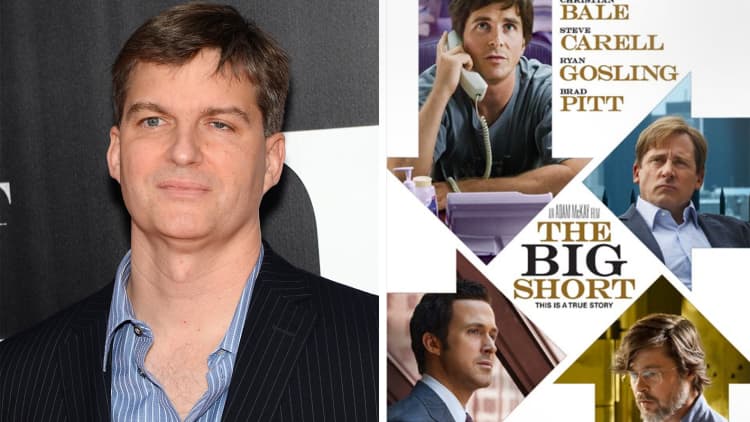
Michael Burry — the investor known for predicting the housing meltdown ahead of 2008 — has turned his attention to one of the market’s most beloved themes: artificial intelligence.

Burry recently deregistered his hedge-fund firm, Scion Asset Management, removing it from routine regulatory disclosures. But he remains actively investing, and he is doubling down on what he sees as the next major mispricing in markets.

Central to that view is Phil Clifton, Scion’s former associate portfolio manager, whose research underpins the skepticism. Clifton argues that while generative AI adoption is accelerating, the economics behind the industry’s massive infrastructure buildout have yet to justify the cost.

In his farewell letter to Scion investors in late October, Burry called Clifton “the most prodigious thinker” he’s ever encountered. CNBC obtained several of Clifton’s research notes from earlier this year, written before he launched his own firm, Pomerium Capital, that help outline Scion’s bearish thesis on AI.

The investment world is “expecting far more economic importance out of this technology than is likely to be provided,” Clifton wrote. “Just because a technology is good for society or revolutionizes the world doesn’t mean that it’s a good business proposition.”

Low margins

On the surface, AI usage appears ubiquitous. More than 60% of U.S. adults say they interact with AI at least several times a week, according to Pew Research Center. Yet Clifton said the economics on the demand side are “surprisingly small.”

OpenAI — market leader and cultural phenomenon — is set to surpass $20 billion in annualized revenue this year, but that figure is tiny compared with the size of the AI build-out. Hyperscalers have quadrupled their capex spend in recent years to almost $400 billion annually, with expectations of $3 trillion over the next five years, according to Man Group.

“We assume other generative AI services in aggregate are insufficient to justify the sums being spent on infrastructure,” Clifton wrote.

History’s warnings

Scion sees a clear historical parallel with the early-2000s telecom boom, when heavy investment in fiber-optic networks far outpaced actual usage. U.S. capacity utilization fell to about 5%, and wholesale telecom pricing collapsed roughly 70% in a single year, Scion noted.

Clifton argues the cloud giants are now in a comparable race, expanding AI infrastructure on the assumption that future demand will catch up eventually. But if mass AI adoption takes longer than expected, the economics on these massive data center deals could become untenable.

Some Big Tech companies are starting to wobble on commitments already, he noted. Microsoft has canceled data center projects set to use 2 gigawatts of electricity in the U.S. and Europe, citing an oversupply. Alibaba’s chairman has warned a bubble is forming in AI infrastructure.

The Nvidia Exposure

No company has benefited more from AI spending than Nvidia. The stock has surged alongside unprecedented GPU orders from cloud providers. But Scion questions whether those customers will ever generate economic returns on that investment.

Stock chart icon

hide content
Nvidia one year

A key element here is depreciation policy. Tech giants have lengthened server lifespans on the books to six years. Yet Nvidia’s product cycles run every year now, making older chips functionally obsolete and less energy-efficient, long before they’ve been written down, Scion claims.

Nvidia has pushed back at this claim, saying its hardware remains productive far longer than critics say, thanks to efficiencies driven by the company’s CUDA software system.

Still, Burry and other critics are seizing on a contradiction. Nvidia says the newest chips are superior in performance, efficiency and capability, at the same time as it promises that older chips remain economically viable. One of those defenses, they say, has to give.

Burry has launched a new Substack newsletter to lay out his bearish thesis on AI. Whether generative AI ultimately proves to be a bubble remains to be seen, but for now, Burry is again positioning himself on the cautious side of a fast-moving story.

Top Wall Street analysts favor these 3 stocks for solid upside potential

Signage at the Microsoft campus in Mountain View, California, US, on Thursday, Oct. 23, 2025.
Benjamin Fanjoy | Bloomberg | Getty Images

Concerns about the steep valuations of artificial intelligence (AI) stocks and a questionable outlook for an interest rate cut in December weighed on investor sentiment in recent trading sessions. For now, however, Nvidia‘s solid earnings last week seemed to undermine the idea that everything tied to AI investment is in a bubble.

Investors looking to capitalize on the recent selloff and pick up some attractive stocks for the long term can track the recommendations of top Wall Street analysts. These experts can help provide key insights into a company’s growth potential.

Here are three stocks favored by the Street’s top pros, according to TipRanks, a platform that ranks analysts based on their past performance.

Microsoft

Windows and Xbox owner Microsoft (MSFT) is viewed as one of the major beneficiaries of the AI boom. Last month, the company reported better-than-expected results in its fiscal first quarter, with revenue from the Azure cloud business growing by 40%.

Recently, Baird analyst William Power initiated coverage on Microsoft with a buy rating and a price target of $600. TipRanks’ AI Analyst is also optimistic on MSFT, giving it an “outperform” rating and a price target of $628.

“Microsoft is leading the AI revolution with infrastructure and applications, aided by its OpenAI relationship, providing an end-to-end AI platform for enterprises and consumers alike,” said Power, explaining his optimism.

Power sees MSFT’s partnership with ChatGPT parent OpenAI as a key differentiator, helping it run AI at scale and speed. The 5-star analyst said that after a commitment to invest $13 billion, Microsoft recently announced an incremental $250 billion Azure investment over several years.

The analyst discussed the impressive growth in MSFT’s total revenue and Azure business in the September quarter, with the cloud business now constituting 60% of the overall top line. Power also highlighted the strength in Microsoft’s core applications, including Microsoft 365, LinkedIn and Dynamics. He noted that MSFT’s revenue growth in Q1 FY26 was accompanied by a solid operating margin of 49% and free cash flow margin of 33%. Microsoft’s strong margins are ensuring continued double-digit EPS growth, he said.

Power believes in Microsoft’s near- and long-term potential, despite any immediate pressure stemming from AI capital spending concerns.

Power ranks No. 287 among more than 10,100 analysts tracked by TipRanks. His ratings have been successful 57% of the time, delivering an average return of 17%. See Microsoft Ownership Structure on TipRanks.

Booking Holdings

Online travel agent (OTA) Booking Holdings (BKNG) is another pick this week. The Priceline and Kayak owner posted impressive third-quarter results, with double-digit gains in gross bookings and revenue.

Impressed by the Q3 performance and attractive valuation, Wedbush analyst Scott Devitt upgraded BKNG to buy from hold with a price targe of $6,000. By comparison, TipRanks’ AI Analyst has a “neutral” rating on Booking Holdings with a price target of $5,406.

“Booking remains the best-positioned OTA in our view,” benefiting from several positives, from the company’s scale and diversification to solid liquidity to free cash flow conversion, Devitt said.

The top-rated analyst also noted management’s impressive history of successfully executing major strategic initiatives. Devitt highlighted Booking Holdings’ widening market share in alternative lodging while optimizing costs and driving efficiencies. The company’s cost savings are supporting reinvestment in growth initiatives to achieve longer-term targets, he said.

Additionally, Devitt discussed Booking’s impressive growth across key metrics in the third quarter amid better-than-anticipated global travel demand. Third-quarter gross bookings growth of 14% surpassed management’s guidance by 400 basis points, the analyst said. ASs a result, Devitt raised his 2025 gross bookings growth estimate by 100 basis points from his prior forecast, to 11.5%. Further, he expects BKNG to report adjusted EBITDA of $9.8 billion, reflecting year-over-year margin expansion of about 180 basis points.

Devitt ranks No. 660 among more than 10,100 analysts tracked by TipRanks. His ratings have been profitable 50% of the time, delivering an average return of 12.3%. See Booking Holdings Financials on TipRanks. 

DoorDash

Devitt also upgraded his rating for food delivery platform DoorDash (DASH) to buy from hold with a price target of $260. TipRanks’ AI Analyst rates DoorDash “neutral” with a price target of $211.

DASH shares took a hit when the company announced mixed third-quarter results and said it expects to spend “several hundred million dollars” on new initiatives and development in 2026.

Devitt believes that the pullback in DASH shares presents an attractive risk/reward opportunity, with the stock now trading at about 17.7x his 2027 adjusted EBITDA estimate. The Wedbush analyst noted that the post earnings selloff was mainly due to concerns about the level of capital spending and pressured profit margins.

Devitt admits that the higher level of spending will hurt near-term margins, but argues such investments in growth initiatives are warranted given that they’ll expand DASH’s addressable market and bolster its product offerings.

Specifically, Devitt highlighted management’s plans to direct incremental investments toward three key areas: “(1) creating a cohesive global tech platform, (2) building new verticals and products, and (3) scaling geographic expansion.”

Overall, Devitt is bullish on DoorDash, believing it has held a dominant position in the U.S. food delivery sector. Moreover, he noted the company’s solid execution across strategic initiatives as management pushes for long-term sustainable growth. See DoorDash Hedge Fund Activity on TipRanks.

Does Berkshire’s big tech bet signal a new risk tolerance in Omaha?

Buffett Watch

(This is the Warren Buffett Watch newsletter, news and analysis on all things Warren Buffett and Berkshire Hathaway. You can sign up here to receive it every Friday evening in your inbox.)

Just one week after Berkshire Hathaway’s revelation last Friday that it purchased 17.8 million Class A shares of Google’s parent, Alphabet, in the third quarter (July-September), that position has increased in market value by $415 million to almost $5.35 billion.

GOOGL gained 8.4% this week while its biggest tech rivals fell significantly as Nvidia’s strong earnings failed to overcome fears of an “AI bubble.”

Alphabet shares started the week with a 3.1% boost on Monday, apparently in reaction to the news of Berkshire’s purchase.

Wednesday’s release of Google’s new Gemini 3 AI model, which is receiving positive reviews, gave the stock another push higher.

(Google’s AI momentum is reportedly beginning to worry Sam Altman at OpenAI.)

While the full evaluation of the move obviously can’t be made until months or years from now, someone in Omaha is probably smiling right now.

Warren Buffett is getting the credit in a lot of headlines, as he usually does, with many publications assuming he is responsible for everything Berkshire does.

We know that’s not the case, however, since portfolio managers Ted Weschler and Todd Combs are able to act as “free agents.”

As I noted last week, Alphabet doesn’t feel like Buffett’s “kind of stock.”

CNBC.com’s Yun Li writes the investment “likely” was the work of Weschler or Coombs, noting they have been behind many of Berkshire’s “tech-leaning” investments, including its Amazon stake, now worth $2.2 billion.

(Even before that position was first disclosed in 2019, Buffett went out of his way to tell CNBC’s Becky Quick it wasn’t his decision and “no personality change has taken place.”)

Warren Buffett and Greg Abel walkthrough the Berkshire Hathaway Annual Shareholders Meeting in Omaha, Nebraska on May 3, 2025.
David A. Grogen | CNBC

Bloomberg Opinion columnist Nir Kaissar recalls Buffett’s famous refusal to invest in a business he doesn’t fully understand, which kept him out of the internet bubble in the late 1990s, calling AI “orders of magnitude more complicated than selling books or pet food online.”

He adds, “Combine opaque technology with premium valuations, and you’re sure to lose Buffett.”

Kaissar says he has the impression CEO-designate Greg Abel may have just shown us a “very different approach than Berkshire’s shareholders are used to – notably, a new willingness to pay more now for potentially higher growth down the road, a chance Buffett rarely took, if ever.”

Berkshire has not responded to my midday email asking for clarification on who decided to make the Alphabet purchase. The company almost never reveals who bought what.

BUFFETT AROUND THE INTERNET

Some links may require a subscription:

HIGHLIGHTS FROM THE ARCHIVE

Buffett on what ‘understanding’ a business means (2000)

Warren Buffett explains that when he says he doesn’t understand tech stocks, he means he doesn’t understand where the tech industry will be in ten years.

AUDIENCE MEMBER: In terms of these tech stocks, you say that you don’t understand them… I can’t imagine you not understanding something.

WARREN BUFFETT: Oh, we understand the product. We understand what it does for people. We just don’t know the economics of it 10 years from now.

That, I mean, you can understand all kinds — you can understand steel. You can understand home building. But if you look at a home builder and try and think where it’s going to be in five or 10 years, the economics of it, that’s another question.

I mean, it’s not a question of understanding the product they turn out or the means they use to distribute it, all of those sort of things. It’s the predictability of the economics of the situation 10 years out. And that — that’s our problem.

BERKSHIRE STOCK WATCH

Four weeks

Twelve months

BRK.A stock price: $755,320.00

BRK.B stock price: $504.04

BRK.B P/E (TTM): 16.12

Berkshire market capitalization: $1,085,818,736,612

Berkshire Cash as of September 30: $381.7 billion (Up 10.9% from June 30

Excluding Rail Cash and Subtracting T-Bills Payable: $354.3 billion (Up 4.3% from June 30)

No Berkshire stock repurchases since May 2024.

(All figures are as of the date of publication, unless otherwise indicated)

BERKSHIRE’S TOP EQUITY HOLDINGS – Nov. 21, 2025

Berkshire’s top holdings of disclosed publicly traded stocks in the U.S. and Japan, by market value, based on today’s closing prices.

Holdings are as of September 30, 2025, as reported in Berkshire Hathaway’s 13F filing on November 14, 2025, except for:

The full list of holdings and current market values is available from CNBC.com’s Berkshire Hathaway Portfolio Tracker.

QUESTIONS OR COMMENTS

Please send any questions or comments about the newsletter to me at alex.crippen@nbcuni.com. (Sorry, but we don’t forward questions or comments to Buffett himself.)

If you aren’t already subscribed to this newsletter, you can sign up here.

Also, Buffett’s annual letters to shareholders are highly recommended reading. There are collected here on Berkshire’s website.

— Alex Crippen, Editor, Warren Buffett Watch

Robinhood shares head for brutal weekly loss as bitcoin, AI stocks are hit hard

Piotr Swat | SOPA Images | Lightrocket | Getty Images

Robinhood shares are heading for a brutal weekly loss as the once-red-hot trades in bitcoin and AI stocks that powered its growth lose momentum.

Shares of the trading platform slid 10.1% on Thursday, extending a sharp decline that has pushed the stock down 13.3% for the week. The slump has erased more than 27% of Robinhood’s value so far in November, a dramatic pullback after a strong run earlier this year. The stock is slightly higher in premarket trading Friday.

Loading chart…

The latest slide reflects a sharp reversal in the risk-hungry investment activity Robinhood relies on. The company’s core business is closely tied to retail investors pouring into speculative corners of the market, particularly cryptocurrency and buzzy artificial intelligence stocks stocks.

Those trades helped fuel a resurgence in Robinhood revenue and user engagement earlier this year as bitcoin hit fresh highs and anything tied to artificial intelligence soared. But the recent rout in crypto and high-growth tech stock leaders is exposing Robinhood’s sensitivity to sentiment swings.

Bitcoin has fallen about 12% this week alone, hitting a fresh low of $80,548.09 on Friday, the lowest level since April. Shares of AI enabler Nvidia are down 5% this week.

Muddy Waters Capital’s Carson Block makes rare long call in Canadian miner Snowline Gold

  • Snowline, valued at about C$2.1 billion, has made what Block called a “first-of-its-kind” discovery in Canada’s Yukon territory.
  • “This is one of the few assets globally that can move the needle for a mid- or large-cap gold miner,” Block’s presentation materials stated, calling the firm “an elephant.”
Carson Block, Muddy Waters Capital, at CNBC’s Delivering Alpha, Sept. 28, 2022.
Scott Mlyn | CNBC

Muddy Waters Capital’s Carson Block, best known for his short-selling campaigns, took an unusually bullish stance at the Sohn London Investment Conference on Wednesday, pitching junior miner Snowline Gold as a top takeover candidate in the mining sector.

Snowline, valued at about C$2.1 billion, has made what Block called a “first-of-its-kind” discovery in Canada’s Yukon territory, a region with limited historical production but vast geological potential, he said. The company controls a large land package in an emerging district that Block said could eventually host a new multi-deposit gold camp.

The focus is the Rogue project’s Valley deposit, which holds an estimated 8 million ounces of gold in the measured and indicated category at an average grade of 1.21 grams per ton. While Snowline has other exploration targets, Block said Valley is likely the asset that will attract interest from major producers facing declining reserves.

“This is one of the few assets globally that can move the needle for a mid- or large-cap gold miner,” Block’s presentation materials stated, calling the firm “an elephant.”

Block expects Snowline to be acquired within the next three years. If a transaction comes in the next 12 months, he sees a potential valuation of C$4 billion to C$6 billion, and suggested the price could rise further as drilling continues.

“The longer it takes for this asset to be bought, the more expensive it will be,” he said.

Snowline shares have surged more than tenfold since early 2022, when the company drilled its initial discovery hole at Valley. Still, Block argued the stock doesn’t yet reflect the strategic value of the resource in a mining industry that has seen increasing consolidation.

The Canadian-listed stock popped more than 6% after Block made his call.

Carson Block will be on “The Exchange” with CNBC’s Jon Fortt at 1 p.m. ET.

Top Wall Street analysts are bullish on these 3 dividend stocks

Pavlo Gonchar | SOPA Images | Lightrocket | Getty Images

The U.S. stock market continues to be volatile due to concerns about valuations of tech and artificial intelligence stocks and an uncertain macroeconomic backdrop. Given this scenario, investors seeking passive income can add some dividend stocks to their portfolios.

At the same time, investors might find it challenging to pick the right stock from the vast universe of dividend-paying companies. In this regard, recommendations of top Wall Street analysts can help investors select attractive dividend stocks with strong fundamentals. These experts assign their ratings after in-depth analysis of a company’s financials and growth potential.

Here are three dividend-paying stocks, highlighted by Wall Street’s top pros, as tracked by TipRanks, a platform that ranks analysts based on their past performance.

Diamondback Energy

First on this week’s list is Diamondback Energy (FANG), an independent energy company focused on onshore oil and natural gas reserves in the Permian Basin in West Texas. The company recently reported better-than-expected third-quarter results. Diamondback returned $892 million of capital to shareholders (50% of adjusted free cash flow) via share repurchases and dividends in the third quarter. It declared a base cash dividend of $1.00 per share for the period, payable on Nov. 20. At an annualized dividend of $4 per share, FANG offers a yield of 2.8%.

In reaction to the third-quarter print, RBC Capital analyst Scott Hanold reiterated a buy rating on Diamondback stock with a price forecast of $173. Interestingly, TipRanks’ AI Analyst is also bullish on FANG stock with an “outperform” rating and a price target of $156.

Hanold continues to view Diamondback as a core long-term holding in the energy space, given that it stands out with one of the top core inventory durations in the Permian Basin and the lowest breakeven levels of $37 to $38 per barrel (WTI, unhedged, and inclusive of capitalized costs).

“FANG remains among the most resilient E&P, with leading edge operational, capital, and production performance,” said Hanold.

The 5-star analyst expects Diamondback to gain from the renewed gas-fired power prospects in the Permian Basin, supported by its strong footprint and natural gas exposure. Hanold noted that FANG is a part of the Competitive Power Ventures project, where the company has agreed to supply 50 million cubic feet per day to a 1,350-megawatt combined cycle gas turbine. He added that management is optimistic about securing more power/data center deals.

Hanold ranks No. 69 among more than 10,000 analysts tracked by TipRanks. His ratings have been profitable 64% of the time, delivering an average return of 26.2%.

Permian Resources

Hanold is also bullish on another dividend-paying energy company, Permian Resources (PR). The independent oil and gas company delivered upbeat earnings for the third quarter, citing its dominance in the Delaware Basin. Permian declared a base dividend of 15 cents per share for the fourth quarter, payable on Dec. 31. At an annualized dividend of 60 cents per share, PR stock offers a yield of 4.5%.

Impressed by the results, Hanold reaffirmed a buy rating on Permian Resources stock with a price target of $18. TipRanks’ AI Analyst has an “outperform” rating on PR stock with a price target of $14.50.

The top-rated analyst stated that continued “proficient operational and financial performance has become a hallmark” for Permian, which he believes the company can continue in the years ahead. Hanold highlighted PR’s robust operational performance that reflected a solid growth in organic production with no increase in spending.

Hanold noted that the implied fourth-quarter oil guidance is up 2% to 3% from the prior consensus forecast. Accordingly, he now expects 188 Mb/d (oil) for the fourth quarter, which is 3% above his previous estimate. The analyst added that management seems confident about keeping capital spending steady at current levels while generating solid free cash flow, with dividend payment supported even at around $40 per barrel.

Additionally, Hanold sees the possibility of an increase in Permian’s fixed dividend in early 2026. He also expects the company to make opportunistic stock buybacks. The analyst expects Permian to use the remaining free cash flow to further bolster an already solid balance sheet (0.8x leverage ratios).

Duke Energy

Finally, let’s look at Duke Energy (DUK), an energy holding company that generates and distributes electricity and natural gas. The company recently reported better-than-anticipated adjusted earnings per share for the third quarter, citing the implementation of new rates and riders, along with increased retail sales volumes.

Last month, Duke Energy declared a quarterly cash dividend of $1.065 per share, payable on Dec. 16. At an annualized dividend of $4.26 per share, DUK stock offers a yield of 3.4%.

Noting the third-quarter performance, Evercore analyst Nicholas Amicucci reaffirmed a buy rating on DUK stock with a price target of $143. In comparison, TipRanks’ AI Analyst has a “neutral” rating on Duke Energy stock with a price target of $135.

Amicucci noted Duke Energy’s strong third-quarter results and an early look into its updated capital plan expected to be announced in February 2026. Notably, the company mentioned a $95 billion to $105 billion plan for 2026 to 2030, with an equity funding target of 30% to 50%.

Furthermore, the 5-star analyst highlighted that management sees continued momentum into the next year, expecting to turn large load economic opportunities into tangible projects with signed energy service agreements. Amicucci added that Duke Energy is well-positioned to add at least 8.5 gigawatt of new dispatchable generation across its service areas, including about 1 GW of uprates and 7.5 GW of new natural gas assets.

Overall, Amicucci remains bullish on Duke’s future growth, driven by its premium service areas, solid pipeline of new projects, and the fact that about 90% of its electric capital spending qualifies for efficient-recovery mechanisms, “alleviating seemingly all regulatory lag.”

Amicucci ranks No. 693 among more than 10,000 analysts tracked by TipRanks. His ratings have been successful 79% of the time, delivering an average return of 48.1 %.

Berkshire Hathaway’s surprising new tech stake

Buffett Watch

As Warren Buffett gets closer to stepping down as CEO at the end of next month, he told shareholders he will be “going quiet,” but only “sort of.”

More on his Thanksgiving letter, which looks like it could become a substantial annual tradition, below.

First:

A surprising stake

There was a notable surprise in Berkshire Hathaway’s end-of-Q3 equity portfolio snapshot, released after Friday’s closing bell.

Someone in Omaha purchased more than 17.8 million Class A shares of Google’s parent, Alphabet.

They are currently valued at $4.9 billion, making them the biggest Q3 addition in dollar terms.

The news sent the stock 3.5% higher in after-hours trading.

At this point, we don’t know who made the call.

Buffett has typically made purchases of this size, but it doesn’t feel like his kind of stock.

It is up 51.3% year-to-date, including a 37% climb in the third quarter.

Also, he has traditionally shied away from tech stocks. (He considers Apple a consumer products company.)

At the 2019 Berkshire meeting, Buffett and Charlie Munger lamented that they had “screwed up” by not buying Alphabet earlier because they “could see in our own operations how well that Google advertising was working. And we just sat there sucking our thumbs.”

On that day, the shares were going for around $59, and they gave no indication there were prepared to rectify their error.

Incoming CEO Greg Abel isn’t encumbered by that history, and Buffett has been handing over many of his duties to him.

Or it could be one or both of the portfolio managers, Ted Weschler and Todd Combs.

Stay tuned.

Not so surprising selling

Alphabet was by far the biggest Q3 addition at $4.3 billion, based on the September 30 price, well ahead of a $1.2 billion increase for Chubb.

The biggest decreases, Apple and Bank of America, had been foreshadowed by hints in Berkshire’s 10-Q almost two weeks ago.

(The Verisign reduction was disclosed in early August.)

Berkshire’s Apple position was cut by almost 15%, or $10.6 billion, to around 238 million shares.

It’s down 74% since Berkshire began selling two years ago.

But Apple remains Berkshire’s largest equity position at $64.9 billion, which is 21% of the portfolio’s current value.

The Bank of America reduction was smaller, just 6.1%, or around $1.9 billion.

The remaining 238 million shares are currently valued at $29.9 billion, Berkshire’s third largest position, making up almost 10% of the portfolio’s current value.

It’s been cut by 43% since early last year.

A complete listing of Berkshire’s Q3 13F appears below. 

‘Sort of’

Many of the headlines on news stories about Warren Buffett’s Thanksgiving letter on Monday included this quotation: “I’m ‘going quiet.'”

But there was another phrase that followed that line near the top of the letter, getting its own paragraph: “Sort of.”

Warren Buffett speaks during the Berkshire Hathaway Annual Shareholders Meeting in Omaha, Nebraska on May 3, 2025.

Starting next year, Greg Abel, “a great manager, a tireless worker and an honest communicator,” will be writing the annual meeting to shareholders and answering questions at the annual meeting. Buffett plans to sit on the arena floor with the other directors.

But he wrote, “I will continue talking to you and my children about Berkshire via my annual Thanksgiving message.”

This year’s letter ran a bit more than seven pages, compared to around three pages last year, and sounded a lot like the annual letters he’s been writing for decades, with sections on the importance of luck, getting old, his admiration for Berkshire shareholders, the many friends he has made over the years in Omaha, and his complete confidence in Abel’s ability to run the company.

He also revealed that while hospitalized as a child, he received a fingerprint kit and proceeded to take prints from the nuns caring for him, because “someday a nun would go bad, and the FBI would find that they had neglected to fingerprint nuns.”

(CNBC.com has this summary)

The newsiest bit was his plan to “step up the pace of lifetime gifts” to the three foundations run by his children, who, like Buffett, are getting older. (They are 72,70, and 67.)

He wants to “improve the probability that they will dispose of what will essentially be my entire estate before alternate trustees replace them.”

But he also “wants to keep a significant amount of ‘A’ shares until Berkshire shareholders develop the comfort with Greg that Charlie and I long enjoyed.”

The result, at least for this year, is an increase in the Class B shares (converted from Class A) going to each foundation to 400,000 shares from 300,000 shares last year.

Including a fourth unchanged donation to a foundation named after his late wife, the total as of the date of the gifts increased 17% to $1.3 billion.

Playing a more minor role: Class B shares are up 4% since last year’s gifts.

The entire U.S portfolio as of September 30

BUFFETT AROUND THE INTERNET

Some links may require a subscription:

BERKSHIRE STOCK WATCH

Four weeks

Twelve months

BERKSHIRE’S TOP U.S. HOLDINGS – Nov. 14, 2025

Berkshire’s top holdings of disclosed publicly traded stocks in the U.S., Japan, and Hong Kong, by market value, based on today’s closing prices.

Holdings are as of September 30, 2025 as reported in Berkshire Hathaway’s 13F filing on November 14, 2025, except for:

The full list of holdings and current market values is available from CNBC.com’s Berkshire Hathaway Portfolio Tracker.

QUESTIONS OR COMMENTS

Please send any questions or comments about the newsletter to me at alex.crippen@nbcuni.com. (Sorry, but we don’t forward questions or comments to Buffett himself.)

If you aren’t already subscribed to this newsletter, you can sign up here.

Also, Buffett’s annual letters to shareholders are highly recommended reading. There are collected here on Berkshire’s website.

— Alex Crippen, Editor, Warren Buffett Watch

Financial News

Daily News on Investing, Personal Finance, Markets, and more!

Financial News

Policy(Required)