We want to hear from readers who have stories to share about the effects of increasing costs and a changing economy. If you’d like to share your experience, write to readerstories@marketwatch.com. Please include your name and the best way to reach you. A reporter may be in touch.
A bank accused of redlining in the Columbus, Ohio, area has agreed to a $9 million settlement over allegations that it concentrated branches and mortgage lenders in majority-white neighborhoods, the Justice Department said Tuesday.
Park National Bank, headquartered in nearby Newark, Ohio, operated 36 total branch locations where it accepted mortgage-loan applications across the metropolitan area surrounding Ohio’s capital city over a period of several years — but none of them were located in Black or Hispanic neighborhoods, according to a complaint also announced by the federal government Tuesday.
The bank, which the Justice Department says today has 20 full-service branch locations in the Columbus area, has since agreed to open one new branch and one new mortgage loan production office in majority Black and Hispanic neighborhoods in Columbus as a part of the settlement, and will ensure that a minimum of four mortgage lenders — at least one of whom can speak Spanish — are assigned and able to serve those communities, according to the Justice Department.
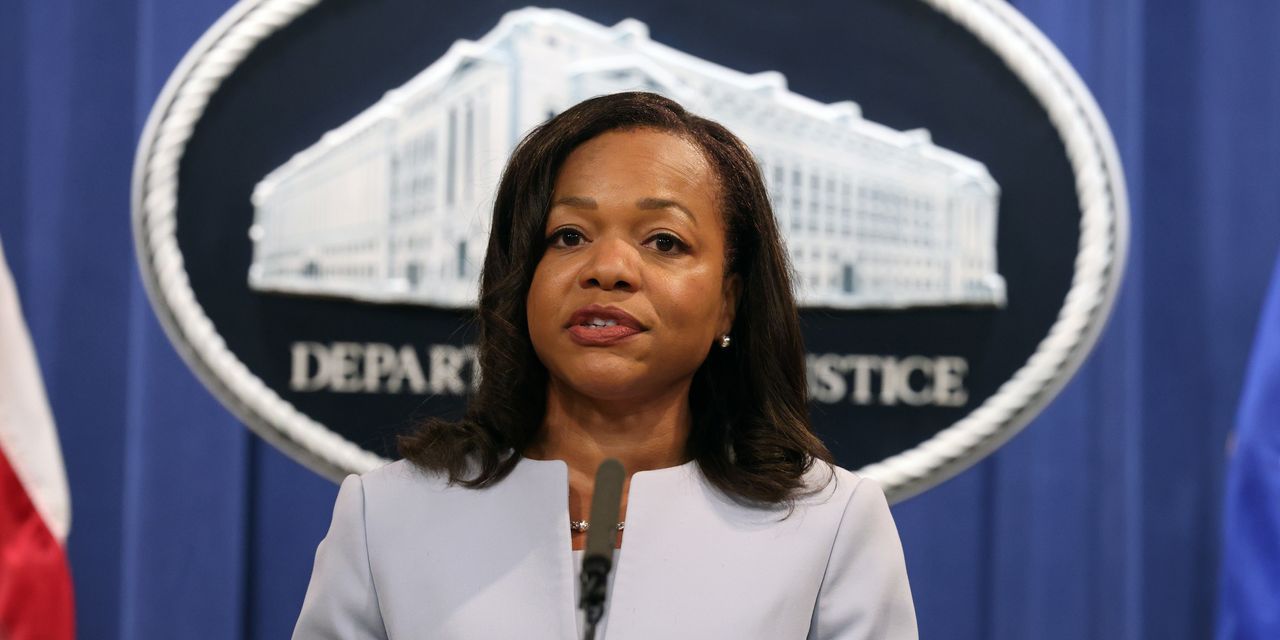
“For far too long the doors to home ownership have been shut for Black families and many other people of color because of unlawful redlining by banks and other financial institutions,” Kristen Clarke, assistant attorney general for civil rights at the Justice Department, said in a statement Tuesday. “When banks fail to provide equal access to lending services in neighborhoods of color, they engage in modern day redlining and exacerbate the racial wealth gap in our country.”
Previously, the bank allegedly failed to engage in adequate marketing and outreach to communities of color to compensate for its lacking presence in Black and Hispanic neighborhoods, and processed fewer mortgage applications in those neighborhoods when compared to other peer lenders as a result, the Justice Department said. Just 159 of the nearly 13,500 mortgage-loan applications the bank received from 2015 through at least 2021 came from people seeking credit in Black and Hispanic neighborhoods, according to the Justice Department.
The city of Columbus has more than 900,000 residents, approximately 29% of whom are Black, according to Census Bureau data. Nearly 7% of the city’s residents are Hispanic. Across the entire metropolitan area, meanwhile, almost 17% of the census tracts are majority Black or majority Hispanic, according to the Justice Department’s complaint.
To better serve those communities, Park National has agreed to invest at least $7.75 million in a loan subsidy fund that will increase access to mortgage, improvement and refinancing loans, as well as home-equity loans, in Hispanic and Black neighborhoods. The bank will also put $750,000 toward outreach, advertising, consumer financial education and credit counseling in these communities, and devote $500,000 to developing community partnerships to service residents of majority Black and Hispanic neighborhoods.
The bank will additionally maintain a full-time director of community home lending and development to oversee lending practices in majority-minority communities, and will conduct a “community credit needs assessment” to identify financial-services needs in majority Black and Hispanic neighborhoods in Columbus.
“‘When banks fail to provide equal access to lending services in neighborhoods of color, they engage in modern day redlining and exacerbate the racial wealth gap in our country.’”
— Kristen Clarke, assistant attorney general for civil rights at the Justice Department
In a statement Tuesday, Park National Bank chairman and chief executive officer David Trautman said that while the bank disagreed with “any suggestion that intentional discrimination took place, we are united with the DOJ in our commitment to ensuring equal access to credit for all consumers.”
The bank has “several home lending initiatives underway,” the statement said, and has already participated in programs to provide down-payment assistance, as well as housing-investment programs and community-development loans to fund affordable-housing initiatives and more, for years.
“Park National Bank takes pride in our heritage of corporate citizenship, philanthropy, and compassionate support for all communities,” Trautman said in an additional statement sent to MarketWatch Wednesday night. “We condemn discrimination in any form and stand firm in our commitment to providing equal access to credit for all borrowers. We look forward to creating even more opportunities for individuals and families to achieve the dream of home ownership.”
In remarks at the Martin Luther King Jr. Branch of the Columbus Metropolitan Library Tuesday, Clarke of the Justice Department also noted the bank had cooperated with the federal government.
“We encourage other lenders to take initiative in evaluating their fair lending risks and embrace opportunities to better serve all communities,” Clarke said, according to a copy of her prepared remarks. “And for those banks that fail to take these steps, know that the Justice Department stands vigilant and ready to hold them accountable.”
The Justice Department has amassed $84 million through its Combating Redlining Initiative, first announced by Attorney General Merrick Garland in October 2021, according to Tuesday’s press release.
The term “redlining” is often associated with the color-coded maps created by the federal government in the 1930s to grade perceived risk associated with certain neighborhoods, with Black neighborhoods often marked in red to denote the supposedly highest hazard for lending. These neighborhoods were often denied access to credit.
In announcing the Combating Redlining Initiative, the Justice Department described redlining more generally as lenders illegally avoiding offering services to people in communities of color due to the race and national origin of people living there.
Columbus is one of the few major cities where Black homeownership rates actually fell between 2016 and 2021, according to an analysis from Apartment List published last week. More broadly, Black homeownership rates improved in 57 of the 63 metropolitan areas Apartment List examined over that time period.
The Black homeownership rate in Columbus was already low to start, data shows: It was 33% across the city’s metropolitan area between 2015 and 2019, compared to a homeownership rate of 68% for white people there, according to the Urban Institute.
This story was originally published March 1, 2023, and has been updated.