How to Get a Personal Loan in 6 Steps

Shopping for a personal loan doesn’t have to be a complicated process. Knowing where to start and understanding how to compare offers can help you select the best personal loan.

Below are six steps to guide you through the process of shopping for and getting a personal loan.

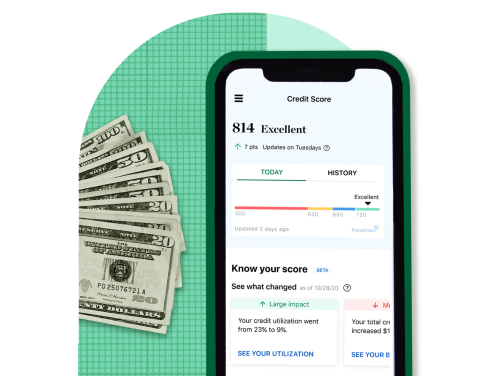
1. Check your credit score

A high credit score gives you a better chance of qualifying for a personal loan and getting a lower interest rate. Assess your creditworthiness by checking your score.

Credit scores typically fall into these categories.

  • 720 and higher: Excellent credit.

  • 690-719: Good credit.

  • 630-689: Fair or average credit.

  • 300-629: Bad credit.

Looking at a less-than-friendly score? Fix any errors that might be dragging it down. You can request your free credit report and dispute wrongly reported missed payments or other inaccuracies it may contain.

Be sure to make on-time payments toward credit card and other loan payments, and keep your credit utilization (the amount of credit you use relative to credit limits) low as these are the biggest factors affecting your score.

Be ready for any loan application

NerdWallet tracks your credit score and shows you ways to build it — for free.

2. Compare estimated rates

Knowing your credit score will give you a better idea of the annual percentage rate and payment amounts you might receive on a personal loan. Use the calculator below to see estimates based on your credit score and consider the impact of monthly payments on your budget.

3. Get pre-qualified for a loan

Pre-qualifying for a personal loan gives you a look at the offers you may receive from lenders. Many online lenders and some banks perform a soft credit check during pre-qualification that doesn’t affect your credit score.

During pre-qualification, you must typically provide some personal contact information, such as your name, date of birth, income and loan purpose.

Pre-qualifying with multiple lenders lets you compare estimated rates and payment amounts.

4. Compare lenders and shop

Compare the loan amounts, monthly payments and interest rates on your pre-qualified offers from various lenders. Online lenders, banks and credit unions offer safe unsecured loans.

Loan amount

Get started

5.94% – 35.47%.

$1,000 – $50,000.

at Upgrade

4.99% – 19.63%.

$5,000 – $100,000.

8.93% – 35.43%.

$1,500 – $50,000.

at Universal Credit

6.99% – 19.99%.

$3,500 – $40,000.

5.99% – 24.99%.

$2,500 – $35,000.

at Discover

5.99% – 17.99%.

$500 – $20,000.

at NerdWallet

Click “Check Rates” to pre-qualify on NerdWallet and receive personalized rates from multiple lenders.

If you have a fair or bad credit score, consider a secured loan or adding a co-signer or co-borrower to your loan application. These options can increase your chances of qualifying for a lower interest rate. However, note that both options have consequences for the collateral or co-applicant if you fail to repay.

5. Read the fine print

Before signing a loan, read the terms of the loan offers and get answers to your questions. In particular, watch for:

Prepayment penalties. A prepayment penalty — a fee for paying off the loan early — is rare. However, still be on the lookout for them in loan agreements.

Automatic withdrawals. If a lender automatically withdraws loan payments from your checking account, consider setting up a low-balance alert with your bank to avoid overdraft fees.

APR surprises. The total cost of your loan, including interest and any origination fees, should be clearly disclosed and figured into the APR.

Additionally, look for lenders that offer consumer-friendly features like reporting payments to the three major credit bureaus, allowing borrowers to change their payment date or sending borrowed funds directly to creditors on debt consolidation loans.

6. Application and approval

Once you’ve selected a lender that matches your needs, you’ll provide documentation to formally apply for the loan.

Application requirements may vary by lender, but you’ll likely need:

  • Identification: A passport, driver’s license, state ID or Social Security card.

  • Verification of address: Utility bills or lease agreement.

  • Proof of income: Pay stubs, bank statements or tax returns.

During the loan application process, you’ll need to provide documents that prove identification, verify your address and show proof of income.

The lender will run a hard credit check that may briefly decrease your credit scores by a few points and show up on credit reports for 24 months. Upon final approval, you’ll receive your funds according to the lender’s terms, typically within a week.

ETF Wrap: Omicron volatility? How ETFs obliterated 2020’s record, gathering $800 billion in new money so far in 2021

Hello, there. We’re baack! And so is market volatility. Where can you take cover in exchange-traded funds amid all this carnage? How has the year been so far for ETFs? We’ll discuss all those things and more in our first issue back since Thanksgiving and the start of the final month of 2021.

You know the drill: Send tips, or feedback, and find me on Twitter at @mdecambre or LinkedIn, as some of you are wont to do, to tell me what we need to be jumping on.

Please sign up here for ETF Wrap sent fresh to your inbox weekly.

The good…
Top 5 gainers of the past week

%Performance

Vanguard Extended Duration Treasury ETF
EDV,
-0.35%
6.4

iShares 20+ Year Treasury Bond ETF
TLT,
-0.27%
4.9

SPDR Portfolio Long Term Treasury ETF
SPTL,
-0.28%
4.6

Vanguard Long-Term Treasury ETF
VGLT,
-0.31%
4.6

iShares 10-20 Year Treasury Bond ETF
TLH,
-0.35%
3.8

Source: FactSet, through Wednesday, Dec. 1, excluding ETNs and leveraged productsIncludes NYSE, Nasdaq and Cboe traded ETFs of $500 million or greater

…and the bad
Top 5 decliners of the past week

% Performance

United States Oil Fund LP
USO,
+1.40%

-14.8

United States Natural Gas Fund LP
UNG,
-4.13%
-9.9

iShares GSCI Commodity Dynamic Roll Strategy ETF
COMT,
+0.89%
-9.5

iShares MSCI Chile ETF
ECH,
+0.36%
-9.3

Invesco DB Commodity Index Tracking Fund
DBC,
+0.41%
-8.9

Source: FactSet

A bumper year for ETFs

CFRA’s Todd Rosenbluth tells us that demand for ETFs hasn’t abated amid the recent bout of volatility that has gripped the market, even before the omicron worries took choppy market action to a new level.

Rosenbluth notes that ETFs thus far in 2021, through the end of November, have attracted about $800 billion in new money. That is a stunning figure that crushes the old record of $504 billion, set last year — and we still have nearly an entire month to go. The current tally means that net inflows in ETFs were about $72 billion a month.

“Equity ETFs represent 79% of the ETF market and have been extremely popular in 2021, but fixed income ETFs have pulled in a strong 23% share of net inflows through the first 11 months,” says Rosenbluth, who heads up mutual fund and ETF research.

The analyst notes that fund provider Vanguard delivered the greatest number of funds among the top 10 providers, BlackRock’s
BLK,
+2.25%

iShares drew the most money.

“While Vanguard has had six of the 10 most popular ETFs to purchase in 2021, led by Vanguard S&P 500 ETF and Vanguard Total Stock Market ETF… iShares had the most funds cross the $1 billion market,” Rosenbluth writes.


CFRA

ETF expert Marc Knowles, director at Alpha FMC — an asset management consulting firm that works with 90% of the top 20 global asset managers by assets under management — says that he is advising such managers to adopt an ETF strategy.

Much of the growth in the ETF industry has come amid the boom in actively managed ETFs, the emergence of nontransparent vehicles and a raft of outright conversions of mutual funds into ETFs.

The ETF in the fridge

Precision farming, innovation around meats and non-meat creations are among some of the key elements of what some describe as the future of food. The trend is something that probably would have gotten Thomas Malthus pretty excited and now we’re looking at a new ETF that focuses on the subsector.

The folks at VanEck is kicking off the VanEck Future of Food ETF, with the ticker symbol YUMY, on the Intercontinental Exchange-
ICE,
+1.82%

owned New York Stock Exchange’s Arca platform.

The actively managed fund carries and expense ratio of 0.65%, which translates to a an annual cost of $6.50 for every $1,000 invested. Some of its biggest holdings will include alternative milk provider Oatly Group AB
OTLY,
-3.33%
,
as well as Corteva Inc.
CTVA,
+3.57%
,
an agricultural innovation company that was spun out of DowDuPont, as well as Givaudan
GVDNY,
+1.80%
,
a Swiss-based maker of flavors and fragrances, and Westchester, Ill.-based Ingredion Inc
INGR,
+1.15%
.
, which develops modified starches, among sugars.

ETF for NFTs? Ofc!

There are plenty of ETFs pegged to crypto and blockchain but Defiance ETFs is targeting the much narrower segment of digital assets: nonfungible tokens, or NFTs. Sylvia Jablonski, co-founder and Chief Investment Officer of Defiance declared that NFTs “could be bigger than the internet.”

The Wall Street Journal reported that interest in NFTs — digital collectibles that can be used to authenticate an asset using blockchain technology — has exploded among, “generating $10.67 billion in trading volume in the third quarter of this year, up 704% from the second quarter,” citing data from digital analytics firm DappRadar. 

Whether it is ultimately a fad or something that approximates the significance of the internet remains to be seen, however.

The Defiance Digital Revolution ETF
NFTZ,

trades on the NYSE Arca and tracks BITA NFT and Blockchain Select Index. It carries an expense ratio of 0.65%.

It’s not clear that the fund is demonstrably different than many other crypto-adjacent ETFs in existence but Defiance describes the fund’s strategy thusly:

The Index, and consequently the Fund, is expected to concentrate its investments (i.e., hold more than 25% of its total assets) in the securities of Crypto and Blockchain Companies. As a result, the value of the Fund’s shares may rise and fall more than the value of shares of a fund that invests in securities of companies in a broader range of industries.

What to buy?

CFRA’s Rosenbluth is rating iShares Broad USD High Yield Corporate Bond ETF
USHY,
+0.43%

a five-star rating, citing its performance (which is no gurantee of future results) and its expense ratio. Rosenbluth says that the ETF is worth a look compared against some of its more expensive rivals like iShares iBoxx $ High Yield Corporate Bond ETF
HYG,
+0.52%

and SPDR Bloomberg High Yield Bond ETF
JNK,
+0.47%
.

The funds are all down at a comparable level in the year to date, with the USHY offering a slightly better performance than its rivals.

The iShares USHY product carries an expense ratio of 0.15%, compared with SPDR’s 0.40% expense and iBoxx, which has an expense ratio of 0.48%.

This week, fixed-income ETFs (see attached table) were one of the best performers, with volatility and concerns about the omicron variant forcing investors to make adjustments to their portfolios or at least seek some protection.

What’s in a name?

A number of companies are looking to benefit from a change in name, including Square
SQ,
-3.06%
,
which recently announced it will be known as Block, as CEO Jack Dorsey seems set to double down on digital assets and blockchain at the payment processor after the entrepreneur announced that it was stepping down from social-media platform Twitter Inc
TWTR,
-1.99%
.

But anyone doubting the efficacy of a name change on one’s business (even if the company benefiting isn’t changing its name), need only look at the Roundhill Ball Metaverse ETF
META,
+0.07%
,
which apparently has seen inflows surge 548%, since Facebook changed its name to Metaverse name change, Business Insider reports.

What to do amid the omicron chaos

Despite the omicron-inspired choppiness in the market, flows into “SPY,” the SPDR S&P 500 ETF Trust
SPY,
+1.35%

were strong, as were those for similar equity ETFs such as Vanguard S&P 500 ETF
VOO,
+1.34%
.
Investors also jumped into ProShares UltraPro QQQ
TQQQ,
+1.05%
,
the ProShares Ultra VIX Short-Term Futures ETF
UVXY,
-4.37%

and the Global X Nasdaq-100 Covered Call ETF
QYLD,
+0.58%
,
CNBC reported.

Meanwhile,  the U.S. Global Jets ETF
JETS,
+5.11%
,
which holds 50 stocks in major airlines, has been at the center of the reopening trade from COVID and took a big hit as the omicron variant implied new or extended restrictions on travel. The ETFMG Travel Tech ETF
AWAY,
+1.38%
,
which invests travel and tourism-related industries were in focus.

U.S. Global Jets was down 0.7% on the week, while the travel tech ETF was down 1.3% so far this week.

MarketWatch’s Tomi Kilgore writes that the triple-short Nasdaq 100 ETF, the ProShares UltraPro Short QQQ ETF
SQQQ,
-1.35%
,
was one of the most active funds on U.S. exchanges on Thursday.

Good ETF reads

The Fed: Fed’s ‘dot-plot’ likely to show more than one interest rate hike in 2022, Daly says

The Federal Reserve’s new “dot-plot,” to be released in two weeks, could show more than one quarter-point hike in the central bank’s benchmark policy rate in 2022, said San Francisco Fed President Mary Daly on Thursday.

Daly’s comments are another sign that the Fed is pivoting in a hawkish direction given the widespread price pressures reported in the economy.

Already, Fed Chairman Jerome Powell has opened the door for the Fed to accelerate the pace of the tapering of the central bank’s asset purchases by a few months so that they will end in the first quarter. There is broad support at the Fed for an accelerated pace of taper. Fed Governor Randal Quarles and Atlanta Fed President Raphael Bostic both said they will support the earlier end to asset purchases.

Fed officials want to end the asset purchases before they raise interest rates.

In the last “dot-plot” released in September, the Fed penciled in only one rate hike. The dot-plot also indicated three rate hikes in both 2023 and 2024 to push interest rates up to 1.8%.

Pulling rate hikes forward ” is certainly something I would anticipate,” Daly said.

“We could have some of them more in 2022,” Daly said, during a discussion hosted by the Peterson Institute for International Finance.

In his remarks, Quarles said the Fed will have to need to raise rates.

Financial markets have penciled-in three rate hikes: one in June, September and December.

Looking forward, Daly said she had no expectation the Fed would need to raise interest rates above “neutral,” which is estimated to be when interest rates get to 2.5%.

“Neutral” is the level of interest rate where Fed policy is neither stepping on the gas to boost the economy or slamming on the brakes.

With inflation at 30-year highs, the fear of the Fed having to push interest rates above neutral is a concern on the mind of investors.

In the famous period of the late 1970s and early 1980s, Fed policy rates got up nearly to 20%.

“I have no expectation right now that we will need to raise interest rates beyond the neutral rate of interest. I don’t see we would have to really go beyond that in order to rachet-back rising inflation,” Daly said.

The Dow Jones Industrial Average
DJIA,
+1.70%

was up more than 600 points on Thursday as stocks have become more volatile given the shift in the Fed’s tone.

The yield-curve has flattened with the yield on the 10-year Treasury note
TMUBMUSD10Y,
1.456%

falling to 1.460% while shorter-dated bond yields
TMUBMUSD02Y,
0.610%

have risen.

: Dollar General says it’s committed to offering $1 merchandise, and plans to expand PopShelf, which offers items at $5 or less

Dollar General Inc. said it’s staying true to its name, even as a key competitor raised its prices, and said it was expanding its PopShelf store brand that sells items for $5 or less.

Dollar General Chief Executive Todd Vasos opened the company’s third-quarter earnings call on Thursday with a recommitment to the $1 price point, after rival Dollar Tree Inc.
DLTR,
+1.83%

recently said it was moving to a $1.25 threshold.

“[B]ecause so many families depend on us for everyday essentials at the right price, we believe products at the $1 price point are important for our customers and they will continue to have a significant presence in our assortment,” said Chief Executive Todd Vasos, chief executive of Dollar General, on the Thursday earnings call, according to a FactSet transcript.

“And moving forward, we will continue to foster and grow this program where appropriate.”

The discount retailer said 20% of its merchandise is priced at $1 or less.

Dollar Tree announced its price hike last week, saying that it will allow the retailer to offer a wider assortment of merchandise. The move comes after a test with shoppers, which the company said was well-received. Dollar Tree said the rollout of its new price point will be complete in the first fiscal quarter of 2022.

See: Dollar Tree raises prices to $1.25, and it says it’s not because of inflation

Dollar Tree is also the parent to Family Dollar.

Dollar General also said it is planning nearly 3,000 real-estate projects in 2022, including 1,110 new stores and up to 10 new stores in Mexico, the company’s first international locations.

Part of the expansion will also include the PopShelf banner, a concept that was introduced in 2020. Nearly all of the items at PopShelf are priced at $5 or less. When the concept launched, it was aimed at customers in suburban communities with an annual household income ranging from $50,000 to $125,000.

Vasos says the PopShelf concept “continues to exceed our expectations.” There should be about 1,000 PopShelf locations by the end of fiscal 2025.

Dollar General is the largest retailer by store count in the U.S. with more than 18,000 locations, according to Vasos. About 75% of the U.S. population is within five miles of a Dollar General store.

Also: Thanksgiving holiday shopping weekend sees declines in online spending and shopper turnout

Dollar General
DG,
-2.66%

stock slumped 3.2% in Thursday trading after the earnings announcement, which showed the company’s profit declining in the third quarter.

Shares are up 2.6% for the year to date, while the benchmark S&P 500 index
SPX,
+1.22%

has gained 22% for the period.

“In our view, Dollar General is still witnessing the unwinding of some of the pandemic-related trends that drove it to all-time highs in 2020,” wrote Neil Saunders, managing director of GlobalData, in a note.

“Foremost among these is a reduction in foot traffic as some consumers who used it because it was local and convenient have now resumed more normalized shopping patterns, visiting big box stores such as Walmart.”

GlobalData has also observed that Dollar General’s core customers are pulling back on discretionary purchases due to inflation, though the company could make gains with customers who are looking to save money.

“This is bad news for Dollar General as it not only reduces impulse buying but does so in higher-margin categories. The worry is that if inflation persists it will strengthen this dynamic still further,” Saunders wrote.

Dom’t miss: Nearly half of Americans say inflation has caused them ‘financial hardship’

BMO Capital Markets maintained its outperform stock rating and $250 price target.

“We thought there may be upside to comps, but were more conservative on
gross margin percentage, yet the opposite largely played out,” Kelly Bania wrote in the BMO note after the earnings announcement.

Comps fell 0.6% for the quarter and margin was 30.8%, a 57 basis-point decline from last year.

Key Words: MLB lockout: Commissioner Rob Manfred ‘so disappointed’ about offseason work freeze

“I am so disappointed about the situation in which our game finds itself today.”

That was Major League Baseball commissioner Rob Manfred discussing the lockout and work stoppage rocking America’s pastime in an open letter to baseball fans.

The player freeze began after the league and its players union failed to agree to a new collective bargaining agreement by the Dec. 1 deadline. The MLB lockout marks the first work stoppage for the professional baseball league in nearly 27 years, since a players strike led to the cancellation of the 1994 World Series.

Read more: Major League Baseball owners lock out players

But Manfred also wrote that he is hopeful that a deal can still be made between the MLB and the Players Association.

“Simply put, we believe that an offseason lockout is the best mechanism to protect the 2022 season,” Manfred wrote in his letter to fans posted on MLB.com. “We hope that the lockout will jumpstart the negotiations and get us to an agreement that will allow the season to start on time.”

Manfred cited a record-breaking free agency period that saw over $1.7 billion worth of contracts given out to MLB players as proof of the league’s commitment to the players. Players like Max Scherzer and Corey Seager were among the group of high-profile signings by MLB clubs.

See also: Penn National, DraftKings highlight November slump for sports betting stocks

During the MLB lockout, teams may not make transactions, have any contact with players, or host workouts at team facilities. Players will still get paid their signing bonuses, but they will not receive any normal salary payments as long as there is a lockout, according to CBS.

“This drastic and unnecessary measure will not affect the players’ resolve to reach a fair contract,” MLBPA head Tony Clark said in a statement. “We remain committed to negotiating a new collective bargaining agreement that enhances competition, improves the product for our fans, and advances the rights and benefits of our membership.”

Related: Max Scherzer, Corey Seager get big-money deals ahead of expected MLB lockout

The MLB stated that it doesn’t anticipate any furloughs at the league office or for individual teams due to the lockout.

Manfred said that there are no scheduled negotiations between the league and the Players Association at this time.

Project Syndicate: Global supply chains may be efficient, but they also risk boosting inflation and inequality

BOSTON (Project Syndicate)—Global supply chains used to be the last thing policy makers worried about. The topic was largely the concern of academics, who studied the possible efficiency gains and potential risks associated with this aspect of globalization. Although Japan’s Fukushima nuclear disaster in 2011 had demonstrated how supply-chain disruptions could impact the global economy, few anticipated how central the problem could become.

Not anymore. Today’s supply-chain bottlenecks are creating shortages, propping up inflation, and preoccupying policy makers around the world.

Biden administration reacts

President Joe Biden’s administration deserves credit for recognizing that supply chains are key to future economic security. In February 2021, Biden issued an executive order directing several federal agencies to secure and strengthen the American supply chain; and in June, the White House published a 100-day review on “Building Resilient Supply Chains, Revitalizing American Manufacturing, and Fostering Broad-Based Growth.”

This 250-page report contains many important proposals. Some are already part of the broader discussion on improving the U.S. work force’s skills and the economy’s capacity for innovation. Other ideas have been circulating for a while in international relations and security studies; for example, the document considers the national-security implications of defense and other critical industries’ reliance on imported inputs.

The globalization of supply chains is an integral part of the shifting balance between capital and labor.

But the review’s most important contribution is its observation that global supply chains have imposed various social costs: “Our private sector and public policy approach to domestic production, which for years gave priority to efficiency and low costs over security, sustainability and resilience, has resulted in supply-chain risks.”

The review then asks whether hyper-globalized supply chains are so great for economic efficiency after all.

The default position among economists is “yes, they are.” When two firms enter into a transaction in which each will gain something, that is good for both firms and also probably for the rest of the economy, owing to the resulting efficiency improvements and cost reductions. Whether this involves a U.S. manufacturer offshoring the production of some inputs to a Chinese firm is beside the point.

Dangers from two sources

Yet supply chains can pose a danger to an economy in two important ways (beyond the defense-related concerns mentioned above). The more complex a supply chain becomes, the greater the economic risks. A break in any link can affect the whole chain and send prices surging if it creates sudden shortages of a necessary input.

The worst-case scenario is when a failure in one part of the chain triggers domino effects, bringing down other firms and bringing the entire sector to a standstill. Logically, this scenario is similar to what one finds in financial networks, where the failure of one bank can push others into insolvency or even bankruptcy, as happened in 2008 following the collapse of Lehman Brothers.

In principle, because uncertainty is costly, businesses will take these risks into account when deciding to build supply chains. In practice, however, there are good economic reasons why firms may overextend their supply chains. For one thing, firms will account for their own risk, but not for the systemic effects they are creating, nor for the risks they are imposing on other firms or the entire economy.

Moreover, when global competition creates powerful incentives to reduce costs, even small price differences offered by foreign suppliers can become attractive, especially in the short term. In this age of stock-market
SPX,
+1.63%

DJIA,
+1.94%

options and hefty bonuses, financial interests also factor into managers’ considerations. CEOs enjoy immediate compensation when they can achieve cost reductions and increase profits, whereas the significant costs of future uncertainty—or even bankruptcy—will likely be someone else’s problem.

Squeezing the working class

A second way that companies may overextend their supply chain is subtler but no less important. The problem, the White House review notes, is that “the United States has taken certain features of global markets—especially the fear that companies and capital will flee to wherever wages, taxes and regulation are lowest—as inevitable.” This statement echoes economist Dani Rodrik’s prescient observation that globalization is not just about trade in goods and services; it is also about the sharing of rents.

As such, the globalization of supply chains is an integral part of the shifting balance between capital and labor.

The most straightforward mechanism for this process is the offshoring of inputs, the mere threat of which can be used by managers to keep wages low. This happens on both ends of the offshoring transaction: U.S. companies can pay less to their employees by expanding their supply chain to countries (such as China or Vietnam) where wages are already lower as a result of lax labor regulations.

A fragmented supply chain may also make it more difficult for workers to organize for collective bargaining, creating yet another benefit for businesses. Companies may even reap tax advantages from globalizing their supply chain, if doing so allows them to book profits in lower-tax jurisdictions.

This second reason is problematic for the U.S. economy as well. It suggests that managers will tend to globalize their companies’ supply chains even when doing so is not more efficient, simply because doing so allows them to shift rents away from workers and toward shareholders. Not only does this create an excessively overextended supply chain; it also distorts the income distribution by suppressing wages, especially for low- and middle-skill workers.

Whose economy is it?

The White House report proposes keeping more of the supply chain in the U.S., especially in manufacturing. But how can this be achieved? A two-pronged approach would be the most effective. First, the need for meaningful inducements for businesses to invest in their domestic supply chains implies that the tax advantages of offshoring inputs should be eliminated, and the opportunities for labor-regulation arbitrage should be curtailed.

But other, more fundamental changes are also needed.

The global supply-chain mess is an opportunity for the U.S. to have a broader conversation about the economy and what it is for. As long as CEOs remain obsessed with short-term stock-market performance, bolstered by the ideology of “shareholder value,” they will seek ways to shift rents away from their workers, whatever the risks.

Daron Acemoglu, professor of economics at MIT, is co-author (with James A. Robinson) of “Why Nations Fail: The Origins of Power, Prosperity and Poverty” and “The Narrow Corridor: States, Societies, and the Fate of Liberty.”

This commentary was published with permission of Project SyndicateThe Supply-Chain Mess.

More on supply chains, efficient and inequality

James K. Galbraith: The cause of high inflation? Too much efficiency in supply chains

Diane Coyle: Broken supply chains are a market failure. What’s the right way to restore resilience?

Joseph E. Stiglitz: Three decades of neoliberal policies have decimated the middle class, our economy, and our democracy

Commodities Corner: Platinum, palladium buck an overall upward trend for commodities, poised for hefty 2021 losses

Palladium looks to post its first yearly price decline in six years, and platinum is ready for its first loss in three years. Both metals are defying overall strength in the commodities sector, which is on track to see its benchmark index score its strongest performance since 2016.

The negative impact on demand for both metals, due to the global shortage of semiconductor chips, “heavily influenced investor sentiment and positioning” on the Comex futures market, says Trevor Raymond, director of research at World Platinum Investment Council.

Platinum, however, has fared better than palladium this year. It may also be undervalued compared with both palladium and gold.

As of Dec. 1, most-active platinum futures
PLF22,
-0.44%

PL00,
-0.44%

settled at $935.20 an ounce, down by over 13% this year, according to Dow Jones Market Data. Platinum futures last year rose over 10%, up a second straight year. Palladium futures
PAH22,
+0.97%

PA00,
+0.97%

settled at $1,753.50 an ounce, nearly 29% lower this year, which would mark the metal’s first yearly loss since 2015. Last year, palladium rose almost 29%.

This year’s losses for both metals come in contrast to the S&P GSCI
SPGSCI,
+0.36%
,
a commodity index composed of 24 exchange-traded futures contracts across five physical commodities sectors, including precious and industrial metals, which is trading more than 27% higher this year. It is on track for the biggest yearly gain in five years.

Given the shortage of semiconductor chips, which are used in automobile production, and palladium’s main use in catalytic converters for gasoline-powered vehicles, palladium’s demand loss was “far greater than that of platinum,” says Raymond. Platinum is mainly used in catalytic converters for diesel cars, and globally there are far more gasoline light vehicles than diesel, he says.

Palladium’s higher price contributed to its larger loss this year. “The volume of platinum substituting for palladium at a 1-for-1 ratio has become more public, and palladium demand loss as a result added to negative investor sentiment,” Raymond says. 

Platinum mining supply continued to “recover gradually” from last year’s Covid-19-related operational disruptions, with total mine supply this year forecast to climb 19%, to 8.235 million ounces, according to the World Platinum Investment Council’s Platinum Quarterly report published on Nov. 24, which is based on research from Metals Focus.

Platinum demand is also expected to rise by 14% in the automotive sector, and by 26% in the industrial sector this year, the report said, but investment demand for the metal is forecast to see a year-on-year decline of 86%. Against that backdrop, WPIC forecasts a platinum supply surplus of 769,000 ounces this year and 637,000 ounces next year.

The report said that many of the trends that have dominated 2021 are expected to continue into next year, but Raymond warns that the 2022 forecast has a “high degree of uncertainty.”

There is “high confidence” in the expected growth of 1% in total platinum mining supply for 2022, as well as the expected reduction in industrial demand of 13% from the “exceptional” levels seen in 2021, the WPIC report said. But “less certain is the extent to which processing capacity limitations may curb growth in autocatalyst recycling later in the year, and the extent to which vehicle sales and production will rebound as the semiconductor shortage is resolved.”

Platinum is “heavily undervalued compared with its 1-for-1 autocatalyst substitute metal palladium—and against gold.”


— Trevor Raymond, World Platinum Investment Council

Still, Raymond expects palladium prices to remain strong as Chinese auto makers buy the metal on the spot market for near-term use, and supply growth is “as constrained as that of platinum.” Also, a rebound in palladium “could be dramatic if auto maker supply-chain issues ease.”

Platinum, meanwhile, is “heavily undervalued compared with its 1-for-1 autocatalyst substitute metal palladium—and against gold,” he says.

: Nearly half of Americans say inflation has caused them ‘financial hardship’

Americans are feeling inflation’s squeeze.

Nearly half — 45% — of people say inflation’s rising prices have caused them financial hardship, according to a new Gallup poll released Thursday.

In that swath of people, 10% say the financial hardship is severe as they watch the prices rise on everything from food prices to rent. A severe hardship jeopardizes a person’s capacity to keep up their current standard of living, according to the nearly 1,600-person survey conducted earlier this month.

Many investors and consumers are bracing for high inflation to stick around awhile.

That’s especially bad news for low-income families, who face less budgeting room and more stress with upward creeping costs. And it’s all happening as the holiday season rolls in and winter heating costs loom, Gallup noted.

Low-income survey participants were most likely to feel inflation’s pinch, the poll shows. More than two-thirds (71%) of people making less than $40,000 a year said inflation was causing them financial hardship and 28% said the problem was severe.

By contrast, 47% of households making between $40,000 and $99,000 said inflation was causing them hardship and most of them said the problems were moderate. Roughly a quarter of people (28%) making above $100,000 said they were facing inflation woes and it was mostly moderate.

Does politics influence people’s perception of inflation?

In a potential sign of the ways politics color the view of the economy and government regulation, Democrats in the Gallup poll were less likely to say they were experiencing hardship from inflation, compared to Republicans and independents.

Fewer than half (37%) of Democrats said they were experiencing financial hardship due to inflation while 49% of independents, while 53% of Republicans said the same.

People in the three groups said inflation was posing a “severe” hardship for them at roughly similar rates, the pollsters noted. It was 11% for Republicans and independents and 8% for Democrats.

President Joe Biden, a Democrat, has said he’s fighting inflation and doing what he can to bring down everyday costs. One step, he says, is releasing 50 million barrels of oil from the country’s stockpile in an effort to lower commuters’ gas costs.

Around the time Gallup researchers were gauging public opinion, the Bureau of Labor Statistics said the pace of inflation hit a 31-year high in October.

It’s “probably a good time” to end calling inflation “transitory,” Federal Reserve Chairman Jerome Powell told lawmakers this week. Powell said he’s retiring the word in order to speak more clearly about price increases and how long they’ll be rising.

Washington Watch: Biden’s big social-spending bill probably will pass Senate this month without many cuts to it, analysts say

Will President Joe Biden’s $2 trillion social-spending and climate package actually get the Senate’s OK this month, as that chamber’s leader has promised?

Two analysts from opposite ends of the political spectrum said that looks likely, as they spoke on Wednesday with MarketWatch for a Barron’s Live episode.

“I think the chances are very, very good that this bill will pass, and I wouldn’t bet the mortgage on it, but I would predict that it’s going to happen by this month,” said Seth Hanlon, a senior fellow at the liberal Center for American Progress.

Kyle Pomerleau, a senior fellow at the conservative American Enterprise Institute, concurred with Hanlon, as the analysts assessed Senate Majority Leader Chuck Schumer’s stated goal of passage by Christmas. The legislation already got the House’s approval last month, so Biden can sign it into law if the Senate acts and the two chambers reconcile their versions of the measure.

“I think that the Build Back Better Act ultimately passes. I think before Christmas seems like a reasonable timeline,” Pomerleau said. “There are other political challenges involved, if this bleeds over into next year, and I think that the Democrats want to avoid that.”

Democrats also could be motivated by not wanting a lapse in monthly child tax credit payments, according to Hanlon. Those payouts, which began over the summer and provide up to $300 per child to families, would get extended for another year in the current version of the Build Back Better Act.

“The child tax credit payments — the last one would be done on Dec. 15, and so I think the Democrats are going to want to continue those into January and not have them cut off suddenly,” the Center for American Progress expert said.

Hanlon and Pomerleau said they don’t expect huge changes to the Build Back Better Act’s overall price tag, even as moderate Democratic Sen. Joe Manchin of West Virginia has expressed opposition to some items in the House version of the bill, including a plan for paid leave and a $4,500 tax credit for electric vehicles made in unionized U.S. factories. Another issue that’s dividing Democratic lawmakers is a proposed lift to the SALT cap, which refers to a limit on deductions from federal income tax for state and local taxes.

“I think that $2 trillion in spending, including the tax credits, is a reasonable place that they will end up,” Pomerleau said, referring to what’s a likely final price tag.

Meanwhile, Hanlon noted that a lot of negotiating has happened this year to get to the current state of affairs, after Sen. Bernie Sanders, the Vermont independent who usually votes with Democrats and chairs his chamber’s budget committee, proposed a much larger spending package.

“If you back up to where we started with President Biden’s agenda and Sen. Sanders’s budget, we’re down to a relatively narrow, limited set of issues and a pretty narrow band of a total price tag,” he said.

“I might expect that to shrink somewhat because of Sen. Manchin, but not that much. I think 90% of the bill will stay the same.”

Democrats can’t afford to lose the support of any senator who typically votes with them, as they advance the bill through a process known as budget reconciliation. That’s because the Senate is split 50-50, with the party in control only because Vice President Kamala Harris can break ties.

Now read: Congress faces shutdown deadline, hurdles for Biden’s Build Back Better plan

And see: Here’s Biden’s Build Back Better framework — in two charts

Grants galore! Why there’s never been a better time to buy an electric car

Image source: Getty Images


Slowly but surely, the world is waking up to the global climate emergency. One way the government is attempting to cut the UK’s carbon emissions is to offer motorists a grant to buy an electric vehicle.

This means that if you’re on the hunt for a new car, as well as doing your bit to save the planet, you may qualify for help towards the cost. Here’s what you need to know.

What are the benefits of electric vehicles?

Putting aside the huge environmental benefits, perhaps the biggest advantage of owning an electric vehicle is the fact they’re cheaper to run than traditional cars.

While it can be difficult to pinpoint the exact difference in running costs, as this will vary depending on the model, make and specification of the vehicle, according to Vanarama, running costs of a typical electric vehicle can be up to 58% cheaper than a petrol equivalent. 

In addition to this, electric cars generally require less maintenance than cars with internal combustion engines.

Other benefits of electric cars include the fact that they attract low (or zero) Vehicle Excise Duty. They can also dodge the congestion zone charges found in some areas of the UK.

A final perk is that electric cars generally hold their value better than their petrol counterparts.

Can you get a grant to buy an electric vehicle? 

To persuade the public to switch to electric cars, the government now offers grants towards the cost of electric vehicles. Grants apply to the following types of vehicles: 

  • Cars
  • Motorcycles
  • Mopeds
  • Small vans
  • Large vans
  • Taxis
  • Trucks

The total grant available will depend on the type of vehicle you buy. The maximum grant for an electric car is £2,500.

A full list of qualifying vehicles, including models, can be found on the gov.uk website.

What about grants towards the cost of car chargers?  

To accelerate the switch to electric cars, the government recently announced that all new homes and buildings in England will be built with electric vehicle charging points from 2022. It’s hoped the move will lead to up to 145,000 extra charging points being installed.

To further support the use of charging points, the government now offers grants of up to 75% towards the cost of installing one. Dubbed the ‘Electric Vehicle Homecharge Scheme’, those eligible can bag themselves up to £350 (including VAT) towards the cost of installing a charger at home. Further information about this scheme can be found on the gov.uk website.

Why is it a good time to buy an electric vehicle?  

Aside from helping the planet, if you switch to an electric vehicle now, you may qualify for a juicy grant.

Grants such as these won’t last forever. This is the reason why many are suggesting now is the perfect time to make the switch. This opinion is echoed by Bill Scotney, commercial director at Moneybarn. He explains, “If you’re thinking of switching to an electric car, there’s never been a better time. More models are coming to the market, and now the latest news is that all new build homes will require EV charging stations.”

Scotney goes on to explain the cost benefits of opting for an electric vehicle. “Essentially, the main reason to switch to an electric car is that they are better for the environment, but they also have lower running costs and are eligible for a government grant.

He goes on, “You can currently get a discount on plug-in vehicles from the government if you buy new, up to a maximum of 35% of the price. You don’t need to do anything to claim it, the dealership will automatically apply it.”

Are you interested in joining the electric vehicle revolution? See two electric vehicle stocks to buy and hold for the next decade.

Products from our partners*

Top-rated credit card pays up to 1% cashback

With this top-rated cashback card cardholders can earn up to 1% on all purchases with no annual fee. Plus, there’s a sweet 5% welcome cashback bonus (worth up to £100) available during the first three months!

Those are just a few reasons why our experts rate this card as a top pick for those who spend regularly and clear their balance each month. Learn more here and check your eligibility before you apply in just 2 minutes.

*This is an offer from one of our affiliate partners. Click here for more information on why and how The Motley Fool UK works with affiliate partners.Terms and conditions apply.

Was this article helpful?

YesNo


Some offers on The Motley Fool UK site are from our partners — it’s how we make money and keep this site going. But does that impact our ratings? Nope. Our commitment is to you. If a product isn’t any good, our rating will reflect that, or we won’t list it at all. Also, while we aim to feature the best products available, we do not review every product on the market. Learn more here. The statements above are The Motley Fool’s alone and have not been provided or endorsed by bank advertisers. John Mackey, CEO of Whole Foods Market, an Amazon subsidiary, is a member of The Motley Fool’s board of directors. The Motley Fool UK has recommended Barclays, Hargreaves Lansdown, HSBC Holdings, Lloyds Banking Group, Mastercard, and Tesco.


Financial News

Daily News on Investing, Personal Finance, Markets, and more!

Financial News

Policy(Required)