
Extra Credit: Inside the restart of student loan payments. Here’s what you need to know.

Hello and welcome back to MarketWatch’s Extra Credit column, a weekly look at the news through the lens of debt. 

For nearly two years, borrowers with federal student loans have had a reprieve from monthly bills thanks to a pandemic-related pause on student loan payments, interest and collections that’s been in place since March 2020. That’s ending in less than two months — beginning on February 1, 2022. 

If you’re experiencing deja vu, you’re likely not alone. The freeze was scheduled to end multiple times over the last 21 months and each time, officials extended it. This week advocates are renewing calls on the Biden administration for mass student debt cancellation and pairing that with a request to continue to hold off on resuming the payments, using the pause as a “stopgap” until the debt is canceled. Senate Majority Leader Chuck Schumer also called on the Biden administration to keep the freeze in place.  

“With the advent of omicron, the continuation of COVID, students should not have this burden placed on their shoulders,” he said. 

Still, borrowers may want to start preparing for payments to resume; policymakers have said on several occasions that this will be the “final extension” of the pause. We’ll have tips for how to get as ready as you can to pay that first bill at the end of this piece, but first we’ll dig into some of the issues that could complicate the transition to repayment and that advocates, borrowers and regulators will likely be watching closely. 

How will the end of the student loan payment pause affect your life and finances? We want to hear from you: email jberman@marketwatch.com

The economy: 

Though the economy and labor market are certainly in a much better position than at the start of the pandemic when the payment pause was first implemented — or even at other times when officials extended the freeze — some Americans are still struggling. 

Exacerbating those challenges, much of the other pandemic relief, like enhanced unemployment benefits and the eviction moratorium, have already disappeared or are scheduled to end soon. In addition, the new omicron variant and the possibility of a winter COVID surge could complicate the economic recovery. 

“There are lots of people that are just not well served by the current economy,” said Mike Pierce, the executive director of the Student Borrower Protection Center, a borrower advocacy group. Specifically, Pierce pointed to the elevated unemployment rate among Black workers, which was 6.7% in November, compared to the 4.2% unemployment rate overall. 

“You’re adding insult to injury here by restarting student loan payments and you’re going to widen disparities as a result,” Pierce said. “It’s hard to imagine building back better and at the same time sucking billions of dollars out of the pockets of the people that you expect to be driving this new economic resurgence.” 

Even borrowers who have jobs are worried about how their student loan payments will fit into their monthly budget. Nearly 90% of fully-employed student loan borrowers said they weren’t financially ready to resume payments on February 1 in a survey of more than 33,000 borrowers conducted by The Student Debt Crisis Center, an advocacy group, and Savi, a company that helps borrowers manage their student loans. 

For some, the payment pause provided an opportunity to focus on other financial priorities, like paying down other debt or saving. Advocates worry that resuming student loan payments will put that progress towards financial stability in jeopardy. Roughly 87% of respondents to the survey said the payment pause made it possible for them to afford other bills. 

“This has really unleashed people’s potential to participate in the economy, support their families and do things that we all recognize are really important,” said Cody Hounanian, executive director, Student Debt Crisis Center. 

The student loan system: 

This period marks the first time the government has ever shut the entire student loan system off and turned it back on. Evidence indicates that during previous more targeted student loan payment pauses — for example, to help borrowers cope with the impact of a natural disaster — borrowers have slipped into default due to poor communication about the resumption of payments. 

That dynamic has had stakeholders concerned about how prepared the Department of Education and the companies it hires to work with student loan borrowers are to restart the system and protect borrowers from slipping into delinquency and default. 

Democratic Senators Elizabeth Warren, Chris Van Hollen, Richard Blumenthal and Tina Smith wrote to some student loan servicers this month asking them for information about how they plan to support borrowers resuming payments. “This simultaneous restart of 32 million borrowers’ loans, half of whom will also be transferring to a new loan servicer, marks an unprecedented event with a heightened risk of borrower harm,” the Senators wrote

Student loan servicers feel more prepared now for payments to resume than they did the last several times the threat of payments loomed, said Scott Buchanan, the executive director of the Student Loan Servicing Alliance, a trade group. 

“Previously we would be 45 days away from a resumption date and had zero guidance about how to do it,” Buchanan said. “That is not the case now.  We have roughly the guidance that we’re going to need to do this.”  

Roughly 57% of borrowers in the Student Debt Crisis and Savi survey, which was conducted in early November, said they already heard from their servicer about payments resuming. About one-third heard about the end of the payment pause from the Department of Education directly. 

Restarting student loan payments for millions of borrowers would be a dramatic undertaking on its own, but it comes at a time when the student loan system is undergoing other, major changes. Multiple contractors have said they plan to stop servicing student loans, which means millions of borrowers’ accounts are shifting to a new firm. 

“There have been times in the past, as I understand it, that [the Office of Federal Student Aid] hasn’t always handled transfer of accounts well and the servicers haven’t transferred the accounts well and there have been problems for borrowers,” Richard Cordray, the chief operating officer of Federal Student Aid told lawmakers in October. 

This time around, Cordray, the former director of the Consumer Financial Protection Bureau, said, they’re starting by moving small groups of borrowers over at a time to work out the kinks and then increasing the number of borrowers who are transferred. Regulators, including some at the state level, and the CFPB, are also watching the servicer transfer closely, Cordray said. 

“That gives me more confidence,” he said. 

Throughout the Biden administration, advocates have called on officials to fix outstanding issues with the student loan program before throwing borrowers back into repayment. In the past few months, officials have started to deliver on one of those requests by vowing to revamp the program that provides loan forgiveness to public servants with at least 10 years of service, after years of complaints from borrowers — presenting another operational challenge for the student loan system as payments resume. 

Defaulted borrowers: 

Borrowers who have defaulted on their student loans are one of the groups at risk of facing the most harm when payments and collections resume. These borrowers can have their wages, tax refunds — including the child tax credit, advocates warn — and Social Security benefits garnished over the debt. 

“What is concerning is that if payments turn back on and collections turn back on early next year, folks in default — right as they’re filing their 2021 taxes — will be in a position to have their tax refunds garnished and their benefits garnished,” said Sarah Sattelmeyer, project director, education, opportunity and mobility, at New America, a think tank. “This money is a lifeline for many folks.” 

Politico reported in October that officials were considering moving borrowers out of default when payments and collections resume, essentially wiping their slate clean. But officials haven’t made any formal announcements indicating they will adopt this policy. 

“It is understood that delinquent borrowers will be returned to current status and we’ll move forward to try to put them in the right position to succeed during repayment,” Cordray told lawmakers in October. “As for defaulted borrowers, those are matters that are under consideration right now.” 

Regardless of these concerns, payments, interest and collections are very likely to resume starting on February 1. As that date approaches, here are some tips on how to prepare. 

Make sure your contact information is up to date: 

Many borrowers may have moved during the pandemic or if they graduated from school will be entering into repayment for the first time when the pause lifts. To ensure they receive accurate and timely information about the end of the payment freeze, borrowers should make sure their address, phone number, email address and other details are up to date with their servicer, said Betsy Mayotte, the president of the Institute of Student Loan Advisors. 

“That’s how they’re going to know when their actual first payment is due,” she said. Though borrowers won’t be required to make any payments before February 1, 2022, actual payment dates will vary depending on the billing cycle. 

If you’re not sure who your servicer is, Mayotte advises logging on to studentaid.gov to find out who is servicing your loans. While you’re there, it also makes sense to update your contact information with the Department of Education’s Office of Federal Student Aid. 

The agency is also reaching out directly to borrowers through text messages, phone calls, emails and other means, a Department official told financial aid professionals during a November training conference. 

Find out how much you’ll owe each month: 

It’s been so long since borrowers have been making payments that it makes sense that some might forget how much they’re expected to pay each month. In addition, some borrowers who left school during the pandemic will be repaying their student loans for the first time when the payment pause lifts. 

That’s why Mayotte suggests borrowers find out how much their payments are going to be. The easiest way to do that is to contact your student loan servicer. If your circumstances have changed since the last time you were repaying your student loans or the payment doesn’t look affordable to you, you should figure out if another payment plan makes more sense, Mayotte said. 

To do that borrowers can go to studentaid.gov and use the loan simulator, which is a calculator that allows you to see how different payment plans will impact your monthly bill.

“How much you’ll end up paying over time under each plan, that’s another important number for borrowers to look at,” Mayotte said. Smaller monthly payments could stretch the loan repayment term, putting borrowers at risk of paying more over the lifetime of the loan. 

If you’re payment isn’t affordable, start the process of moving to a new payment plan: 

“The good news, to the extent that there is any, is that you do still have the right to make payments as a percentage of your income,” said the SBPC’s Pierce. “You have this right to pay nothing at all on your student loans and that’s not going anywhere.” 

Indeed, through income-driven repayment, the suite of payment plans that allow federal student loan borrowers to make payments tied to income, borrowers who earn 150% (or less) of the poverty line for their family size and state can stay current on their debt with monthly bills as low as $0. Borrowers whose employment situation has changed during COVID should be looking particularly closely at this option. 

“The best advice that we have is the same advice we’ve always had,” Pierce said. “Call your student loan company, demand a payment that you can afford and if something doesn’t feel right submit a complaint,” to the Consumer Financial Protection Bureau or Federal Student Aid’s student loan ombudsman. 

Borrowers who were using an income-driven plan before the pandemic may want to re-certify their income, particularly if their income dropped during the past several months, said Persis Yu, policy director and managing counsel at SBPC. 

It probably makes sense to start this process as soon as possible because once bills come due, servicers may face a crush of calls from borrowers trying to adjust their payments. Like many employers, student loan servicers are facing competition for workers in the tight labor market, which exacerbate these challenges, Buchanan said. 

“We’re going to hire as many as we can under the economics of the program that the marketplace will allow,” he said. “No matter what our staffing situation is, if 30 million people call us on one day that’s going to be a challenge.” 

If you want to have your payments auto-debited from your bank account, make sure you’ve confirmed that decision with your student loan servicer: 

Borrowers who signed up for auto-debit before the payment pause went into effect won’t be automatically enrolled in the auto-debit — which provides a 0.25 basis point discount and eliminates the chore of remembering to make a payment — when the system gets turned back on. 

Servicers will be contacting or have already contacted borrowers to confirm whether they want to stay in auto-debit, according to the Department of Education’s website. If you want your payments to be auto-debited from your account when the pause ends you should respond to these communications.  

The decision of whether to re-enroll borrowers into auto-debit by default, included tricky tradeoffs. Some lawmakers expressed concern that not automatically re-enrolling borrowers could lead some to fall into delinquency. Still, it’s likely at least some borrowers who would prefer not to be in auto-debit would stick with it if the agency placed them there automatically. 

“If you make something the default a lot more people choose it at least in the short-term and the short-term can be many years,” said Mark Dean, an associate professor of economics at Columbia University.  

For some of those borrowers, re-enrolling in auto debit could be the right choice. It would ensure that they make a student loan payment when they might have otherwise forgotten. This might be helpful given how much time has elapsed since borrowers last paid a student loan bill and that the last time they paid, the funds were taken from their bank account automatically. 

But for some of those borrowers, particularly those whose economic situation has changed during the pandemic, defaulting to auto-debit could put them in financial jeopardy. 

“You put them into autopay, maybe this means that you don’t pay your rent and you don’t eat that week,” Dean said. In other words, the costs of officials choosing the wrong default option are likely bigger for those people who shouldn’t be using auto-debit than for those who should be using it, he said. 

“If you were going to ask me to vote for a policy,” Dean said, he’d vote for “don’t put them on automatically.” 

That dynamic is at the heart of a “cutting edge question” in the field of behavioral economics, which has gained attention and popularity in recent years as a tool for policymakers, educators and companies to nudge consumers towards certain financial decisions. 

“For a long time people have focused on the average effects of these policies,” Dean said. “What people are realizing is they have very heterogeneous effects on different people.” 

If you have a cushion and want to make a big payment: 

For some borrowers, a break from student loan payments allowed for an opportunity to save and they may be looking to use those funds to pay off a big chunk of their debt before payments resume. 

If that’s you, the Institute of Student Loan Advisors’ Mayotte suggests making the lump sum payment before the payment freeze ends. As part of the pause, federal student loans are accruing interest at 0% — a great opportunity to knock out some of the principal before interest goes back to its pre-pandemic rate. 

If the money you plan to put towards the loan is invested elsewhere, you probably want to wait until January to make a loan payment, to give those funds as much time as possible to build, she said. 

There are two general approaches to lump sum debt payments that borrowers could choose from. One is the avalanche method where you target the loan with the highest interest rate, that will likely save you the most money over time. The other is the snowball method, where you focus on knocking out loans with the smallest balance, which can provide a psychological boost as you stare down your loan balance. 

Regardless of which method you choose, make sure your servicer knows where you want to direct the payment. Some servicers’ online portal will allow you to designate the loan where you want to apply the funds when you make the payment. If yours doesn’t, you either want to send them an email or speak with someone on the phone to make sure your payment is going to the right loan, Mayotte said. 

Factoring forgiveness into your plans: 

Though there are constant headlines surrounding the possibility of widespread loan forgiveness, experts — even those who support the policy — say you shouldn’t factor it into your financial plans. 

“Prepare for the worst,” said the SPBC’s Yu, adding that there is a need for widespread debt cancellation because borrowers can’t afford payments. “I would not make personal decisions based on things that are in the political atmosphere.” 
: Americans are not canceling flights as omicron variant spreads — at least, not yet

The emergence of the omicron variant of the virus that causes COVID-19 may have prompted the reintroduction of travel restrictions, but that hasn’t stopped jetsetters from planning more getaways.

After reports of the new variant emerged in November, many countries sought to partially or fully restrict international travel — against the recommendations of the World Health Organization. More recently, the U.S. tightened testing requirements for international travelers, requiring all who enter the U.S. from abroad to provide proof of a negative COVID-19 test taken within a day of their departure.

These restrictions reflect the concerns of world leaders about the speed with which omicron has spread, as early reports have indicated it might be more transmissible than other variants. Nevertheless, there is a lot public-health experts still don’t know about the omicron variant, including whether it causes more severe cases of COVID-19 or if it is resistant to the vaccines on the market.

Previous variants, including the delta strain, contributed to a downturn in travel demand. But so far, people are still planning to move forward with scheduled trips — and even plan new ones.

What does the news mean for your wallet? Sign up for Personal Finance Daily to find out.

Travel subscription service Scott’s Cheap Flights surveyed more than 600 members on whether the omicron variant had altered their travel plans. The vast majority — 87% of respondents — said they weren’t changing their plans for Christmas travel, while 10% said they cancelled their trips and 3% changed the location of their destination. That said, 79% of the survey’s respondents indicated they had concerns about omicron disrupting travel plans for 2022.

One survey found that 87% of travelers are still planning to follow through with Christmas trips, despite the emergence of the omicron variant.

Ultimately, the effects on travel demand have depended on the destination. “When the new variant was announced, overseas travel demand began tanking virtually overnight, and has actually rebounded a bit in the few days since the shorter testing period was announced,” said Scott Keyes, founder of Scott’s Cheap Flights.

Data from the travel booking site Hopper showed that since Nov. 26, when WHO classified omicron as a variant of concern, the weekly average for search demand for domestic travel has climbed 10%. Comparatively, international search demand hasn’t changed. Prior to Nov. 26, travel searches had decreased for both domestic and international trips, which Hopper economist Adit Damodaran attributed to the end of the shopping period for Thanksgiving travel.

“We are seeing a shift in share of search volume towards more domestic travel,” Damodaran said. Currently, around 62% of flight searches on Hopper are for domestic itineraries, up from 57% before the omicron variant was detected.

Airfare prices haven’t changed dramatically yet

This shift in demand hasn’t caused a significant reduction in the cost of airfare yet, though. Hopper data showed that domestic airfares have increased, reaching 2019 pricing levels that are in line with the high prices seen this past summer. International airfares, meanwhile, have only slightly decreased, falling 2% for flights out of the U.S. and 5% for flights into the country.

“Airfare is one of the most volatile purchases we make, so ascribing changes in fares to any one variable is always fraught,” Keyes warned, but he added that “airlines haven’t made any material changes to their capacity, while demand has shrunk.” As a result, he suggested that cheaper fares could emerge if omicron concerns are persistent.

And if the variant remains an issue in 2022, Keyes projected that airlines would slash pricing for international flights, and possibly reroute some of their largest planes to serve domestic routes in the U.S.

“Those 787s will make fewer trips to London and Madrid, and make more trips to Los Angeles and Miami,” he said.

How to approach travel insurance in the wake of omicron

Thus far, there haven’t been many changes to airlines’ COVID-related policies, even though omicron has somewhat hampered the ability to travel. The main change that airlines are making is to waive change fees in cases where countries are not accepting foreign visitors.

Nevertheless, the latest variant of the virus that causes COVID-19 is a reminder of how volatile the pandemic is. “With varying policies and changing travel restrictions, we recommend that travelers book future trips with flexibility to ensure you can make changes to your plans if and when you need to,” Damodaran said. This could mean booking with an airline that has more lenient flight-change policies, or utilizing services that will rebook you if you request it.

As for travel insurance, purchasing a policy right now is not always straightforward.

“Many people buy travel insurance assuming it will allow them to simply cancel the trip for a full refund if they later reconsider,” Keyes said. “But that assumption makes a fool of you and me because most insurances expressly do not cover ‘COVID fear’ cancellations.”

If a traveler wishes to purchase a policy that will allow them to fully cancel a trip because of COVID-related concerns, they will need a “cancel for any reason” policy. These policies are more expensive, and don’t always provide a full refund.

That said, Keyes underscored that jetsetters may already be well protected by their credit-card company.

“Many cards automatically include travel protections, as long as you used that card to pay for your ticket,” Keyes said. “These protections include compensation for flight delays, baggage mishaps, even reimbursement for accommodation and food for many canceled flights.”

The Ratings Game: Stitch Fix shares plunge as ‘messy’ business transition could stall sales growth

Stitch Fix Inc.’s “messy” fiscal first quarter has sent shares plunging 23% in Wednesday trading, with KeyBanc Capital Markets downgrading the fashion retailer’s shares, and at least four other brokers slashing their price targets.

Stitch Fix
SFIX,
-21.99%

swung to a loss in the most recent quarter, and while active clients rose by 417,000 to 4.18 million, that’s less than the 643,000 the company added the previous quarter.

“[O]ur sequential net client additions were lower than prior quarters, and we are currently making changes to get this moving in the right direction,” said Stitch Fix Chief Executive Elizabeth Spaulding on the call, according to a FactSet transcript.

One of the changes the company is making is the addition of the “Freestyle” program, which offers clients the chance to purchase a personalized outfits.

See: Allbirds has big growth potential but competitors like Nike could be a speed bump, analysts say

Stitch Fix is known for its “Fix” shipments, which are customized by stylists who make selections for the customer based on a style quiz that gathers information like size and style preference. Shoppers can purchase what they like and return what they don’t.

“There will be significant learning and experimenting to build this future of retail experience,” Spaulding said.

“We may experience short-term impacts of cannibalization. We will be implementing new systems and we are building new workflows. All of this learning of new motions is in service of building a great customer experience, and we will need to optimize these. We do not anticipate a linear journey.”

All of this adds up to “limited visibility,” according to KeyBanc Capital Markets, which downgraded Stitch Fix shares to sector weight from overweight.

“We believe the onboarding Style Quiz for customers interested in Freestyle continues to be too lengthy, and conversely, customers with high Fix intent may be distracted by the options for Freestyle,” analysts said, though they continue to believe in the company’s personalization capabilities.

“We expect a decline in active clients in 2Q and an uncertain 2H (management
believes it will return to growth).”

Want intel on all the news moving markets before the day starts? Sign up for our daily Need to Know newsletter.

Analysts also say the company will have to invest more in marketing and technology to grow the “Freestyle” program.

The stock was on track to close at the lowest price since May 2020 in afternoon trading. Trading volume ballooned to 22.8 million shares, more than 10 times the full-day average.

Wells Fargo maintained its underweight rating and slashed its price target to $14 from $35. Analysts called the quarter “extremely disappointing,” and said it is “very damaging to the bull case on the story.” Analysts note that all of this happened at a time when “the apparel market has never been as robust.”

Wedbush cut its price target to $21 from $45 while maintaining its neutral stock rating; BMO Capital Markets cut its price target to $25 from $40 while hanging on to its market perform rating; and Stifel held its hold stock rating but halved its price target to $23.

“The core ‘Fix’ business is underwhelming (a ‘niche’ offering with diminishing returns as it grows) and the ‘Freestyle’ service has better long-term prospects, but the transition from one business model to the next is proving to be messy,” said Wedbush analysts led by Tom Nikic.

“If they can pull it off, the stock could re-rate higher, but until we see evidence/visibility of fundamental stabilization, we’re comfortable avoiding this
one.”

Don’t miss: Nordstrom stock falls harder than ever before as supply-chain struggles hit high-end inventory at Rack chain

Truist Securities maintained its buy stock rating and only cut its price target by $6 to $40.

Analysts say the problems the company faces are “transitory, which should
start abating in F2H22, and believe that the stock offers compelling value at current
levels given prospects for Stitch Fix to return to double-digits growth with margin
expansion in FY23 and beyond.”

Stitch Fix stock has sunk more than 67% in 2021 while the S&P 500 index
SPX,
+0.08%

has gained 24.8%.

: Kellogg to permanently replace 1,400 striking union factory workers

Kellog
K,
-1.41%

says it is permanently replacing about 1,400 of its striking factory workers, ending a labor feud between employees and the cereal brand.

“The prolonged work stoppage has left us no choice but to hire permanent replacement employees in positions vacated by striking workers,” the company wrote in a statement on Tuesday night.

Workers had reportedly been striking for a variety of reasons including issues surrounding compensation, benefits and cost of living, according to its union’s website.

See also: Billionaires increased their share of global wealth more in 2020 than any year on record

Earlier on Tuesday, striking Kellogg workers “overwhelmingly voted to reject” a five-year offer from Kellogg that would have given employees a 3% raise.

The strike began on Oct. 5 and took place for employees at factories in Battle Creek, Michigan; Omaha, Nebraska; Lancaster, Pennsylvania; and Memphis, Tennessee.

According to the Associated Press, one of the specific obstacles in the negotiations has been the company’s wage system that gives newer workers lower pay and fewer benefits. About 30% of the cereal plant workforce receives these lower wages.

Striking Kellogg’s workers Michael Rodarte, Sue Griffin, Michael Elliott and Mark Gonzalez stand outside the Omaha, Neb., cereal plant on Dec. 2, 2021.


AP

Kellogg makes popular cereals like Frosted Flakes, Froot Loops and Rice Krispies, and had been hiring contract workers to keep up with product demand during the strike.

See also: Pete Buttigieg fires back after Elon Musk blasts federal spending on EVs, saying there are ‘things that don’t happen on their own’

The Kellogg workers on strike were represented by the Bakery, Confectionery, Tobacco Workers and Grain Millers International Union — the BCTGM union did not immediately respond to MarketWatch’s request for comment on this story.

The news comes as “The Great Resignation” of U.S. workers slowed in October, but over four million people still quit their jobs.

Kellogg stock was down 2.3% during early afternoon trading on Wednesday, compared with a slight drop of 0.1% for the S&P 500
SPX,
+0.04%
.

Market Extra: ‘Proceed with caution’: here’s what Wall Street analysts see for the U.S. stock market in 2022

The recent spike in market volatility may herald a bumpier U.S. stock market in 2022, as investors come to grips with an inflection point in monetary policy in the pandemic.

“There probably will be some elevated volatility around the potential tightening of Fed policy,” said Shawn Snyder, head of investment strategy at Citigroup’s U.S. consumer wealth management division, in a phone interview. “Omicron throws in a bit of a wrench” to the 2022 outlook, he said of the new variant of the coronavirus, though investors have appeared encouraged by some early signs that it may be less dangerous than initially feared.

The CBOE Volatility Index
VX00,
-13.51%
,
or VIX, jumped in late November and remains above its 200-day moving average even after subsiding since last week, according to FactSet data. The VIX broke above 30 last week for the first time since the first quarter of 2021, the data show, amid market jitters over the emergence of omicron and the potential move by the Federal Reserve to remove some accommodation from the market faster than investors had anticipated.

“That’s a big transition that creates tension for investors,” said Lauren Goodwin, economist and director of portfolio strategy at New York Life Investment, in a phone interview. The Fed looks to be positioning for more flexibility for potential interest rate hikes next year, with increased inflationary pressure likely to mean more rate rises in 2022 than currently expected, creating more market risk, she said.

Some investors worry that interest rate-sensitive growth and technology stocks would be particularly vulnerable should the Fed aggressively tighten its monetary policy through rate hikes. The S&P 500 index,
SPX,
+0.05%

which has a large exposure to tech, is on track for a third straight year of strong gains after rising almost 25% in 2021 through Tuesday, according to FactSet.

The U.S. stock market will probably deliver more modest gains “accompanied by higher volatility” next year, Jeffrey Kleintop, chief global investment strategist at Charles Schwab, told MarketWatch by phone.

Goodwin said she also expects increased volatility, amid transitions that include the fading of the fiscal stimulus that provided direct support to consumers during the COVID-19 crisis and the Fed taking its “foot off the gas” in the economic recovery. She expects “much lower” stock-market returns next year compared to gains so far in 2021.

“Most of the equity upside should be realized between now” and the first half of 2022, “when monetary and fiscal policy tailwinds will be strongest,” JPMorgan Chase & Co. strategists said in a 2022 outlook report Wednesday.

Wall Street banks have been rolling out their 2022 forecasts for the S&P 500, with Goldman Sachs Group and JPMorgan being among the most bullish on U.S. stocks. 

Goldman expects the S&P 500 will end 2022 at 5,100, according to a portfolio strategy research report from the bank dated Dec. 3. Meanwhile, JPMorgan analysts predicted in a research report at the end of November that the U.S. stock benchmark will rise next year to 5,050, partly on “robust earnings growth” and easing supply chain woes. RBC Capital Markets has forecast the same price target as JPMorgan, while Deutsche Bank predicts the S&P 500 will end next year at 5,000, according to a slide presentation from its chief investment office. 

Meanwhile, Citigroup set an S&P 500 target of 4,900 for the end of 2022, a research report from the bank in late October shows. Coming in below that level, Barclays predicted in a U.S. equity strategy report this month that the index will finish next year at 4,800.

“Proceed with caution,” the Barclays analysts wrote in their 2022 outlook report dated Dec. 2. “We see limited upside for equities next year,” they said. In their view, “household and corporate cash hoards should support modest earnings growth but persistent supply chain woes, reversal of goods consumption to trend and China hard-landing are key tail risks.” 

Bank of America’s analysts have a lower price target than Barclays for the S&P 500 next year, with a BofA Global Research report last month showing the benchmark will end 2022 at 4,600. 

“Unfortunately we see a lot of similarities between today and 2000 — the tech bubble peak,” said Savita Subramanian, head of equity and quant strategy at BofA, during a late November media briefing on their U.S. stock market outlook.

See: S&P 500 may end ‘pretty flat’ in 2022 amid previously ‘unthinkable’ negative real rates, says BofA strategist

Morgan Stanley has a more bearish outlook for next year that puts the S&P 500 below the index’s close Tuesday at 4,686.75. A report Monday from the bank’s wealth management division shows a base-case forecast of 4,400 for the S&P 500 at the end of 2022 even with an expected gain in earnings.

“We expect the S&P 500 to be range-bound and volatile, and bond returns to be negative net of inflation,” said Lisa Shalett, chief investment officer at Morgan Stanley Wealth Management, in the note. “Fixed income should be reduced to fund greater exposure to real assets and to absolute return funds.”

The core of Morgan Stanley’s “cautious” view on the S&P 500 is based on price-to-earnings ratios typically compressing during “a midcycle transition,” Shalett said. She pointed to a chart in her note showing that “median stock has traversed the midcycle transition.”


MORGAN STANLEY WEALTH MANAGEMENT REPORT DATED DEC. 6, 2021

The chart shows “the median S&P 500 stock has corrected 15% from its 52-week high,” but the index has been kept aloft by the 15 largest companies now accounting for 40% of its market capitalization, according to her note. 

“While they may be great companies, we are less convinced they will all be great stocks in 2022 as financial conditions tighten, interest rates rise, employment costs increase and inflation remains challenging,” Shalett said. “We think profit margins for the top 15 have peaked.”

In Morgan Stanley’s view, “this suggests investors should move toward stock picking and away from passive index funds,” her note shows. 

JPMorgan expects that “international equities, emerging markets and cyclical market segments will significantly outperform,” according to its report Wednesday.

“The reason for this is our expectation for increasing interest rates and marginally tighter monetary policy that should be a headwind for high-multiple markets such as the Nasdaq,” the JPMorgan strategists wrote, citing the tech-laden Nasdaq Composite Index
COMP,
+0.30%
.

Citi’s Snyder told MarketWatch that during “midcycle” he likes high-quality stocks, “dividend-growers” and global healthcare  equities. Consistent earnings growth and “reasonable valuations” make healthcare attractive, he said, and stock bets in the area can serve as “a volatility dampener” in portfolios.

Immunology is one of three megatrends poised to accelerate next year as “a range of next-gen oncological therapeutics come up for approval and enable more targeted cancer treatment,” according to Jeff Spiegel, head of U.S. iShares megatrend and international ETFs. Shares of the iShares Genomics Immunology and Healthcare ETF
IDNA,
+0.94%

were up about 0.2% this year based on midday trading Wednesday, FactSet data show, at last check.

Want Intel on all the news moving markets? Sign up for our daily Need to Know newsletter.

Two other megatrends to watch in 2022 are “digital transformation” intensifying through the cloud, 5G and cybersecurity, and “automation technologies” such as robotics and artificial intelligence, Spiegel wrote in a report this month. Automation technologies should grow “in response to ongoing supply chain bottlenecks and wage inflation” in the pandemic, he wrote.

“I think we’ll actually be dealing with gluts next year rather than shortages,” said Charles Schwab’s Kleintop. “That will help drive down inflation, particularly in the second half of next year, making an aggressive path of rate hikes unlikely.”

The market is expecting three rate hikes by the U.S. central bank in 2022 after Fed Chair Jerome Powell signaled last week that it may speed up the tapering of its monthly asset purchases, said Deepak Puri, Deutsche Bank’s CIO for the America, during a media briefing Monday on his outlook for next year.

While the Fed may become more aggressive in tapering its bond purchases, potentially completing the process in March instead of June, said Puri, he expects the Fed will still be “dovish” on rates next year. Puri forecasts that the Fed will raise rates just once next year, which is below consensus, he said.

“We expect two rate hikes next year,” said New York Life Investment’s Goodwin.

Morgan Stanley’s Shalett wrote in her 2022 outlook note that “we see a classic reflationary rebalancing in which higher nominal and real rates reflect higher average growth and inflation rates.” She also expects yield curves will steepen, profit margins to be squeezed by rising costs, and price-to-earnings ratios to compress in “rate-sensitive sectors.” 

“Within the U.S., we like reopening and reflationary themes and beneficiaries of higher bond yields,” JPMorgan said in its report Wednesday. The bank’s strategists expect the yield on the 10-year Treasury note
TMUBMUSD10Y,
1.514%

will rise to 2.25% by the end of next year, the report shows.

“Our view is that 2022 will be the year of a full global recovery, an end of the global pandemic, and a return to normal conditions we had prior to the COVID-19 outbreak,” Marko Kolanovic, chief global markets strategist at JPMorgan, and the bank’s global co-head of research Hussein Malik wrote in the report Wednesday.

According to Shalett, “on most counts, 2022 will be a critical year when the imbalances wrought by the global pandemic begin to resolve and the business cycle normalizes from extremes.”

The Margin: ‘Every step we take toward this catastrophe’: A ‘black box’ the size of a city bus will log the climate crisis

A reportedly indestructible steel box that will be roughly the size of a city bus will digitally collect and store climate-related conversations, data and artifacts, creating a blueprint of the environmental crisis for future generations and policy-makers, its Australian creators say.

Data in “Earth’s Black Box” might include land and sea temperature changes, ocean acidification, measurements of greenhouse gases in the atmosphere, human population figures, energy consumption
CL00,
+0.53%
,
military spending, legislative ideas and more.

The system will also store news headlines, trending social media posts and readouts from climate-change meetings. It is designed to grab old data, too, building a historical record of climate change.

The project, to officially launch next year, will include storage drives constantly downloading web-available information. Solar panels
TAN,
+0.36%

and battery storage will power this function.

The Earth’s Black Box site shows a real-time scroll in beta to give an idea of the scope of data it will track.

“Earth’s Black Box will record every step we take toward this catastrophe,” write the project’s creators, including Australia’s University of Tasmania researchers and a marketing communications company, Clemenger BBDO.

“The purpose of the device is to provide an unbiased account of the events that lead to the demise of the planet, hold accountability for future generations, and inspire urgent action,” according to the website. “How the story ends is completely up to us.”

The ‘black box’ concept is akin to the term used for flight-data recorders, which log cockpit conversations and plane functions, typically helpful after accidents.

It also takes on a sculptural quality against Tasmania’s landscape, which the creators, including art groups, say gives it permanence.

Read: It’s got Leo and Meryl and the return of Jennifer Lawrence: ‘Don’t Look Up’ is the darkly comedic climate-change film that doesn’t mention climate change

Tasmania was chosen to host the climate project, the groups said, because of its relative geopolitical and geological stability, meaning it is considered resilient to the the climate change factors it is tracking. The location scored ahead of other candidates — including Malta, Norway and Qatar.

Environmental watchdog Climate Action Tracker has warned that under current policies, excluding proposals, the world is on track for 2.7 degrees Celsius of warming above pre-industrial levels. Scientists have said the planet should stay below a 1.5-degree increase to avoid the worst consequences of the climate crisis, including droughts, shore erosion, flooding, wildfires and more.

“This project is reminiscent of the Svalbard Global Seed Vault, but unlike the precious seeds in this northern Norwegian vault, the data to be stored within Earth’s Black Box doesn’t seem inherently useful, or at least not to me,” writes George Dvorsky, in a commentary on technology site Gizmodo, who said artful messages carry weight, but may not do enough toward actually cooling Earth. 

: A couple who earns $220,000 a year with almost no debt thinks they never have enough — how can they see things differently?

Ms. MoneyPeace,

I’d like to ask what my spouse and I should be thinking about and doing differently over the next decade before retirement.

We are 53 years old and married. Our home is worth $450,000, with just under four years to pay off the mortgage, and we have a $20,000 car loan and zero credit card debt. We are trying to be aggressive with our investing and debt reduction, and while we make $220,000, we live on considerably less.

We have been saving $3,000 a month and have $1.45 million earmarked for retirement. We are invested 100% into equities, including a large percentage of bitcoin
BTCUSD,
-0.51%

and FAANG stocks. [FAANG stocks include Apple
AAPL,
+1.86%

and Alphabet
GOOG,
+0.11%
.
]

Until about two years ago we were invested completely in broad market mutual funds with a very low cost basis, but I feel a more hands-on investing focus is both satisfying and necessary for one’s largest asset.

In the past, we had an investment adviser who I never felt like they earned their 0.75%-1.25% fee to manage our investments.

We would like to retire by 62 at the latest — and leaving the workforce at 59 1/2 sounds even better. As we enter the final years of our careers, what should we do differently? What should we keep the same? And when do you think we could retire? 

Never feeling like it is enough

Dear Enough:

First, I will congratulate you on the determination you and your wife have had to accumulate your assets. Getting your children through college and nearing your mortgage payoff has taken hard work.

There is a reason “peace” is in my name. Your retirement and finances are about much more than numbers. Your laser focus on saving and investing seems to have overshadowed the realities of retirement details.

Send your questions to MsMoneyPeaceQuestions@MoneyPeace.com

Looking around and seeing others retired is appealing, especially those who adapted life plans as a result of priorities changing during the pandemic. According to the Pew Research Center, over half of U.S. adults over age 55 are retired.

Do not jump on the early retirement bandwagon just because it looks good. Retiring is more like planning a career than building a nest egg alone. Without understanding and preparing for this complex and emotional time, the idea of retirement may be more appealing than actuality of a major lifestyle change.

In addition, your signature says it all. The “feeling” that there is never enough cannot be eradicated by more money. Emotions and money are intimately tied together. So first and foremost, reach out to a financial therapist in your area through the Financial Therapy Association. There you can find someone to help you sort out that feeling of scarcity.

Second, you need professional guidance on your investments. I do not know what your career is, but your approach to handling your own investments demonstrate a lack of education on investing.

Focusing on the returns rather than being well-diversified is a pitfall for many do-it-yourself investors. For example, FAANG stocks have done very well over the past decade. But this is not guaranteed to continue. The aggressiveness of your investments may have served you well to date, but you are now heading into retirement, and it is time to taper your investment approach. Last weekend’s 20% bitcoin drop may have already been getting you to reconsider your strategy. And remember, the stock market does not always bounce back like it did from the March 2020 dip.

Investing is only one piece of the equation. Hire someone like a certified financial planner (CFP) who will help with all aspects of finances, from cash savings to charitable giving and loans. You are in need of this type of advice, as having a car loan on a depreciating asset demonstrates you are not saving for intermediate needs. Even if the interest rate is 0%, a car loan demonstrates a lack of an overall financial strategy.

For example, a CFP would suggest you put more in your 401(k)s and paying down debt even quicker. The 2022 401(k) individual contribution limit is $20,500, up from $19,500 in 2021. If you are 50 years old or older, you can also contribute up to an additional $6,500. That’s putting away $27,000 tax-free each year. For you and your wife, that is a whopping $54,000. Any costs in hiring a CFP will be offset by what they save you.

Plus, you and your wife need to prepare for the many aspects of retirement. Too many people are emotionally thrown when they realize it is time to withdraw money after decades of saving. I have seen individuals with plenty of money for retirement carry around this fear of not having enough in retirement and, as a result, make poor decisions. (This is why I can’t recommend financial therapy enough.)

The details and complexity in cash-flow planning continue in retirement, including Medicare premiums, tax issues and the ups and downs of investing. Knowledge in these areas is essential to a productive retirement, and a dedicated planner has this knowledge. The time to engage a planner is now, not a few months before retirement when you need to evaluate health-insurance options and a tax-efficient strategy for withdrawals.

Read: You could unwittingly triple your Medicare premiums — here’s what to watch for

Finally, you do not mention what you will be doing in retirement. This is a critical conversation to start having with your wife. You are both young and may be retired for 30 years. Where will you live? What will you do? What will your daily schedule be like?

Also read: Want a better relationship? Talking about money will help

Knowing what you are going to do in retirement is an essential part of the life-planning process. That will provide some information on what you will spend, making a connection with your investment needs. You will be financially better prepared for the long, healthy retirement you desire. Start seeking some professional advice now to make a better transition.

CD Moriarty is a certified financial planner, a columnist for MarketWatch and a personal-finance speaker. She blogs at MoneyPeace.

Market Extra: A 10-year Treasury yield at or above 2% has been elusive. Here are the banks making it their 2022 call.

Major financial firms, such as JPMorgan Chase & Co. and Morgan Stanley, are back to forecasting a 2% and higher 10-year Treasury yield for 2022, backed by expectations for stronger U.S. growth.

Earlier calls for 2% in 2021 have been stymied by a year of uneven progress toward recovery as the result of new virus outbreaks like the omicron variant, which caused the widely followed 10-year yield
TMUBMUSD10Y,
1.521%

to languish below 1.65% for much of 2021.

The 10-year yield, which influences the cost of long-term borrowing on everything from mortgages to student loans and credit cards, hasn’t been at 2% since August 2019, falling repeatedly short of the level generally associated with a healthy U.S. economy. Even expectations that the Federal Reserve will kick off a faster pace of tapering bond purchases next week, to have enough flexibility to possibly deliver a sooner-than-expected 2022 rate increase, haven’t been enough to drive the 10-year rate sustainably higher. Investors usually sell Treasurys, pushing yields up and prices lower, in anticipation of richer rates.

Morgan Stanley Wealth Management, a division of Morgan Stanley
MS,
-0.66%
,
foresees a scenario next year that includes “a robust global recovery, a moderation of U.S. growth and inflation, and more balanced monetary and fiscal policies,” Chief Investment Officer Lisa Shalett wrote in a 2022 outlook released this week.

Even if the Fed delays its first rate increase until the fourth quarter of 2022 or first quarter of 2023, Morgan Stanley “estimates the US 10-year Treasury yield will be 2.1% by December 2022,” she wrote. That would be up more than 50 basis points from its 1.52% level on Wednesday.

The direction of travel for the 10-year rate has been a matter of debate for some time, with a few analysts such as Dimitri Delis of Piper Sandler Cos.
PIPR,
-2.40%

in Chicago and Richard McGuire of Rabobank warning that the yield will continue to drift lower — as it has for each of the past three or four decades. One of the reasons has been continued demand from foreign buyers and U.S. corporations for Treasurys, which are still yielding more than the government debt of other countries.

But expectations for central-bank policy also matter and “the U.S. Federal Reserve has provided the most tangible and imminent indication of liftoff,” or the first rate increase, “to this point,” according to portfolio managers Erin Browne and Geraldine Sundstrom of Pacific Investment Management Co., or PIMCO. The firm, which managed $2.2 trillion as of September, expects “government bond yields to trend higher over the cycle as central banks raise rates.”

Still, they said in an outlook released Tuesday, “the risk of a policy mistake has increased as monetary and fiscal stimulus recedes and authorities attempt to engineer a growth handoff to the private sector.” That’s creating the potential for more divergent outcomes — such as sooner-than-expected tightening by central banks that ultimately hampers growth, or a “virtuous cycle” of greater consumption supported by higher personal savings which “would likely be a boon for economic growth.”

On Wednesday, most Treasury yields moved higher as investors digested news suggesting the omicron variant of coronavirus that causes COVID-19 may not impact the economy as much as feared. Rates on 10-
TMUBMUSD10Y,
1.521%

and 30-year Treasurys
TMUBMUSD30Y,
1.874%

rose, though the 2-year rate
TMUBMUSD02Y,
0.691%

slipped, after a report from Pfizer Inc.
PFE,
-0.90%

 and BioNTech SE
BNTX,
-3.86%

 said results from an initial lab study showed that their COVID-19 vaccine neutralized the omicron variant of the coronavirus after three doses, or the full two-dose regimen plus a booster shot.

JPMorgan is heralding 2022 as the year of “a full global recovery, an end of the global pandemic, and a return to normal conditions we had prior to the
COVID-19 outbreak,” according to Marko Kolanovic, chief global markets strategist, and Hussein Malik, who is global co-head of research along with Kolanovic.

“In our view, this is warranted by achieving broad population immunity and with the
help of human ingenuity, such as new therapeutics expected to be broadly available in 2022,” they wrote in a report released Wednesday.

They said they expect Treasury yields to rise in 2022, with the 2-year rate hitting 0.7% in the second quarter before getting to 1.20% by the end of next year. “Meanwhile, we believe the curve has room to steepen for a short period in early 2022, and we project 10-year yields will rise to 2% by mid-year and 2.25% by the end of 2022.”

1 beaten down FTSE 250 stock that just made smart gains

After taking a bit of a hit in the past few days, the stock markets have returned to fine form now. Consider the FTSE 250 index, which returned to 23,000+ levels at yesterday’s close. As I write this article today, it looks very likely that the index will close even higher. This is good news considering that the index had fallen below the mark in late November, when updates about the Omicron virus were getting increasingly worrisome. 

One of the biggest gainers from today’s buoyant markets is the otherwise utterly beaten-down cruise operator Carnival Corporation (LSE: CCL). As I write, its share price is up by 4.6% from yesterday’s close. And this rise is second only to the media company Reach, which is up so far by 6.4%. I think there are two reasons why this just happened. 

5 Stocks For Trying To Build Wealth After 50

Markets around the world are reeling from the coronavirus pandemic… and with so many great companies trading at what look to be ‘discount-bin’ prices, now could be the time for savvy investors to snap up some potential bargains.

But whether you’re a newbie investor or a seasoned pro, deciding which stocks to add to your shopping list can be a daunting prospect during such unprecedented times.

Fortunately, The Motley Fool UK analyst team have short-listed five companies that they believe STILL boast significant long-term growth prospects despite the global upheaval…

We’re sharing the names in a special FREE investing report that you can download today. And if you’re 50 or over, we believe these stocks could be a great fit for any well-diversified portfolio.

Click here to claim your free copy now!

Buying the FTSE 250 stock on dip

The first has to do with the recent sharp recent decline in its share price. On November 26, the stock fell a huge 16%, as the FTSE 250 index itself dipped by a non-trivial 3.2%. This is hardly surprising. Travel has already been impacted by the appearance of the new virus, with new restrictions being put in place to stem its spread. And leisure travel is likely to be even more impacted, because it is not essential consumption, but a discretionary one. So, if it can be avoided, chances are that it probably will. Not to mention the fact that it could potentially face even bigger restrictions if the variant starts getting out of hand. So clearly, investors sold this particular stock far more in panic than the others. 

But as is often the case, when a stock price has corrected too much, it becomes an opportunity to buy. This is exactly what we at the Motley Fool keep saying. We always buy during stock market crashes! And even the mini-meltdown of late November has been seen as a reason for investors to step in and buy the Carnival Corporation stock. It has now recovered most of its value lost since 26 November, and is up by over 14% since. 

Return of investor bullishness

There is a more fundamental reason than just investor psychology behind it as well, though. There is a reason that stock markets have picked up in the last couple of days. I think that has to do with the fact that incoming company results continue to be healthy, the variant is still largely controlled, and might not even be as severe as some of the earlier variants, and there have been no other adverse developments to create market scares either. This bodes well for travel stocks, which could stand to gain big if the recovery continues unabated. 

What I’d do

However, that does not mean Carnival is a buy for me yet. In the past year, its share price has declined by 10%. And its financials are still badly impacted by the pandemic. It is on my watchlist, but I need more proof of its turnaround before considering buying the stock. 

FREE REPORT: Why this £5 stock could be set to surge

Are you on the lookout for UK growth stocks?

If so, get this FREE no-strings report now.

While it’s available: you’ll discover what we think is a top growth stock for the decade ahead.

And the performance of this company really is stunning.

In 2019, it returned £150million to shareholders through buybacks and dividends.

We believe its financial position is about as solid as anything we’ve seen.

  • Since 2016, annual revenues increased 31%
  • In March 2020, one of its senior directors LOADED UP on 25,000 shares – a position worth £90,259
  • Operating cash flow is up 47%. (Even its operating margins are rising every year!)

Quite simply, we believe it’s a fantastic Foolish growth pick.

What’s more, it deserves your attention today.

So please don’t wait another moment.

Get the full details on this £5 stock now – while your report is free.


Manika Premsingh has no position in any of the shares mentioned. The Motley Fool UK has no position in any of the shares mentioned. Views expressed on the companies mentioned in this article are those of the writer and therefore may differ from the official recommendations we make in our subscription services such as Share Advisor, Hidden Winners and Pro. Here at The Motley Fool we believe that considering a diverse range of insights makes us better investors.

BookWatch: This surprising investing strategy crushes the stock market without examining a single financial metric

I am not a professional stock picker, but over the past decade my portfolio has beaten the stock market by a factor of three to one.

Unlike Peter Lynch, who advocated investing in the makers of products you love and who, in my estimation, stands out as one of the greatest of all stock pickers, I did not examine a single financial metric to build my portfolio. Instead, I simply ranked competitors in each industry based on customer love and then bet on the winner.

My portfolio has performed so well because the market undervalues the economic power of customer love. When customers feel loved, they come back for more and refer their friends. This is the economic flywheel that drives sustainable prosperity, and companies built on it generate surprising levels of profitable growth.

To measure customer love, I used the Net Promoter Score (NPS) that I created 20 years ago. It captures how likely a customer is to recommend a product or service to a friend or colleague. I relied on the market to incorporate all financial insights into the current stock price.

My buy-and-hold investing portfolio started with the 11 public NPS leaders profiled in my 2010 book, “The Ultimate Question 2.0“: Amazon
AMZN,
-0.10%
,
Meta Platforms (formerly Facebook)
FB,
+2.80%
,
Apple
AAPL,
+1.93%
,
Costco Wholesale
COST,
-2.40%
,
Google parent Alphabet
GOOG,
+0.10%

GOOGL,
-0.06%
,
Southwest Airlines
LUV,
+2.17%
,
American Express
AXP,
+1.77%
,
JetBlue Airways
JBLU,
+4.68%
,
Verizon Communications
VZ,
-1.08%
,
T-Mobile US
TMUS,
-2.42%
,
NortonLifeLock
NLOK,
-1.35%

and Metro PCS Communications (which merged with T-Mobile in 2013).

In hindsight some of those stocks look like no-brainers, but back when the book was written they were anything but. Amazon had a market cap below eBay’s. T-Mobile was considered by many to be the weakest player in mobile telephony.

In the years since, however, this group’s extraordinary customer focus has paid off. From Jan. 1, 2011 to Dec. 31, 2020 these stocks outperformed Vanguard’s Total Stock Market Index exchange-traded fund
VTI,
+0.22%

by a factor of 2.8 to 1. (This performance is market-cap weighted and rebalanced quarterly akin to VTI’s rebalancing).


Fred Reichheld

Since then, Bain & Co., where I have worked since 1977, has applied NPS to a long list of industries, and created NPS Prism, a data benchmarking service that ranks competitor NPS on an apples-to-apples basis. As we X-ray more industries, we continue to uncover new NPS leaders, among them Texas Roadhouse
TXRH,
+3.07%
,
Discover Financial
DFS,
-0.28%
,
Tesla
TSLA,
+0.50%
,
Chewy
CHWY,
-1.00%

and FirstService
FSV,
-0.16%
.
 

I serve on the board of directors at FirstService, a real-estate services company whose social media handle #FirstServeOthers provides a hint about its corporate philosophy. Over the 25 years since the IPO, its annual total shareholder return has been just under 22%, a better record than all but seven of the 2,800 firms with revenues of at least $100 million at the time of their NASDAQ listing. 

For a long time, like many great customer-focused organizations, it remained below investors’ radar screens. One reason: GAAP accounting is woefully lacking at measuring customer centricity. It doesn’t even require organizations to report the number of customers they serve, let alone how many are returning, increasing purchases, or referring friends and family. 

This makes it hard to find comparable data. I first discovered online pet supply retailer Chewy when its self-reported NPS appeared in its IPO documents. Chewy does a tremendous job tapping into the special emotional tie between owner and pet, with things like the hand-painted pet portraits the company mails as surprise thank-yous to customers, who, delighted, then post them, along with glowing testimonials, across social media.

By our calculations Chewy’s NPS beats Amazon’s by 24 points in its category — an extraordinary performance. Chewy’s own numbers are slightly different from ours, however, and the inconsistency of self-reported numbers is one reason we developed a new metric called earned growth rate. It measures the revenue growth generated by returning customers and their referrals by combining net revenue retention (NRR), the back-for-more battle-tested statistic used in the software-as-a-service (SaaS) industry among others, with earned new customers (ENC), measuring how much new customer spending is earned through referrals rather than bought through promotional channels.

NPS exemplar First Republic Bank
FRC,
-0.37%

has in the past earned 82% of its deposit growth, with 50% coming from existing customers and another 32% from referrals. Warby Parker
WRBY,
-1.56%
,
the direct-to-consumer pioneer in prescription eyeglasses, earns almost 90% of its new customers through referrals.

You can use this calculator to estimate your company’s earned growth rate.


Abingdon Press

In addition to these metrics, it’s also possible to spot NPS leaders by their common features.  

  1. They apply the Golden Rule – love thy neighbor as thyself. This often means eschewing bad profits. Discover Card, for example, never sells receivables to collection agencies.

  2. They empower their front-line employees to serve customers in creative ways. Companies like Chewy that give employees the freedom to serve customers with empathy and creativity engender trust in and loyalty to their companies.

  3. They integrate in-store and online customer feedback. Technology-rich companies like Warby Parker augment direct feedback with digital signals from customers and front-line employees to guide decision-making—crucial in helping companies respond to holiday shopping trends this season.

  4. They make customers their primary purpose. By going the extra mile to provide a customer with an experience that’s not just good, but remarkable, companies can play a part in enriching their lives beyond the product they offer.

I have spent most of my 44-year career focused on understanding the role that loyalty plays in building great organizations and helping leaders inspire their teams to embrace a mission of purposeful service enriching the lives of customers and colleagues. That is the right way—and the best way—to win in business and the stock market. 

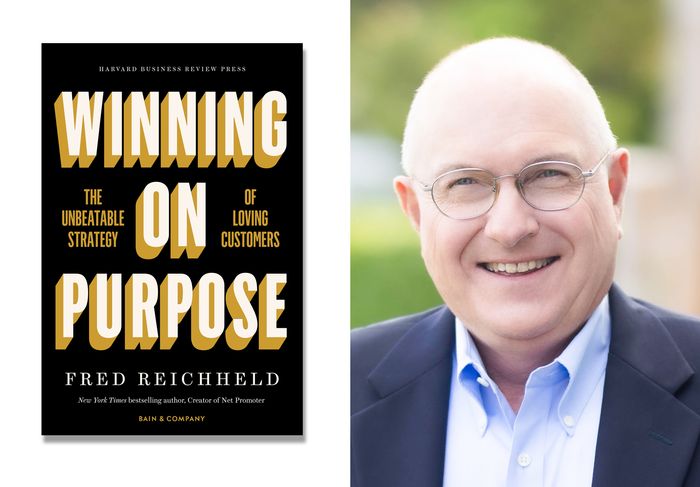
Fred Reichheld is the creator of the Net Promoter system of management and the author of “Winning on Purpose: The Unbeatable Strategy of Loving Customers” (together with Darci Darnell and Maureen Burns), among other books.

Financial News

Daily News on Investing, Personal Finance, Markets, and more!

Financial News

Policy(Required)