The Number One: To the moon! Cryptocurrency was the most popular Reddit topic this year

While Reddit hosts more than 430 million monthly active users in over 100,000 communities who discuss everything under the sun, there was one financial subject that cut through the online chatter this year:  Cryptocurrency. 

The massive social network dropped its Reddit Recap 2021 this week, which rounds up the most popular posts, topics and conversations on its platform over the past year. And cryptocurrency was hands down the most popular topic on Reddit in 2021, with people mentioning “crypto” 6.6 million times. There are also more than 500 cryptocurrency communities on Reddit, and the five most popular ones this year were r/dogecoinr/superstonkr/cryptocurrencyr/amcstock, and r/bitcoin.

The Most Viewed Topics of 2021 on Reddit
  1. Cryptocurrency

  2. Gaming

  3. Sports

  4. Weddings

  5. Health and Fitness

  6. Food and Drink

  7. Movies and Television

Cryptocurrencies including Dogecoin
DOGEUSD,
Ethereum
ETHUSD
and Shiba Inu also topped Google’s 2021 Year in Search, which the Alphabet-owned
GOOGL
search engine released this week. “Dogecoin” and “Ethereum price” landed in the top 10 most-Googled news stories of the past year, both in the U.S. and across the globe. And the top two “Where to buy” Google searches were “Where to buy Dogecoin?” and “Where to buy Shiba coin?”

Read more: Google’s 2021 Year in Search: AMC and GME stocks, Dogecoin, stimulus checks and shortages dominated queries

Whats’s more, a recent Rover.com survey found that pet owners are actually naming their dogs “Doge” and their cats “Bitcoin.”

And a group of crypto investors named ConstitionDAO tried making history last month by crowdfunding more than $40 million to bid on a rare copy of the U.S. Constitution. Alas, it lost out to Citadel founder Ken Griffin, who spent $43.2 million on the historic document. 

Reddit notes that the rise of these retail and crypto investors looking to game the system has had real-world impact, such as the GameStop
GME
short squeeze in January. Maybe. The year-end Reddit report credits redditors with being “catalysts for real-world change” over the past year.

Want intel on all the news moving markets each day? Sign up for our daily Need to Know newsletter

“From r/wallstreetbets and the crash of the One Simple Wish website, to the Battle of the Joshes, in 2021, the most notable moments on Reddit were when redditors took their comments, comradery, conversations, and more from URL to IRL,” Reddit staff wrote in a blog post. 

Reddit’s year-end review notes that users created 366 million posts over the past year, which was a 19% increase year over year. And as of Nov. 9, 2021, Reddit drew more than 2.3 billion total comments and 46 billion upvotes; aka when users show their approval for a post by clicking an “up” arrow, which pushes the post toward the top of the site so that more people can see it.

The three most upvoted Reddit posts of the year came from the retail investors on the WallStreetBets, and the Superstonk page (which describes itself as discussing GameStop stock specifically) saw a 917K% increase in subscribers year over year. 

Those eager to learn more about the sometimes volatile world of meme stocks can check out MarketWatch’s MemeMoney column and weekly MemeMarkets videos on YouTube. Or stay up-to-speed with cryptocurrency market news here

And amid the Great Resignation, the r/antiwork subreddit has exploded. The number of “idlers” (aka members) in this community for “those who want to end work, are curious about ending work, want to get the most out of a work-free life, want more information on antiwork ideas and want personal help with their own jobs/work-related struggles” spiked 279% this year.

This video highlights the “oddities and commodities” discussed on Reddit this year, such as meme stocks like AMC
AMC
and GameStop, supply chain issues, the billionaire space race and the breakout Netflix
NFLX
hit “Squid Game.” 

Check out the full Reddit recap here.

3 top dividend shares to buy now for 2022

Interest rates have remained low throughout 2021. Even with the potential for rates to increase in coming months, it’s likely to only be by 0.15% or similar. Therefore, in 2022 it’s going to be still important for me to try and make my money work hard elsewhere. One way I can do this is via top dividend shares. The income yield that I pick up from these stocks can help me to have a return on my initial capital. Here are some stocks I like.

Some dividend shares from finance

If I had a pot of money to invest in dividend shares, I’d aim to split it up via a selection of stocks. This allows me to reduce my risk from just holding one company. It also allows me to mix up the yields. I can target some high yielding stocks but offset some of this risk by also choosing some more conservative options. When I average out the yields, I should be able to get a nice blend.

5 Stocks For Trying To Build Wealth After 50

Markets around the world are reeling from the coronavirus pandemic… and with so many great companies trading at what look to be ‘discount-bin’ prices, now could be the time for savvy investors to snap up some potential bargains.

But whether you’re a newbie investor or a seasoned pro, deciding which stocks to add to your shopping list can be a daunting prospect during such unprecedented times.

Fortunately, The Motley Fool UK analyst team have short-listed five companies that they believe STILL boast significant long-term growth prospects despite the global upheaval…

We’re sharing the names in a special FREE investing report that you can download today. And if you’re 50 or over, we believe these stocks could be a great fit for any well-diversified portfolio.

Click here to claim your free copy now!

For some conservative options, I’d look to buy finance firms Brewin Dolphin and TP ICAP. Both have similar yields of around 4.3% at the moment. Although they both operate in the finance sector, the companies are quite different. Brewin Dolphin is an investment manager that primarily makes money from providing wealth management advice and by growing the assets held under management.

TP ICAP is a financial broker for banks and other institutions. It helps to facilitate large trades as a middleman, taking a small cut as commission. I like both companies because both should do well if we see the stock market become volatile. Also, these companies shouldn’t be particularly negatively impacted from higher interest rates, which is another plus.

In terms of risks, both these subsectors of finance are very competitive. Both wealth management and brokering have numerous companies competing for the same business. Either of these top dividend shares could lose market share easily if they take their foot off the gas.

Higher yields, but higher risks

When looking for some higher yields, the metal and mining space offers me plenty of options. In fact, the three highest dividend yields in the FTSE 100 at the moment are all from this area. All offer yields of 10% and above. However, these do come with high risks, hence why I’d use other stocks to try and diversify.

For example, Rio Tinto can be classified as a top dividend share with a yield of 10.92%. It’s been paying out generous amounts from the profits made recently. In half-year results, profit after tax rose 271% from the previous period to $12.3bn.

One risk here is that the commodity prices can pull the share price lower. Falling iron ore prices have hurt the Rio Tinto share price, which is down 13% over one year. This helps to boost the dividend yield, but arguably this isn’t a sustainable way of doing it.

Overall, I’m considering buying the top dividend shares mentioned now. By mixing up the types of stocks I go for, I should be able to diversify my risk but keep an attractive overall dividend yield.

Inflation Is Coming: 3 Shares To Try And Hedge Against Rising Prices

Make no mistake… inflation is coming.

Some people are running scared, but there’s one thing we believe we should avoid doing at all costs when inflation hits… and that’s doing nothing.

Money that just sits in the bank can often lose value each and every year. But to savvy savers and investors, where to consider putting their money is the million-dollar question.

That’s why we’ve put together a brand-new special report that uncovers 3 of our top UK and US share ideas to try and best hedge against inflation…

…because no matter what the economy is doing, a savvy investor will want their money working for them, inflation or not!

Best of all, we’re giving this report away completely FREE today!

Simply click here, enter your email address, and we’ll send it to you right away.


Jon Smith and The Motley Fool UK have no position in any of the shares mentioned. Views expressed on the companies mentioned in this article are those of the writer and therefore may differ from the official recommendations we make in our subscription services such as Share Advisor, Hidden Winners and Pro. Here at The Motley Fool we believe that considering a diverse range of insights makes us better investors.

: Backlog at Los Angeles port won’t ease until June, chief says

The backlog at the nation’s busiest container port won’t ease until next summer, said Gene Seroka, executive director of the Port of Los Angeles, on Thursday.

“Our next mile market [is] probably June or July of next year,” Seroka said during a virtual interview with the Washington Post.

Supply-chain bottlenecks at ports around the country driven by high consumer demand as the country has recovered from the coronavirus pandemic has helped push up prices of consumer goods and fueled a 3-year high in the U.S. inflation rate.

The number of container ships carrying imports from China to the U.S. are likely to pick up in the middle or end of February due to the Lunar New Year holiday in Asia. Then in the second quarter, American retailers are going to focus on inventory replenishment during what is traditionally the port’s slack season. The holiday season will likely start early again and last for the rest of the year, Seroka said.

Read: This is how America’s booming demand for goods shattered the supply chain

Seroka said “some progress” is being made in small areas untangling the supply-chain, but noted that labor shortages continue to bedevil his port. The port itself is still short about 4,000 truckers, and warehouses in Southern California could use 8,000-9,000 more workers, he said.

“We’ve got to…find a way to create professions out of both of these sectors,” through higher compensation and more attractive benefits, he said.

“We still are fulfilling nearly only 50% of our available truck appointments every day,” he said.

“If we had more truckers we’d move more cargo. If we had more warehouse workers, we could extend hours,” he added.

One sign of improvement is that there are fewer ships awaiting berths. There are 60 container ships either coming from Asia or waiting for berths at the ports, down from 69 container ships in mid-October, Seroka said.

Just the threat of fines has reduced the number of aging containers that have been clogging the port by more than 50%, he added.

The Los Angeles port is operating 19 hours a day and there have been very few takers for the 3:00 a.m. – 8:00 a.m shift, Seroka said.

The yield on the 2-year U.S. Treasury note
TMUBMUSD02Y,
0.675%

has risen steadily since the summer on the prospect that the Federal Reserve will raise its benchmark interest rates next year to combat higher inflation partly caused by shortages due to supply chain problems.

The Ratings Game: U.S. airlines are in tough spot, but its ‘too early’ to tell omicron impact, Citi says

U.S. travelers have booked fewer flights the last few weeks, but it remains to be seen whether that is due to concerns about the omicron variant of the novel coronavirus.

That’s from Citi analyst Stephen Trent, who added he continues to favor U.S. airlines more exposed to the domestic market, as well as low-cost ones, as it might be “a little too early to say” the full extent of omicron’s impact on air-travel plans, especially for international travelers.

“Within the group, (Frontier Group Holdings Inc.)
ULCC,
-1.82%

is showing the strongest 4Q (passenger) revenue trends on its top 25 routes, while (United Airlines Holdings Inc.’s)
UAL,
-1.58%

relatively heavy international route network puts it in the opposite corner,” Trent said.

American Airlines Group Inc.
AAL,
-0.95%

is in the middle, as its passenger revenue “looks a little more defensive than United’s” as the domestic and short-haul international to Mexico, the Caribbean, and Central America continues to outperform trans-Atlantic and trans-Pacific passenger flows, he said.

Going into Thanksgiving week, traffic volumes “looked robust and oil prices had begun to moderate, and then the omicron variant reared its head,” he said.

Trent said Citi’s analysis showed November traffic volumes for the domestic market down around 16%, 17% compared with November 2019, with passenger revenue likely down about 28% over the same period.

“December trends, which had been steadily improving in recent weeks, took a slight step back over the last week or so,” even as this year’s early Thanksgiving as compared with 2019 “might have created a tougher December comp,” he said.

Trent said he expects revenue from domestic passengers to fall between 30% to 35% in December as compared with December 2019. He continues to favor Frontier among the U.S. low-cost carriers and Delta Air Lines Inc.
DAL,
-1.00%

among U.S. legacy airlines.

“The COVID virus threat is certainly not gone—and may never disappear,” he said. “However, going forward, the sector’s prosperity could hinge, in part, on public policy that thoughtfully balances public health concerns against potentially significant socio-economic dislocation associated with lock-downs.”

The U.S. Global Jets exchange-traded fund
JETS,
-1.09%
,
which slumped 1.2% on Thursday, has shed 7.1% over the past three months, while the S&P 500 index
SPX,
-0.32%

has gained 4.3%.

Here’s one of my best stocks to buy now!

On the lookout for the best stocks to buy now for my portfolio, I believe Sage Group (LSE:SGE) is one such pick. Here’s why.

UK tech stock

Sage Group is one of the UK’s largest listed tech firms. It specialises in accounting and payroll software for small to mid-sized businesses. A recent shift in strategy to migrate its products to the cloud software-as-a-service (SaaS) subscription model seems to be working.

5 Stocks For Trying To Build Wealth After 50

Markets around the world are reeling from the coronavirus pandemic… and with so many great companies trading at what look to be ‘discount-bin’ prices, now could be the time for savvy investors to snap up some potential bargains.

But whether you’re a newbie investor or a seasoned pro, deciding which stocks to add to your shopping list can be a daunting prospect during such unprecedented times.

Fortunately, The Motley Fool UK analyst team have short-listed five companies that they believe STILL boast significant long-term growth prospects despite the global upheaval…

We’re sharing the names in a special FREE investing report that you can download today. And if you’re 50 or over, we believe these stocks could be a great fit for any well-diversified portfolio.

Click here to claim your free copy now!

As I write, shares in Sage are trading for 820p, which is a 43% return since this time last year when the shares were trading for 573p. At current levels, the Sage share price has only recently surpassed pre-crash levels.

Why I like Sage shares

Tech stocks have become more defensive since the pandemic began and the market crashed. Defensive stocks refers to stocks with resilient and predictable earnings despite worsening market conditions. Typical defensive stocks used to be healthcare, utilities, and transport. The pandemic has changed this. The reliance on technology for day-to-day operations of businesses has increased and I believe it will continue to do so. Sage’s products are key components for the running of any type of business. Despite macroeconomic pressures on small to medium-sized businesses, the need for accounting and payroll services will always be a requirement.

Sage has a good track record of performance as well as impressive recently reported results. I understand that past performance is not a guarantee of the future but I use it as a gauge nevertheless. Sage has generated consistent growth and profitability has been excellent too. Coming up to date, audited results for the year ending September 2021 were released last month. The shift towards SaaS seems to be paying off. Sage reported organic recurring revenue growth of 5.4%, driven by growth in its Sage Business Cloud division of 19%. Furthermore, annualised recurring revenue increased by 8%. Cash generation was strong, supplementing a robust, cash-rich balance sheet.

At current levels, Sage looks cheap to me. It sports a price-to-earnings ratio of just 30. I think this is cheap for a tech stock with such a good track record of performance and growth year-on-year.

Risks involved

Despite believing Sage is one of the best stocks to buy, I know that it still comes with risks. Competition among tech stocks is intense and I must take this into account. For example, Xero is a new entrant into Sage’s marketplace that could eat away at Sage’s burgeoning market share with its own offering and hamper Sage’s performance.

Overall, I view Sage as a quality company with defensive attributes and a good track record. Recently, analysts noted they expect the share price to rise to the 900p level, which means its recent upward trajectory could continue. It is worth noting that forecasts can change and aren’t something to rely on. 

It also pays a dividend that will make me a passive income, although dividends aren’t guaranteed. Furthermore, it has a good balance sheet to ward off any issues if they were to arise. I would add the shares to my portfolio at current levels.

FREE REPORT: Why this £5 stock could be set to surge

Are you on the lookout for UK growth stocks?

If so, get this FREE no-strings report now.

While it’s available: you’ll discover what we think is a top growth stock for the decade ahead.

And the performance of this company really is stunning.

In 2019, it returned £150million to shareholders through buybacks and dividends.

We believe its financial position is about as solid as anything we’ve seen.

  • Since 2016, annual revenues increased 31%
  • In March 2020, one of its senior directors LOADED UP on 25,000 shares – a position worth £90,259
  • Operating cash flow is up 47%. (Even its operating margins are rising every year!)

Quite simply, we believe it’s a fantastic Foolish growth pick.

What’s more, it deserves your attention today.

So please don’t wait another moment.

Get the full details on this £5 stock now – while your report is free.


Jabran Khan has no position in any shares mentioned. The Motley Fool UK has recommended Sage Group. Views expressed on the companies mentioned in this article are those of the writer and therefore may differ from the official recommendations we make in our subscription services such as Share Advisor, Hidden Winners and Pro. Here at The Motley Fool we believe that considering a diverse range of insights makes us better investors.

: How an unexpected pandemic trend could upend where you live in retirement

Fay, a 51-year old mother of twins manages a full-time job as an X-ray technician and, as she sardonically describes, spends “oodles of her free time” helping her aging parents.

Sandwiched between caring for both young and old, she describes her routine, “When I am not at the hospital, taking care of my own house, taking the boys to practice or to SAT prep, or to whatever else they do, I am helping my folks.” 

Rolling her eyes, she looks away and remarks, “On my day off I would take one or both of them grocery shopping. It was an all-day affair.” 

Online grocery shopping became a lifeline to many during the pandemic. Estimates suggest that online grocery shopping increased five times faster than forecast before COVID-19. Acosta Shopper Community Survey recently reported that 23% of respondents said they plan to increase their online grocery shopping over the next year. Another nearly two-thirds (64%) plan to continue shopping online at levels adopted during the pandemic.

Trends in online grocery shopping would not ordinarily intersect with discussions of senior housing. Online grocery buying, however, is indicative of the services and technologies adopted during the pandemic that are likely to change the decision calculus of older adults and their families when considering senior housing.

The pandemic made Fay’s former shopping routine impossible. She did not want to expose her parents or herself to possible infection. She signed up online with her local grocery store and arranged for home delivery.

“It became so easy that I signed up my family too,” Fay says. “That little change saved me nearly a full day of my life wandering up and down store aisles.”

As the pandemic unfolded, MIT AgeLab research showed increasing interest and adoption of online services as well as technology. Younger and older adults reported that during the pandemic the use of video chat, smart speakers, door cameras, and tablets became more attractive.

Read: Are you healthy enough to retire?

High-tech increasingly was filling a gap where high-touch was not always possible. Recent trends in online grocery shopping indicate what many might have guessed, as the pandemic ebbs, apps are not being deleted from phones, devices are not being packed back into boxes, and shopping for exciting purchases such as towels and tuna fish are best done online.

People like Fay and her parents effectively hacked an entirely new option to senior housing — virtual assisted living. Nearly everything from online groceries, to delivery of household staples and medications, reduced, if not eliminated, the travel and time demands on family caregivers.

Read: Living longer often means more years spent with serious illness — how to increase your health span

Smart technologies once considered novelties provided a means not just to stay in contact, but to check in on how mom and dad were doing as well as to ensure their security by ‘seeing’ who might be at their door. Older adults also discovered that this new virtual assisted lifestyle not only reduces demands on adult children, but promises the possibility to extend the capacity to remain in the home they love.

Be a smarter investor. Read Need to Know every morning.

The implications for the senior housing industry are both immediate and longer term. The discussion, let alone the decision, to move to senior living can now be delayed by many. While showing modest improvement, senior housing resident numbers, down since the pandemic, are likely to experience a sluggish recovery not necessarily due to continued pandemic fears, but due to tech-enabled services that families and older adults see as an alternative to moving.

The average age of assisted living residents has been increasing long before COVID-19 — average new resident age is now in the mid-80s. Virtual assisted living is likely to further delay entering senior housing thereby further increasing the average age of new residents.

With increased resident age often comes additional functional challenges and disease acuity — exacerbating the impact of the industry’s staffing crisis and making operations more complex and costly.

While virtual assisted living does greatly increase the competitive advantage of home over senior housing, there is a bright spot for investors and operators. Today’s model of senior housing is predicated on experience, care, and place.

The convergence of technology, consumer behavior, and pandemic effects have put senior housing investors and operators at a strategic crossroads. Just as the grocery business has discovered that it must serve its customer in both the store aisle as well as the customer’s front porch, the senior housing industry must decide if they will continue to base their value proposition only on the delivery of experience and care in their home, or wherever the consumer and their families choose to call home.

Joseph Coughlin, Ph.D., leads the Massachusetts Institute of Technology AgeLab. Researcher, teacher, speaker, and adviser, Coughlin examines the market and societal implications of consumer behavior and technology trends across the generations. His recent book is The Longevity Economy: Unlocking The World’s Fastest-Growing, Most Misunderstood Market. Follow him on Twitter @josephcoughlin.

ETF Wrap: Forget crypto! Some ETF providers bet that this $800 billion industry in 2024 is fund investing’s new frontier

Happy Thursday, ETF Wrap readers! It is a been a roller-coaster ride on Wall Street. Stock markets were knocking on the door off a correction just last week, after being jolted lower by the new omicron variant of COVID. Now, the S&P 500
SPX,
-0.34%

stands within shouting distance of its Nov. 18 record close. What a ride!

We’ll discuss some strategies around dealing with volatile markets. And we’ll also talk about the metaverse trend, which some are proclaiming as a new frontier for the internet and communication. But is it fertile ETF ground?

Send tips, or feedback, and find me on Twitter at @mdecambre or LinkedIn, as some of you are wont to do, to tell me what we need to be jumping on.

Most important, sign up here for ETF Wrap sent fresh to your inbox weekly.

Read: What is an ETF? We’ll explain.

The good…
Top 5 gainers of the past week

%Performance

VanEck Oil Services ETF
OIH,
-1.86%
9.8

U.S. Oil Fund LP
USO,
-1.20%
9.7

U.S. Global Jets ETF
JETS,
-1.32%
9.4

SPDR S&P Oil & Gas Exploration & Production ETF
XOP,
-1.65%
9.0

iShares MSCI Brazil ETF
EWZ,
-2.52%
7.7

Source: FactSet, through Wednesday, Dec. 7, excluding ETNs and leveraged productsIncludes NYSE, Nasdaq and Cboe traded ETFs of $500 million or greater

…and the bad
Top 5 decliners of the past week

%Performance

Invesco Optimum Yield Diversified Commodity Strategy No K-1 ETF
PDBC,
-0.67%
-23.4

ProShares Bitcoin Strategy ETF
BITO,
-4.37%
-10.9

Amplify Transformational Data Sharing ETF
BLOK,
-3.85%
-4.3

VanEck Rare Earth/Strategic Metals ETF
REMX,
-1.82%
-3.5

Global X Lithium & Battery Tech ETF
LIT,
-2.44%
-2.3

Source: FactSet

Grayscale’s brief ETF sojourn

Here’s a fun one to get our readers started off.

Since at least Monday, FactSet System Inc. FDS had listed crypto-focused asset manager Grayscale Investment’s Bitcoin Trust GBTC as Grayscale Bitcoin Trust ETF on its platform, which is used by professional investors and other Wall Street clients, including MarketWatch publisher Dow Jones.

And as all of readers know, the Grayscale fund, the largest bitcoin investment vehicle on the planet, which boasts a roughly $27 billion market value as of Tuesday’s close, isn’t an ETF—far from it. ETFs can be bought and sold like stocks and offer transparent pricing. Grayscale is a closed-end product akin to a mutual fund and it has aspirations to convert to an ETF, but it isn’t there yet.

It isn’t clear what happened on the FactSet data platform but the error has since been fixed but for at least a day or so, Grayscale’s wish of being an ETF became a reality.

No TLC for TLT

It is no secret that Treasurys, similar to stocks these past few weeks, have had a turbulent ride. However, the folks at Bespoke Investment Group make the case that plain-vanilla bonds are experiencing volatility that one would normally associate with equities, not bonds that promise stability due to their steady cash flows.

Gauged by the popular iShares 20+ Year Treasury Bond ETF
TLT,
+0.62%

against the SPDR S&P 500 ETF Trust
SPY,
-0.31%

bond volatility is reaching extreme negative levels. The folks at Bespoke put it this way. “Since 2002, in fact, there have only been three other periods where the spread was at similar or more extreme levels,” referring to a measure of the spread between daily moves for the SPY versus TLT going back to 2002.

“When the readings are positive, it indicates that SPY has been more volatile than TLT, while negative readings indicate that TLT has been more volatile than SPY,” Bespoke writes (see attached chart).


Bespoke Investment Group

That’s so meta

What started as a much-maligned name-change by Facebook Inc.
FB,
+0.91%
,
aka Meta Platforms Inc., has turned into a dash for investor cash. Bloomberg writes that ETF providers are rushing to create metaverse funds offering exposure to virtual-reality related enterprises after Zuckerberg referred to that nascent segment of internet technology as “the next frontier.”

So far, there is the $830 million Roundhill Ball Metaverse ETF
META,
-1.50%
,
which launched back in June and the smallish Fount Metaverse ETF
MTVR,
-0.29%
,
which kicked off in late October.

Now, First Trust Advisors LP recently filed to launch the Indxx Metaverse ETF, and Bloomberg estimates, citing industry analysts, that the metaverse market will reach around $800 billion in two years, boasting annual growth of 13%.

“Asset managers are increasingly looking to long-term thematic strategies where they can provide a unique approach and often charge a premium to more traditional index based ETFs,” said CFRA’s head of mutual fund and ETF research Todd Rosenbluth.

“There are more than 200 thematic ETFs managing $135 billion in assets,” he notes.

To be sure, the metaverse remains an industry that is nascent and whose potentially isn’t completely understood.

BlackRock spreads the love

The Wall Street Journal reports that asset management behemoth BlackRock
BLK,
+0.07%

is pulling $2 trillion in ETF assets that have been custodied by State Street
STT,
+0.82%

for more than a decade.

BlackRock is doing this to reduce its reliance on a small number of parties and lower the fees it pays for back-office work. Some of the administrative work that State Street handled is being shifted to Citigroup
C,
-0.82%
,
JPMorgan Chase & Co.
JPM,
-0.42%

and Bank of New York Mellon Corp.
BK,
+0.87%
,
WSJ reports.

ETFs to help you sleep?

Choppy markets come with the territory on Wall Street. However, not everyone enjoys the type of stomach-churning moves in stocks that markets experienced at the end of November and into the early part of December, amid the emergence of omicron.

Luckily, there are ETFs for that — but they are not for everyone.

We talked to Jay Pestrichelli, CEO of ZEGA Financial, which looks after $600 million, and kicked off a low-volatility ETF about five months ago that has drawn about $100 million in assets thus far.

The ZEGA Buy & Hedge ETF
ZHDG,
-0.23%

 carries an official expense ratio of $1.02% (which translates to an annual cost of a little over $10 for every $1,000 invested) and is an actively managed fund that uses options to limit the downside, while capping downside risk.

Pestrichelli said that typical low-vol strategies involve buying a stock and purchasing a put as a hedge, or buying a put-spread as a hedge.

“We don’t do that,” he said.

Instead, Pestrichelli said that ZEGA Buy & Hedge ETF aims to buy call [options] and those options represent “the notional value but also embed protection,” for an investor in the ETF.

An option is a derivative security that allows the buyer to buy or sell a security at a particular price within a set time frame. That price is known as the strike price. Call options allow the purchaser to buy, while a put option allows the purchaser to sell at specified price and time. When you purchase a put, you will profit when a stock drops in value and when you purchase a call you will profit when the stock rises above a specified level. Because options can be bought for a fraction of the underlying stocks value it is often implemented as a strategy to express a directional view on an asset or to mitigate swings in value.

“Using long calls as exposure to the market, the most I could lose is 8% to 10% from a stock market perspective,” the ZEGA CEO said. The ETF buys calls on SPY, aka SPDR S&P 500 ETF Trust. The ideal candidate for this ETF is someone nearing retirement who wants to limit losses, the fund provider said. The fund also invests in companies like American Airlines
AAL,
-1.24%

and Occidental Petroleum
OXY,
-1.63%
.

“The portion of the portfolio invested in equity options provides long-term exposure to the equity markets, seeking upside potential while mitigating downside risk. The portion of the portfolio invested for income seeks cash generation to help purchase the equity options,” the folks at ZEGA write in a statement.

In the month to date, the ETF is up 2.2%, compared with a 2.6% gain for the S&P 500, a 3.6% rise for the Dow Jones Industrial Average
DJIA,
-0.07%

and a 0.8% increase for the Nasdaq Composite Index
COMP,
-0.84%
.

Pestrichelli said that if your “goal is to beat the stock market, this is not aggressive enough” for you, but if you’re aim is to sleep at night, ZDHG may be worth a look.

Low-Vol options

Competitors include Amplify BlackSwan Growth & Treasury Core ETF
SWAN,
-0.07%
,
which manages over $900 million and has been around since 2018. SWAN is down 0.2% in the month to date, but does carry an expense ratio of 0.49%.

One of the largest ETFs aiming to mitigate market gyrations, the iShares MSCI USA Min Vol Factor ETF
USMV,
-0.20%
,
manages $29 billion and is up 2.7% so far in November and carries a 0.15% expense ratio. USMV was launched back in 2011. Also Invesco’s S&P 500 Low Volatility ETF
SPLV,
-0.06%
,
which also has been around for a decade, is up 4% in November and carries a 0.25% expense ratio.

Visual of the week?

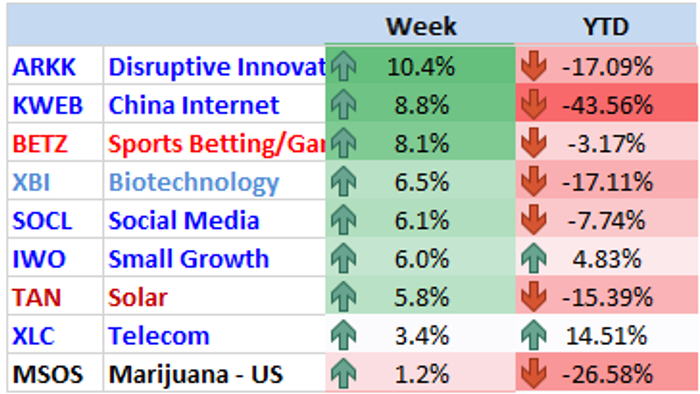
Is it time to catch some falling knives? That’s one question that Instinet’s Frank Cappelleri has us pondering as he highlights a batch of ETFs that have had a nice weekly run but have been otherwise in the doghouse. Those include Cathie Wood’s Ark Innovation ETF
ARKK,
-3.47%
,
KranShares CSI China Internet ETF
KWEB,
-0.59%
,
SPDR S&P Biotech ETF
XBI,
-2.13%
,
Roundhill Sports Betting & Gaming ETF
BETZ,
-1.16%
,
among others. Check it out:


via Instinet

Let us know if you think it’s time to dive back into any of these names.

Good ETF reads

The Conversation: How the auto and petroleum industries knew for 100 years how deadly leaded gas was, but sold it anyway

On the frosty morning of Dec. 9, 1921, in Dayton, Ohio, researchers at a General Motors
GM,
-1.28%

lab poured a new fuel blend into one of their test engines. Immediately, the engine began running more quietly and putting out more power.

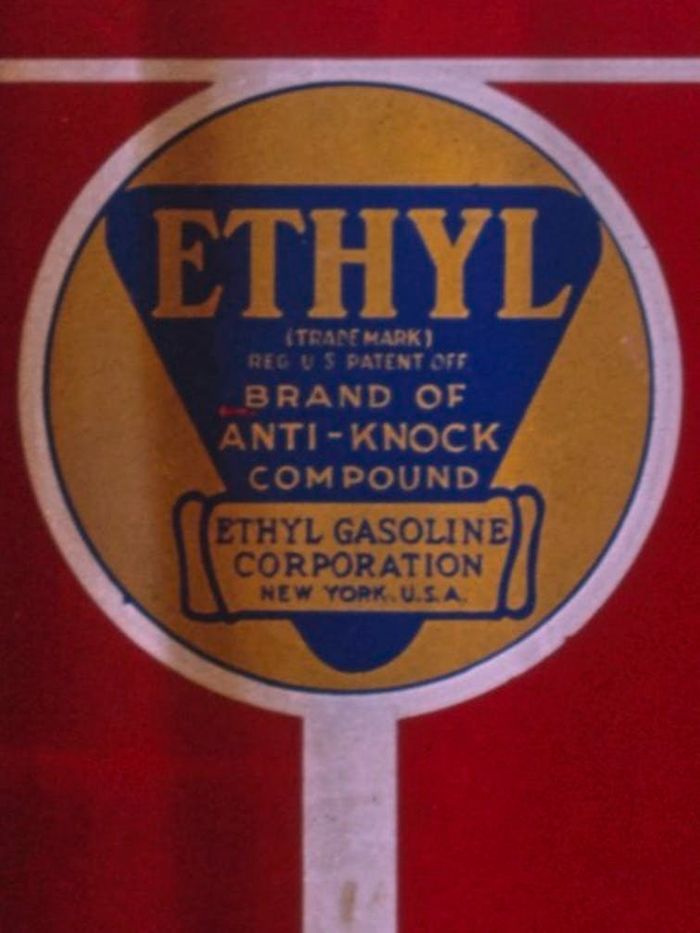
The new fuel was tetraethyl lead. With vast profits in sight—and very few public-health regulations at the time—General Motors Co. rushed gasoline diluted with tetraethyl lead to market despite the known health risks of lead. They named it “Ethyl” gas.

It has been 100 years since that pivotal day in the development of leaded gasoline. As a historian of media and the environment, I see this anniversary as a time to reflect on the role of public-health advocates and environmental journalists in preventing profit-driven tragedy.

Scientists working for General Motors discovered in the 1920s that tetraethyl lead could greatly improve the efficiency and longevity of engines.


Courtesy of General Motors Institute

Lead and death

By the early 1920s, the hazards of lead were well known—even Charles Dickens and Benjamin Franklin had written about the dangers of lead poisoning.

When GM began selling leaded gasoline, public-health experts questioned its decision. One called lead a serious menace to public health, and another called concentrated tetraethyl lead a “malicious and creeping” poison.

 Researchers have estimated that decades of burning leaded gasoline caused millions of premature deaths, enormous declines in IQ levels and many other associated social problems.

General Motors and Standard Oil
XOM,
-0.50%

waved the warnings aside until disaster struck in October 1924. Two dozen workers at a refinery in Bayway, N.J., came down with severe lead poisoning from a poorly designed GM process. At first they became disoriented, then burst into insane fury and collapsed into hysterical laughter. Many had to be wrestled into straitjackets. Six died, and the rest were hospitalized. Around the same time, 11 more workers died and several dozen more were disabled at similar GM and DuPont
DD,
+0.09%

plants across the U.S.

Fighting the media

The auto and gas industries’ attitude toward the media was hostile from the beginning. At Standard Oil’s first press conference about the 1924 Ethyl disaster, a spokesman claimed he had no idea what had happened while advising the media that “Nothing ought to be said about this matter in the public interest.”

More facts emerged in the months after the event, and by the spring of 1925, in-depth newspaper coverage started to appear, framing the issue as public health versus industrial progress.

A New York World article asked Yale University gas warfare expert Yandell Henderson and GM’s tetraethyl lead researcher Thomas Midgley whether leaded gasoline would poison people. Midgley joked about public-health concerns and falsely insisted that leaded gasoline was the only way to raise fuel power. To demonstrate the negative impacts of leaded fuel, Henderson estimated that 30 tons of lead would fall in a dusty rain on New York’s Fifth Avenue every year.

Industry officials were outraged over the coverage. A GM public relations history from 1948 called the New York World’s coverage “a campaign of publicity against the public sale of gasoline containing the company’s antiknock compound.” GM also claimed that the media labeled leaded gas “loony gas” when, in fact, it was the workers themselves who named it as such.

Leaded gas was marketed as Ethyl, a joint brand of Standard Oil and General Motors.


John Margolies/Library of Congress

Attempts at regulation

In May 1925, the U.S. Public Health Service asked GM, Standard Oil and public-health scientists to attend an open hearing on leaded gasoline in Washington. The issue, according to GM and Standard, involved refinery safety, not public health. Frank Howard of Standard Oil argued that tetraethyl lead was diluted at over 1,000 to 1 in gasoline and therefore posed no risk to the average person.

Public-health scientists challenged the need for leaded gasoline. Alice Hamilton, a physician at Harvard, said, “There are thousands of things better than lead to put in gasoline.” And she was right. There were plenty of well-known alternatives at the time, and some were even patented by GM. But no one in the press knew how to find that information, and the Public Health Service, under pressure from the auto and oil industries, canceled a second day of public hearings that would have discussed safer gasoline additives like ethanol, iron carbonyl and catalytic reforming.

By 1926, the Public Health Service announced that they had “no good reason” to prohibit leaded gasoline, even though internal memos complained that their research was “half baked.”

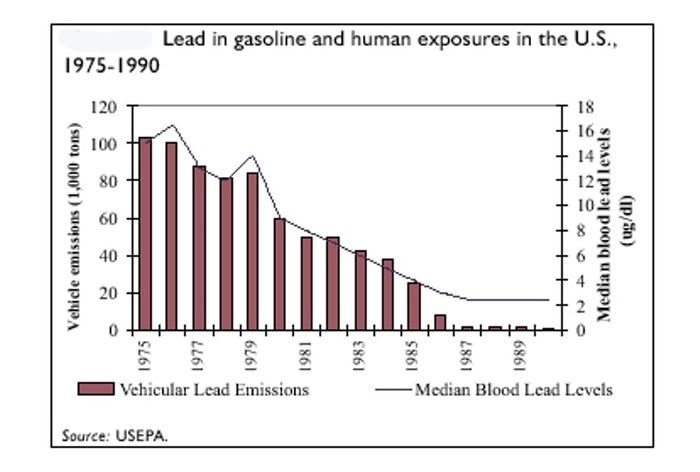
As leaded gasoline fell out of use, lead levels in people’s blood fell as well.


EPA

The rise and fall of leaded gasoline

Leaded gasoline went on to dominate fuel markets world-wide. Researchers have estimated that decades of burning leaded gasoline caused millions of premature deaths, enormous declines in IQ levels and many other associated social problems.

In the 1960s and 1970s, the public-health case against leaded gasoline re-emerged. A California Institute of Technology geochemist, Clair Cameron Patterson, was finding it difficult to measure lead isotopes in his laboratory because lead from gasoline was everywhere and his samples were constantly being contaminated. Patterson created the first “clean room” to carry on his isotope work, but he also published a 1965 paper, “Contaminated and Natural Lead Environments of Man,” and said that “the average resident of the U.S. is being subjected to severe chronic lead insult.”

In parallel, by the 1970s, the U.S. Environmental Protection Agency decided that leaded gasoline had to be phased out eventually because it clogged catalytic converters on cars and led to more air pollution. Leaded gasoline manufacturers objected, but the objections were overruled by an appeals court.

The public-health concerns continued to build in the 1970s and 1980s when University of Pittsburgh pediatrician Herbert Needleman ran studies linking high levels of lead in children with low IQ and other developmental problems. Both Patterson and Needleman faced strong partisan attacks from the lead industry, which claimed that their research was fraudulent.

Both were eventually vindicated when, in 1996, the U.S. officially banned the sale of leaded gasoline for public-health reasons. Europe was next in the 2000s, followed by developing nations after that. In August 2021, the last country in the world to sell leaded gas, Algeria, banned it.

A century of leaded gasoline has taken millions of lives and to this day leaves the soil in many cities from New Orleans to London toxic.

The leaded gasoline story provides a practical example of how industry’s profit-driven decisions—when unsuccessfully challenged and regulated—can cause serious and long-term harm. It takes individual public-health leaders and strong media coverage of health and environmental issues to counter these risks.

Bill Kovarik is a professor of communication at Radford University.

This commentary was originally published by The Conversation—A century of tragedy: How the car and gas industry knew about the health risks of leaded fuel but sold it for 100 years anyway

Your Digital Self: Tesla and Elon Musk have had a wild run this year. Nothing was as crazy, or as intriguing, as the Tesla Bot

At Tesla’s AI Day event in August, CEO Elon Musk promised the company would build a humanoid robot called Tesla Bot (code name “Optimus”), and that we’d likely see a prototype next year.

A lot has happened to Tesla in 2021. As the year draws to a close, I’d like to revisit the Tesla Bot with some time removed to break down what has to be Musk’s wildest claim to date.

Also this year, Tesla released the Plaid version of the Model S, which accelerates to 60 miles per hour in two seconds and hits 200 mph — making it the quickest accelerating production car in the history of the world. The electric-vehicle maker is now producing cars at a 1 million annual run rate, and is building more factories than ever before. Tesla is on fire, and that includes its stock price.

Back to the Bot. First, the basics. The 5-foot, 8-inch robot is designed to weigh 125 pounds, be able to carry 45 pounds and move as fast as 5 miles per hour. It will have five fingers on each hand and perform “boring, repetitive and dangerous” tasks. To build it, Tesla
TSLA,
-3.52%

will rely on a myriad of sensors, joints, actuators, the company’s self-driving technology implemented in its cars and advances made in the development of the AI.

Tesla sympathizers and influencers came out of the woodwork to speculate on the brave new world the company will usher in come 2022. The same individuals (and some media outlets) were equally ecstatic in 2016 when Tesla announced Solar Roof on the “Desperate Housewives” set.

Fast forward to 2021, and the company is facing significant issues with what turned out to be a rushed, inadequately researched product, causing cost overruns for Tesla, and delays and headaches for customers.

Five years ago, Musk also promised full self-driving, or FSD, a feature far removed from Level 5 autonomy, the highest. In 2021, FSD is still at Level 2, as Tesla was forced to disclose in a letter to California’s Department of Motor Vehicles.

The (broken) promise of robotaxis

The trend never seems to end. Musk had a similar slip of the tongue in 2019, when he announced 1 million autonomous Tesla robotaxis would be on the road by 2020. Instead of cars capable of autonomously shuttling passengers around, making money for their owners, we got “smart summon,” a feature that’s anything but autonomous.

Right after the rollout, owners complained about various issues, ranging from weird pathfinding patterns to collisions resulting in thousands of dollars of damage. Even this hit-and-miss feature was oversold by Musk.

But this is just a tip of the iceberg. The self-proclaimed “Technoking of Tesla” made so many promises he never fulfilled that there are now websites dedicated to his failures to deliver.

Overselling and underdelivering

Tesla Bot seems to be the case of same-old, same-old. Musk is still doing what he does best — overselling and underdelivering. “Our cars are semi-sentient robots on wheels,” he has said. No, they’re not. They can barely pull off the smart summon feature, let alone demonstrate any kind of sentience other than limited Level 2 autonomy provided by FSD.

In the case of the Tesla Bot, provided Musk ever builds one, these inadequacies will be even more evident. The eyes of the robot will be the same cameras used for Tesla’s Autopilot feature, and a “full self-driving” computer will be placed in the torso. So, that’s the same FSD that requires a driver’s constant attention. It’s also the one that causes collisions and makes wrong calls.

Finally, a vehicle’s movement is far simpler than that of a robot. Robots, especially humanoid ones, need to execute far more complex maneuvers using inverse kinematics, servos and actuators, as well as plethora of sensors in order to make sense of, and to interact with, the environment.

It’s unreasonable to expect that a navigation system that is still in development and proved to be inadequate even for use in cars would somehow significantly evolve by 2022 in order to master complex environments Tesla Bot is expected to navigate.

Those bots should be able to autonomously buy groceries. Judging by the current performance of the FSD, you can expect them to bump into people, get hit by cars, get lost as they miscalculate trajectories, fall over and get damaged, and so on. I don’t believe they could pose a threat to humanity other than getting in the way.

More complex than a car

Simply getting a robot to walk straight and navigate terrain is a gargantuan feat in itself. Boston Dynamics and Agility Robotics have been trying to crack this issue for many years. They’ve achieved impressive results in the end, but it’s been a long and bumpy ride that only serves to demonstrate the enormity of the problem. Musk could be able to solve it, but judging from his track record, that won’t happen by next year.

Does this mean the Tesla Bot will never see the light of day? Not necessarily. Musk usually tries hard to accomplish the projects he promotes and is a much better engineer than a promoter. Indeed, if he were less hype-y about the Tesla Bot announcement, this article would have a totally different tone.

Chances are that the event served to push the stock price higher, sidestep the fear, uncertainty and doubt caused by investigative news, appease investors and attract new talent for Tesla’s robotics division. Musk has been a trailblazer for many industries, and here we see him doing the same for robotics. Consumer and industrial robotics have been around for years, but never like this.

As Musk stumbles over himself to make a Tesla Bot prototype, crashing through many deadlines and prototypes in the process, he may disappoint many of his ardent followers, but I’m certain he will also solve multiple genuine problems in robotics, which will ultimately serve to push forward the idea he was trying to promote with his robot.

A more realistic timeframe

In the process, Tesla may end up being the first company that creates robots such as the Tesla Bot but highly unlikely in the timeframe Musk proposes.

So, what timeframe could be more realistic?

In an interview for Reuters, Raj Rajkumar, a professor of electrical and computer engineering at Carnegie Mellon University, was asked that same question. He said he was fairly certain that “it will be much longer than 10 years before a humanoid bot from any company on the planet can go to the store and get groceries for you.”

Do you think Tesla has what it takes to pull this off? Finally, what’s your take on robots like the Tesla Bot? Do we really need them? Let me know in the comment section below.

Financial News

Daily News on Investing, Personal Finance, Markets, and more!

Financial News

Policy(Required)