Netflix’s NFLX, -0.33%
much-hyped live-action adaptation of the anime classic “Cowboy Bebop” has been canceled less than three weeks after the show premiered, which was first reported by The Hollywood Reporter.
The space western based on Shinichirō Watanabe’s cult 1998 anime series follows three bounty hunters — Spike Spiegel (played by John Cho), Jet Black (Mustafa Shakir) and Faye Valentine (Daniella Pineda) — who hunt down the solar system’s most dangerous criminals.
The teaser art got a mixed reaction from fans ahead of the premiere, however, and the 10-episode first season has had similar mixed reception. It’s certified “rotten” on Rotten Tomatoes, with only a 46% positive rating from critics, and a 55% average audience score.
And while the show drew almost 74 million viewing hours worldwide since it debuted, according to Netflix’s Top 10 site, it dropped 59% for the week of Nov. 29 to Dec. 5.
Insiders told THR that the decision to cancel was made by balancing the show’s viewership and cost.
The cast and crew shared their disappointment on Twitter TWTR, -2.71%
on Thursday and Friday. Co-executive producer Javier Grillo-Marxuach wrote, “I truly loved working on this” in one tweet. In another, he mused, “Had so much cool s— spanned for [season 2.]”
Cast member Mason Alexander Park, who plays Gren, tweeted back to Grillo-Marxuach with “A joy to work on this with you.”
Lead actor Cho simply tweeted a GIF of Tom Selleck saying, “I’m okay.”
“Seriously, one of my favorite shows ever. It hit all the right notes and was so much fun,” mourned one fan on Twitter, who tried pitching it to rival streamers. “Maybe you can take it elsewhere for a continuation? Hulu? Apple? I don’t know.”
As we continue navigating pandemic life, supply chain issues have caused disruptions and delays, but don’t fret: other gifts besides the hottest new toy or tech gadget can be given. Contributing to 529s, for example, can reduce your holiday shopping stress while making a meaningful impact through the gift of education.
What is a 529 and why contribute to it?
A 529 plan is a tax-advantaged investment account used to save for qualified educational expenses. For those with disabilities, an ABLE account (also known as a 529A account) works similarly but covers qualified disability-related expenses instead of only qualified education-related expenses.
“A gift toward a 529 college savings account is an investment in a child’s future and as such, an extremely thoughtful gift to give as it will likely grow in value versus depreciate as many traditional gifts often do,” says author Patricia Roberts — who is also the chief operating officer at Gift of College Inc., an online gifting platform that helps facilitate 529 and ABLE account contributions.
Contributing to a 529 is a triple win, she says. The gift giver wins by finding a gift they feel good about and is easy to give, while the student’s parents or guardians win by receiving help with the arduous task of saving for education. And, the student wins by accumulating more educational savings and potentially less student loan debt down the road.
Additional benefits for the gift giver
As the gift giver, you may be eligible for additional benefits on top of finding a convenient and suitable gift.
“The first one is taxes; some states allow tax breaks for contributions. If you are not the parent, then you need to decide if you want the tax deduction or if you want the parents to take the tax deduction,” says Clayton Quamme, a certified financial planner and partner at AP Wealth Management in Augusta, Georgia.
If the gift giver doesn’t have any state income tax liability, giving cash to the student’s parents or guardians could make sense, Quamme says. This way, the parents or guardians could use the cash to contribute toward the student’s 529 while taking advantage of a reduction in their state income tax liability.
If opening a 529 account, the gift giver can also retain control of their monetary gift, if desired.
“One of the key features of the 529 plan is that the account owner retains control of the funds. You want to decide if you want to maintain control or if you want someone else, like the parents, to control the account,” he says.
The accounts have built-in flexibility for the 529 owner, who can name a different account beneficiary at any time. This means that if the current beneficiary or student doesn’t use the funds, the owner can change the beneficiary, allowing someone else to use the funds.
Caveats to keep in mind
As with any financial product, there are essential details to think through.
Due to federal gift tax limits, one caveat to consider is the size of this gift along with any other gifts to the same recipient or their parents. Unless you’re giving more than $15,000 in 2021, you shouldn’t need to worry. However, if the amount is over $15,000, Quamme suggests discussing your gift with your tax and financial advisors first to understand any potential gift tax ramifications.
“529s have a unique rule that allows you to gift up to $75,000 for a child in one year. It is a common estate planning strategy, but you need to make sure you file the correct forms in the year you do it,” he says.
Also, you may not be the only one contributing to the student’s 529 or education savings.
“If you are a grandparent or family member considering a 529 plan contribution, we recommend you coordinate your contributions with other family members. This will help the family avoid under or over funding a child’s education,” he says.
Another consideration is the age of the student. You’ll get more bang for your buck if you contribute to a student’s 529 when they are young, giving the account more time to grow. Generally, the earlier you start saving, the less you’ll need to save to meet the same educational savings goal.
How to make a contribution
If contributing to 529s appeals to you, there are several ways to make it happen. Roberts from Gift of College Inc. says that you can:
Open a new account for the future student. Anyone can open a new 529 account for any beneficiary and keep tabs on the investments within the account.
Contribute to an existing account. If the student has an existing 529 account, you can send a check directly to the 529 plan administrator. In addition, some plans allow account owners to send an invitation to prompt an electronic contribution or distribute an ID number for gifting purposes.
Purchase a 529 gift card. Some 529 plan administrators provide the option to purchase gift cards for student accounts under their management. Otherwise, you can buy gift cards through a third-party vendor, which can be deposited into any 529 plan.
Contributing toward a loved one’s education can be a great gift idea — not only when the supply chain breaks down but anytime of the year. So this year, instead of waiting in line or fighting the crowds, consider making a 529 contribution and know you’ve given a gift that will last a lifetime.
Shares of Costco Wholesale Corp. charged higher Friday into record territory, after the membership-based warehouse retail giant reported better-than-expected earnings, even as inflation and supply chain issues continued to take a bigger bite out of its results.
The stock COST, +6.48%
rose 6.3% in afternoon trading, putting them on track to close above the Nov. 29 record close of $554.88. The stock is also headed for the biggest one-day gain since it shot up 8.4% on March 17, 2020.
Costco reported late Thursday fiscal first-quarter profit, revenue and same-store sales that all rose above consensus analyst forecasts, as compiled by FactSet, despite continued supply chain disruptions and increasing inflation pressures.
““Some inventory, in fact, won’t make it before Christmas, but we’ve mitigated that as best as possible and feel pretty good about it.””
— Costco Chief Financial Officer Richard Galanti
Meanwhile, merchandise cost growth of 17.3% outpaced revenue growth of 16.6%, and gross margin fell by 49 basis points (0.49 percentage points), resulting from efforts to mitigate price increases to customers. That compares with a gross margin decline of 32 basis points in the sequential fourth quarter and a 35-basis-point drop in the third quarter.
The stock’s one-day, post-earnings gain would be the biggest in at least nine years, according to available data on earnings releases provided the Securities and Exchange Commission.
On the post-earnings conference call with analysts, Chief Financial Officer Richard Galanti listed a lot of factors pressuring the supply chain and inflation, including port delays, container challenges, COVID disruptions, shortages of various components, raw materials, ingredients, packaging supplies, labor cost pressures and truck and driver challenges.
That led Galanti to estimate year-over-year price inflation for the first quarter of 2022 to be 4.5% to 5.0%. That’s up from his price-inflation estimate of 3.5% to 4.5% provided in the fourth-quarter call in September, which was up from an estimate of 2.5% to 3.5% provided in the third-quarter call in May, and compared with his estimate of “probably flat to up 1%, 1.5%,” in the second-quarter call in March.
That’s actually pretty good, considering the latest government data out Friday showed that U.S. consumer prices rose at a 6.8% yearly rate in November, the highest rate seen in 39 years.
“Hopefully, we’re getting towards the top and it’ll start flattening out and subsiding, but we’ll see,” Galanti said, according to a FactSet transcript.
FactSet, MarketWatch
Regarding supply chain issues, Galanti said about 79% of import containers arriving on the Pacific Coast are late by an average of 51 days; a few percentage of those are actually a few days early, but many of them are a few days more than 51 days late.
He believes “we’ve dealt pretty well” with the challenges, as “we’ve ordered early in many cases,” and have some “extra billion dollars” invested in inventory “even if it hangs around for a little bit.” But he expects the issues to continue to ebb and flow, making it hard to pin down. As a result:
“Some inventory, in fact, won’t make it before Christmas, but we’ve mitigated that as best as possible and feel pretty good about it,” Galanti said.
Costco’s stock has soared 48.0% year to date, while the SPDR Consumer Staples Select Sector exchange-traded fund XLP, +1.58%
has gained 9.7% and the S&P 500 index SPX, +0.59%
has advanced 25.0%.
The inflation storm is still battering American families, and there’s no quick end in sight.
Since March, when inflation really began to heat up, the consumer price index (CPI) has risen at an 8% annual rate, the highest in more than 40 years. Over the past two months, prices are up at a 10.8% annual rate.
Prices increases are now broad-based, with only a few items dropping in price.
Everything may be more expensive, but some prices are going up faster than others, and some prices mean more to us than others, because they are a bigger part of our budget. (It goes without saying that every family is different; these numbers are averages for American families.)
In this analysis, I’m examining where the inflation is coming from, and where it isn’t.
Four items in the family budget
Over the past 12 months, prices have risen 6.8%, the largest gain since 1982. The bulk of the gains have been in four big items in the typical family’s budget: Energy, shelter, vehicles and food. These four items represent about 61% of consumer purchases, but account for 81% of the inflation we’ve experienced over the past 12 months.
Energy prices were the biggest contributor to inflation. Even though energy takes less than 8% of the typical family budget, it accounted for about 30% of the inflation. The good news: Global energy supply and demand seem to be getting back into balance. Energy traders expect crude petroleum prices QMF24, +0.05%
to fall about 15% over the next two years.
Motor vehicles accounted for about 20% of the inflation over the past 12 months, even though they too represent only about 8% of consumer purchases. New vehicle prices have jumped 11.1% in the past year, while used car and truck prices are up 31.4%. In the year before the pandemic (and the year before that and the year before that), new and used vehicle prices were roughly unchanged after adjusting for quality improvements.
Prices of durable goods have soared since the pandemic after falling steadily for decades.
MarketWatch
Sea change in durables
But it’s not just new and used vehicles that have gotten more expensive. The sea change has been in the price of durable goods, which are defined as physical commodities designed to last three years or longer. Think of trucks, washing machines, TVs and furniture.
Because consumers flush with emergency cash payments from the government were deprived of access to many of their favorite services (such as travel and recreation), demand soared for goods, especially those that make their homes more inviting, their commutes safer and their lives more fun. Unfortunately, at the same time, the pandemic crimped supplies of finished goods and vital parts. You can guess what happened: Prices of durable goods skyrocketed.
In the past year, durable goods prices are up 14.9%, the largest increase since American manufacturers went on a war footing in 1942. To show how extraordinary the price increases are, you should note that prices of durables fell nearly 20% between 1996 and the start of the pandemic in March 2020.
The low inflation of the 2000s and 2010s was built on a foundation of steady deflation in durable-goods prices. But that was then. Durable goods, which represent about 12% of consumer spending, accounted for 24% of the inflation over the past 12 months.
All told, prices of commodities (including both durables and nondurable goods such as food, gasoline and clothing) rose 11.9% over the past year. They contributed about two-thirds of inflation but just 39% of spending.
Services, which represent about 61% of consumer purchases, are up a much smaller 3.8%, contributing just over one-third of inflation in the past 12 months. But that’s nearly twice as high as the Federal Reserve’s inflation target of 2%.
Shelter and food
Shelter is by far the biggest part of services spending, accounting for about one-third of the consumer budget. Homeownership costs and rents (together the government calls them “rent of shelter”) have begun accelerating, a delayed reaction to the historic gains in home prices since the pandemic began.
Over the past 12 months, rent of shelter has risen 3.9%, contributing about one-fifth of the inflation we’ve seen. Over the past three months, however, shelter prices are up at a 5.5% annual rate, the highest since 1990 and a major concern for the Federal Reserve. Shelter prices are very sticky and carry a big weight in the CPI.
Food prices, by contrast, are very flexible. Because consumers buy food all the time, they notice when prices go up. Grocery prices have risen 6.4% in the past year, and have soared at a 12.7% pace over the past three months.
Prices for food purchased for consumption away from home have risen 5.8% in the past 12 months, with restaurant and fast-food meals rising at the fastest pace on record. Everyone knows food costs a lot more than it used to.
Food represents about 14% of consumer purchases, split almost evenly between food purchased for home consumption and food consumed away from home. Food accounted for about 13% of inflation in the past 12 months. For all the attention food prices get, food is actually punching below its weight in terms of inflation.
Where inflation isn’t
The inflation news isn’t universally bad. Several items that people used to worry a lot about in the past have been rather tame recently.
Health care, for instance, was a major preoccupation in the decade before Obamacare was enacted in 2010. But over the past year, despite a terrible health emergency, medical-care prices are up just 1.7%. Prescription drug prices are down 0.3% and health-insurance prices are down 3.8% due to increased government subsidies.
College tuition, which rose at a 6.7% annual rate in the 2000s and 3.4% in the 2010s, is up just 1.9% in the past year.
Every storm cloud has a silver lining, I suppose. But the storm clouds are still gathering.
Rex Nutting is a MarketWatch columnist who has covered economics for more than 25 years.
Global citizens under the age of 25 roundly believe that governments are letting them down when it comes to an aggressive handling of global warming and dangerous weather — and they’re fed up with being told to meditate to cope.
Nearly 60% of young people surveyed said they were “very” or “extremely” worried about climate change, and 45% said their feelings about climate change negatively affected their daily life and functioning, according to a study published Thursday in the science journal The Lancet Planetary Health.
“I grew up being afraid of drowning in my own bedroom,” said Mitzi Tan, a 23-year-old from the Philippines, who was featured in the study’s report. The query included 10,000 participants aged 16 to 25 across 10 countries: the U.S., the U.K., France, Finland, Australia, Portugal, India, Nigeria, the Philippines and Brazil.
“Society tells me that this anxiety is an irrational fear that needs to be overcome — one that meditation and healthy coping mechanisms will ‘fix,’” Tan said. “But that erases the accountability from those who are directly causing this fear. At its root, our climate anxiety comes from this deep-set feeling of betrayal because of government inaction. To truly address our growing climate anxiety, we need justice.”
Nearly two-thirds of young people said their governments were not doing enough to avoid a climate catastrophe, and 58% felt governments were “betraying me and/or future generations.”
Three-quarters of respondents said they believe “the future is frightening,” and 56% felt “humanity is doomed.”
Study authors contributed from the University of Bath, New York University Langone Health, Stanford University, the Oxford Health NHS Foundation Trust and other academic institutions. They stressed the significance of the anxiety survey’s reach across several regions of the world.
“Our children’s anxiety is a completely rational reaction given the inadequate responses to climate change they are seeing from governments,” Caroline Hickman of the University of Bath said in a release. “What more do governments need to hear to take action?”
This week, by executive order, President Biden said he’ll use the economic might of the U.S. government to push greener initiatives toward net-zero emissions by 2050, including updating federal buildings and the fleet of government vehicles. Leading Republicans said that’s an inefficient way to expand cleaner energy markets, which should be private-sector driven and only be included alongside fossil fuels NG00, +2.44%
that will position the U.S. as its own energy powerhouse.
The Intergovernmental Panel on Climate Change (IPCC) has found that emissions from fossil fuels are the dominant cause of global warming, with about 89% of those emissions coming from traditional energy sources and industry.
The U.K. and the European Union are generally considered the leaders in climate-change policy, although not as fast as environmental advocates might like, while growing economic giants such as China and India have their own portfolios of green energy innovation but have pushed for a slow drawdown of the coal they largely depend on. In fact, their moderate language on coal was the late snag in otherwise mostly collaborative talks last month at the high-profile U.N. summit.
Those talks still failed to energize noted global teenage activist Greta Thunberg, who said the Glasgow conference takeaway was only more “Blah, blah, blah…”
“‘I’ve never been in a market that is up — has appreciated — and our strategies are down…That has never happened before.’”
— Cathie Wood, CEO and founder Ark Investments
That’s Cathie Wood explaining, during a Bloomberg TV interview, the challenges the star fund manager has been facing in recent weeks, as her suite of technology-centric exchange-traded funds experience a swoon following a stellar performance in 2020.
At last check, the ARK Innovation ETF ARKK, -0.89%
was down 0.6% Friday, after a roughly 13% decline last week. and a more than 22% slide so far this year, according to Dow Jones Market Data. By comparison, the tech-heavy Nasdaq Composite Index COMP, +0.32%
is up almost 21%, the S&P 500 index SPX, +0.53%
is looking at a nearly 25% year-to-date advance, and the Dow Jones Industrial Average DJIA, +0.22%
was up by about 17% thus far in 2021.
The large-cap tech-heavy Nasdaq-100 index NDX, +0.64%
is up nearly 26% in the year to date.
“‘When we go through a period like this, of course we are going through soul-searching, saying ‘are we missing something?’”
— Wood
ARK’s seven ETFs returned an average of 141% in 2020, on the back of gains from companies such as Tesla Inc.TSLA, 0.37%, and Teladoc Health Inc. TDOC, -1.25%, cementing the investor’s clout on Wall Street.
However, her strategy of doubling down on losers and investing in disruptive technology hasn’t resulted in similarly strong returns this year—quite the contrary.
The flagship Ark Innovation fund is down 38% since its Feb. 15 peak, for example.
Talk about dromedary drama: Let this be a cautionary tale against using botox and other cosmetic touch-ups to give your camel an edge in a beauty pageant.
Saudi authorities have disqualified 43 camels from the King Abdulaziz Camel Festival in what’s being called the biggest-ever crackdown on camel beauty contestants in history, the Associated Press reported.
The annual month-long festival sees the most beautiful camels competing for $66 million in prize money, with jurors scoring the winner based on the shape of the camels’ heads, necks, humps, dress and postures. There are also camel races and sales celebrating the animals.
Using botox injections, face lifts and cosmetic procedures to enhance the camels’ assets are strictly prohibited. But this year, Saudi authorities uncovered dozens of breeders gaming the system by using botox to make the camels’ heads bigger and lips droopier, for example. Or hormones were used to boost their muscles, while other body parts (we don’t want to even ask) were inflated with rubber bands.
Camel breeding is a multimillion-dollar industry, the AP reports.
“The club is keen to halt all acts of tampering and deception in the beautification of camels,” the Saudi Press Agency said. And organizer will “impose strict penalties on manipulators.”
The CEOs from 20 major retail brands, including Target TGT, +0.09%,
CVS CVS, +1.20%
and Walgreens WBA, +0.42%,
have jointly penned a letter to Congress over concerns of increasing crime in their stores.
“As millions of Americans have undoubtedly seen on the news in recent weeks and months, retail establishments of all kinds have seen a significant uptick in organized crime in communities across the nation,” the letter reads.
“While we constantly invest in people, policies, and innovative technology to deter theft, criminals are capitalizing on the anonymity of the Internet and the failure of certain marketplaces to verify their sellers,” it continues. “This trend has made retail businesses a target for increasing theft, hurt legitimate businesses who are forced to compete against unscrupulous sellers, and has greatly increased consumer exposure to unsafe and dangerous counterfeit products.”
The goal for the letter, which was addressed to the majority and minority leaders in both the House and the Senate, is to consider passing the Integrity, Notification and Fairness in Online Retail Marketplaces (INFORM) Consumers Act. The act aims to increase transparency for online retail marketplaces, slow the sale of counterfeit goods online, and increase verification protocols for buyers.
“Leading retailers are concerned about the growing impact organized retail crime is having on the communities we proudly serve, which is why we strongly support the bipartisan and bicameral Integrity, Notification and Fairness in Online Retail Marketplaces (INFORM) for Consumers Act,” the letter continues. “This important legislation will modernize our consumer protection laws to safeguard families and communities from the sale of illicit products and we urge its quick passage.”
Versions of this act have already been introduced several times over the past few years by members of both chambers of Congress.
And 69.4% of retailers say they have experienced a rise in retail-related crimes over the past year, according to data from the 2021 Retail Security Survey. The surveyed companies cited issues surrounding COVID-19, policing, changes to sentencing and the huge growth of online marketplaces.
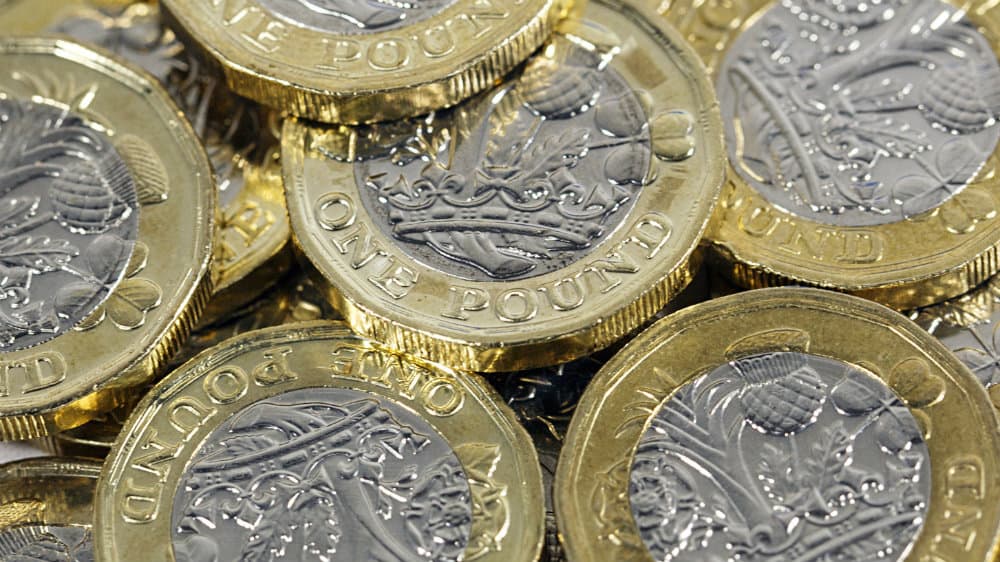
The end of the year often brings extra costs. It’s at moments like these that some passive income streams could come in handy. Putting aside just £3 a day, starting today, I could hopefully already have passive income streams in place by the time December rolls around again next year. Here’s how.
The power of regular saving
Putting aside a set amount on a regular basis would help me develop personal discipline. So when other things came along on which I could spend that money — as they always do in life, sooner or later — I would already be accustomed to sticking to the regular saving habit.
Markets around the world are reeling from the coronavirus pandemic… and with so many great companies trading at what look to be ‘discount-bin’ prices, now could be the time for savvy investors to snap up some potential bargains.
But whether you’re a newbie investor or a seasoned pro, deciding which stocks to add to your shopping list can be a daunting prospect during such unprecedented times.
Fortunately, The Motley Fool UK analyst team have short-listed five companies that they believe STILL boast significant long-term growth prospects despite the global upheaval…
We’re sharing the names in a special FREE investing report that you can download today. And if you’re 50 or over, we believe these stocks could be a great fit for any well-diversified portfolio.
Three pounds a day soon adds up. Within a year, I would have saved over £1,000. But having that money piled up in a drawer won’t earn me passive income. I’d need to do something with the money I was saving. One option would be to put it in a bank account. But an alternative I prefer for income generation potential would be to use it to buy shares I think might pay me a dividend.
What are dividend shares?
Dividends are a portion of a company’s profits paid out to shareholders. Dividends are never guaranteed. But some companies typically pay them while others don’t. Often a company has a stated dividend policy in which it sets out its plans for dividends. That is a good place to start when looking at whether a company might pay dividends in future, although that will still depend on the decision of the company’s directors.
Why I like dividend shares as passive income ideas
With a few pounds a day I need to be realistic about what I can do to generate passive income. Buying shares even on a small scale can give me direct exposure to large companies such as BP, HSBC, National Grid, and Direct Line. So I can benefit from their established business, management expertise, and business models. Each currently pays a dividend, as do hundreds of other listed firms.
That means I can sit back and do nothing at all other than keep putting aside my three pounds each day. Even the best run company can run into unexpected difficulties, though. So I would reduce my risk by diversifying across a number of companies in different sectors. With £3 a day, I would have enough funds to invest a bit more than £250 each quarter. So if I started today, I could already hold a portfolio of dividend shares in four different companies a year from now.
I’d start today
Some people try to time the market and buy shares at their lows. But that’s difficult to do in practice. If my objective is passive income, I would simply invest regularly and build up my earning streams.
So while I might not always buy shares at their lowest prices, I’d be putting my money to use and hopefully start earning passive income in short order. Rather than waiting, I’d start by taking action and putting aside a few pounds today.
Markets around the world are reeling from the coronavirus pandemic…
And with so many great companies still trading at what look to be ‘discount-bin’ prices, now could be the time for savvy investors to snap up some potential bargains.
But whether you’re a newbie investor or a seasoned pro, deciding which stocks to add to your shopping list can be a daunting prospect during such unprecedented times.
Fortunately, The Motley Fool is here to help: our UK Chief Investment Officer and his analyst team have short-listed five companies that they believe STILL boast significant long-term growth prospects despite the global lock-down…
You see, here at The Motley Fool we don’t believe “over-trading” is the right path to financial freedom in retirement; instead, we advocate buying and holding (for AT LEAST three to five years) 15 or more quality companies, with shareholder-focused management teams at the helm.
Christopher Ruane has no position in any of the shares mentioned. The Motley Fool UK has recommended HSBC Holdings. Views expressed on the companies mentioned in this article are those of the writer and therefore may differ from the official recommendations we make in our subscription services such as Share Advisor, Hidden Winners and Pro. Here at The Motley Fool we believe that considering a diverse range of insights makes us better investors.
Beef, chicken, seafood, eggs, milk, snacks, even baby food. Americans are seeing rising prices or inflation every time they make a trip to the grocery store. Prices are rising at the fastest pace in more than a decade.
Dec. 10, 2021 at 11:50 a.m. ET
by Jeffry Bartash
Financial News
Daily News on Investing, Personal Finance, Markets, and more!