
: ‘Representation at the table’: Can state and local governments attract the next generation of Black talent?

Representation is what motivates Shameka Lee. 

Lee, 46, is the interim manager of the Oklahoma City Action Center, a call center akin to what’s sometimes called 311 in other cities. She started as a temp seven years ago and has grown into her current role, a process she calls “the whole purpose” of any career. 

As she has advanced, Lee has taken Spanish lessons. “We want to be able to reach people who don’t speak English,” she said in an interview. “Let me tell you, you have a problem and you’re calling your government and no one understands you — that’s scary. I want all our residents and employees, 10 years from now, to see a reflection of themselves. I want them to feel part of the whole.”

The empathy Lee brings to her work isn’t always reciprocated. “I’m an African-American. I think about race all the time,” she said. “I live in a world where I’m not always expected.”

But she has had excellent managers, she said, and has always felt her workplace was “fair.” Lee also appreciates that Oklahoma City recently launched a diversity and inclusion initiative. “When you see the city trying, you want to jump on board and help with that,” she said. “We’re moving forward.”

‘I want all our residents and employees, 10 years from now, to see a reflection of themselves,’ says Shameka Lee.


Courtesy of Shameka Lee

To some extent, Oklahoma City’s efforts toward a more diverse workplace, and one that especially welcomes Black workers, aren’t anything new. Black workers have long made up a bigger share of the state and local government workforce than the private sector, largely because of intentional civil rights-era policies and initiatives designed to open up more opportunities and enable advancement for them. And government work at all levels has been associated with reducing the Black-white wealth gap and helping create the Black middle class of the 20th century.

But as with so many things in American society, the shocks of the past two years are putting that history to the test. 

In the early months of the COVID-19 crisis, state and local governments slashed 1.3 million jobs. Eighteen months on, not even half have been refilled. Meanwhile, every month for the past six has seen a fresh record number of Americans overall quitting their jobs, in many cases because they’re fed up with poor wages and working conditions — or are just hungry for something different.
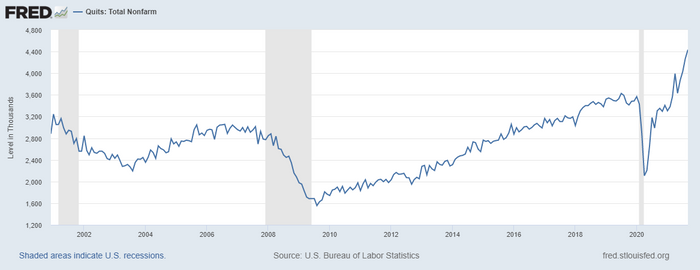

St. Louis Fed, Labor Department

The shifts in the workforce come as the country reckons with ongoing violence against Black men and women, and backlash against the teaching of America’s racial history. Meanwhile, trust in local government now sits at its lowest in over two decades, according to a recent Gallup poll. 

Taken together, this all suggests a very different future from the compact that has existed between Black municipal workers and their communities over the last several decades.

“I think this might be a moment where people are exploring. Are people resigning because they want more money? More meaning in their careers?” said Hughey Newsome, who as chief financial officer for Wayne County, Mich., helps manage a budget of roughly $1.7 billion. “I don’t know the answer, but I think there is an opportunity here because there is a big question mark. People are looking for something.”

Newsome, who is Black, knows a bit about “looking for something” in a career: He left a comfortable job in management consulting to become the CFO of Flint, Mich., at the height of the city’s water crisis. Now he thinks the country is at a crossroads. 

“At the national level, public service has not done a good job of advertising itself,” he told MarketWatch. “Most young people are probably looking at the profession, seeing all the nastiness and superimposing it to the local level. The polarization, lack of civility — that kind of infects how people see all of public service. It’s a sad state of affairs, because this is the opportunity we have to shine now.”

‘Good, equitable jobs’

Over the first 12 months of the pandemic, the left-leaning Economic Policy Institute published a series of analyses showing how public-sector layoffs would disproportionately impact workers of color

“One in five state and local government workers is a woman of color (19.9%, compared with 18.2% in the private sector),” the group wrote. Black women make up 8.7% of the municipal workforce versus just 6.4% of the private sector, and Black workers overall account for nearly one in seven state and local government employees, compared to fewer than one in eight private-sector employees. 

The sector “has been a really important employer for Black workers and women,” Julia Wolfe, a state economic analyst with EPI, told MarketWatch. 

“This isn’t a coincidence. It’s come about because of intentional policy choices that have made these good, equitable jobs,” Wolfe said. “There’s been a lot of intentionality behind making sure the government is a more equitable employer at the outset, making sure they’re reaching a broader pool of candidates.”

Public-sector workers are also unionized at much higher rates than the private-sector workforce is, Wolfe noted — another way to ensure more fairness and equity in hiring, compensation and upward mobility.

As a 2020 analysis from the liberal Center for American Progress put it, “Public jobs provide good wages, better benefits, and greater job security, all of which are critical components of economic security and help families build wealth.”

That has helped narrow the racial wealth gap among those who work in the public sector, where white households hold roughly $2 for every $1 of wealth for Black families, versus in the private sector, where white households have as much as $10 of wealth for each $1 Black households hold.

‘The only’ or ‘the first’

For all that, sources who spoke with MarketWatch described often having to blaze their own trails. 

“I started my city management career in 1989, and of course you’re the first woman of color in every position you’re always in. So I always felt a responsibility to make sure every jurisdiction had outreach,” said Valerie Lemmie. 

Lemmie, who is currently the director of a foundation after nearly four decades in public service, including as the city manager for Petersburg, Va., and Dayton and Cincinnati, Ohio, says there was no one to mentor her. 

Valerie Lemmie presents the mayor of Fort Wayne with an All-American City Award in August.


Courtesy of Valerie Lemmie

“First of all, you’re the boss, so it’s hard to be nurtured. They expect you to lead and guide and not be vulnerable,” Lemmie said. “My first job in Petersburg, the editorial in the local paper the first day said, ‘When she was hired she was Superwoman, and now that she’s here, she’s fair game.’”

Marcia Conner is the executive director of the National Forum for Black Public Administrators, a national organization founded in 1983 by a group of city managers of color who “felt like they needed a group of like-minded individuals they could bond with in terms of being ‘the only,’ or ‘the first,’” she said. 

“What we’re seeing is definitely an increase in the number of African-Americans being hired in positions around the country,” Conner told MarketWatch, “but of course we are still not the majority of the ones being hired.” 

Like many others, Conner believes representation at higher levels of municipal government is important. “People like to see people who look like them leading,” she said. “There’s empathy there in terms of needs.”

To that end, the organization is stepping up recruitment efforts. “We continue to say to those looking for careers, there are great opportunities, great benefits and environments to work in,” Conner said. “We need to do a better job of using people in the community who are not as skilled and not as well-trained.”

That may have been a hard sell even before the shocks of 2020. Now, some local-government champions worry about the tarnished appeal of going to work for a government that doesn’t appear to work for its people.

“We have a sense of skepticism and mistrust, which is healthy in a democracy because it means people will be held accountable as they should be,” Lemmie said. “I think that the pressure this generation has put on institutions is necessary. Many young people feel that public institutions tend to be more partisan, so they look to nonprofits instead. My counsel is that you need change from within and without.”

‘You’ve got to be intentional’ about recruitment

Thirty years after Lemmie began her public-service tenure, LaShawn Thompson isn’t “the first,” but she is “the only minority in the executive level in the city,” she said. 

Thompson, the municipal courts administrator for Oklahoma City, is not the only person of color in leadership: Her husband is a battalion chief in the fire department, and the head of the diversity and inclusion initiative mentioned earlier by Lee is a high-ranking manager. 
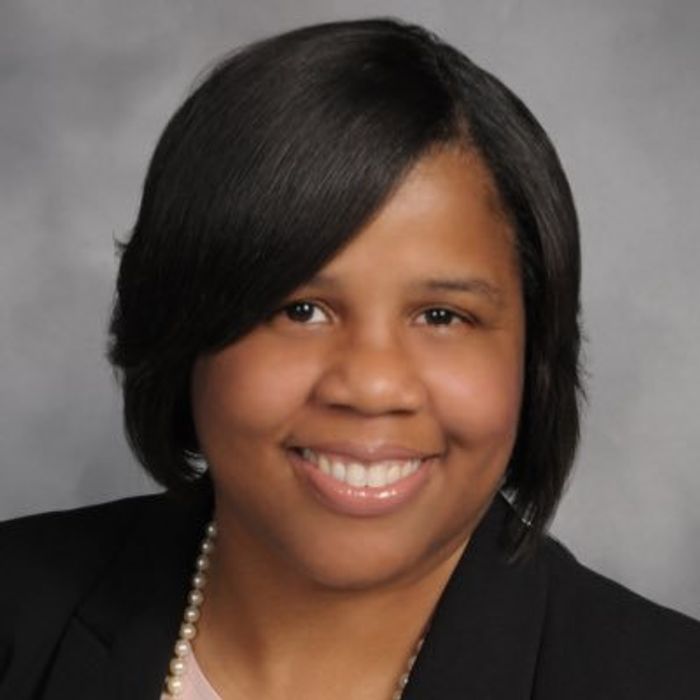
LaShawn Thompson is the municipal courts administrator for Oklahoma City.


Courtesy of LaShawn Thompson

Still, Thompson told MarketWatch, “My colleagues are great. But it does feel like there is not anyone that I can identify with. I’m treated equally, but I would like to see some other representation at the table.”

Thompson has recently taken on more recruitment efforts herself, recognizing it’s hard for many people, particularly younger ones, to grasp all the moving parts that go into running a city — as well as all the opportunity that affords. 

“You’ve got to be intentional,” she said. “You can’t just sit at the table without doing anything. We have to care about what the world looks like behind us.”

Newsome, the Wayne County, Mich., CFO, put it more bluntly. 

“It’s sexier to try to change things from the outside,” he said. “At the end of the day I have to deliver a balanced budget, deliver the annual audit. If you want to save the world and be green, that’s fine, but [in city government] you still have to manage the park or make sure we do an environmental assessment of our drains. The day-to-day is the primary focus.”

Newsome sees an opportunity for the federal government. President Biden’s White House has expressed a desire to foster diversity, equity and inclusion in the federal workforce, and advance racial justice more broadly, he noted. 

But Thompson thinks the influence may better come from closer to home.

“I think it’s going to be an attitude of ‘I see Ms. Thompson, Chief Thompson, but I don’t see the trajectory of how they got there,’” she said. “I think if we continue to steer our children to local government, they can see the blessings.”

Read next: ‘Trying to strangle local governments’: What happens when states and their cities become adversaries?

: Company holiday parties are (sort of) back this year — and the decision on whether to host one ‘may have more resonance than ever’

Last December, Keith Willard and his party planning staff were assembling fresh flowers, bitters, dehydrated grapefruit, and ham so companies could celebrate the holidays with Zoom
ZM,
-2.20%

events on how to make a bouquet, a tasty cocktail or a charcuterie board.

This year, the south Florida-based wedding and corporate event planner hired actors to stage a Christmas village where corporate party guests drive through and have a gift waiting for them. He’s also figuring out socially-distanced hotel ballroom seating charts and has more sanitizing gel than he knows what to do with.

Tonya Hoopes, of Hoopes Events, a Utah wedding and corporate event planner in Salt Lake City and the Park City area, had a quiet holiday season last year. Five companies sought her help getting gifts to staff. The to-do list for Hoopes’ 21 in-person parties this December includes verifying that the catering wait staff is fully vaccinated at one company party she’s orchestrating, and ensuring vendors can supply customized coffee mugs in time for another one.

In Portland, Ore., Nora Sheils has seen a jump in holiday party demand this year, as both the founder and CEO of Bridal Bliss and the co-founder of Rock Paper Coin, software for event planners and vendors. But because of labor shortages, she’s had to scrounge to find catering operations with enough staff to handle the corporate parties on her schedule.

On the flip side, Sheils also has to arrange the distribution of swanky gifts, including one tech company that’s giving out $150 bottles of Pinot Noir to 100 employees at its holiday party. She views these gestures as a genuine “thank you” from companies to employees, but also as an enticement for workers to stay as millions have quit their jobs.

This holiday season, the in-person company office party is returning — and it’s a food-and-drink encapsulation of today’s uneven economic recovery. These events are all over the map in how they look and feel, reflecting the wide array of return-to-office policies as the country re-opens and grapples with the effects of the delta variant and the emerging omicron variant.

The corporate party “is back, I would say, in a smaller, more intimate form,” said Hoopes.

The corporate party ‘is back, I would say, in a smaller, more intimate form.’


— Tonya Hoopes of Hoopes Events

“In 2019, it was about being inclusive of the entire staff,” said Willard, of Keith Willard Events. “In 2021, it’s about A-type sales people and the executive branch.”
Companies are well aware of that dynamic and want to get back one day to the 2019 version, he said. But for now, the businesses he’s working with want to make an event for the people who want to be there.

“You want to keep the troops happy. It’s a reward for people working hard all year. What that is for people is very different now,” he said.

Forty percent of companies said they were planning holiday parties this season, according to a recent poll of more than 400 employers by Seyfarth at Work, a human resources consulting firm. That’s up from 6% in 2020, but down from 75% in 2019, the survey noted. The firm, a subsidiary of the law firm Seyfarth Shaw, noted the survey concluded Dec. 1, in omicron’s very earliest days.

The party planners MarketWatch interviewed are sometimes working parties with rules and restrictions, like requiring masks except when eating or drinking and smaller guest lists. But other parties do resemble a pre-pandemic event without ground rules.

One example of the range: Hoopes and Sheils do not have any parties with vaccination proof requirements for guests, but Willard has plenty that require vaccine proof — including a recent 50-guest yacht party. Willard has a stack of COVID-19 test kits at his house and he’s struck a business relationship with a vendor that can do on-site testing.

Omicron is making some party hosts hesitant

The traditional holiday party season comes at a time when more people are getting back into the office. Labor Department numbers show a shrinking number of people who are working from home. In November, 11.3% said they were teleworking because of the pandemic. That’s half the amount in January, when 23.2% of workers said they were working from home due to COVID-19.

Now throw in the omicron variant, which popped on the radar after Thanksgiving. Some early findings suggest the variant could be mild and Pfizer
PFE,
+1.00%

/BioNTech
BNTX,
-9.43%

laboratory results suggest it could be countered with a booster dose. But omicron underscores how quickly things can still change in a pandemic that’s grinded on for almost two years.

“We’ve got companies that are planning holiday parties and I know they are going to pull the plug on them,” said Philippe Weiss, president of Seyfarth at Work. “They are getting signals of discomfort” from workers about gathering under the circumstances, he noted.

Some employees are too ready to party

Deciding on whether to host holiday parties can be a tricky public health call for some companies, but there’s another factor to consider: employee behavior. It’s been a while since some people have partied with co-workers and there’s a risk some don’t remember how to celebrate responsibly, Weiss said.

“People have been chomping at the bit for an opportunity to let loose and reconnect with each other,” he said. Employers need to know their workforce to determine the risk, he said.

He’s already seen evidence that some employees need reining in at festive group gatherings. Three new company clients have already sought advice and assistance from Seyfarth at Work after problematic holiday parties this year, Weiss said. In one instance, a company’s overnight trip ended with three drunk executives and a bellhop swimming in a Los Angeles hotel fountain, Weiss said.

At another party, two accounting staffers raced forklifts and damaged $12,000 in products at an Illinois warehouse. On the day of a beverage distributor’s party in Nevada, the company hired an armed guard to stand sentry over the alcohol so no sticky-fingered workers would filch anything ahead of the bash.

Some companies ‘fear either a spike in conduct complaints and/or a spike of COVID cases. Either, or both, will be caused by an event that’s two hours in length.’


— Philippe Weiss, president of Seyfarth at Work

Parties as spreader events? A boozy moment spawning bad blood, internal complaints or lawsuits? Why bother? Some companies “fear either a spike in conduct complaints and/or a spike of COVID cases. Either, or both, will be caused by an event that’s two hours in length,” Weiss said.

To host a holiday party or not to host is a longstanding question for companies, Weiss said, “but it may have more resonance than ever.”

Today’s corporate holiday events are driven by business calculations and something deeper, planners said.

“People like to gather. They like to have that festive fun. We need to reward employees, but do it in a way that still feels comfortable,” Hoopes said. With each of her corporate clients, Hoopes gets the sense there’s no expectation of attendance for anyone who doesn’t feel like it.

“A lot of companies are missing that team cohesion,” Sheils said. When it comes to her holiday party clients, “a lot them do truly want to show their appreciation to their employees,” she said, “and they don’t want to lose anyone right now,” she later added.

Some companies are viewing the event as a morale-boosting strategy, Willard said. On the other hand, “I feel like they want something to look forward to, a little bit of normalcy.”

The Ratings Game: Broadcom stock jumps as more than half of Street analysts hike price targets

Broadcom Inc. shares were on track for their best day in more than a year and a half Friday after more than half the analysts covering the chip and software company hiked their price targets on the stock following strong results and big plans to return cash to shareholders.

Broadcom
AVGO,
+7.49%

shares were last up 7.4% at $626.36, after touching an intraday high of $644.75, and were on track for their best performing day since April 6, 2020, when they closed up 7.8% at $252.44.

Late Thursday, Broadcom not only topped Wall Street expectations for the quarter and provided a strong outlook but also it announced a $10 billion share buyback it expects to complete in a little more than a year and hiked its dividend 14%. With more than $12 billion in cash on the company’s books and growing, Broadcom Chief Executive Hock Tan told analysts, “It’s just a very logical conclusion for us to not just sit on the cash,” given a lack of recent acquisitions from a company that has been heavily into M&A over the past few years.

Back in July, talks to buy software company SAS Institute Inc. fell apart, and the company hasn’t had a big deal since it closed on the acquisition of Symantec’s enterprise security business two years ago following acquisitions of CA Inc. and Brocade in previous years.

Of the 32 analysts who cover Broadcom, 27 have buy ratings, four have hold ratings, and one has a sell rating. Of those, 18 hiked their price targets, resulting in an average target of $664.72, up from a previous $578.93, according to FactSet data.

Bernstein analyst Stacy Rasgon, who has an outperform rating and hiked his price target to $725 from $560, characterized Broadcom’s report as “What’s not to like here?”

“While enjoying solid upside in their core markets the company has high and, potentially, more stable visibility given how they are proactively managing their bookings and demand as they parse their orders to minimize risks of customer stockpiling,” Rasgon said.

“Cash generation and return is stellar, with enough [free cash flow] to still leave M&A on the table even with the sizeable 2022 buyback (a positive in our opinion as we remain partial to their acquisition strategy),” Rasgon said.

See another $10 billion buyback: Oracle’s stock jumps 10% on sales, earnings beat

Citi Research analyst Christopher Danley, who has a buy rating and raised his price target to $685 from $585, on the basis that “Broadcom continues to see robust demand for its networking and storage products due to strength from the enterprise and cloud end markets.”

Susquehanna Financial analyst Christopher Rolland, who has a positive rating and a $680 price target, said that while near-term result were “as expected,” the company provided “solid guidance as Networking fires on all cylinders,” while “Cloud and Enterprise to accelerate while 5G rides the tide.”

Additionally, Rolland called the buyback and dividend hike results of how “management scours for a decent use of cash.”

Mizuho analyst Vijay Rakesh, who has a buy rating and a $665 price target, said he was surprised by the $10 billion buyback, but had expected more along the lines of $6 billion to $8 billion.

Jefferies analyst Mark Lipacis, who has a buy rating and hiked his price target to $720 from $590, said he estimates that Broadcom will be “returning greater than 100% of net income to shareholders in 2022.” 

“AVGO trades a 35% discount to SOX, has solid visibility, a 2.8% div yield and is entering a capital return cycle,” Lipacis said.

Over the past 12 months, shares of Broadcom have gained 53%. In comparison, the S&P 500 index 
SPX,
+0.51%

has advanced 28%, the tech-heavy Nasdaq Composite Index 
COMP,
+0.19%

has risen 26%, while the PHLX Semiconductor Index 
SOX,
+0.28%

has grown 43% over that time.

Key Words: ‘Its time to get those boosters’: Jimmy Fallon releases Christmas song promoting booster shots ahead of Biden appearance

“It’s Christmas time, we’ll be in line for a booster.”

The Tonight Show host Jimmy Fallon has released a Holiday song called “It Was A Masked Christmas,” which promotes getting booster shots to protect against the COVID-19 virus.

Fallon recorded with musical artists Ariana Grande and Megan Thee Stallion, and released the song ahead of a scheduled Friday interview with President Joe Biden.

Biden commented on the song and his future appearance on The Tonight Show on Twitter
TWTR,
-2.59%

saying, “‘Tis the season (to get boosted).”

“Its time to get those boosters,” the song begins and makes several references to pandemic life like Zoom
ZM,
-2.17%

calls, mask wearing and COVID-19 booster shots.

Several studies indicate that COVID-19 boosters shots improve immune responses in fully vaccinated people.

Friday is set to be Biden’s first late night talk show appearance as president. The appearance comes as the White House is urging eligible Americans to protect themselves against COVID by getting booster shots and inflation in the U.S. hit record levels.

: Everbridge stock suffers record selloff after CEO resignation, downbeat outlook leads to multiple downgrades

Shares of Everbridge Inc. appeared to fall off a cliff Friday, putting them on track for their biggest-ever one-day selloff by a wide margin, as the chief executive’s resignation and disappointing revenue outlook led a number of analysts to abandon their bullish calls.

The stock
EVBG,
-45.45%

plummeted 46.3% on heavy volume in afternoon trading, putting them on track for the lowest close since September 2019, and enough to make it the biggest loser on major U.S. exchanges. Trading volume ballooned to 11.8 million shares, compared with the full-day average over the past 30 days of about 572,000 shares.

The percentage decline is more than three times the previous one-day record drop of 14.3% suffered on Oct. 28, 2020. The price decline of $53.37, which compares with the previous record price fall of $20.26 on Nov. 10, 2021, shaved about $2.06 billion off the company’s market capitalization.

The company said late Thursday that Chief Executive David Meredith notified the board of directors of his intention to resign as CEO, after 2 1/2 years in the role, and from the board of directors. The company did not provide a reason for Meredith’s resignation.

The board said it accepted Meredith’s resignation, and will immediately establish an office of the CEO, and begin to transition leadership to Chief Financial Officer Patrick Brickley and Chief Revenue Officer Vernon Irvin.

Separately, the company reiterated its 2021 revenue guidance of $367.6 million to $367.8 million, but said it expects revenue growth of 20% to 23% in 2022. The current FactSet revenue consensus for 2022 of $456.5 million, which has already been lowered from $464.2 million at the end of November, implies 24.1% to 24.2% growth from 2021 guidance.

No less than four analysts surveyed by FactSet downgraded Everbridge in the wake of the announcements.

J.P. Morgan analyst Sterling Auty cut his rating on the stock to neutral roughly 10 months after upgrading it to overweight, and slashed his price target to $127 from $200.

He said there were already questions about slowing growth, despite the opportunity for countrywide public notification system wins in the European Union ahead of the upcoming deadline for implementation.

“The new 2022 growth guidance is likely to further solidify those concerns, especially with the possibility of disruption from the leadership change,” Auty wrote in a note to clients.

Stifel Nicolaus’s J. Parker Lane lowered his rating to hold, after being at buy for at least the past three years, saying he believes there are “more questions than answers” at this point. He dropped his stock price target to $100 from $185.

“In our view, the timing and uncertainty around the circumstances of Mr. Meredith’s departure combined with the company’s guidance introduces a high degree of uncertainty into the story in the near term, and we are moving to the sidelines while we digest the disruption Mr. Meredith’s departure will have on the company’s operations and assess the potential changes made to the business under its new co-CEO’s and future leadership,” Lane wrote.

Meanwhile, Raymond James analyst Brian Peterson reiterated the outperform rating he’s had on the stock for at least three years, while keeping his price target at $180.

“While we’re never encouraged by a CEO transition, we believe [Everbridge] may be in a unique situation to have a smooth transition in this regard, with Mr. Brickley and Mr. Irvin also having the help of Chairman (and former CEO) James Ellertson,” Peterson wrote.

The stock has now plummeted 53.3% year to date, while the SPDR S&P Software & Services exchange-traded fund has gained 6.4% and the S&P 500 index
SPX,
+0.62%

has rallied 25.1%.

The Ratings Game: UBS singles out Bank of America as top pick in glowing view of bank stocks

UBS on Friday hiked its rating on Bank of America Corp. and said the megabank stands out as its top pick among lenders poised to benefit from potential loan growth and higher interest rates in 2022.

UBS analyst Erika Najarian upgraded Bank of America
BAC
to buy from neutral and increased the bank’s price target to $64 a share from $37 a share.

UBS also boosted its view on JPMorgan Chase
JPM
to buy from neutral and increased its price target to $210 a share from $149 a share. It upgraded Wells Fargo & Co.
WFC
to buy from neutral and bumped up the bank’s price target to $65 a share from $47. Citigroup
C
drew a downgrade to neutral from buy, with a lower price target of $67 a share, down from $98.

While Bank of America’s sensitivity to rising interest rates is well understood by Wall Street, Najarian said she sees additional value in the company because it’s “poised to be the secular winner of the upcoming economic and rate cycle, similar to how JPMorgan dominated the post-Global Financial Crisis recovery by outperforming on profitability.”

Bright spots in Bank of America’s business include a clean balance  sheet, excess capital, and no major regulatory/legal issues, she said.

“We are particularly bullish on global banking, where heavy investments in talent  and tech should pay off,” Najarian said. “In 2022 and 2023, we project loan growth of about 4%, driven by  strength in commercial and industrial loans. “

Najarian characterized the current environment as a golden era for bank stocks, even after big gains in the sector this year. The KBW Nasdaq Bank Index
BKX
has gained about 36% so far in 2021, outpacing a rise of 25% by the S&P 500.

UBS also initiated coverage of three other banks: PNC Financial Services Group Inc. PNC with a buy rating and a price target of $240 a share; Truist Financial Corp TFC with a neutral rating and a price target of $63 and US Bancorp USB with a buy rating and a $70 price target.

Najarian’s flurry of ratings moves on banks comes after she moved over to UBS this year from Bank of America.

Retirement Weekly: Is direct indexing really the next big thing?

Direct indexing may be the next big thing, as a Barron’s column recently suggested, but it won’t help retirees or near-retirees.

Direct indexing, for those of you who are unaware of it, allows you to imitate an index fund by purchasing each of the component stocks directly in your brokerage account. Before direct indexing, of course, your only alternative was to own the stocks indirectly through an index fund.

Proponents of direct indexing trumpet a number of supposed advantages. It allows you to customize your index according to whatever criteria you might wish to impose, for example. You can manage it to be more tax efficient, furthermore. And with the advent of zero-commission trading and the ability to purchase fractional shares, you can imitate an index such as the S&P 500
SPX,
+0.66%

with a relatively small portfolio.

Unfortunately, the disadvantages of direct indexing outweigh any advantages, Lawrence Tint argued in an interview. Tint should know, since he devoted much of his investment career to perfecting index funds. He is the former U.S. CEO of BGI, the organization that created iShares (now part of BlackRock).

In fact, Tint argued, the advantages of direct index either don’t exist or don’t apply to retirement accounts. Take the ability to customize your index. That’s just active investing in sheep’s clothing, Tint reminded us. We all know how poor the odds exist for trying to pick a group of stocks that will outperform the overall market. I present below some new evidence on how poor those odds are.

Tint did allow that there is the theoretical possibility that you could manage a direct index with greater tax efficiency than by investing in an index fund. But he mentioned two caveats. First, even if you were able to be more tax efficient in your direct index portfolio (which is by no means assured), the benefit would be small since index funds incur little turnover. Secondly, the portfolios of retirees and near-retirees will almost certainly be in tax-deferred accounts, for which relative tax efficiency is irrelevant.

Direct indexing’s downsides

Balanced against those either nonexistent or minimal advantages, direct indexing has some distinct disadvantages, according to Tint. The first is that, unlike for index funds, your direct indexing portfolio does not earn any securities lending revenue. This is the income that your brokerage firm earns when lending out your shares to short sellers. Because the amount of such revenue depends on the kind of stocks that your fund holds, no two index funds will have the same securities lending income yield. But it can be significant. According to a Morningstar analysis, this yield for the iShares Russell 2000 ETF
IWM,
-0.43%

between 2007 and 2018 averaged 0.19%.

That income is one of the big reasons why index funds are able to charge minimal fees. And while you may think your direct indexing portfolio would still come out ahead on fees, you are kidding yourself. Though most brokerage firms now offer commission-free trading, you still incur the cost of bid-ask spreads when buying or selling. Your brokerage firm may also charge asset-based fees for your direct-indexing account.

Another disadvantage of direct indexing comes when trying to reinvest dividends. To exactly match an index, you would need to reinvest each dividend in each of the component stocks in the index, in just the right proportions so as to preserve each stock’s proper weight in that index. The logistical hurdles are considerable.

The bottom line? It’s easy to understand the fee-based motivations for why brokerage firms are pushing direct indexing. But it’s not as easy to understand how individual investors, and especially retirees and near-retirees with tax-deferred portfolios, are any better off because of it.

The poor odds of active management

There’s a novel way of measuring whether advisers add value through their trading: Calculate whether their portfolios are ahead or behind of where they would have been had they undertaken no trades since the beginning of the year. This approach is so revealing because it doesn’t compare an adviser to an abstract index, but instead to himself without the trading.

I conducted just such an analysis for each of the investment newsletter portfolios that my firm audits, creating a hypothetical portfolio that was an exact copy as of the beginning of this year—and which, since then, has made no changes. If this hypothetical “frozen” portfolio is today worth just as much or more than its corresponding real-world portfolio, then we know its trading didn’t add value.

As was also the case in prior years, this year’s frozen portfolios on average came out ahead. For the first 11 months of this year, in fact, they were 2.1 percentage points ahead.

This result is very telling because the newsletters currently monitored by my auditing firm are those that have the best historical records in my Hulbert Financial Digest tracking service. These results mean that even the very best advisers have difficulty beating the market.

This is yet another reason to be skeptical of direct indexing.

Mark Hulbert is a regular contributor to MarketWatch. His Hulbert Ratings tracks investment newsletters that pay a flat fee to be audited. He can be reached at mark@hulbertratings.com.

Economic Report: U.S. budget deficit narrows to $356.4 billion in first two months of new fiscal year

The numbers: The U.S. federal budget deficit narrowed to $356.4 billion in the first two months of the fiscal year, the Treasury Department said Friday. This is down from a $429.3 billion deficit over the same period last year.

In November, the deficit was $191.3 billion, up from $145.3 billion in the same month last year. But calendar quirks led to the increase. Excluding those technical factors, the deficit would have narrowed 6% last month, the department said.

Earlier this week, the Congressional Budget Office estimated the November deficit would be $193 billion. 

Key details: For the first two months of the 2022 fiscal year, which ends Sept. 30, receipts were up 24% while outlays rose only 4%.

One of the biggest declines in outlays in percentage terms came from the Labor Department, where spending has fallen 85% in the last two months as a result of the ending of emergency pandemic unemployment insurance payments.

Big picture: There are several moving parts in the fiscal picture that matter for investors.

First, Senate Republicans and Democrats have reached a compromise to allow Congress to raise the debt ceiling and avoid a government default. A final vote on the plan is set for next week. 

Secondly, the fiscal deficit is expected to continue to narrow in 2022 as all sorts of emergency pandemic support ends. The White House projects a budget deficit of $1.66 trillion in 2022 compared with $2.8 trillion last year.  Some economists worry that this fiscal tightening will slow down the U.S. economy more than the Federal Reserve and most economists believe. The Fed has projected a 3.8% growth rate in 2022, down from a 6% rate this year.

Thirdly, the Fed is expected to move to a less accommodative monetary policy next year. Any increase in Fed interest rates will make government borrowing more expensive. If rates rise sharply over the next few years, with deficits still high, government spending on interest on the federal debt may begin to crowd out spending on social spending.

The budget outlook is also uncertain because Democrats are working to pass their Build Back Better social-spending package. There are various estimates of the cost of the plan. Sen. Joe Manchin, the Democrat from West Virginia whose support is needed if the package is going to pass the Senate, thinks the package will cost $2.2 trillion over 10 years.

Market reaction: Treasury yields
TMUBMUSD10Y,
1.481%

were mostly lower on Friday despite U.S. November consumer price inflation data.

Retirement Weekly: Want to share your life experiences and help others? Here’s how to do it well

As we age, we tend to search for a deeper meaning in being alive. Some find (or revisit) religion or give more of their time and money to deserving recipients. Others learn a new skill or even come out of retirement to launch an encore career.

But one of the easiest ways for older folks to derive meaning from life is to give advice. The simple act of sharing life lessons with a range of people—friends, family, students—can in itself enrich your days.

A 2016 study found that individuals in their 60s who give advice tend to see their lives as highly meaningful, while those who dish out less advice are less likely to report high life meaning.

“This association between advice giving and life meaning is not evident for other age groups,” said Markus Schafer, lead author of the study and an associate professor of sociology at the University of Toronto. “And it’s not about just going through the motions of offering advice. It’s giving advice that matters, of feeling like we’re of consequence to others.”

If you love to give advice, you may treat this study as great news. But finding a receptive audience for your wisdom—and conveying it in such a way that they heed it—requires self-awareness and emotional intelligence.

After you retire, loneliness might set in. Your social circle can shrink as you have fewer opportunities to connect with everyone from former work colleagues to casual acquaintances and strangers.

Ideally, you remain socially active in retirement. Engaging in activities that allow you to converse with diverse groups sets the stage for you to build positive relationships—and perhaps share advice at an opportune moment.

As community groups rebound from the pandemic, they can invite people in late middle age (or older) to share their experiences tied to timely issues. Schools and civic and religious organizations are well suited to host panel discussions on topics such as managing a crisis or parenting amid adversity.

“Some people are aching to share what they know and are looking for a platform to share it,” said Anita Sanz, Ph.D., a psychologist in Orlando, Fla. “Others don’t see how what they want to share is valuable so I’ll say to them, ‘There are people who can actually benefit from what you know.’”

Older people who build and maintain trust with others are more likely to be asked for advice. Patience pays off, as it can take time for someone to say to a friend or family member, “I need your advice about something.”

Schafer warns against giving unsolicited advice, even if your intent is to help someone in need.

Be a smarter investor. Read Need to Know every morning.

“For the person getting advice, it can imply they’re incompetent,” he said. “And it can be demoralizing to get advice,” especially if it’s hard-hitting, unwelcome or tough to implement.

Perhaps the best way to serve up advice is to tell a story—and let listeners draw their own conclusion. Instead of issuing directives (“Here’s what you ought to do…”), reflect on your experience (“Here’s what happened to me…”).

Say a grandfather wants to urge his teenage grandkid not to abandon a big commitment. He can declare, “Hey, don’t be a quitter. I’ve found that quitters regret it later.”

A better approach is to share an anecdote. For example, he may recall meeting a girl who lost a leg due to cancer.

One day, he calls her to see how she’s doing and the phone keeps ringing. He’s about to hang up when she finally answers.

He asks what took so long and she replies, “My crutches weren’t nearby, so I had to crawl to the phone.”

The “don’t give up” message rings loud and clear, while allowing the grandfather to skip the lecture.

“Avoid preaching or saying, ‘What you’re doing now isn’t helpful,’” Sanz said. “First, listen, practice empathy and take time to nurture the relationship” before you share a story that resonates with the other person.

After several such interactions, you may find yourself taking on a mentoring role. The people close to you may seek your advice more often.

“People committed to mentoring feel a greater sense of fulfillment,” Sanz said. “It should lead to a feeling of service that you’re making a positive contribution.”

She adds that the best advice givers apply two ground rules to maximize their impact when dispensing life lessons.

First, they confirm that others want to hear advice before they dive in. If you blurt out, “When I was your age,” you’ve already dug a hole that will distance you from the person you seek to advise.

Second, they show humility. Rather than brag about their smarts, they bask in their errors.

“If you’re trying to help someone develop a skill, it’s very effective to share ways that you failed and what you learned from it,” Sanz said.

Retirement Weekly: Why small amounts saved now can boost retirement income later in life

Did you know that seemingly small differentials in the price points at which investments, annuities and other elements of retirement income strategies can be delivered from within a Defined Contribution (DC) plan can, for certain retirement plan participants, add up over the course of a lengthy retirement to several hundred thousand dollars of additional income, relative to income solutions offered at retail price points? 

According to a white paper recently released by the Institutional Retirement Income Council (IRIC), self-directed participants in employer-sponsored retirement plans can, in many cases, generate more income and/or higher asset balances by using products and programs offered within their defined-contribution plan than they can by rolling those assets over to a retail account within an IRA. 

Want to become a better investor? Sign up for our How to Invest series

Specifically, IRIC estimates the accumulated balance and retirement income of a hypothetical, middle-income participant that remained in her DC plan for both investment services and retirement income services for her entire life, relative to what that participant might have experienced if she had rolled her accumulated balance to an IRA at retirement. The participant in this hypothetical case was able to accumulate about $1 million at retirement by saving consistently from age 23 through age 65.

IRIC reviewed the income this participant would receive through age 95 from in-plan investment relative to investments with a retail fee structure under an IRA under three different income approaches:

  1. Estimating the additional income and additional remaining balance using withdrawals through 95 under the IRS required minimum withdrawal table

  2. Estimating the additional income and additional remaining balance at 95 using institutional versions of guaranteed minimum withdrawal benefits (GMWBs)

  3. Estimating the additional income through 95 when using institutional immediate and deferred immediate annuities

In the first scenario using IRS required minimum withdrawal tables, the 401(k) participant received between $268,000 and $798,000 of additional income through age 95, depending on the assumed level of investment fee cost advantage received by the participant’s DC plan.

In the second scenario using GMWBs, the results are equally astounding. The participant received an estimated additional income of $225,000 and an additional remaining account balance at age 95 of $607,000. As such, the nominal incremental benefit of remaining invested in plan totaled $832,000.

In the third scenario using fixed income annuities, the participant received between $82,000 to $164,000 in additional income through 95.   

Plan sponsors and participants do not always realize that although institutionally-negotiated investment fee cost savings negotiated by plan sponsors on behalf of participants might seem like a small percentage of total costs, they can add up to very significant amounts of additional income and retirement assets for participants. Employers that want to increase the retirement readiness of their workforce should review this study and consider adding retirement income solutions to their DC plans.

Michelle Richter is the executive director of the Institutional Retirement Income Council, a nonprofit, membership-based organization of retirement industry advisers. Bob Melia is the former executive director of the Institutional Retirement Income Council, and now serves as an adviser to the group

Financial News

Daily News on Investing, Personal Finance, Markets, and more!

Financial News

Policy(Required)