Are you saving enough into a pension? These groups are officially ‘under-pensioned’

Image source: Getty Images


New research reveals almost three million Britons are not saving into a workplace pension. What’s more, this figure has risen by a staggering 300,000 in the space of a year. So which groups are officially under-pensioned, and why? Let’s take a look.

What does the research reveal about pensions?

According to NOW: Pensions, ‘under-pensioned’ groups typically have just 15% saved in their pension pot compared to the UK average. The total number of people that are part of this group is officially 280,000.

Strikingly, the report suggests that 81% of carers, 21% of disabled people and 23% of women do not qualify for an auto-enrolment pension. Part of the reason is that many don’t earn above the £10,000 ‘trigger’ to be automatically enrolled. 

Sadly, the report also reveals that those with disabilities have private pension wealth of £7,450. This is just 9% of the average private pension in the UK.

On a similar note, those with more than one job often struggle to build up a decent amount of pension wealth. That’s because the average pension of someone with multiple jobs stands at £2,650. This is a tiny 3% of the national average. 

According to the report, income levels dropped more for ‘under-pensioned’ people over the past year due to the impact of Covid-19 on their ability to keep on top of bills, savings and debt repayments. The report also notes that many of those who are under-pensioned are more likely to have been affected by reduced furlough income and redundancies last year.

Which groups are officially under-pensioned?

According to the report, the following seven groups have private pensions far below the UK average. For comparison, the average median pension wealth in the UK stands at £80,690.

  1. Carers (£29,800)
  2. Divorced women (£26,100)
  3. Single mothers (average median private pension wealth: £18,310)
  4. Disabled (£7,450)
  5. Multiple jobholders (£2,650) 
  6. BAME (£0 – most people in this group do not contribute to any pension saving)
  7. Self-employed (£0 – most people in this group do not contribute to any pension saving)

What are the positives from the report?

While the report paints a bleak picture for those who are under-pensioned, its writers do acknowledge that the auto-enrolment pensions scheme, first introduced in 2012, has been a ‘good start’ with regards to tackling pension inequality. Despite this, the report highlights that the current system doesn’t necessarily suit those with non-typical working patterns.

The report says, “Auto-enrolment has been widely praised for its success in bringing more people into pension saving in the UK, yet there are millions of people still missing out.

“The policy was designed for traditional patterns of work and isn’t geared to help employees who take significant career breaks, work in multiple or part-time roles, or move frequently between jobs.

“This exacerbates the widening savings gap and later life inequalities experienced by the most financially at-risk groups, many of whom are more likely to be excluded from auto-enrolment.”

To address these concerns, the report suggests the government removes the £10,000 earnings trigger that currently applies to auto-enrolment pensions.

On a more positive note, the report welcomes the fact that auto-enrolment has closed down previous gender gaps when it comes to pension savings.

Samantha Gould, head of campaigns at NOW: Pensions, explains, “Thanks to automatic enrolment, the latest figures show the number of women who benefit from a workplace pension is equal to the number of men.”

How do you know if you’re saving enough into your pension?

As the report reveals, a large part of the UK population has pension pots far below the national average.

However, it’s worth knowing that there’s no set figure regarding how much you should save into your pension. That’s because how much you should save depends on a number of variables.

Some of these variables include how luxurious you expect your retirement to be, the age you hope to give up work, and whether you plan to be a homeowner in your later years.

For more on this, see our article that explores how much Brits are expected to have saved in their pensions.

Products from our partners*

Top-rated credit card pays up to 1% cashback

With this top-rated cashback card cardholders can earn up to 1% on all purchases with no annual fee. Plus, there’s a sweet 5% welcome cashback bonus (worth up to £100) available during the first three months!

Those are just a few reasons why our experts rate this card as a top pick for those who spend regularly and clear their balance each month. Learn more here and check your eligibility before you apply in just 2 minutes.

*This is an offer from one of our affiliate partners. Click here for more information on why and how The Motley Fool UK works with affiliate partners.Terms and conditions apply.

Was this article helpful?

YesNo


Some offers on The Motley Fool UK site are from our partners — it’s how we make money and keep this site going. But does that impact our ratings? Nope. Our commitment is to you. If a product isn’t any good, our rating will reflect that, or we won’t list it at all. Also, while we aim to feature the best products available, we do not review every product on the market. Learn more here. The statements above are The Motley Fool’s alone and have not been provided or endorsed by bank advertisers. John Mackey, CEO of Whole Foods Market, an Amazon subsidiary, is a member of The Motley Fool’s board of directors. The Motley Fool UK has recommended Barclays, Hargreaves Lansdown, HSBC Holdings, Lloyds Banking Group, Mastercard, and Tesco.


Metals Stocks: Gold futures bounce around as Fed meeting comes in focus

Gold prices traded slightly higher Monday, and have been moving in a tight range ahead of the U.S. Federal Reserve’s gathering this week, which could solidify bullish or bearish momentum for the precious metals complex.

“Gold continues to consolidate this morning as the price remains under pressure from a higher U.S. Dollar, fueled by expectation of upcoming hawkish measures from the Fed,” wrote Pierre Veyret, technical analyst at ActivTrades, in a note.

February gold 
GCG22,
-0.03%

GC00,
-0.03%

traded $1.30, or less than 0.1%, higher at $1,786.10 an ounce on Comex, after the most-active contract booked gains of around 0.1% for the week on Friday.

 Market participants are awaiting monetary-policy decisions from the Fed when its two-day policy meeting concludes Wednesday, where the central bank will offer its update on projections of interest rates and the pace of its reduction of COVID-era accommodations, which will impact trading in precious metals such as gold and silver. Updates on policy from the Bank of England, European Central Bank and Bank of Japan also are on deck later in the week.

On Friday, gold turned higher after the U.S. government reported that the rate of consumer inflation hit the highest level in nearly 40 years. Data on Friday revealed that the U.S. cost of living climbed in November and drove the rate of inflation to 6.8%, marking the highest annual rate since 1982.

Meanwhile, March silver
SIH22,
+0.36%

SI00,
+0.36%

was trading 7 cents, or 0.3%, higher at $22.27 an ounce, following a weekly drop around 1.3%. 

Futures Movers: Oil prices move lower as traders monitor omicron spread

Oil futures traded lower Monday, giving back a portion of last week’s rebound, as worries over the spread of the omicron variant of the coronavirus that causes COVID-19 cast some uncertainty over the outlook for demand.

Losses were trimmed somewhat, however, after the Organization of the Petroleum Exporting Countries, in its monthly report, said it expected the impact of the omicron variant to be “mild and short-lived.”

West Texas Intermediate crude for January delivery
CL00,
-0.47%

CLF22,
-0.47%

fell 71 cents, or 1%, to $70.96 a barrel on the New York Mercantile Exchange. February Brent crude
BRN00,
-0.41%

BRNG22,
-0.41%
,
the global benchmark, declined 72 cents, or 1%, to $74.43 a barrel on ICE Futures Europe.

Last week, WTI, the U.S. benchmark, jumped 8.2%, the sharpest weekly gain since a 10% rise in the period ended Aug. 27, according to Dow Jones Market Data. Brent, meanwhile, climbed 7.5%, based on the front-month contract settlement from last Friday, also logging its steepest weekly advance since late August.

U.K. Prime Minister Boris Johnson on Sunday warned that Britain faces a “tidal wave” of infections from the omicron variant, announcing an increase in booster vaccinations to strengthen defenses against it.

“It looks like COVID is once again the culprit as the rapidly spreading omicron variant raises serious concerns over demand for crude oil as countries go back in partial or full lockdown,” said Fawad Razaqzada, analyst at ThinkMarkets, in a note. “Even milder restrictions such as working from home reduces oil demand as people no long commute to work.”

In its monthly report, OPEC shifted some expected demand from the current quarter to early 2022 as a result of the omicron spread, but left its outlook for oil-demand growth in 2021 and 2022 unchanged.

A lack of evidence that omicron is causing severe disease has blunted the impact on crude prices, Razaqzada said, and explains why oil prices bounced back strongly last week, though “the path of least resistance is likely to be to the downside for a while, even if we don’t see significant falls” in crude prices.

In addition to the impact of omicron, demand concerns are on the rise due to struggles of some emerging market economies and oil consumer nations, he said.

Can National Grid shares double my money?

FTSE 100 company National Grid (LSE: NG) has a long record of paying steady dividends. And for me, that’s the main reason to buy some of the shares now.

But can the stock double my money? It’s possible. And here’s how it could happen.

5 Stocks For Trying To Build Wealth After 50

Markets around the world are reeling from the coronavirus pandemic… and with so many great companies trading at what look to be ‘discount-bin’ prices, now could be the time for savvy investors to snap up some potential bargains.

But whether you’re a newbie investor or a seasoned pro, deciding which stocks to add to your shopping list can be a daunting prospect during such unprecedented times.

Fortunately, The Motley Fool UK analyst team have short-listed five companies that they believe STILL boast significant long-term growth prospects despite the global upheaval…

We’re sharing the names in a special FREE investing report that you can download today. And if you’re 50 or over, we believe these stocks could be a great fit for any well-diversified portfolio.

Click here to claim your free copy now!

Compounding dividend returns

With the share price near 1,046p, the dividend yield for the current trading year to March 2022 is around 4.8%.

To help explore the potential, I’m assuming the company will keep paying a dividend at the same rate for years ahead and the share price won’t move up or down. In reality, both those numbers will likely vary.

But I could buy the stock now and reinvest the stream of dividends with the aim of compounding my investment. And punching the numbers into a compound interest calculator reveals the investment would double after 15 years.

But the share price and dividend will almost certainly not remain as they are today. There’s an obvious risk that both could fall over time. And it’s even possible for the company to stop paying dividends altogether. After all, company directors have the power to do whatever they like with shareholder dividends.

However, there’s also an upside scenario I find attractive. Indeed, the share price and the dividend payment could both rise in the years ahead. And if that happens, the doubling time for my investment would shorten.

One of the factors making me optimistic is the firm’s long record of steady trading and finances. The business occupies a regulated monopoly position at the heart of the UK’s energy infrastructure with both electricity and gas operations. And it has regulated operations in the USA as well.

Borrowings versus dividends

To me, the energy sector is attractive because it tends to experience reliable and predictable demand. So it can be a straightforward process for the company and regulators to plan ahead. And, so far, regulators have not required National Grid to reinvest a crippling amount of money into its infrastructure networks.

However, regulatory risk is worth considering when holding the stock because conditions could change. And it’s possible ongoing shareholder dividend payments could be threatened if National Grid can’t afford them.

The company has to service debt interest and shareholder dividends. And the balance could become difficult to maintain if borrowings rise too far because of onerous regulatory demands.

However, National Grid and its regulators have the ability to raise prices to accommodate rising costs. So, on balance, I see the economics of the business as attractive. And the push for a low-carbon world economy could drive revenue growth in the years ahead. For example, the use of electric vehicles seems set to rise.

After some consideration, I think National Grid shapes up as a decent-looking stock to hold with the aim of doubling my money in the years ahead.

But I’m also considering these…

Our 5 Top Shares for the New “Green Industrial Revolution”

It was released in November 2020, and make no mistake:

It’s happening.

The UK Government’s 10-point plan for a new “Green Industrial Revolution.”

PriceWaterhouse Coopers believes this trend will cost £400billion…

…That’s just here in Britain over the next 10 years.

Worldwide, the Green Industrial Revolution could be worth TRILLIONS.

It’s why I’m urging all investors to read this special presentation carefully, and learn how you can uncover the 5 companies that we believe are poised to profit from this gargantuan trend ahead!

Access this special “Green Industrial Revolution” presentation now


Kevin Godbold has no position in any of the shares mentioned. The Motley Fool UK has no position in any of the shares mentioned. Views expressed on the companies mentioned in this article are those of the writer and therefore may differ from the official recommendations we make in our subscription services such as Share Advisor, Hidden Winners and Pro. Here at The Motley Fool we believe that considering a diverse range of insights makes us better investors.

As Primark sales recover, should I buy ABF shares?

Recently there’s been good news from the owner of discount clothing chain Primark, Associated British Foods (LSE: ABF). The company announced at its annual general meeting last week that trading at the retailer so far this year has been ahead of expectations. What does that mean for ABF shares? Below I consider where the shares might go next and whether I ought to put them in my shopping basket.

Business is recovering at Primark

In the update, ABF said that like-for-like sales have improved compared to the fourth quarter of its last financial year. But the good news wasn’t limited to sales figures. At a time when supply chain disruption is troubling many retailers, the company said that it’s managing such disruption. And it has stock cover for the “vast majority” of its product lines for the Christmas trading period.

5 Stocks For Trying To Build Wealth After 50

Markets around the world are reeling from the coronavirus pandemic… and with so many great companies trading at what look to be ‘discount-bin’ prices, now could be the time for savvy investors to snap up some potential bargains.

But whether you’re a newbie investor or a seasoned pro, deciding which stocks to add to your shopping list can be a daunting prospect during such unprecedented times.

Fortunately, The Motley Fool UK analyst team have short-listed five companies that they believe STILL boast significant long-term growth prospects despite the global upheaval…

We’re sharing the names in a special FREE investing report that you can download today. And if you’re 50 or over, we believe these stocks could be a great fit for any well-diversified portfolio.

Click here to claim your free copy now!

ABF also owns a number of well-known food businesses, as its name suggests. But over the past few years, Primark has become a key part of the investment case for the company. It now has 400 shops spread across a number of international markets. The fast fashion favourite had been the largest revenue contributor to ABF in the years leading up to the pandemic. That’s why Primark trade getting back on track is a critical element of the pandemic recovery story for ABF shares, in my opinion.

Attractive business but not cheap 

There was already a lot to like about the ABF business before Primark became quite so prominent. It owns a wide range of key brands such as Twinings, Allinson’s and Silver Spoon. That gives it pricing power. Some of the food sectors in which it operates, such as sugar refining and distribution, have fairly high barriers to entry due to their capital expenditure requirements. That can help support ABF profit margins.

Primark added something very different to the company’s business model. The clothing chain’s business cycle isn’t connected to that of food. In principle that adds to the company’s diversification. But as we saw last year, it can also mean that ABF shares suffer overall when Primark underperforms, even if the food divisions are doing fine. That risk remains. For example, further lockdowns affecting Primark could eat into revenues and profits for the whole company. In fact, lockdowns could hurt Primark more than many competitors because its operations are based only on physical shops, not online channels.

Overall though, I continue to find the investment case for ABF attractive. It has proved that it’s well run, with an efficient business operation. But with a price-to-earnings ratio over 30, I think that’s already reflected in the price of ABF shares.

Should I buy ABF shares now?

Despite its attractive business model and improving performance at the Primark division, I don’t plan on adding ABF shares to my portfolio at the moment. Over the past 12 months, they’ve lost 15% as I write. I think that underlines City nervousness about how deep-rooted the company’s recovery may turn out to be.

Not only is the Primark recovery subject to key markets remaining open, there are risks in the food business too. Ingredients price inflation could hurt profit margins in the foods business if the company can’t pass higher prices on to customers, for example.

Inflation Is Coming: 3 Shares To Try And Hedge Against Rising Prices

Make no mistake… inflation is coming.

Some people are running scared, but there’s one thing we believe we should avoid doing at all costs when inflation hits… and that’s doing nothing.

Money that just sits in the bank can often lose value each and every year. But to savvy savers and investors, where to consider putting their money is the million-dollar question.

That’s why we’ve put together a brand-new special report that uncovers 3 of our top UK and US share ideas to try and best hedge against inflation…

…because no matter what the economy is doing, a savvy investor will want their money working for them, inflation or not!

Best of all, we’re giving this report away completely FREE today!

Simply click here, enter your email address, and we’ll send it to you right away.


Christopher Ruane has no position in any of the shares mentioned. The Motley Fool UK has recommended Associated British Foods. Views expressed on the companies mentioned in this article are those of the writer and therefore may differ from the official recommendations we make in our subscription services such as Share Advisor, Hidden Winners and Pro. Here at The Motley Fool we believe that considering a diverse range of insights makes us better investors.

Need to Know: A near-term pullback, then the third bubble in 100 years is coming, says strategist. Here’s how to get ready.

Of the dozens of central bank meetings crammed into this week, the Federal Reserve is seen stealing the show with a tapering start and possible early rate-hike hints.

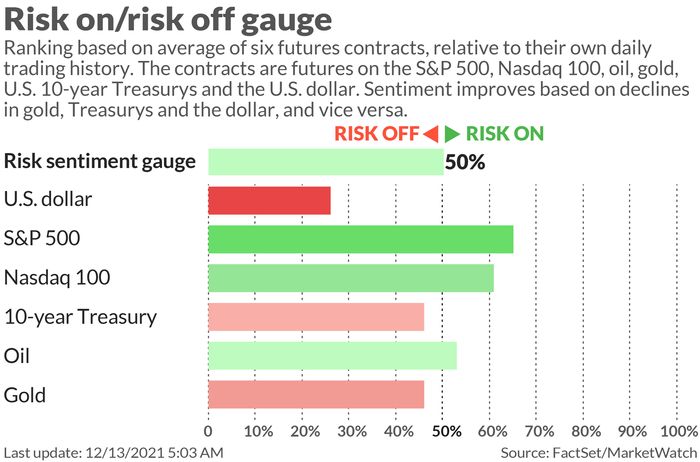
After the “worst inflation call in history” and its credibility shattered, Chair Jerome Powell will need to take the reins hard, says Allianz’s chief adviser Mohamed El-Erian. So we’ll see if a potentially sterner Fed knocks the S&P 500, which glided to a new high on Friday despite nosebleed consumer prices, off the Santa rally path.

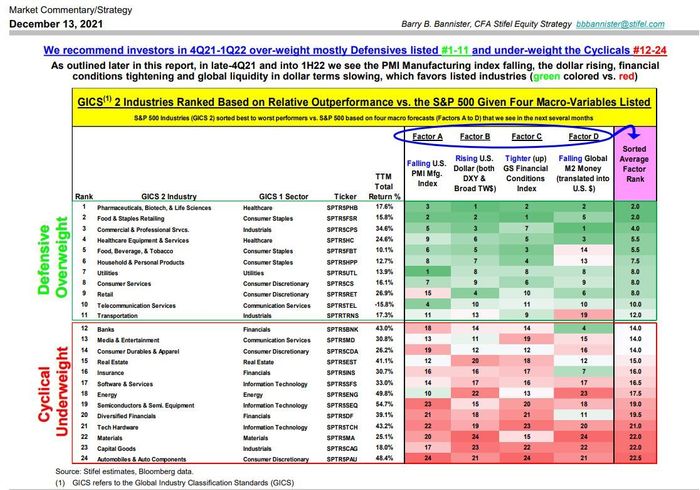
On to our call of the day from a team at Stifel, led by Barry Bannister, warning of another bubble for the ages, thanks to “poor monetary and fiscal decisions since COVID-19.”

And maybe enjoy any Santa rally while it lasts, as the team sees a near-term correction taking the S&P 500 toward the low 4,000s by the first quarter of next year. And then…

“Later in 2022-23E, we believe the ‘behind-the-curve’ Fed might create the third bubble in 100 years, by 2023 to 6,750 for the S&P 500 (Nasdaq [approximately] 25,000),” said the Stifel team.

“Populism (which the Fed and Treasury seemingly embrace) leads to poor choices and even worse outcomes. Rate repression may again create a bubble that bursts (always do), followed by a lost decade,” it said.

It said investors should look to history for proof this can happen. The S&P 500 dropped nearly 20% in the third quarter of 1998 before the dot-com bubble burst in 1999-2000. A “late arriving” Fed tightening from the second-half of 1999 to the first half of the next year couldn’t stop it, said Bannister and the team.

“The same happened in the Roaring ’20s, with a -10.7% mid_Dec-1928 drop as rates rose before the Oct.-1929 crash,” the strategists added.

The only way to prevent such a bubble would be for the Fed to heed its own financial stability report, where it warned over elevated risk appetite among retail investors and high equity and real estate valuations, and “tilt hawkish.”

“Still, policy may arrive too late, and if the market goes ‘risk-on’ with a falling Equity Risk Premium and if the 10Y Treasury Inflation Protected Security (TIPS) yield remains repressed at -1.0% due to global central banks, a P/E [price-earnings] convexity bubble in 2022-2023E may occur,” they said.

While the big one may be a way off, they offer a near-term survival guide. Bannister and his team said if both the S&P 500 and commodities weaken simultaneously — they expect that due to dollar strength, a China growth slowdown, Fed exit signals and tighter global liquidity —investors can take refuge in S&P 500 defensives. So healthcare, consumer staples, utilities and telecommunications are the safety spots of choice, for now.

The buzz

We’ve got Monday mergers and acquisitions. Pfizer
PFE,
+1.34%

is buying Arena Pharma
ARNA,
-5.33%

in a $6.7 billion deal. Software group SPX Flow
FLOW,
+0.82%

has agreed to a $3.8 billion buyout from Lone Funds.

South African researchers say a two-shot course of Pfizer and BioNTech’s
BNTX,
-9.33%

COVID-19 vaccine is about 23% effective against the omicron coronavirus variant, but may still prevent serious disease.

Peloton
PTON,
-5.38%

has fired back lightning fast at a plot twist in the “Sex and the City” reboot that was partly blamed for some stock selling, with a new ad featuring actor Chris Noth…back on his bike.

Monday is quiet on the data front, but the rest of the week is busy enough with retail sales and some manufacturing gauges. The Fed’s two-day meeting kicks off Tuesday. Here’s a preview.

Iron-ore prices have been rising on speculation China will provide fiscal stimulus in early 2022, after the country’s top officials said at a weekend meeting that they want to stabilize the economy.

Celebrity chefs such as José Andrés are among those providing aid to Kentucky, which bore the brunt of a series of deadly and devastating tornadoes that hit multiple states this weekend.

The chart

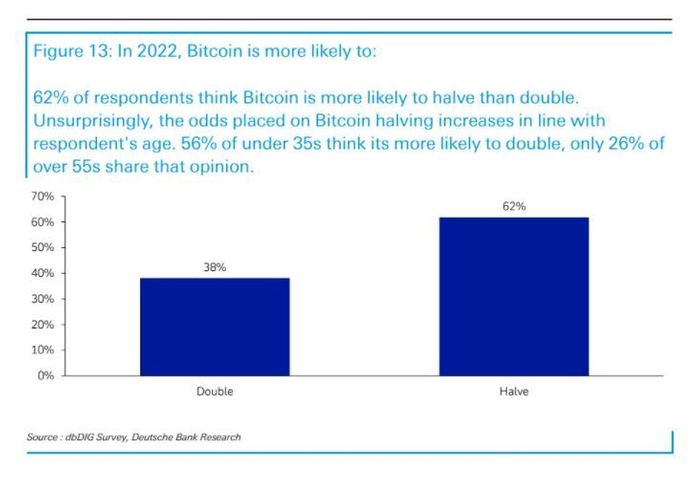
Betting on bitcoin? A survey conducted by Jim Reid and other strategists at Deutsche Bank finds that the older crowd is less optimistic about more gains than the younger crowd.

The markets

Stock futures
ES00,
+0.23%

YM00,
+0.06%

NQ00,
+0.41%

are higher, with oil
CL00,
-0.98%

and industrial metals prices
HGZ21,
+0.26%

also moving up. It was a mixed day for Asian stocks, but Europe is perking up, while bitcoin
BTCUSD,
-2.21%

and other cryptocurrencies are softer. The beaten-down Turkish lira
USDTRY,
+2.27%

was getting crushed again after Standard & Poor’s warned of a downgrade. Then the central bank intervened.

Random reads

An Oregon elementary school called the cops on a friendly, but foul-mouthed, snack-stealing crow.

Fans mourn “Interview with the Vampire” author Anne Rice, who has died at 80. Here’s her son’s farewell:

Need to Know starts early and is updated until the opening bell, but sign up here to get it delivered once to your email box. The emailed version will be sent out at about 7:30 a.m. Eastern.

Want more for the day ahead? Sign up for The Barron’s Daily, a morning briefing for investors, including exclusive commentary from Barron’s and MarketWatch writers.

Bond Report: Treasury yields edge lower as investors await Fed meeting

Treasury yields edged lower Monday as investors awaited a meeting this week of Federal Reserve policy makers that’s expected to see the central bank speed up its wind-down of monthly asset purchases in the face of stubbornly high inflation.

What are yields doing?
  • The yield on the 10-year Treasury note
    TMUBMUSD10Y,
    1.471%

    fell to 1.476%, down from 1.487% at 3 p.m. Eastern on Friday. Yield and debt prices move in opposite directions.

  • The 2-year note yield
    TMUBMUSD02Y,
    0.668%

    was 0.661%, little changed from 0.66% on Friday afternoon.

  • The yield on the 30-year Treasury bond
    TMUBMUSD30Y,
    1.859%

    fell to 1.864% from 1.883% late Friday.

What’s driving the market?

The benchmark 10-year yield ended little changed on Friday after data showed inflation in November rose at its fastest year-over-year pace in nearly 40 years at 6.8%, but was slightly below expectations. For the week, however, the yield bounced 14.5 basis points for its largest such rise since the week ended Feb. 19.

All eyes are on the two-day meeting of the Fed’s policy-setting Federal Open Market Committee, or FOMC, that will conclude Wednesday. Fed Chairman Jerome Powell last month opened the door last month to speeding up the tapering process, while hot inflation data last week helped cement market expectations for such a move.

Read: Highest U.S. inflation in nearly 40 years will force Federal Reserve’s hand

A faster taper, which is seen potentially ending the Fed’s asset purchases by March, would also set the stage for earlier rate increases. Investors will be paying close attention to the Fed’s updated economic projections and the latest version of the so-called dot plot, which maps policy maker’s rate expectations.

See: El-Erian says Fed use of ‘transitory’ to describe inflation was its worst call ever

Several other central banks are meeting this week, including the European Central Bank on Thursday, The ECB is expected to signal that it plans to end its additional pandemic-inspired asset purchases, a 1.85 trillion euro ($2.1 trillion) program known as the Pandemic Emergency Purchase Program, or PEPP, in March.

Investors are also paying heed to the spread of the omicron variant of the coronavirus that causes COVID-19.

What are analysts saying?

“If the FOMC announces a faster taper but acknowledges uncertainty, the market reaction may be limited, as it was after last week’s CPI data,” said Kit Juckes, global macro strategist at Société Générale, in a note. “However, two more weeks of evidence that omicron causes low enough rates of hospitalization and death that experts conclude increased restrictions will be temporary, could mean the new year starts with the focus firmly on accelerated and extended Fed tightening.”

Your office meetings within three years will move to the 3D metaverse, says Bill Gates

Image source: Getty Images


So there’s this brilliant place called the metaverse, which has received renewed interest recently when the world’s largest social network, Facebook, announced that it has rebranded its corporate company name to Meta. I know the term has been used to a dizzyingly promiscuous level, but for those who know what the metaverse is, it refers to a combination of virtual, augmented and physical reality. For those who don’t know, it can seem like a vague place that is strange or foreign to the real world. But realistically, there is no single, unified entity called the metaverse; rather there are multiple mutually reinforcing ways in which virtualisation and 3D web tools are embedded into a virtual environment. 

It’s common to be at a loss for what the metaverse is because there is still debate as to whether it really does constitute a significant chapter of human evolution or if it’s just another overhyped fad. In this moment, the vector of change points towards the metaverse being a revolutionary force that could permanently transform how we interact with the digital world. 

While Facebook has rather aptly described the metaverse as “the ultimate dream of social technology”, this month Bill Gates went as far as to say that within two or three years, most office meetings will go from 2D camera image grids to a 3D space with digital avatars. I know what you’re thinking: “unlikely”. But if you told the owners of a Nokia 3310 mobile phone in 2000 that they’d have the entire contents of a computer sitting within their pockets seven years later in the form of a smartphone, they may have had the same reaction.  

Here’s what Gates had to say in his blog post on 7 December:

“You will eventually use your avatar to meet with people in a virtual space that replicates the feeling of being in an actual room with them. To do this, you’ll need VR goggles and motion capture gloves to accurately capture your expressions, body language and the quality of your voice”. 

Gates also mentioned that since most people don’t own the aforementioned tools as of yet, it could slow adoption somewhat, but Microsoft is planning to roll out an interim version of this next year, which will use a webcam to animate an avatar that’s used in a 2D set-up. 

You might be wondering what the benefit of a metaverse-themed office meeting is. Well, data published by Altus shows that remote working can save businesses up to £10,000 annually per employee. The evidence is even more compelling if you look at how of the 17 million millennials living in the UK (a quarter of the total population), 70% prefer remote working to office-based roles — and since millennials will contribute to 75% of the workforce by as early as 2025, it’s clear that flexible working is the future. 

To add to this, millennials have proven to be the most diverse generation yet, with most considering themselves to be politically independent and interested in a wide variety of different cultures and ideas. As the world of work becomes increasingly digital with many employees spending more time away from their offices as a result of the Covid-19 pandemic, this youthful millennial open-mindedness could translate into new, productive and more rewarding forms of work being created as part of this digital transformation. If Gates is right, 3D avatars may well be integrated into your office meetings in such a way that it could change how you work forever. 

Overall, Brits saved on average £500 a month working from home during the lockdowns, and while the impact of the metaverse does largely depend on the uptake of such new technologies, 3D avatars could lead the edge of the shift to more flexible and distributed work that is also exciting and technologically innovative. Personally, I don’t feel that Gates is too far off, and we will see teams collaborating in the 3D metaverse using customised avatars with the help of motion capture and spatial audio technology in the very near future. 

Products from our partners*

Top-rated credit card pays up to 1% cashback

With this top-rated cashback card cardholders can earn up to 1% on all purchases with no annual fee. Plus, there’s a sweet 5% welcome cashback bonus (worth up to £100) available during the first three months!

Those are just a few reasons why our experts rate this card as a top pick for those who spend regularly and clear their balance each month. Learn more here and check your eligibility before you apply in just 2 minutes.

*This is an offer from one of our affiliate partners. Click here for more information on why and how The Motley Fool UK works with affiliate partners.Terms and conditions apply.

Was this article helpful?

YesNo


Some offers on The Motley Fool UK site are from our partners — it’s how we make money and keep this site going. But does that impact our ratings? Nope. Our commitment is to you. If a product isn’t any good, our rating will reflect that, or we won’t list it at all. Also, while we aim to feature the best products available, we do not review every product on the market. Learn more here. The statements above are The Motley Fool’s alone and have not been provided or endorsed by bank advertisers. John Mackey, CEO of Whole Foods Market, an Amazon subsidiary, is a member of The Motley Fool’s board of directors. The Motley Fool UK has recommended Barclays, Hargreaves Lansdown, HSBC Holdings, Lloyds Banking Group, Mastercard, and Tesco.

As the most shorted UK stock, has the Cineworld share price got further to fall?

When a stock is heavily shorted, it’s a very bearish sign. It means that a large number of investors are betting on the stock’s price falling in the future. In the case of Cineworld, the most recent data showed that it has a short interest of 9.5%. This makes the cinema operator the most shorted stock in the UK. So, does this mean that the Cineworld share price is set to decline further, or after its 27% yearly decline, can it recover?

Risks of Omicron

The Omicron variant has put the company’s future into doubt, and over the past month, the Cineworld share price has declined 30%. This is mainly due to fears that demand could be hit. At worst, there’s also the prospect of another lockdown, which could hit the company hard. But is this large share price decline warranted?

5 Stocks For Trying To Build Wealth After 50

Markets around the world are reeling from the coronavirus pandemic… and with so many great companies trading at what look to be ‘discount-bin’ prices, now could be the time for savvy investors to snap up some potential bargains.

But whether you’re a newbie investor or a seasoned pro, deciding which stocks to add to your shopping list can be a daunting prospect during such unprecedented times.

Fortunately, The Motley Fool UK analyst team have short-listed five companies that they believe STILL boast significant long-term growth prospects despite the global upheaval…

We’re sharing the names in a special FREE investing report that you can download today. And if you’re 50 or over, we believe these stocks could be a great fit for any well-diversified portfolio.

Click here to claim your free copy now!

The ideal situation for the company is that demand can continue recovering, despite the risks posed by Omicron. This would continue the trend seen over the past few months, with cinema bookings hitting their highest level of growth since October 2019. It even managed to generate positive cash flow in October, and group revenues were 90% of 2019 levels. If similar momentum can continue, I feel the Cineworld share price could soar.

But this is a big ‘if’. Indeed, restrictions have already been announced in response to the new variant, and this includes compulsory wearing of masks in cinemas. This may lessen the appeal of cinemas, and lead to people staying at home once again.

Further, if there’s a new lockdown, the results could be disastrous. This is especially true considering the company’s extreme levels of debt. In fact, in this scenario, insolvency wouldn’t be out of the question. This risk is the reason why the shares have dropped so much recently.

The debt situation

Even before the pandemic, Cineworld’s debt position seemed pretty unsustainable. Yet at least it was profitable then. But operating losses in the first half of the year totalled over $200m. And debt has also continued to soar. In fact, net debt currently totals $4.6bn, far greater than its current market capitalisation of around $700m. As such, even if it’s forced to issue more shares to pay off some of this debt, this is unlikely to make much of a dent in the total. There are also several forthcoming interest payments, and if the company can’t return to profitability, default is a possibility. This could result in insolvency and even see the Cineworld share price fall to zero.

Has the Cineworld share got further downside?

In the case of another lockdown, I believe that the Cineworld share price will fall a lot further. This is one reason why I think it’s so heavily shorted.

But there’s also the chance for the shares to soar. Indeed, before Omicron, the recovery was progressing well. If this recovery can continue despite the emergence of the new variant, I believe the upside potential could be huge. There could even be a short squeeze. I’m not going to buy though, until I can see more evidence that a new lockdown isn’t coming. This is because the risks seem too great right now. 


Stuart Blair has no position in any of the shares mentioned. The Motley Fool UK has no position in any of the shares mentioned. Views expressed on the companies mentioned in this article are those of the writer and therefore may differ from the official recommendations we make in our subscription services such as Share Advisor, Hidden Winners and Pro. Here at The Motley Fool we believe that considering a diverse range of insights makes us better investors.

As world inflation soars, here’s one ETF I’m looking at

Last Friday’s US inflation figures show that prices have risen faster than at any time in the last 40 years. November inflation figures for the UK are also out soon. If previous trends are anything to go by, prices are likely to be sharply higher. As the same picture emerges around the world, I’m looking at a dividend-paying ETF as a hedge against rising prices.

Looking for protection

I believe that high-dividend-paying shares can be protection against inflation. These companies tend to be steady firms in solid sectors. In an inflationary environment, they could even be able to increase the prices of their goods or services and maintain or increase their dividends more than the rate of inflation.

5 Stocks For Trying To Build Wealth After 50

Markets around the world are reeling from the coronavirus pandemic… and with so many great companies trading at what look to be ‘discount-bin’ prices, now could be the time for savvy investors to snap up some potential bargains.

But whether you’re a newbie investor or a seasoned pro, deciding which stocks to add to your shopping list can be a daunting prospect during such unprecedented times.

Fortunately, The Motley Fool UK analyst team have short-listed five companies that they believe STILL boast significant long-term growth prospects despite the global upheaval…

We’re sharing the names in a special FREE investing report that you can download today. And if you’re 50 or over, we believe these stocks could be a great fit for any well-diversified portfolio.

Click here to claim your free copy now!

For my own portfolio, I’ve always liked ETFs (exchange traded funds). These are funds that track an index or sector and can be bought and sold like a share through most online brokers. They allow me to invest in multiple companies in a single fund and are usually low-cost.

One I’m considering

SPDR S&P Global Dividend Aristocrats UCITS ETF (LSE: GBDV) is one fund that’s always on my radar. Its aim is to invest in global high-dividend-yielding companies by following the S&P Global Dividend Aristocrats Quality Income Index. This tracks companies that have over a $1bn market capitalisation and that have sustained or elevated dividends for at least 10 consecutive years. At the same time, the firms must maintain a positive return on equity and cash flows from operations. Such companies should have pricing power in an inflationary environment.

Diversification is always on my mind when investing and this ETF scores well in terms of number of firms, geographical location and industries.

First, there are around 100 companies in this fund. No company has more than a 3% weighting within the ETF. Second, the fund is geographically diverse. US companies make up 45%, but the remaining firms come from all across the world. Finally, it covers a wide variety of industries including banking, utilities and insurance.    

This ETF is large at over $700m and has a reasonable ongoing charge. The dividend yield is currently around 3.7%, which is acceptable given the diversity of the ETF. 

The outlook

It’s worth me remembering that there are some risks. One that comes to mind is the dividend trap. This is where a dividend isn’t sustainable in the long run because the underlying business isn’t good. I’m also aware there are other alternatives that might provide more protection in the face of inflation, such as gold.

As I see it, demand for oil and gas is pushing up energy bills around the world. Shortages of many goods, because of factory shutdowns due to covid restrictions, are pushing up prices. The rise of the omicron Covid variant is likely to exacerbate things.

On balance, given that inflation is likely to continue to soar next year, I’m seriously contemplating adding this high dividend-paying ETF to my portfolio.

Inflation Is Coming: 3 Shares To Try And Hedge Against Rising Prices

Make no mistake… inflation is coming.

Some people are running scared, but there’s one thing we believe we should avoid doing at all costs when inflation hits… and that’s doing nothing.

Money that just sits in the bank can often lose value each and every year. But to savvy savers and investors, where to consider putting their money is the million-dollar question.

That’s why we’ve put together a brand-new special report that uncovers 3 of our top UK and US share ideas to try and best hedge against inflation…

…because no matter what the economy is doing, a savvy investor will want their money working for them, inflation or not!

Best of all, we’re giving this report away completely FREE today!

Simply click here, enter your email address, and we’ll send it to you right away.


Niki Jerath does not own shares in SPDR S&P Global Dividend Aristocrats UCITS ETF. The Motley Fool UK has no position in any of the shares mentioned. Views expressed on the companies mentioned in this article are those of the writer and therefore may differ from the official recommendations we make in our subscription services such as Share Advisor, Hidden Winners and Pro. Here at The Motley Fool we believe that considering a diverse range of insights makes us better investors.

Financial News

Daily News on Investing, Personal Finance, Markets, and more!

Financial News

Policy(Required)