Former Silicon Valley Bank CEO Greg Becker’s claim that he did not possess material, non-public information before he made $2.3 million by selling company stock less than two weeks before his bank collapsed will not free him from potential regulatory scrutiny, a law professor and former enforcement officer for the Securities and Exchange Commission told MarketWatch.
Among the potential issues for a securities-law investigation is whether Becker violated insider-trading laws when he sold stock on Feb. 27, legal sources have said.
“Becker’s remarks regarding market conditions and materiality will not put an end to things,” said Christine Sgarlata Chung, Albany Law School professor and former branch chief for the Securities and Exchange Commission’s enforcement division. “In my view, the government is still likely to take a careful look at what Becker knew about Silicon Valley Bank’s financial condition (and its vulnerability around interest rates), and when he knew it.”
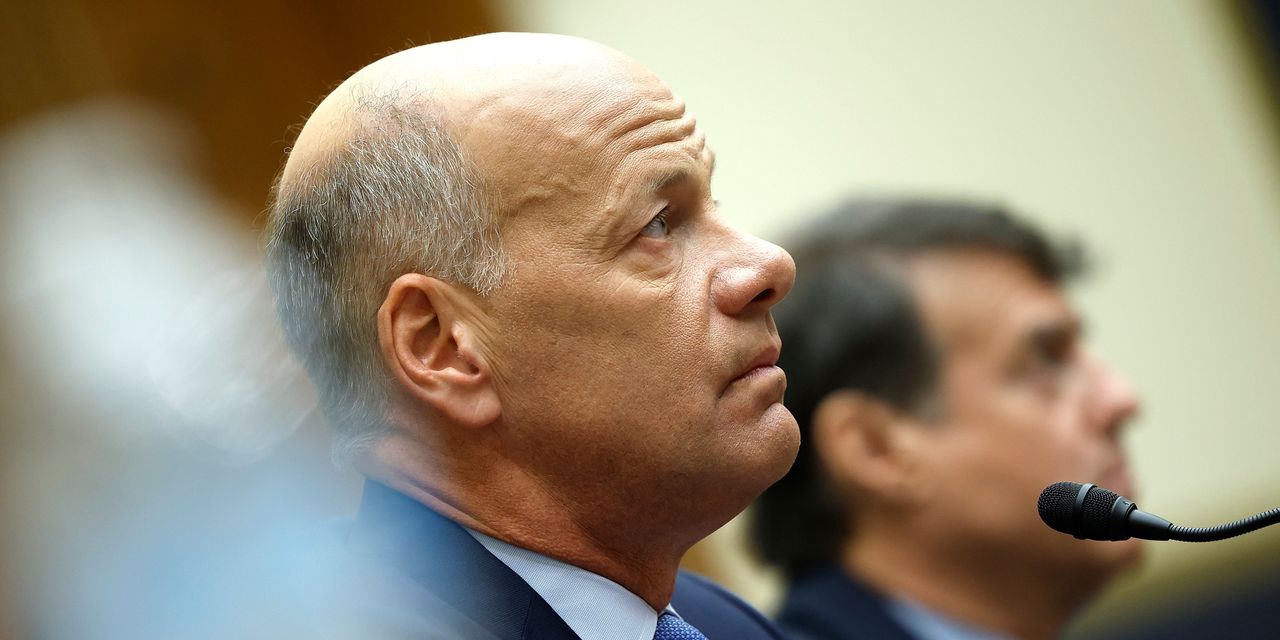
Questions about Becker’s stock sale surfaced during Becker’s testimony in Congress last week as Congress grappled with the March 10 collapse of Silicon Valley Bank.
During the hearings on May 16, New Jersey Democratic Sen. Bob Menendez said Becker and other executives sold $84 million in SVB stock during a two-year span when the Federal Reserve issued 30 supervisory findings that flagged potential issues around risk management, board effectiveness, and interest rate risk simulation and modeling.
Menendez said all of these issues “directly contributed to the bank’s collapse” and yet were not publicly released.
Becker said he did not believe the supervisory findings amounted to material information that he had prior to the stock sales.
Becker “can’t change the timeline” of his stock sale so close to the March 10 collapse of the bank, Chung said. Nor can he dismiss the fact that Silicon Valley Bank’s business model, client base and investment portfolio made it “uniquely vulnerable” to interest rate risk, duration risk on its long-dated securities and a run on the bank, she added.
“While SVB was not the only bank to suffer investment losses during this period, depositors’ run on the bank was not just about social media dog piling,” Chung said.
Becker also can’t avoid the fact that the regulators had raised specific and targeted concerns, she said.
“At the end of the day, Becker is basically arguing that he didn’t see the collapse coming, and that because he didn’t see the collapse coming, he didn’t sell while in possession of material non-public information respecting the bank’s impending collapse,” Chung said. “If it’s really true that he had no inkling of how much trouble Silicon Valley Bank was in with its portfolio and business model, or that a few bad articles might trigger a bank run, what does that say about his attention to risk management and regulatory compliance? What does that say about his ability to understand markets?”
Rule 10b5-1 trading plans used by Becker allow executives to sell stock at regular intervals as a way to protect against any compliance concerns around trading off inside knowledge of the company.
Becker’s Feb. 27 stock sale with a personal profit of $2.27 million was part of a new 10b5-1 trading plan that took effect on Jan. 26, well after the U.S. Federal Reserve had flagged problems with risk management at Silicon Valley Bank, which it did as early as 2021.
In his testimony last week, Becker said he regularly exercised options before they expired and that the company’s legal team signed off on it.
“I believed that using 10b5-1 plans to sell my stock options was the most ethical means to manage this part of my compensation, and I required the rest of our executive team to do the same,” Becker said.
Becker said he could not have foreseen that Silicon Valley Bank would collapse was due to what he described as unexpected and unprecedented market conditions, and a run on deposits sparked by social media.
The Securities and Exchange Commission Chairman Gary Gensler said in March that regulators are focused on identifying and punishing misconduct related to the failures of Silicon Valley Bank, as well as Signature Bank. A spokesperson from the SEC did not reply to an email from MarketWatch inquiring about any updates.
First Citizens Bancshares
FCNCA,
said March 27 it agreed to buy the former Silicon Valley Bank from the Federal Deposit Insurance Corp. In May, First Citizens reported a first-quarter profit of nearly $10 billion from its acquisition of Silicon Valley Bank.
Also Read: First Citizens reports $9.5 billion profit on Silicon Valley Bank acquisition