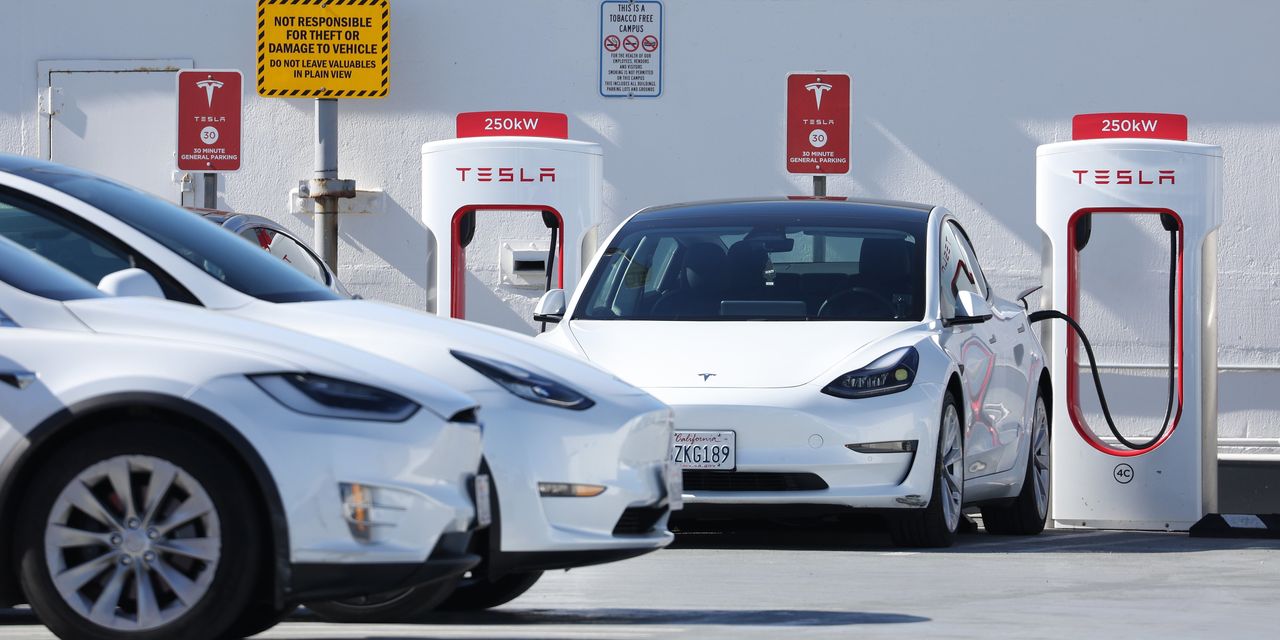
Tesla Inc. has tweaked prices of its electric vehicles several times in recent months, most often reducing them. This has piqued the curiosity of many investors, and now an analyst has peered into the data to find out how the cuts have affected demand.
Cars are elastic goods, Chris McNally at Evercore ISI said in his note on Tuesday. It is generally thought that a reduction of as little as $100 in incentives can move U.S. car sales’ seasonally adjusted annual rate by about 100,000 vehicles, he said.
It remained to be seen, however, just exactly how elastic considering it is one automaker whose bulk of sales consists of two models, the compact SUV Model Y and the cheaper sedan Model 3.
“[Tesla’s]
TSLA,
first cuts had a significant effect on global demand [U.S. by far the largest] but it is much harder to see a clear positive elasticity correlation from the second set of cuts in March/April,” the analyst said.
Tesla shares are likely to remain “in a negative revision cycle” this year as Wall Street is forced to either cut 2024-25 volume assumptions or cut price and margin assumptions to make up for volume, McNally said.
Tesla stock shook off some earlier weakness on Tuesday, up 0.6% at last check.
“The extent to which lower price, from here, can drive volumes, all things equal, is what our newly calculated elasticity of [Tesla] demand function can help analyze in coming quarters,” he said.
Don’t miss: Tesla’s Elon Musk is a ‘rejuvenated’ leader with more time to devote to EV maker, analyst says
Tesla is readying a next-generation EV, expected to be cheaper than the Model 3, which starts at around $40,000. But a boost from that arrival is not seen until at least the second half of 2025, McNally said. Until then, “price vs. volume will be the key stock debate for the next 18 months.”
Tesla shares have gained nearly 54% so far this year, compared with an advance of around 9% for the S&P 500 index
SPX,
in the same period.