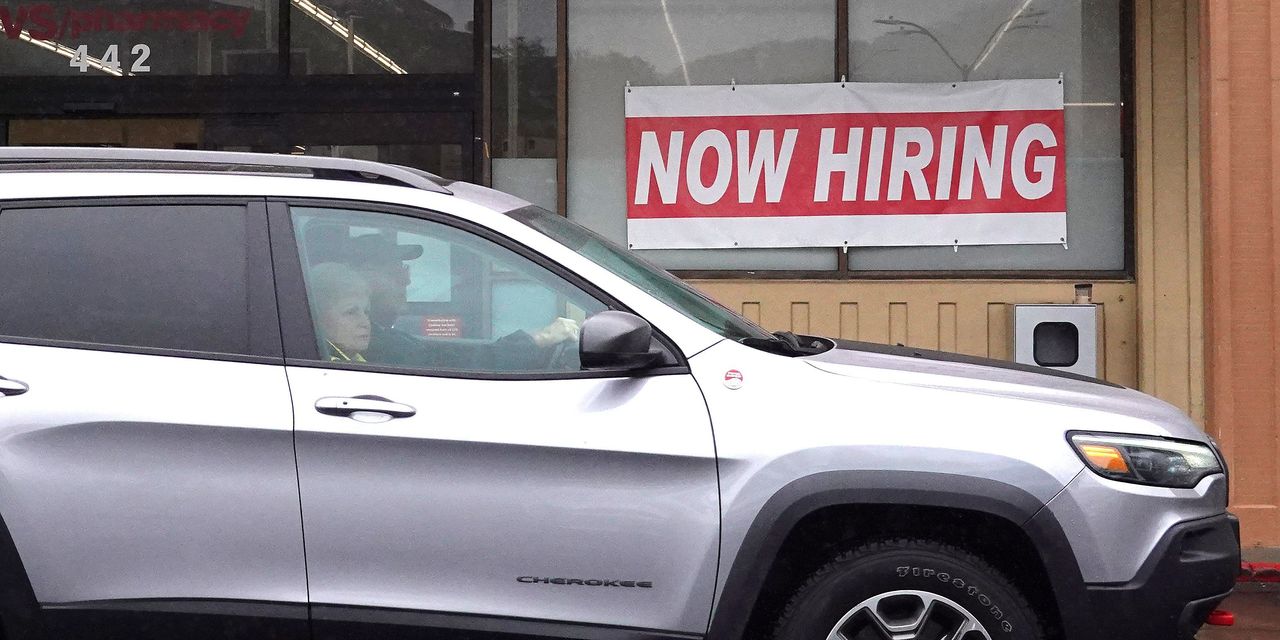
The U.S. probably created fewer than 200,000 new jobs in April for the first time in more than two years, economists say. But they’ve been predicting a much faster deceleration in hiring for months to no avail.
Here’s what to watch in the U.S. employment report due on Friday morning.
The forecast
The U.S. is expected to add 180,000 jobs in April, according to economists polled by The Wall Street Journal.
“The April jobs report should confirm that the labor market slowdown is well underway and that the economy is cooling,” said senior economist Lydia Boussour of EY Parthenon.
For comparison’s sake, the U.S. created 230,000 jobs in March, 326,000 in February and, 472,000 in January. All those gains were well above long-term hiring trends.
The gradual but grudging slowdown, in any case, is due to rising interest rates orchestrated by the Federal Reserve to tame high inflation. Higher borrowing costs depress the economy and reduce the need for labor.
ADP says 290,000 private-sector jobs were created in April, but it has a poor record of foreshadowing changes in the government’s official employment report.
Fed reaction
Senior Fed officials believe the economy can only add around 100,000 new jobs a month without adding to inflationary pressures. They want to see hiring taper off even more — and unemployment rising a bit — to ease the biggest labor shortage in modern times.
The Fed on Wednesday is expected to raise a key U.S. interest rate again to further constrain the economy. Then the central bank is likely to pause further rate hikes to see if the economy and labor market soften enough to forestall further action.
Unemployment rate
The percentage of jobless Americans seeking work was forecast to be unchanged at 3.6%, a sign of persistent strength of the U.S. labor market.
The Fed expects the rate to climb to as high as 4.5% as the economy weakens. But that would still leave the jobless rate at historically low levels. Until several years ago, the unemployment rate has seldom fallen below 4%.
Wage growth
Average hourly wages are forecast to rise a modest 0.3% in April. That would leave the increase over the past year unchanged at 4.2%.
Although the growth in pay is slowing, that’s still too high for the Fed. The central bank wants to see wage growth return to levels consistent with low inflation, seen as 2% to 3% a year.
Leisure and hospitality
Hotel, restaurants and similar service-oriented businesses have benefited from the desire of Americans to go out to eat, travel more and take vacations. They’ve accounted for most of the increase in employment in recent months and are the linchpin of the current economic expansion.
Watch for signs of a hiring slowdown at these businesses. That could be a big clue on whether the economy itself is slowing or even slouching toward recession.