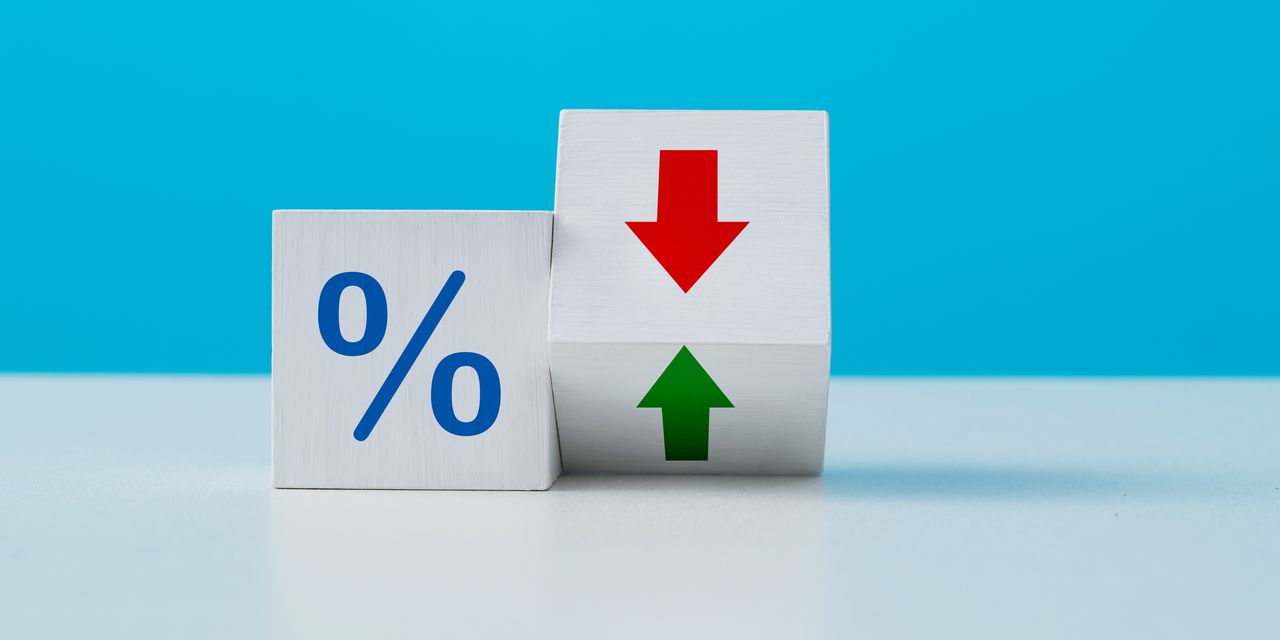
With inflation numbers coming down, the Series I Bonds interest rate took a tumble for its semiannual adjustment, officially announced Monday.
New I-bonds, issued May 1 through the end of October, will have a composite rate of 4.3%, which is down from 6.89% over the previous six months and a peak of 9.62%. That includes a fixed rate of 0.9%, which is up from the last rate of 0.4% in the last six months, and 0% for several years before that.
The U.S. Treasury usually waits until May 1 and Nov. 1 to reveal the new rate on the investments, but this time posted the update with no warning on Friday on its TreauryDirect.gov, which is the only place to buy I-bonds, once sales were locked out for the previous rate on April 27. I-bonds have grown in popularity over the past two years as rates have climbed, and that the news spread quickly.
I-bond rates have two components: an adjustable rate based on inflation data that resets every six months and a fixed rate that is set at purchase and sticks with the bond until redemption (up to 30 years).
Some rules apply, most important: You can only buy up to $10,000 a year per individual. Also, you must hold I-bonds at least one year, and if you cash out before five years, you lose the last three months of interest.
At a rate of 4.3%, I-bonds will no longer be top of the savings heap when CDs, savings accounts and other Treasury products are yielding as much or more. But because of the way the inflation protection works, I-bonds are still attractive for long-term savers. That’s because the new issue I-bonds have such a robust fixed rate. Those who bought I-bonds in the last two years when the fixed rate was 0% might want to think about cashing those out and buying new ones, but this strategy involves waiting at least 15 months rather than just one year.
“I would recommend cashing out old bonds at 0% to switch to new bonds at 0.9%, but you have to be careful not to lose the 6.48% variable rate,” says Harry Sit, founder of the blog The Finance Buff.
The inflation conundrum
You might be wondering: If eggs are still so expensive, why did the I-bond interest rate drop so much?
“Inflation is never an ‘is’–it’s only a ‘was,’” explains Jeremy Keil, a financial adviser based in Milwaukee.
I-bonds are based on the last six months of inflation data from the Consumer-Price Index, which does not have the peak numbers from a year ago that are still included in headline inflation data. “Inflation is percentage of growth and it depends on when you start counting,” Keil says.