I don’t want an emerging markets index fund in my portfolio and I don’t care who knows it.
There’s nothing intrinsically wrong with investing in emerging markets. (A new research paper from the number crunchers at hedge fund company AQR argue that they look like a great investment right now—more on that in a moment.)
And low-cost index funds are generally a very good way of investing in any asset class, whether it be stocks or bonds. But in the case of emerging markets I’m going to make an exception.
Read: These 7 simple portfolios have beat the S&P 500 for more than 50 years
The reason? Pretty simple, really.
China.
Right now you might think your emerging markets index fund is “diversified,” but it isn’t. Chinese stocks account for 32% of the fund and Taiwan another 15%. Which means that about half of your entire stake is at risk in the China-Taiwan situation.
That breaks every possible rule about diversification. As it happens I don’t have a strong view about whether or not China is going to invade Taiwan, as China’s ally Russia has done to Ukraine. I’m not even against taking a bet on the possibility, one way or another, if I were offered generous odds. But I am not gambling half of an emerging market position on the issue. It’s nuts.
There was a similar situation with “east European” funds until early last year. They were heavily invested in Russia, in line with their index. Until it went to zero.
This is even before I get to the other issues about China. Such as that it is run by a totalitarian Communist dictatorship. That the government is involved in what the United Nations says are “serious human rights violations” against the Muslim Uyghur minority. Oh, and that the auditing and disclosure rules are at best questionable: Brit Anthony Bolton, one of the greatest money managers of his generation, was totally taken to the cleaners by all the frauds when he tried to run a China fund a decade ago.
It’s just two years since the Chinese government launched a massive attack on its leading technology companies, such as Alibaba
BABA,
and Tencent
0Z4S,
How do you invest rationally under such an arbitrary government?
If a portfolio is diversified across lots of different markets, the risks of any individual one are manageable. And they’re worth a bet, especially if the stocks are cheap and investors have a wide margin of safety.
But that’s not what we have in emerging markets index funds.
China, at this point, is so huge and so powerful that it is not even subject to the usual constraints of the international community. Most emerging market countries have to abide by general rules of international law and property, or they will find themselves shut out of the rest of the world. China has the world’s biggest economy. They can do what they like.
Are emerging markets even worth holding in my portfolio at all? Well, yes and no.
The case against was made most eloquently just over a decade ago, just when emerging markets were riding high, by SG Securities strategist Albert Edwards.
At the time the biggest investment mania was for the so-called BRICs, meaning Brazil, Russia, India and China. Edwards (who is British) called it instead a “Bloody Ridiculous Investment Concept,” though he credited the investment writer Peter Tasker with the phrase. Investors loaded up on emerging markets, and especially BRICs, because they figured superior economic growth would generate higher investment returns. But as Edwards put it in November 2011, “When you look at the evidence, there is absolutely no correlation between investment returns and economic growth because investors overpay for growth stories and there is no margin for error.”
Since Edwards wrote those words, the U.S. stock market is up 300% and developed international markets of Europe and Asia, as monitored by the MSCI EAFE index, up 110%.
Emerging markets? Try 45%. Total.
And the BRICS have earned you a miserable 31%.
On the other hand, if you bought emerging markets when they were really, really cheap, you’ve made out gloriously. In 1997-1998, emerging markets imploded worldwide, following a collapsing bubble among the “tigers” of southeast Asia and a Russian government default. Emerging market indexes fell by more than a half. As late as early 2003 the MSCI Emerging Markets index was a third lower than it had been a decade earlier. SG data showed that by that stage emerging market stocks were selling at an average of just eight times forecast per-share earnings—which is cheap by the standards of financial history, and was about half the ratings of stocks in the developed markets of the U.S., Western Europe, Japan and Australasia.
Over the next 4½ years, investors made more than a 400% return on their money. Until the bubble burst in the global financial crisis.
If you take the rough and the smooth, since the BRICs concept was first coined in November 2001, BRICS and emerging markets generally have outperformed U.S. and international developed stocks. The average monthly returns, according to MSCI, have been 1.0% for BRICS and 0.9% for emerging markets overall, compared to 0.76% for the U.S. and 0.61% for international. But of course the volatility has been much higher as well. And they have made little or no gains since 2007.
In its recent study, “Re-Emerging Equities,” AQR argues that emerging markets today are about as cheap, in relative terms, as they’ve been since the late 1990s. They argue that the fall in emerging markets since 2020-2021 means you’re getting paid for the risks.
Actually there’s another reason to look at emerging markets as well: The evidence is that they tend to have lower correlations with U.S. and developed market stocks. They zig more often when New York, London and Tokyo zag.
But like I said: I don’t want the index funds. I want something truly diversified.
There are alternatives, even without paying high fees for a manager who thinks he or she can beat the market. The iShares Emerging Markets Ex-China exchange-traded fund
EMXC,
does exactly what it says on the label, and has a low expense ratio of 0.25%. The biggest downside for me is that it’s still 22% invested in Taiwan.
More interesting still is the Global X MSCI “Next Emerging Markets and Frontier Markets” ETF
EMFM,
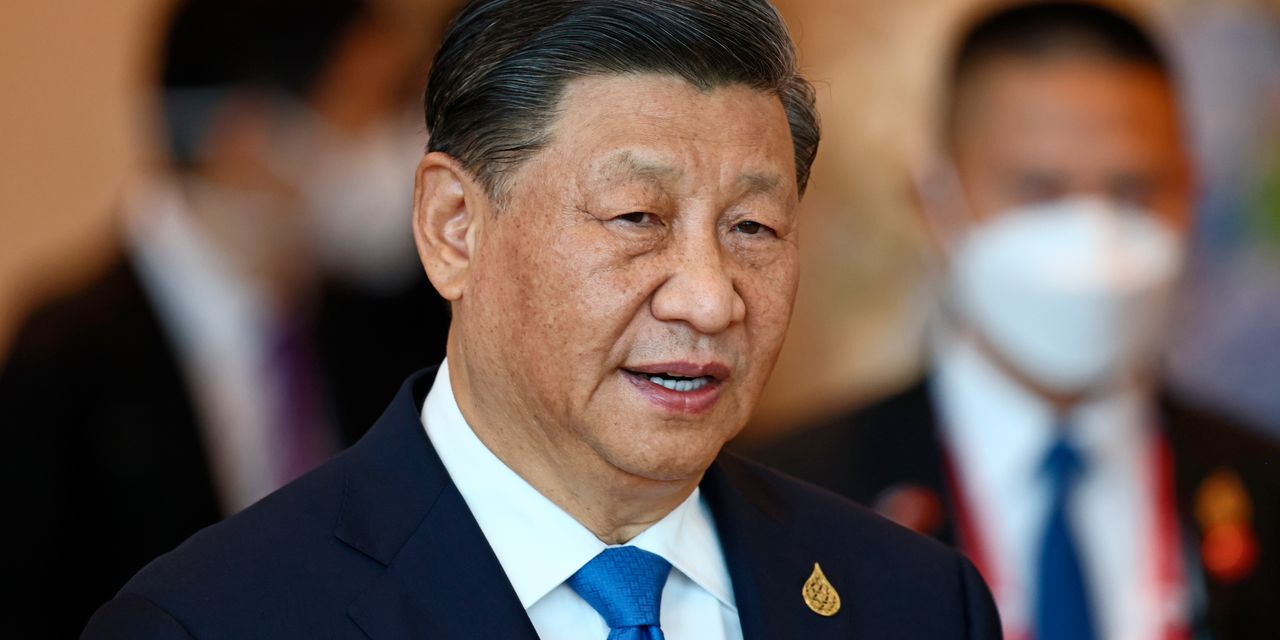
which avoids China, Taiwan, and other big countries like India and Brazil altogether. Instead it’s invested in Saudi Arabia, Indonesia, Thailand, Mexico, and others. It’s pretty well diversified—the biggest two holdings, Saudi and Indonesia, are about 10% of the portfolio each. It seems to offer a chance to capture any equity risk premium for emerging markets globally without having to guess whether Xi Jinping is going to invade China. And the fees are very reasonable, especially for what it is: 0.55% a year.
Meanwhile, do-it-yourselfers who want to take a bet on individual regions or countries have many other options. For instance Franklin Templeton offers a range of low cost ETFs for many individual countries and for regions. For instance the Franklin Templeton Latin America fund
FLLA,
charges just 0.19%: It’s mostly Brazil and Mexico, with a smattering of other countries such as Chile.
As ever, you pays your money and you makes your bet. But this is one instance where I don’t just want the standard index fund.