To stay abreast of the latest trends in retirement and aging in America, I like to attend the American Society on Aging’s gargantuan annual conference, On Aging. I recently returned from the 2023 version in Atlanta and wanted to share eight things I learned that you’ll want to know.
Before I do, let me set the stage: On Aging 2023 featured gerontologists, social scientists and hundreds of other experts presenting research findings, insights and analysis on everything from retirement to financial exploitation of older adults to long-term care to the Biden administration’s Medicare changes. One keynote speaker: CNN’s Dr. Sanjay Gupta, talking about brain health.
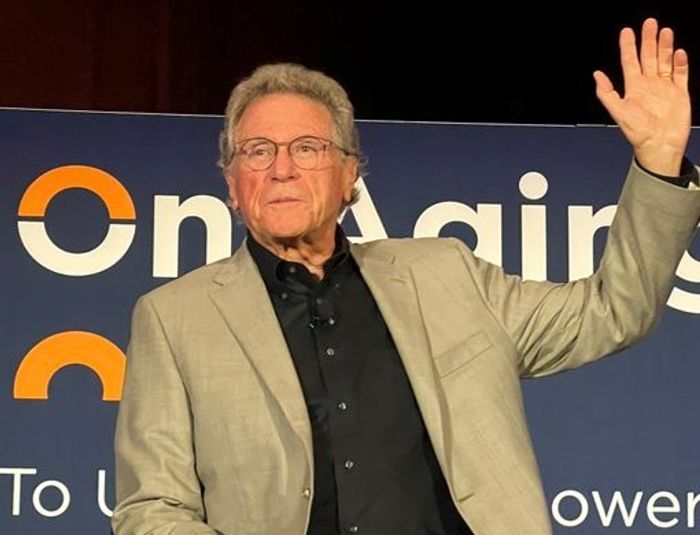
In his “Sages of Aging,” session, Ken Dychtwald, chief executive of the research and consulting firm AgeWave, added a touch of irony for the conference. Dychtwald noted that when he interviewed 12 pioneers in the field of aging for his book, “The Sages of Aging,” they told him “they felt it was time to move on to a better word than ‘aging.’” Many preferred “longevity” because it lacks the connotation baggage of “aging.”
Ken Dychtwald, CEO of AgeWave.
Richard Eisenberg
Onto the eight big things I heard:
Concerns about the 3 A’s: age segregation, ageism and ableism
In Dychtwald’s session, he and one of the book’s Sages, Marc Freedman (founder of Encore.org and now co-CEO of the group, renamed and refocused as CoGenerate.org), lamented age segregation in America. Too often, they said, older people cluster with only older people and younger people with others their own age. Co-Generate is working to fix that problem.
This session grappled with ageism and ableism (discrimination against people with disabilities) in America.
“Ageism and ableism often reinforce each other,” said Michael Adams, CEO of SAGE, the nation’s largest group improving the lives of LGBTQ+ elders.
Ashton Applewhite, an anti-ageism and ableism activist, cited a Yale School of Public Health study putting the cost of ageism in America at $63 billion. Covid, she said, “didn’t make ageism worse; it shined a light on it.”
Tracey Gendron, chair of Virginia Commonwealth University’s Department of Gerontology and author of “Ageism Unmasked,” said she was glad to see more conversation about ageism than ever.
Reducing ageism isn’t just good for society, said Applewhite, the World Health Organization found that “not being ageist makes us happier.”
Employers must do better helping workers transition to retirement
Malaika Edwards, a University of Houston professor who calls herself “The HR Pracademic,” spoke emphatically about the need for HR departments to address the impending retirements of their older employees.
“We need HR practitioners to take a deliberate role, with preretirement planning sessions — all aspects of retirement, not just financial ones,” Edwards said.
She also believes more employers should offer older workers phased retirement options, allowing them to gradually reduce their schedules from full-time to fewer days a week.
Elderfraud is bigger than ever
Financial exploitation of older Americans has seen a huge spike since the pandemic began, especially “romance scams,” according to numerous speakers at the conference. The reason: isolation and loneliness.
The largest type of elderfraud these days, according to the 2022 Consumer Sentinel Network Data Book: identity-theft impostor scams. Other serious problems, said Rodnee Warr, manager of elder client initiatives at Wells Fargo Advisors: fraudsters claiming to be with the IRS, online purchasing scams, lottery sweepstakes scams and cryptocurrency scams.
Dan Lyon, fraud/scams program manager at the elder information and guidance group Lifespan of Greater Rochester had a surprising warning: “If you own a smart TV, a scam is coming your way. You’ll get a warning saying your device to stream entertainment is outdated and you need to update critical information,” said Lyon. “They’ll ask for your credit card number.” Then, the scammer will install malware on your TV to gain personal information.
Solo agers need support
Millions of older Americans don’t have adult children, spouses, partners or close family members. They’re known as “solo agers” and because they lack familial support, they need to find others who can help with their finances and health if they’re unable.
“The only people who are morally obligated to take care of you are people in your family,” said Sara Zeff Geber, a solo ager authority. “If you don’t have people waiting in the wings, it’s important to figure out who you can count on, so you need to start planning.”
Jackson Rainer, a solo ager widower and a clinical psychologist, advises solo agers to find professionals — such as financial advisers and healthcare advocates —for the support they need.
Long-term care has serious problems
Mary Lou Ciolfi, senior program manager at the University of Maine Center on Aging, revealed fascinating insights from her 2021 survey that asked Americans over 60 for their views on moving to long-term-care facilities and how those responses compared with ones from people living in such places.
“We found that priorities shift once you move into a long-term care community,” Ciolfi said.
While older adults not living in long-term-care facilities were most concerned that the staff would care for their health well and that the living environment would be safe and private, the long-term care residents said respectful and compassionate communication from staff was their highest priority.
“Some responses [from nonresidents] brought tears to my eyes,” said Ciolfi. “Things like: ‘I am hopefully planning to never go into long-term care. I do not want to live that way. I’m concerned about being warehoused, treated like a number or a child or an incompetent person.”
The problem of a nursing home staffing shortage came up repeatedly at the conference. The pandemic raised this issue, but many staffing issues predated the pandemic, experts said.
The Biden administration will soon propose minimum staffing standards for nursing homes, said David Lipschutz, of the Center for Medicare Advocacy. “It will be vigorously fought by nursing homes,” he added.
To promote equitable and inclusive care for LGBTQ+ older adults in continuing care retirement communities and skilled nursing facilities, the SAGE advocacy group for LGBTQ+ elders and the Human Rights Campaign Foundation will release the 2023 Long-Term Equality Index in May.
It will name roughly 100 long-term-care facilities the groups believe are welcoming to prospective, and current, LGBTQ+ residents. “The goal is to ensure LGBTQ older adults can access welcoming and respectful care wherever they live,” said SAGE’s Adams. “That is just not the case now.”
Fall prevention and detection help is growing
One in three people over age 65 fall each year and the On Aging exhibit hall was packed with entrepreneurs selling apps and electronic devices to help prevent or detect such events at home.
Examples: VRI, whose fall detection devices sense falls and contact its Care Center; Seesaw, with in-home sensors that predict and detect falls and AltumView Systems’ Sentinare Smart Activity Sensors that works with Alexa to send alerts when falls happen.
There are even professionals who’ll come to an older adult’s home to do the elder equivalent of childproofing.
Companies like Senior Proof in Fort Lauderdale, Fla. — whose founder Sydney Hughes spoke at the conference — look for potential problems that could cause falls and offer advice on how to address them. Hughes said her company prevented 14,888 potential falls in Florida and has retrofitted 1,200 homes, working with the Department of Elder Affairs.