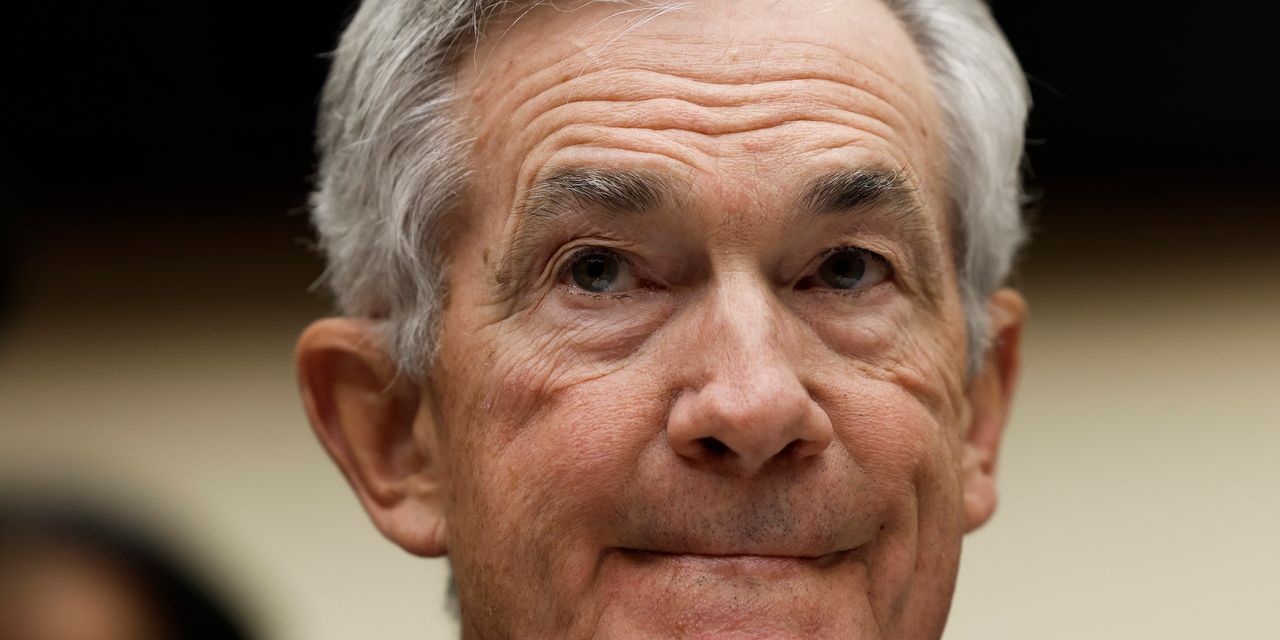
Investors got the “dovish” rate hike that they had been hoping for on Wednesday.
But why did the Dow Jones Industrial Average
DJIA,
fall more than 500 points after Federal Reserve Chairman Jerome Powell hiked rates by 25 basis points and signaled that only one more hike would follow?
The answer, according to several market strategists, is because of Powell and his afternoon press conference left investors with little certainty and plenty to worry about.
On the one hand, the Fed chair played up expectations for a worsening credit crunch that would essentially do the Fed’s job for it by hurting the economy and labor market, while helping to combat inflation.
But while Powell assured reporters and the public that U.S. banks were well-capitalized and “sound,” Yellen told Congress during testimony on Capitol Hill Wednesday that bank deposits hadn’t been considered or discussed, helping to drive stocks lower, market strategists said.
By the time markets closed, the S&P 500 financial services sector had fallen by 2.4%, making it the worst performer on the S&P 500
SPX,
which shed 65.90 points, or 1.7%, to 3,936.97. The Nasdaq Composite
COMP,
fell 190.15 points, or 1.6%, to 11,669.96, according to FactSet.
By comparison, stocks had rallied on Tuesday as investors bid up stocks in anticipation of Powell expressing a less-aggressive outlook for interest rates.
Unfortunately for stock investors, that’s exactly what they got.
Expectations for a lower Fed terminal rate should benefit stocks, at least in theory.
But when these expectations are informed by fears about a potentially serious economic downturn, which is what happened on Wednesday, the outlook can be more complicated, said Steve Sosnick, chief market strategist at Interactive Brokers, during a phone call with MarketWatch.
Although Powell ruled out rate cuts before the end of 2023, both Fed funds futures and Treasury yields appear to be pricing in as many as three rate cuts later this year, Sosnick said.
Hopes for rate cuts benefited stocks in the recent past. But now, “investors need to be careful what they wish for,” Sosnick said.
“Most scenarios that get you to that level of interest rates are not stock-market friendly,” he added.
The yield on the 2-year note BX:TMUBMUSD02Y fell by more than 20 basis points to 3.960% on Wednesday, according to FactSet.
Concerns that the Fed risked leaving its battle against inflation unfinished helped to compound the market’s losses.
Chris Zaccarelli, chief investment officer for Independent Advisor Alliance, said in emailed comments that Fed officials are “potentially losing their nerve in fighting inflation” which could create more issues for markets and the economy down the road.
All things considered, Powell’s press conference was decidedly market-negative, according to Peter Boockvar, chief investment officer of Bleakley Financial Group, who said that Powell confronted markets with a “trifecta of trouble.”
“Powell acknowledges the credit crunch ahead, says inflation and price stability are still a big focus and that they don’t foresee cutting interest rates this year…no wonder why the stock market closed at the lows,” he said in a note emailed to reporters.