The numbers: The U.S. created a robust 311,000 new jobs in February, keeping the pressure on the Federal Reserve to raise interest rates even further to tame high inflation.
Economists polled by The Wall Street Journal had forecast 225,000 new jobs.
The increase in employment last month followed a revised 504,000 gain (initially 517,000) in January, the government said Friday.
The large back-to-back increases could force the Fed to raise interest rates higher than it had planned to slow the economy and loosen up the tightest labor market in decades. The central bank meets March 21-22 to plot its next move.
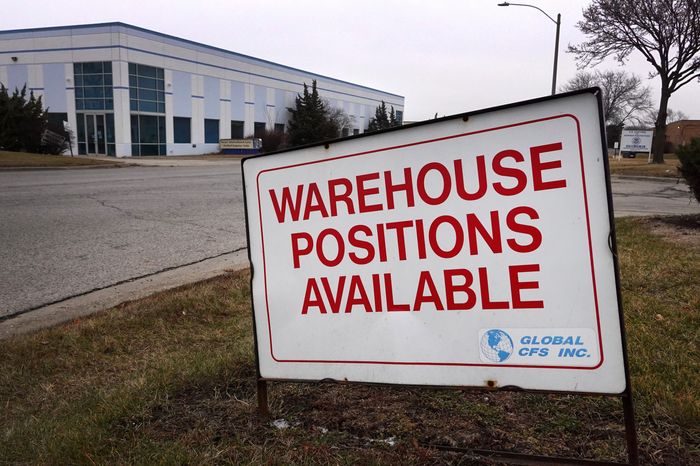
A sign advertises job openings outside a business in Illinois. Lots of companies are still hiring, but the economy has slowed and job creation is likely to as well.
Scott Olson/Getty Images
Yet there were a few glimmers of hope for the Fed that could encourage the central bank to stick to a less aggressive strategy.
The unemployment rate rose a few ticks to 3.6%. Hourly wages rose just 0.2% to mark the smallest increase in a year. And the share of able-bodied people in the labor force climbed to a three-year high.
All of these are pressure valves on the labor market and the broader economy from high inflation.
Investors appeared to put more weight on those factors than another big increase in employment. Stocks rose and bond yields fell in premarket action.
Key details: Half of the new jobs created last month were at service-side companies such as retailers (50,000), restaurants (70,000) and hotels(14,000) — businesses whose employment still has not returned to pre-pandemic peaks.
Government (46,000), white-collar professional businesses (45,000), health-care providers (44,000) and construction companies (24,000) accounted for the rest of the increase in hiring in February.
Government employment has played a big role in the surge in jobs in the first two months of 2023, with a combined 164,000 new jobs. Such an unusually large increase in unlikely to last.
Employment fell in transportation, perhaps because of slower consumer spending on goods purchased online.
Information companies — mostly high tech and media — also reduced employment. A spate of businesses such as Amazon
AMZN,
have announced job cuts in recent months.
There were some signs the labor market is loosening a bit.
The small rise in hourly wages, for example, left the increase in pay over the past year at 4.6%.
That’s down from a 40-year high of 5.9% one year ago, though still well above the 2% to 3% growth rate the Fed would like to see.
Hours worked also slipped a touch to 34.5 hours a week. Companies usually reduce the number hours an employee works when business slows.
The share of working-age people in the labor force — known as the participation rate — edged up to 62.5% from 62.4%. It was the third straight increase and the highest level since early in the pandemic in 2020.
When more people look for work, companies don’t have to compete as much for workers via higher pay.
Big picture: An expanding U.S. economy has shown lots of resilience in the face of rising interest rates, but analysts doubt the good times can last. Higher borrowing costs typically slow the economy by depressing consumer spending and business investment.
Just look at the housing market, where soaring mortgage rates have crushed sales and new construction. The same could happen to the rest of the economy if the Fed has to jack up rates more than Wall Street expects.
Already, a robust U.S. labor market is showing signs of fraying. Job postings have declined, lots of large companies have announced layoffs and workers who lose a job are taking longer to find a new one.
The Fed is unlikely to determine its next step until it sees the February report on consumer inflation published next week.
Looking ahead: “The U.S. economy cranked out another large number of jobs in February, but there were enough soft patches in the overall report to possibly keep the status quo [another 25 basis point rate hike instead of 50) at the Fed’s next meetingm,” said Sal Guatieri at BMO Capital Markets.
“No doubt today’s data is a reminder that the labor market remains tight, but some investors may be able to squint and see signs of slowing,” said Mike Loewengart, head of model portfolio construction at Morgan Stanley Global Investment
Market reaction: The Dow Jones Industrial Average
DJIA,
and S&P 500
SPX,
trimmed premarket losses in Friday trades. The yield on the 10-year Treasury fell to 3.78%.
Investors hope signs of cooling in the labor market will encourage the Fed to keep raising interest rates in smaller increments.