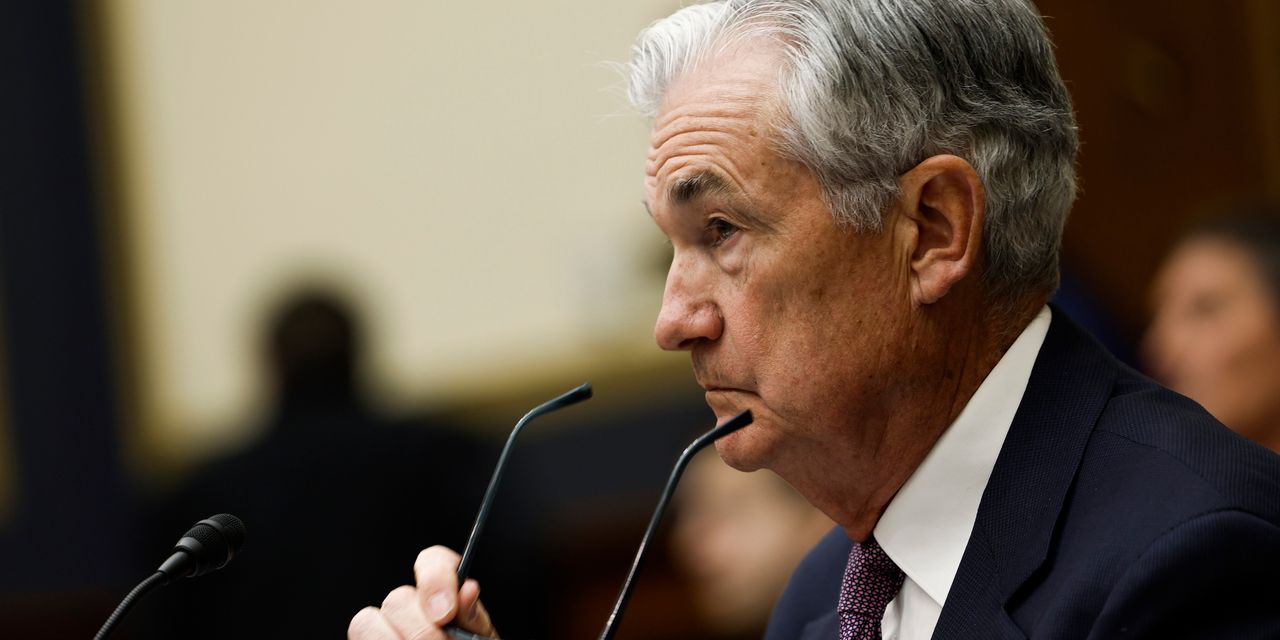
Federal Reserve Chairman Jerome Powell this week said the central bankers would consider reaccelerating the pace of interest rate hikes if February economic data continued to show a stronger economy and higher inflation than had been expected.
That leads to the next obvious question — is there a precise number of net job gains that would guarantee a half percentage point hike at the March 21-22 meeting?
Unfortunately, the Fed’s decision can’t be boiled down to one number, said Avery Shenfeld, chief economist of CIBC World Markets.
“I don’t think there is a precise number that puts the whole thing together,” Shenfeld said.
He said investors will have to take a look at the February consumer inflation report, to be released Tuesday, before they will have a firm grasp on whether the Fed will hike by 25 basis points or 50 basis points, he said.
“You have to look at those two reports and judge what they said together,” Shenfeld said.
At the moment, CIBC is sticking with its call for a 25 basis point hike in 13 days.
Economists surveyed by The Wall Street Journal expect job growth to slow to 225,000 in February from the superstrong 517,000 in the prior month.
In early February, the Fed pushed up rates by 25 basis points to a range of 4.5%-4.75%. It was the smallest rate increase since the Fed lifted off last March.
Traders in the federal funds futures market see a 78% chance of a half percentage point move in March to a range of 5% -5.25%.
Shenfeld said that a half percentage point in March does not mean another one of the same size is guaranteed for May or that the Fed will push rates up above 6%.
As is the case this month, the data will decide how large a rate hike will be seen in May, he said. And because rates are higher, it means that the bar of a 50 basis point move in May will be higher, Shenfeld said.
At the moment, the Fed has penciled in an endpoint of 5%-5.25%, although Powell told Congress this forecast is likely to increase when the Fed releases its updated economic forecast along with the interest-rate decision.
Shenfeld said all the talk about going higher for longer obscures the fact that an economic slowdown from past rate hikes is on the way.
“My view is that we’re not giving enough weight to the impact from the interest rate hikes that have already happened. This will continue to hit the economy with a lag,” Shenfeld said.
For instance, despite the Fed’s rate hikes, residential construction employment hasn’t dropped, yet. Shenfeld said there is a pretty good bet that job losses for this sector are on the way.
Stocks
DJIA,
SPX,
were lower in early afternoon trading on Wall Street. The yield on the 10-year Treasury note
TMUBMUSD10Y,
remained slightly below 4%.