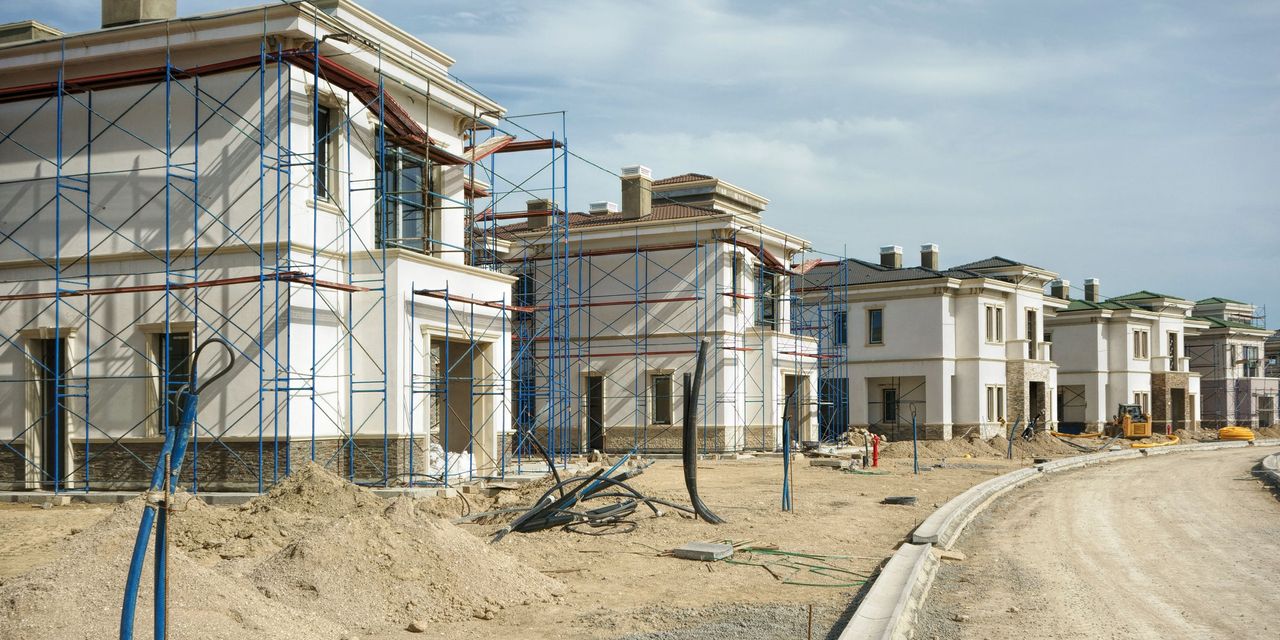
The numbers: U.S. new-home sales decreased 4.5% to an annual rate of 801,000 in January, the government said Thursday. That figure represents the number of homes that would be sold over a yearlong period of time if the same number of properties were bought each month based on the rate of sales in January. Compared to a year earlier, sales were down more than 9.3%.
Economists polled by MarketWatch expected new-home sales in December to rise to an annual rate of 803,000.
The new-home sales report from the U.S. Census Bureau, unlike the existing-home sales report from the National Association of Realtors, records sales when the contract is signed rather than when the transaction has closed. The report’s small sample size means that it can be volatile and prone to large revisions.
What happened: There was a high degree of regional variation in January’s new-home sales data. Sales of newly-constructed homes in the West actually increased by 1.2%, while they fell 10.7% in the Northeast.
The number of homes for sale at the end of the month rose to a 6.1-month supply. Generally, a 6-month supply of homes is considered indicative of a balanced market — meaning there are enough new homes for sale to meet consumer demand. Nevertheless, the median and average sales prices for new homes both increased in January.
The big picture: Notably, the number of new homes sold in December was revised upward to 839,000, suggesting that January’s dip may be an aberration. As Pantheon Macroeconomics chief economist Ian Shepherdson notes, bad weather and the omicron variant likely depressed new-home sales last month.
“New home sales data are captured at the point contracts are signed, sometimes at new home construction sites,” he wrote in a research note. “Fewer people visit developments during weather events, and millions of people had COVID at some point in January.”
Still, rising mortgage rates are pressuring affordability. In time, that trend could have an effect on home-buying demand, which could reduce sales of both new and existing homes.
Looking ahead: “High home prices have been a headwind to the housing market, and now steadily rising mortgage rates, a further drag on affordability, appear to be weighing on demand,” said Rubeela Farooqi, chief U.S. economist at High Frequency Economics, in a research note.
“We expect to see the inventory of homes available for sale begin to grow in 2022 from record-low levels as construction gives buyers new options, and existing homeowners venture into the housing market,” said Danielle Hale, chief economist at Realtor.com.