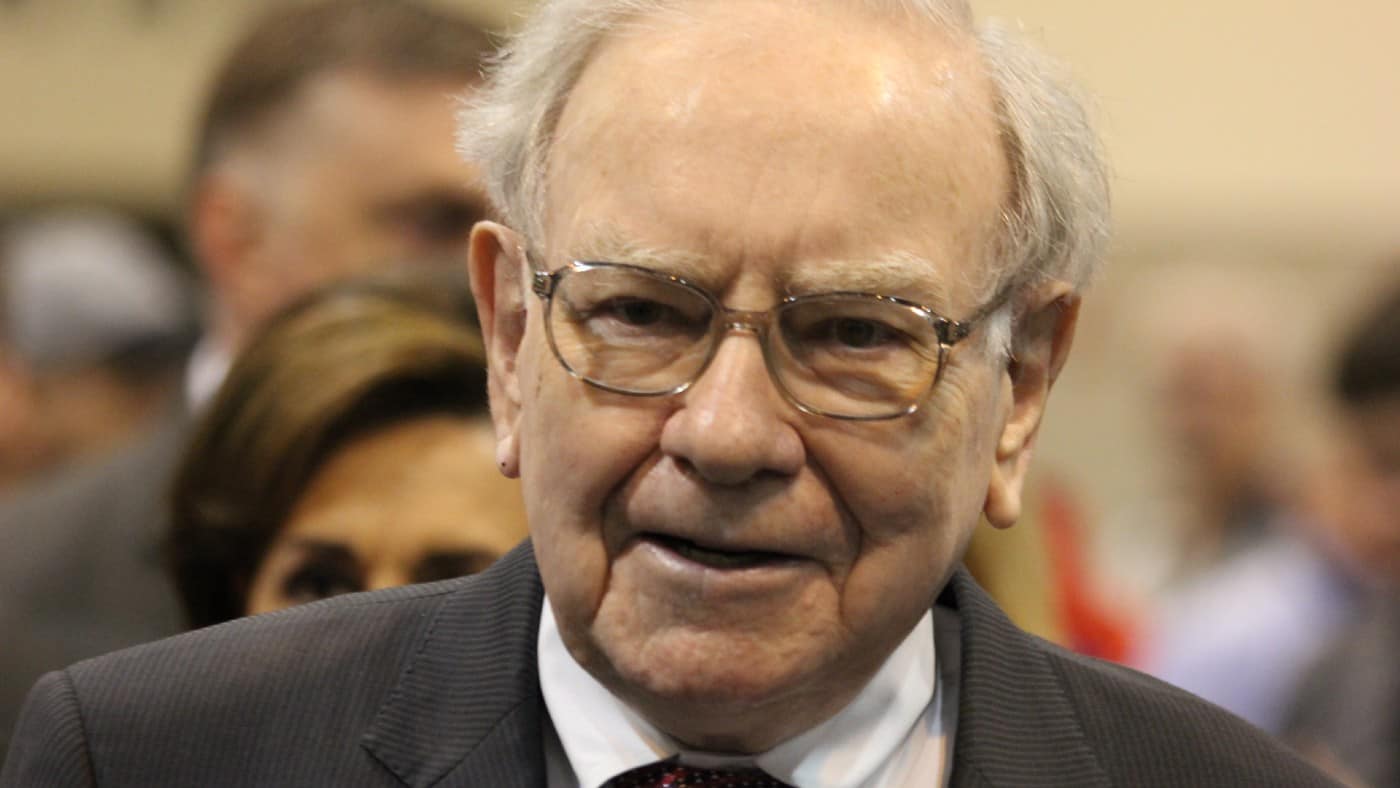
One of the ways investor Warren Buffett has grown his fortune is by being clear about the difference between price and value. Price is what one pays, but value is what one gets.
So when Buffett talks about shares being cheap, he is not referring only to their price. Instead, he is looking at what they cost and then comparing it to how much value he thinks they may generate in future. As a private investor, I see that as a lesson I can apply to my own portfolio.
5 Stocks For Trying To Build Wealth After 50
Markets around the world are reeling from the coronavirus pandemic… and with so many great companies trading at what look to be ‘discount-bin’ prices, now could be the time for savvy investors to snap up some potential bargains.
But whether you’re a newbie investor or a seasoned pro, deciding which stocks to add to your shopping list can be a daunting prospect during such unprecedented times.
Fortunately, The Motley Fool UK analyst team have short-listed five companies that they believe STILL boast significant long-term growth prospects despite the global upheaval…
We’re sharing the names in a special FREE investing report that you can download today. And if you’re 50 or over, we believe these stocks could be a great fit for any well-diversified portfolio.
Hunting for value
How does Buffett try to judge the future value a share may generate? It is an imprecise science. But basically he estimates what free cash flows a company can generate in future, per share. It is easier to create such cash flows in the long-term if a company has unique assets that allow it to charge a premium price. For example, it may have a proprietary product formula like Coca-Cola or an entrenched customer base like National Grid.
Future cash flows also rely on future demand. There is little point in a company having a unique edge in an industry that is about to become extinct. That also can be hard to assess, especially with the fast pace of technological development. Buffett reckons some goods or services will remain in demand no matter what happens. For example, people will still need to buy food. They will still need healthcare.
Warren Buffett pays close attention to such enduring industries. He also applies another principle when trying to select shares that have long-term potential. He only invests in businesses he understands. By staying inside his ‘circle of competence’, the Sage of Omaha reckons he is better able to judge what the future prospects may be for a company. I can apply the same approach no matter how small my portfolio is.
After considering a company’s possible future free cash flows, Buffett looks at its share price. The lower it is compared to a company’s future cash flows, the more interested he is likely to be. Estimating those cash flows in detail can be difficult. So Buffett pays close attention to business assets he thinks might help generate lots of cash, such as iconic brands or distribution networks a competitor would struggle to match.
Looking for cheap UK shares
I think this method can help me identify cheap UK shares like the US ones that form most of Buffett’s portfolio. That is because the underlying principles are basically the same on both sides of the pond. Drivers of long-term value such as an iconic brand or unique technology are relevant to business success in the UK as much as the US. The gap between a company’s likely future free cash flows and its current price can help me identify value in either market.
Applying the Buffett approach, I would consider adding three UK companies to my portfolio. Given their future earnings growth potential, they look cheap to me right now.
Unilever
Buffett actually made a bid for Unilever (LSE: ULVR) a few years ago, although his approach was unsuccessful. Today I can pick up Unilever shares at a lower price than Buffett offered.
The underwhelming performance of the Unilever share price in recent years reflects some challenges that continue to threaten the business. For example, cost inflation may lead to profit margins being squeezed. Consumers tightening their belts in struggling economies could cut demand for Unilever’s premium brands like Dove.
But I think such brands are also a source of long-term competitive advantage. That could help Unilever continue to produce strong cash flows for decades to come. Buffett is a big fan of premium consumer brands. Unilever owns a portfolio that it would be almost impossible for a competitor to replicate from scratch. They are used by billions of people daily. That is why I have taken advantage of recent share price weakness to add the company to my portfolio.
Victrex
Another example of a company with the sort of competitive advantage or ‘moat’ that Warren Buffett likes is Victrex (LSE: VCT). The industrial firm supplies business customers with polymers. These are used in a range of applications, including in cars and planes.
Victrex has its own product technology. That gives it a unique place in its market. The products are used in situations where safety is critical. That allows Victrex to charge premium prices, helping to support profits.
This all adds up to an attractive business model in my view. But there are risks too. Victrex has a concentrated manufacturing footprint. So any unexpected shutdown at its main factory could seriously reduce revenues and profits. Like Buffett, I try to reduce my risks by diversifying across different companies. I would therefore happily add Victrex to my portfolio, alongside other companies.
Judges Scientific
A company that reminds me of Buffett’s own Berkshire Hathaway is Judges Scientific (LSE: JDG). Judges does not have a wide spread of businesses like Berkshire. But it uses a similar business model in which a small central office buys subsidiaries and allocates capital between them. That helps to keep overheads low. But the company’s focus on the scientific instrument market means it can charge premium prices. Similarly to Victrex, catering to applications where quality is crucial means that customers are willing to pay high prices.
This is a lucrative business. Judges has delivered double-digit percentage dividend increases in recent years. One concern I have is the low barriers to entry in building a copycat business. A competitor attracted by Judges’ profit margins could aim to build a similar holding company by bidding for the sorts of assets Judges has been targeting. If that happened, it could push up acquisition costs and harm margins.
Judges’ management has proven the potential of its business model so far. Given Judges’ strong growth prospects, I see the shares as offering value. I would consider adding them to my portfolio.
Inflation Is Coming: 3 Shares To Try And Hedge Against Rising Prices
Make no mistake… inflation is coming.
Some people are running scared, but there’s one thing we believe we should avoid doing at all costs when inflation hits… and that’s doing nothing.
Money that just sits in the bank can often lose value each and every year. But to savvy savers and investors, where to consider putting their money is the million-dollar question.
That’s why we’ve put together a brand-new special report that uncovers 3 of our top UK and US share ideas to try and best hedge against inflation…
…because no matter what the economy is doing, a savvy investor will want their money working for them, inflation or not!
Best of all, we’re giving this report away completely FREE today!
Simply click here, enter your email address, and we’ll send it to you right away.
Christopher Ruane owns shares in Unilever. The Motley Fool UK has recommended Judges Scientific, Unilever, and Victrex. Views expressed on the companies mentioned in this article are those of the writer and therefore may differ from the official recommendations we make in our subscription services such as Share Advisor, Hidden Winners and Pro. Here at The Motley Fool we believe that considering a diverse range of insights makes us better investors.