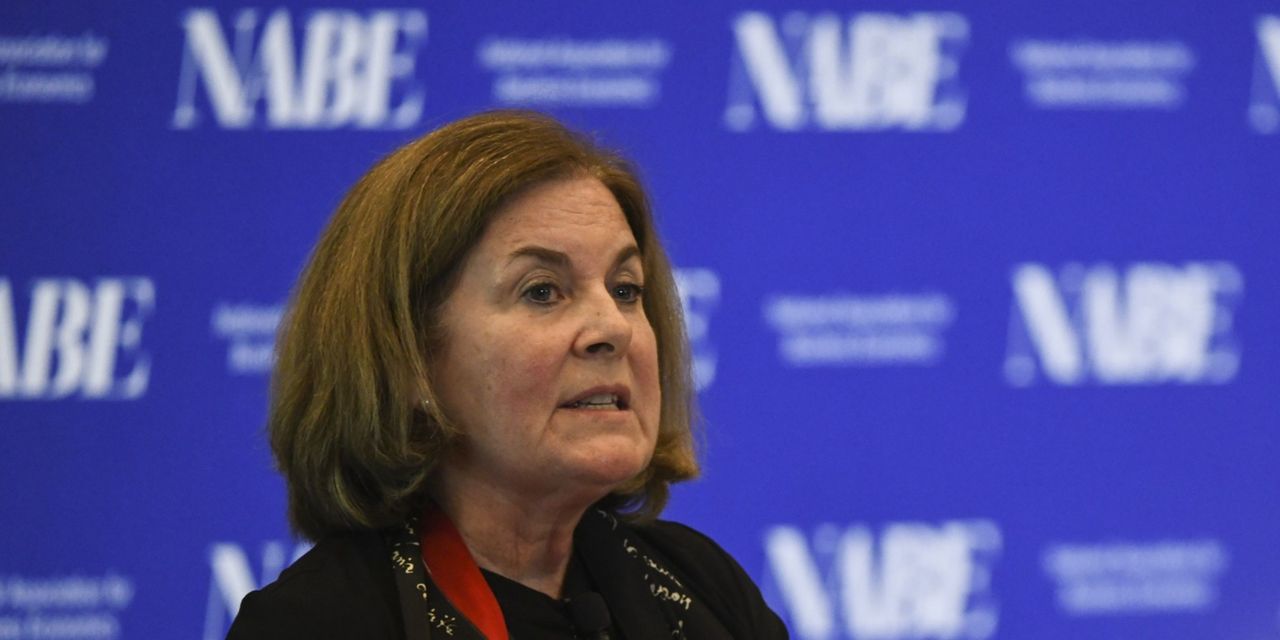
The president of the Kansas City Federal Reserve said on Tuesday the central bank should speedily reduce its enormous $8.5 trillion pile of bond holdings to help curb the highest U.S. inflation in almost 40 years.
Esther George said the Fed’s effort to reduce inflation would be more effective if the bank drew down its holdings of long-term bonds even as it gradually raised short-term interest rates. She made her remarks in a virtual speech to the Central Exchange.
George said the bank should reduce its balance sheet at a faster pace than it did during a similar pivotal moment almost a decade ago as the U.S. was recovering from another sharp recession.
“All in all, I believe that it will be appropriate to move earlier on the balance sheet relative to the last tightening cycle,” she said.
The Fed bought trillions in Treasurys and mortgage-backed bonds during the pandemic to push down long-term interest rates to record lows and spur more borrowing and spending.
Yet the economy has largely recovered and the pace of inflation recently hit a 39-year high of nearly 7% — in part, some economists contend, because of excess Fed and White House stimulus.
George said the economy no longer needs much assistance.
“Even as the pandemic continues to influence economic activity, the time has come to transition monetary policy away from its current crisis stance towards a more normal posture in the interest of long-run stability,” she said.
The Fed is preparing to raise its benchmark short-term interest rate that is now near zero for the first time since 2018 and determine how quickly to reduce its balance sheet. Chairman Jerome Powell in his renomination testimony on Tuesday pledged to prevent inflation from developing deep roots.
If the Fed raised short-term rates but was slow to reduce its balance sheet, George contended, the yield curve could invert and cause excessive risk-taking.
An inversion occurs when short-term interest rates rise above long-term rates. Low long-term rates can induce investors to seek higher returns from riskier investments.
“With robust demand, high inflation, and a tight labor market, policymakers will need to grapple with the appropriate speed and magnitude of adjustments across multiple policy tools as they work to achieve their long-run objectives for employment and price stability,” George said. “That transition could be a bumpy one.”